
PP Impex India Insights
Stainless Steel Manufacturing & OEM Insights
Technical articles, manufacturing trends, and global supply chain expertise from an ISO-certified OEM factory.
OEM & Custom Deep Drawing
Precision Engineering & Metal Forming
In-depth analysis of stainless steel grade selection, deep drawing technologies, and tooling options.
Global Trade & Export Standards
B2B Sourcing & Quality Control
Best practices for international buyers sourcing custom kitchenware and private label cookware.
Top Stainless Steel Fries Servers for Restaurants
Table of Contents
- Types of Stainless Steel Fries Servers for Restaurant Use
- Key Features That Define a High-Quality Fries Server
- How to Choose the Right Fries Server for Your Menu
- Cleaning, Maintenance, and Food Safety Considerations
- Comparing the Best Fries Server Designs for Different Service Styles
- FAQS
- Conclusion
- Related Posts
Choosing the right Stainless Steel Fries Server can shape how guests perceive a restaurant’s food and service. A crisp fry presentation should look intentional, not hurried. Stainless steel offers a durable, professional appearance that suits diners, cafés, pubs, and high-volume kitchens. Its reflective surface can make golden fries look brighter under warm dining lights.
However, appearance is only one consideration. Restaurant teams must examine capacity, weight, stability, cleaning requirements, and resistance to everyday wear. A server that tips easily can create unnecessary spills during busy table service. Sharp edges, loose handles, or poorly finished seams may also frustrate staff over time. Small details matter.
This guide compares leading options for practical restaurant use. It considers how each model performs beside burgers, grilled dishes, and shared appetizers. It also examines whether the design supports consistent portions without making tables feel crowded. Experience shows that the most attractive product is not always the easiest to maintain.
That is worth remembering.
Even high-quality stainless steel can show fingerprints, oil marks, or water spots. Some finishes hide these signs better than others. Cleaning teams may prefer a simpler shape, while managers may value a more distinctive presentation. There is no perfect choice for every operation. The best option balances visual appeal, dependable construction, food-service practicality, and long-term value. This overview helps buyers make a clearer decision before adding new fries servers to their serviceware collection.
Types of Stainless Steel Fries Servers for Restaurant Use
Top Stainless Steel Fries Servers for Restaurants
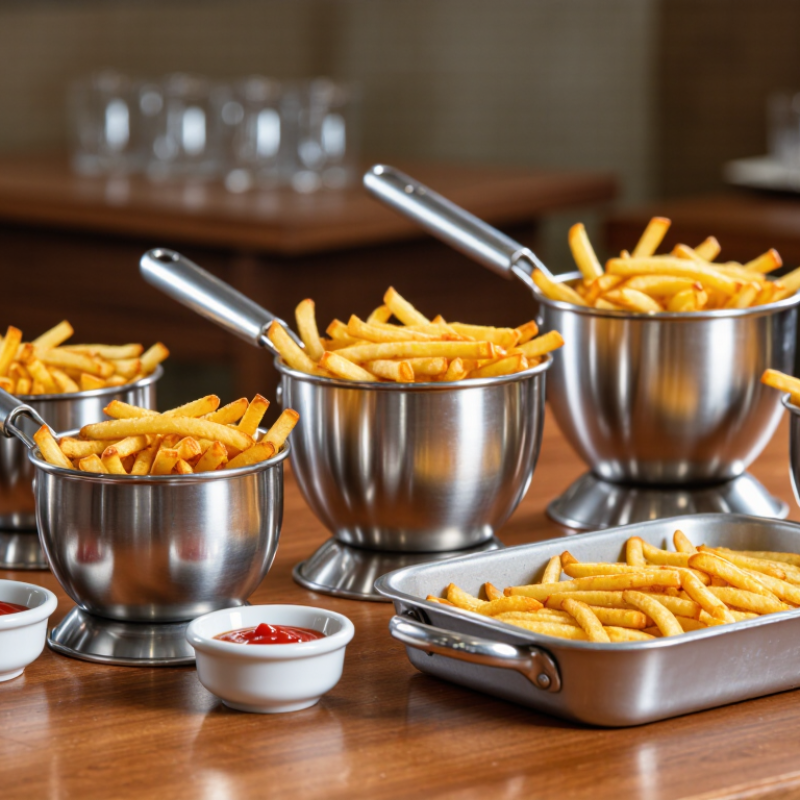
Stainless steel fries servers come in several practical forms, each suited to a different restaurant setting. Cone-shaped servers create a modern presentation and keep fries upright for easy sharing. They work well on trays, but narrow cones can tip when overloaded. Small stainless cups offer better stability for individual portions. Their compact shape also fits beside burgers, sandwiches, and dipping sauces.
Wire baskets provide a casual, generous presentation for counter-service restaurants. Choose baskets with tight, smooth wires to prevent fries from slipping through. Mini pails add visual appeal and hold thicker portions comfortably. However, deep pails may trap steam and soften the lower fries. I have seen this happen during busy lunch periods. Ventilation matters more than appearance.
For high-volume kitchens, stackable stainless holders save shelf space and speed up table service. Look for food-contact stainless steel, a rolled rim, and a stable base. A 304-grade construction is commonly preferred for durability and corrosion resistance. Smooth welds make cleaning easier and reduce hidden residue. Perforated designs help release steam, although large openings may allow crumbs to escape. Test the server with your actual portion size before purchasing. A beautiful holder can still perform poorly when filled beyond its balance point.
Key Features That Define a High-Quality Fries Server
Top Stainless Steel Fries Servers for Restaurants
A high-quality fries server should handle heat, moisture, and repeated service without losing its shape. Stainless steel offers strong corrosion resistance and a clean, professional appearance. Food-contact surfaces should be smooth, with no rough welds or hidden gaps. Those small gaps can trap oil and crumbs.
A stable base matters during busy table service. Look for a balanced design that does not tip when filled. A firm handle protects hands from hot fries and improves control. The basket should hold a practical portion without crushing the fries. Drainage is useful, but holes that are too large may let smaller fries fall through. That detail is easy to miss. I have found that a slightly heavier server often feels safer, although it can become tiring during long shifts. Durability is valuable, but comfort still needs testing.
Tips: Check the steel grade, wall thickness, and handle connection before buying. Wash the server soon after use, then dry it fully to reduce water spots. Avoid rough scouring pads, which may dull the surface. Test one sample with real portions before ordering many units. Photos rarely show balance, heat transfer, or cleaning difficulty.
How to Choose the Right Fries Server for Your Menu
Top Stainless Steel Fries Servers for Restaurants
How to Choose the Right Fries Server for Your Menu
Choosing a fries server starts with your menu, not its appearance. Thin shoestring fries need a narrower container to prevent sliding. Thick-cut fries need a wider opening and stronger base. For loaded fries, choose a deeper server with stable sides. Portion size matters too. A small basket may look attractive but frustrate busy diners.
Stainless steel works well because it resists rust, handles frequent service, and cleans easily. Look for a smooth interior without sharp seams. Rolled edges feel better during table service. A perforated base can release steam and help fries stay crisp. However, large openings may let smaller fries escape. I have found that balance is easy to overlook.
Keep it practical.
Measure the serving area before ordering. A tall server may block plates or crowd a narrow table. Check whether staff can carry several units safely. Handles should remain cool enough for normal service, while the base should resist tipping. A polished finish looks refined, but fingerprints appear quickly. A brushed finish may suit faster operations. Test one sample during a busy shift. Observe cleaning time, portion control, and table stability. The best choice is not always the most decorative one. Some servers also need liners, but liners can soften fries when moisture collects. Review your menu, service speed, and washing routine before selecting a final style.
Cleaning, Maintenance, and Food Safety Considerations
Top Stainless Steel Fries Servers for Restaurants
Cleaning and maintenance deserve more attention than the server’s polished appearance. In busy kitchens, oil residue often hides beneath the rim, handles, and drainage holes. I recommend rinsing loose crumbs immediately, then washing with approved detergent and warm water. Sanitize every food-contact surface afterward. FDA Food Code 2022 requires these surfaces to remain smooth, cleanable, and free from soil buildup. Do not rely on visual inspection alone. A clean-looking server can still carry grease films. That is easy to miss.
Inspect each server before service. Check for sharp edges, loose welds, deep scratches, and distorted bases. Replace damaged pieces promptly. Stainless steel is durable, not indestructible. Avoid abrasive pads and chlorine products unless the manufacturer permits them. They may dull the surface or encourage corrosion. Use test strips when verifying sanitizer strength. Staff should also wash hands before handling cleaned equipment. CDC estimates that foodborne illnesses affect about 48 million Americans annually, with 128,000 hospitalizations and 3,000 deaths. That figure appears in its 2011–2016 burden estimates. Small controls matter. Fries should remain protected from bare-hand contact and nearby splash contamination. If the server holds temperature-controlled food, follow FDA Food Code hot-holding guidance of 135°F or above. I have seen teams clean the basket but ignore the counter beneath it. That habit needs reconsideration. (Sources: FDA Food Code 2022; CDC, Estimates of Foodborne Illness in the United States, 2011–2016)
Top Stainless Steel Fries Servers for Restaurants: Food Safety Control Points
FDA Food Code temperature thresholds relevant to cleaning, maintenance, and safe use of stainless steel fries servers.
Keep hot-held fries and other time/temperature control for safety foods at or above 135°F (57°C), and cold-held ingredients at or below 41°F (5°C). Reheat cooked, cooled food for hot holding to at least 165°F (74°C) for 15 seconds. Stainless steel fries servers should be cleaned and sanitized between uses, checked for food residue or surface damage, and removed from service if corrosion, cracks, or difficult-to-clean areas develop.
Reference: U.S. FDA Food Code 2022, Sections 3-403.11, 3-501.16, 4-602.11, and 4-703.11.
Comparing the Best Fries Server Designs for Different Service Styles
Top Stainless Steel Fries Servers for Restaurants
Comparing the Best Fries Server Designs for Different Service Styles
A fries server should match the restaurant’s service rhythm, not only its visual style. In kitchen trials, stainless steel cones worked well for counter service. They held a generous portion and kept fries visible to waiting customers. Their narrow base, however, can feel unstable on crowded trays.
Capacity changes everything. Small stainless steel cups suit cafés, bars, and side portions. They fit neatly beside burgers and reduce unnecessary food exposure. For family dining, wider baskets offer easier sharing and faster table clearing. A perforated base can help release steam, although it may allow oil to mark wooden tables.
Table-service restaurants often benefit from servers with a weighted base. They remain steady when guests reach across the table. Tall designs create presentation height, but staff may find them awkward to stack. That detail matters during busy shifts. A divided server can separate fries from onion rings or dipping vegetables. Yet extra compartments may slow portioning and complicate washing.
For banquets and high-volume service, compact cups are usually more practical than dramatic cones. They stack efficiently and support consistent portion control. Still, I would not choose solely by storage space. We once favored a stylish narrow basket and changed it after noticing frequent spills. Stainless steel is durable, but sharp edges, poor balance, and difficult cleaning can weaken its value. The best design is the one servers can carry confidently, guests can use easily, and dishwashers can process repeatedly.
FAQS
Small stainless steel cups offer good stability for single servings. They fit beside burgers, sandwiches, and dipping sauces. They save table space.
Cone-shaped servers create a modern, upright presentation. They work well on serving trays and support easy sharing. Narrow cones may tip when overloaded.
Yes, wire baskets suit counter-service settings and generous portions. Choose tight, smooth wires to prevent fries from slipping through. Test the basket with real fries.
Deep mini pails hold thick portions comfortably and look appealing. However, they may trap steam near the bottom. Soft lower fries can result during busy service.
Look for food-contact stainless steel, a stable base, and a rolled rim. Smooth welds simplify cleaning and reduce hidden residue. Sharp seams are best avoided.
Perforated bases can release steam and help preserve crispness. Very large openings may let small fries escape. The design is useful, but not perfect.
Thin fries need narrower containers to reduce sliding. Thick-cut fries need wider openings and stronger bases. Loaded fries need deeper sides for better support.
Measure the serving area and check table stability. Carry several filled units during a busy shift. Observe cleaning time and portion control. One sample may reveal overlooked problems.
Conclusion
Choosing the right Stainless Steel Fries Server can improve presentation, portion control, and service efficiency in any restaurant. Common options include cone-style holders, basket-style servers, and compartment designs, each suited to different menus and dining settings. A high-quality fries server should offer durable stainless steel construction, stable handling, suitable capacity, smooth edges, and a design that keeps fries attractive while supporting easy serving. The best choice depends on whether the restaurant focuses on dine-in meals, casual counter service, sharing portions, or takeaway presentation.
Cleaning and maintenance are also essential considerations. Select a server that is easy to wash, resistant to corrosion, and compatible with the restaurant’s food safety procedures. Regular cleaning, thorough drying, and inspections for damage help maintain hygiene and extend product life. By comparing size, shape, stability, appearance, and cleaning requirements, restaurants can choose a fries server design that matches their menu, service style, and daily operational needs.

Blog Tags: