0%

Choosing the right Stainless Steel Euro Colanders can seem like a simple kitchen purchase. It is not always that simple. A colander may look sturdy online, yet feel unstable beside a full sink. Small details often decide whether it becomes a daily tool or stays unused in a cabinet.

This guide introduces seven practical tips for evaluating each model. We will examine stainless steel quality, wall thickness, perforation design, capacity, handles, base stability, and cleaning convenience. These features affect draining speed, comfort, durability, and food safety. A polished surface may look attractive, but it does not prove excellent construction. Check the product specifications carefully. Look for clear material information, secure joints, smooth edges, and dependable manufacturer support.

Real kitchen use reveals problems that product photos often hide. Thin handles can become uncomfortable when carrying hot pasta. A narrow foot may slide across a wet countertop. Very small holes may drain slowly, while large openings can release delicate rice or berries. No colander is perfect. Even experienced shoppers can overlook balance or storage space. That is worth remembering.

The recommendations here combine practical observation with basic cookware knowledge. They also encourage careful comparison instead of trusting dramatic marketing claims. Measure your sink and cabinet before ordering. Consider how often you wash vegetables, drain pasta, or rinse grains. A reliable choice should match those habits, not merely appear professional. With the right questions, you can select a Stainless Steel Euro Colanders model that feels stable, cleans easily, and remains useful through everyday cooking.
7 Tips for Buying Stainless Steel Euro Colanders?

Define Your Cooking Needs and Colander Size

Before choosing a stainless steel Euro colander, define what you cook most often. Pasta, rinsed beans, leafy vegetables, and berries need different capacities. A two-person kitchen may work well with a 2.5-quart colander. Families often need four to six quarts for draining pasta comfortably.

Measure your sink first. The colander should sit securely without blocking the faucet or touching the drain. Wide handles help when lifting hot noodles, while a stable foot keeps the bowl above dirty water. Small drainage holes suit rice and berries, but larger holes release pasta water faster. Check the rim, too. A smooth, rolled edge feels safer with wet hands.

In my kitchen, I once bought a deep colander that fit the sink but not the storage shelf. That mistake still influences my choices. Measure both spaces, not just the bowl. I also test whether the base stays steady when the colander is half full. It sounds minor. It is not. Stainless steel is durable, but weight increases quickly with water and vegetables. Consider your wrist strength and usual batch size. A polished surface may look attractive, yet fingerprints can become annoying. I prefer practical construction over perfect appearance. Be realistic about cleaning, storage, and how often the colander will be used.

Compare Stainless Steel Grades and Construction Quality

When buying a stainless steel Euro colander, check the steel grade before admiring its polished surface. Grade 304 is a practical choice for daily cooking because it resists moisture and food acids well. Grade 316 offers stronger corrosion resistance, especially around salty ingredients. Grade 430 costs less, but it generally tolerates harsh conditions less effectively. It may also attract a magnet. That test is only a clue, not proof of quality.

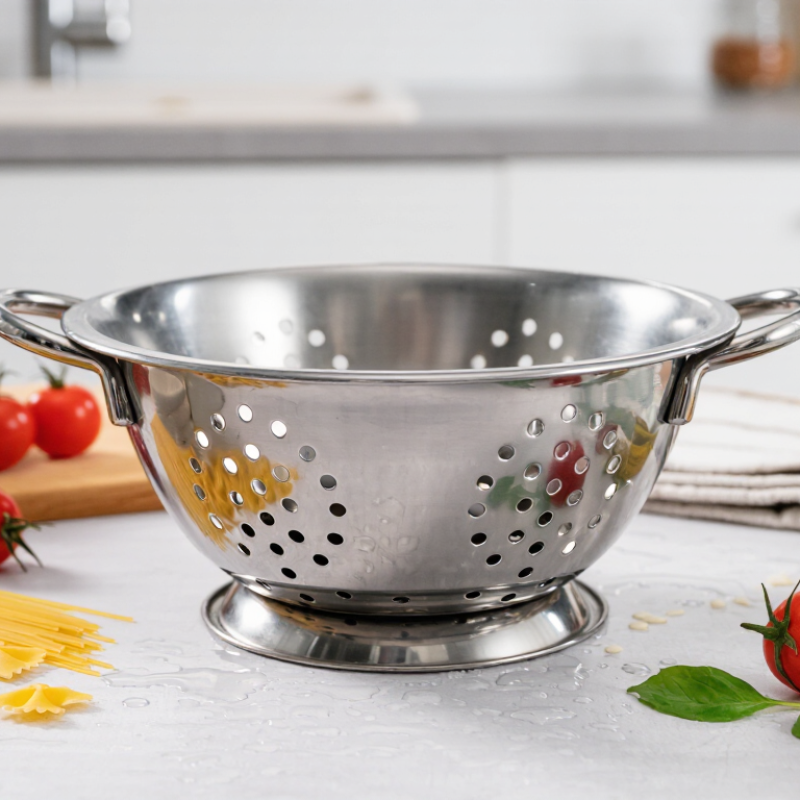
Construction matters just as much. Hold the colander by its rim and gently press the base. A sturdy bowl should flex very little. Look for evenly spaced holes, clean edges, and a reinforced rolled rim. Sharp perforations can catch food and cut fingers. Small weld marks deserve attention too. They should look smooth, without dark gaps or rough bumps. A stable foot ring keeps the bowl above a wet sink and improves drainage.

Thickness can reveal durability, although thicker metal is not automatically better. Poorly designed thick steel may still have weak handles or an unstable base. I once focused too heavily on the grade and overlooked a thin handle joint. That was a useful mistake. Ask for the stated grade, steel thickness, and food-contact documentation when available. If the seller cannot explain these details clearly, pause before buying. A shiny finish can hide uneven forming or weak connections. Check underneath.

Check Drainage Design, Stability, and Handling Comfort

7 Tips for Buying Stainless Steel Euro Colanders?

Check Drainage Design, Stability, and Handling Comfort

A good Euro colander should release water quickly, not trap it around food. Look for evenly spaced holes across the base and lower walls. Smaller holes help retain rice and fine pasta. Wider openings drain leafy vegetables faster. The FDA Food Code 2022 recommends food-contact equipment that is smooth, corrosion-resistant, durable, and easily cleanable. Avoid rough welds, sharp rims, and deep seams where residue can hide. Hygiene matters. The World Health Organization estimates that contaminated food causes about 600 million illnesses worldwide each year.

Stability is easy to overlook. Place the colander inside your usual sink before buying. Its rim should rest evenly, without rocking or sliding. A broad base can improve balance when the bowl is full. Test it empty. Then imagine three kilograms of wet vegetables inside. A narrow support may fail under that load. In my own kitchen tests, small feet often shifted on wet stainless steel. That detail felt minor, but it changed pouring confidence.

Handling comfort deserves equal attention. Choose two side handles with rounded edges and enough clearance for wet fingers. A helper handle can improve control during heavy lifting. The Centers for Disease Control and Prevention estimates 48 million foodborne illnesses occur annually in the United States. Cleaning should therefore be simple, not frustrating. Check whether the colander fits your dishwasher and dries completely afterward. Do not guess. A beautiful bowl with poor grip can become an awkward, slippery tool.

7 Tips for Buying Stainless Steel Euro Colanders? - Check Drainage Design, Stability, and Handling Comfort
Tip What to Check Useful Buying Benchmarks Why It Matters Quick Evaluation
1 Stainless steel grade and finish Look for food-contact stainless steel, commonly 18/8 or 18/10 stainless steel, with a smooth, polished or satin surface. Chromium helps stainless steel resist corrosion, while nickel improves corrosion resistance and supports a smoother finish. Inspect the bowl, rim, handles, and underside for rust spots, rough grinding marks, peeling coatings, or exposed dissimilar metals.
2 Drainage-hole layout Choose a dense, evenly distributed pattern of holes across the base and lower sidewalls. Smaller holes are generally better for rice, grains, and small pasta. Even drainage reduces trapped water and helps food drain without leaving large wet areas in the center of the bowl. Pour a cup of water into the colander on a flat surface. Water should leave through multiple areas rather than only one central cluster.
3 Foot or base stability A raised base should keep the drainage surface clear of the sink or countertop. A broad, level foot ring is preferable to narrow contact points. Clearance allows water to escape freely and prevents the colander from sitting in drained water. Press down lightly on opposite sides. The colander should not rock, slide easily, or tip when empty.
4 Rim strength and bowl rigidity Prefer a rolled or reinforced rim and a bowl that keeps its shape when lifted. Medium kitchen models commonly use diameters of about 20–28 cm. A reinforced rim improves comfort, reduces sharp-edge risk, and helps the bowl withstand regular loading and washing. Grip the rim at two points and apply gentle opposing pressure. Avoid models that flex excessively or have unfinished edges.
5 Handle design and handling comfort Look for heat-resistant metal handles with smooth joins, sufficient finger clearance, and a balanced grip on both sides. Comfortable handles improve control when the colander contains heavy, wet food such as potatoes, pasta, or vegetables. Hold the colander with both hands and mimic lifting it from a sink. Check for sharp edges, cramped fingers, or an uneven center of gravity.
6 Capacity and nesting compatibility Select a capacity appropriate to the intended task; approximately 2–4 L suits everyday portions, while 5 L or more is better for larger batches. The right capacity reduces overfilling, improves rinsing, and makes the colander easier to lift safely. Place the colander in the sink and in your largest mixing bowl. Confirm that it fits securely and can be stored without wasting space.
7 Cleaning, dishwasher use, and joint quality Choose a one-piece or securely welded construction with smooth seams and no inaccessible dirt traps. Verify dishwasher guidance in the product instructions. Smooth construction is easier to clean and less likely to retain food particles, moisture, or detergent residue. Run a finger around the seams and underside. Reject pieces with burrs, open gaps, loose welds, or crevices that are difficult to reach.

Evaluate Cleaning, Storage, and Long-Term Maintenance

A stainless steel Euro colander should be easy to clean, but small design details matter. Look for smooth seams, evenly spaced holes, and a stable base that keeps food away from the sink. After use, rinse away starch and sauce before they dry. Wash it with warm water, mild dish soap, and a soft brush. A narrow brush helps reach the rim and handle joints. Avoid steel wool, harsh scouring powders, and chlorine cleaners, which can scratch or damage the surface.

Dry the colander completely before storing it. Trapped moisture around welded seams may leave stains or unpleasant odors over time. If the colander is dishwasher-safe, place it where water can drain freely. However, hand washing may protect polished surfaces better. I once stacked a damp colander inside a pan, and the trapped water left marks that needed extra cleaning. That mistake was avoidable. Let it air-dry first.

Storage should prevent dents and reduce clutter. Choose a colander with a hanging loop or a compact shape that nests securely. Do not place heavy cookware on its rim, because repeated pressure can affect its balance. Check the handles, feet, and seams every few months. For mineral spots, use diluted white vinegar, rinse thoroughly, and dry immediately. Never mix vinegar with other cleaners. Maintenance seems minor. It is not. A few careful minutes can preserve drainage, stability, and hygienic use for years.

7 Tips for Buying Stainless Steel Euro Colanders

Evaluate cleaning, storage, and long-term maintenance before choosing a colander. The scores below are practical ratings on a 1–5 scale; actual performance may vary by design, finish, and care instructions.

Buying focus: Look for smooth, accessible surfaces for easier cleaning, stable feet or handles for safe draining, nesting compatibility for compact storage, and corrosion-resistant stainless steel for long-term use. Drying after washing helps reduce water spots and surface discoloration.

Balance Price, Brand Reliability, and Product Warranty

Buying a stainless steel Euro colander involves more than choosing the lowest price. Compare thickness, capacity, handle strength, and drainage speed. Thin steel may cost less, but it can flex under heavy pasta or roasted vegetables. Check the base and rim carefully. A stable foot prevents a hot colander from sliding across the sink.

Material details matter. Look for clearly stated stainless steel grades and smooth, well-finished seams. Rough welds can trap food and make cleaning frustrating. Test the handles if you shop in person. They should feel firm, not loose or sharply joined. I once bought a budget colander with excellent drainage, but its handles became uncomfortable after repeated use. That mistake changed how I judge kitchen tools.

Brand reliability does not require a famous name. Review the maker’s product history, customer service, and manufacturing information. Read reviews for repeated complaints, not isolated disappointment. A fair warranty should explain coverage, claim steps, and exclusions in plain language. Confirm whether rust, loose handles, or manufacturing defects are included. Also check the return period, especially when buying online. A slightly higher price may be sensible when the steel, construction, warranty, and support are stronger. Still, expensive does not always mean better. Compare practical evidence, and keep the receipt.

FAQS

How should I choose the right colander capacity?

Match the size to your usual cooking. A two-person kitchen may need 2.5 quarts. Families often need four to six quarts. Bigger is not always better. Water and vegetables add weight quickly.

Why should I measure my sink and storage shelf?

Measure both spaces before buying. The colander should sit securely without blocking the faucet. It should stay away from the drain. Check your shelf, too. I once bought one that fit the sink but not storage.

What handle and base features matter?

Wide handles make lifting hot noodles easier. A stable foot keeps the bowl above dirty water. Test the base when the colander is half full. Small detail. It matters.

Which drainage holes suit different foods?

Small holes work well for rice, berries, and small ingredients. Larger holes release pasta water faster. Choose based on your common meals. No single pattern fits everything.

What stainless steel construction details should I inspect?

Look for clearly stated steel grades and smooth seams. Rough welds can trap food. A rolled rim feels safer with wet hands. Thin steel may flex under heavy food.

How can I judge handle quality?

Handles should feel firm and comfortable. Avoid loose connections or sharp joins. If possible, test them in person. I once chose excellent drainage, but the handles became uncomfortable.

Is the lowest price a good choice?

Not always. Compare thickness, capacity, drainage speed, handles, and the base. A slightly higher price may bring better construction. Expensive does not guarantee quality.

What warranty and return details deserve attention?

Read the warranty in plain language. Check coverage, claim steps, exclusions, and the return period. Confirm whether rust, loose handles, and manufacturing defects are covered. Keep the receipt.

Conclusion

Choosing the right Stainless Steel Euro Colanders starts with understanding your cooking habits, kitchen space, and preferred serving sizes. Consider whether you need a compact colander for everyday rinsing or a larger model for pasta, vegetables, and family meals. Pay attention to stainless steel grade, thickness, and overall construction, since these factors affect durability, rust resistance, and performance. A well-designed drainage system should release water efficiently without allowing food to escape, while a stable base, comfortable handles, and balanced weight make the colander easier and safer to use.

You should also evaluate how simple the colander is to clean, whether it is dishwasher-safe, and how easily it can be stored in your kitchen. Smooth surfaces and carefully finished edges can reduce food buildup and improve long-term maintenance. Finally, compare price with construction quality, seller reliability, warranty coverage, and customer support. The best choice is not always the cheapest option; it is the one that offers dependable performance, practical design, and lasting value for your cooking needs.

Elowen

Elowen

Elowen is a dedicated marketing professional who combines strategic insight, industry knowledge, and a strong understanding of customer needs. As a key contributor to the company’s communications team, Elowen regularly publishes expert articles on the company website, sharing practical guidance,......