0%

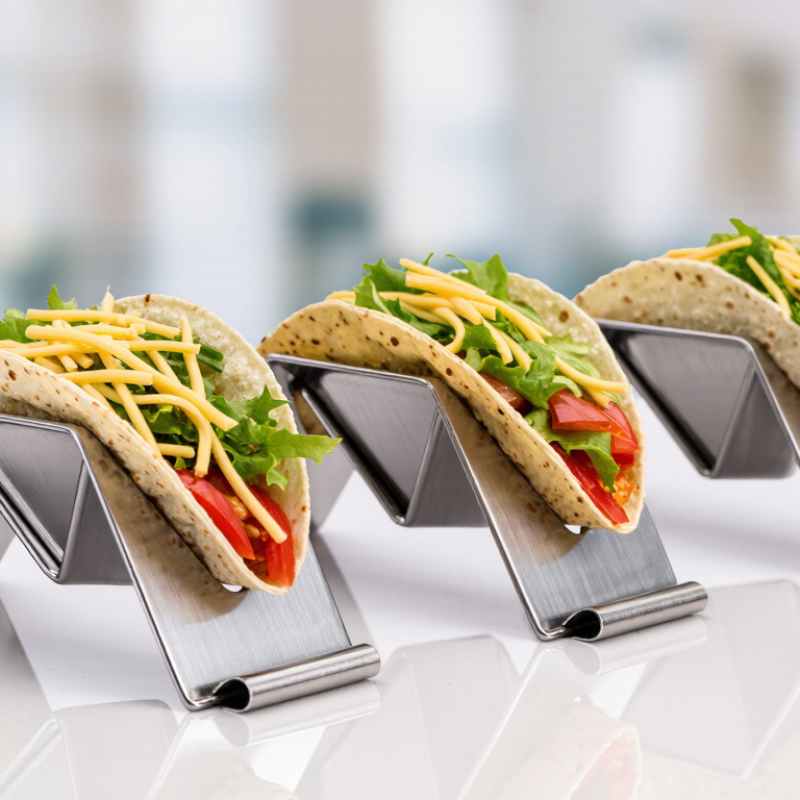
Choosing the right Stainless Steel Taco Server matters more than its polished appearance. It affects portion control, table stability, cleaning speed, and the customer’s first impression.

This 2026 supplier guide examines manufacturers serving restaurants, caterers, hotels, and high-volume foodservice operations. It compares material grades, fabrication quality, taco-slot dimensions, heat resistance, packaging, customization, and delivery reliability. Look for 304 stainless steel, smooth welded edges, stable feet, and surfaces that resist fingerprints. Small details matter.

Product designer Dieter Rams offered a useful principle: “Good design is as little design as possible.” That idea fits a dependable Stainless Steel Taco Server. It should hold tacos securely without stealing attention from the food. Simple. Practical. Easy to clean.

However, supplier claims deserve careful checking. “Food-grade” can mean different things across product listings. A bright finish does not prove stronger steel. Some low-cost servers look impressive in photographs but wobble on a busy table. That mistake can become expensive.

The suppliers featured here are assessed through practical criteria, including factory experience, sample consistency, quality documentation, production capacity, and after-sales communication. Buyers should still request current test reports, material confirmation, and a physical sample before placing a large order. No ranking can replace hands-on inspection.

This guide also considers private labeling and custom taco arrangements for growing brands. Lead times may shift during peak seasons. Pricing can change with steel markets. Even careful comparisons have limits, but they can make the purchasing decision clearer and more defensible.
2026 Top Stainless Steel Taco Server Suppliers?

What Defines a High-Quality Stainless Steel Taco Server in 2026

High-quality stainless steel taco servers in 2026 should support safe, efficient, and consistent food service. In busy kitchens, the best units feel balanced when carried with one hand. Their edges should be smooth, rounded, and free from sharp finishing marks. Food-contact surfaces need corrosion-resistant stainless steel with a clean, non-porous finish. A dull satin surface often hides scratches better than a mirror polish.

Construction details matter during real service.

Strong taco slots should hold shells upright without squeezing them. The base must remain stable when staff add fillings, sauces, or garnishes. Welds should look even and remain easy to inspect. A narrow gap can collect grease and moisture. That small issue may become a daily cleaning problem. Dishwasher resistance is useful, but repeated heat cycles can still reveal weak materials or poor assembly.

From practical handling tests, weight distribution is easy to overlook.

An attractive server may still tip on a crowded table. I would check it with different shell sizes before ordering in volume. Ask suppliers for material specifications, cleaning guidance, and sample units. Claims about “premium steel” need verification. Ideally, suppliers provide traceable production information and consistent quality records. Some imperfections are acceptable, but loose parts, rough corners, and uneven slots should not be ignored. In 2026, dependable taco servers should combine hygiene, durability, stability, and honest documentation.

Key Factors for Comparing Stainless Steel Taco Server Suppliers

2026 Top Stainless Steel Taco Server Suppliers?

Comparing stainless steel taco server suppliers requires more than checking the lowest price. Start with the steel grade, thickness, and food-contact documentation. A dependable supplier should clearly state whether the server uses 304 or another suitable grade. Ask for mill certificates, surface-finish details, and sample measurements. Vague specifications create problems later.

Inspect the construction closely. Smooth welded joints, stable bases, and rounded edges support safer handling during busy service. Request photos of production samples, not only polished catalog images. Check taco capacity, shell spacing, heat resistance, and compatibility with washing equipment. A supplier with practical experience should explain how the design performs after repeated cleaning. Small details matter.

Order a sample before approving a large quantity. Measure its length, balance, and rack stability on your actual counter. Review packaging quality, production lead time, minimum order quantity, and replacement procedures. Clear replies often reveal stronger technical knowledge. Still, communication is not proof of quality. One supplier may sound convincing but provide inconsistent samples. I have seen buyers overlook packaging damage because the unit price looked attractive. That decision needed more reflection. Compare inspection records, customer feedback, and corrective-action responses. Reliable suppliers admit limitations and improve specifications when testing exposes a weakness.

2026 Top Stainless Steel Taco Server Suppliers? - Key Factors for Comparing Stainless Steel Taco Server Suppliers
Evaluation Dimension Market Reference Benchmark Strong Supplier Offer Recommended Verification Method
Material Grade Food-service taco servers are commonly produced from austenitic stainless steel, especially 304 grade. 316 grade may be selected for higher corrosion resistance or demanding environments. Preferred
Clearly identifies the stainless steel grade and provides material traceability for each production batch.
Request a material certificate, grade declaration, or third-party composition test. Confirm that decorative plating is not being presented as solid stainless steel.
Product Thickness Commercial tabletop taco holders often use sheet metal approximately 0.6–1.2 mm thick, depending on the size, shape, and required rigidity. Offers a documented thickness tolerance and maintains a rigid structure without sharp deformation during normal use. Measure samples with a calibrated micrometer at several points and compare the results with the purchase specification.
Typical Capacity Common configurations hold two, three, four, or five tacos. Capacity depends on taco shell width, filling volume, and the spacing between slots. Provides the tested capacity for both hard-shell and soft-tortilla applications, with stable support during serving. Conduct a practical fit test using the intended taco shell dimensions and confirm that the holder remains stable when fully loaded.
Dimensions and Slot Spacing Product dimensions vary considerably. A useful specification should include overall length, width, height, slot width, slot depth, and center-to-center spacing. Supplies a dimensioned drawing with tolerances, consistent slot geometry, and compatibility with standard serving plates or trays. Compare the approved technical drawing with pre-production samples and inspect dimensional consistency across multiple units.
Surface Finish Brushed, satin, and polished finishes are widely used. A uniform satin or brushed finish is generally easier to maintain in high-use food-service settings. Provides an even, scratch-resistant finish with no visible polishing marks, discoloration, burrs, or exposed carbon-steel contamination. Inspect under bright light, rub the surface with a clean white cloth, and review the supplier's cleaning and finishing specifications.
Food-Contact Suitability Food-contact suitability depends on the base material, surface condition, manufacturing process, and applicable destination-market requirements. Maintains documented food-contact compliance for the target market and controls oils, polishing compounds, and cleaning chemicals during production. Request a declaration of compliance and, where required, an independent migration or food-contact test report applicable to the finished product.
Welding and Edge Safety Welded or formed edges should be smooth, fully finished, and free from sharp points that could injure users or damage tableware. Uses controlled welding or forming processes, removes burrs, rounds exposed edges, and performs documented final safety inspections. Run a manual edge check with protective gloves and inspect welds for cracks, pinholes, incomplete penetration, or rough finishing.
Stability and Load Performance A taco server should remain stable when loaded with the stated number of tacos and should not rock excessively on a flat serving surface. Uses a balanced base, consistent forming, and sufficient structural rigidity to resist tipping during normal restaurant service. Test fully loaded units on flat and slightly uneven surfaces. Record tipping behavior, rocking, deformation, and base contact.
Cleaning and Corrosion Resistance Stainless steel is generally resistant to corrosion, but salt, acidic foods, chlorine residues, abrasive cleaners, and poor drying can cause staining or pitting. Provides care instructions, uses compatible finishing processes, and demonstrates resistance to repeated washing under the intended service conditions. Review cleaning instructions and perform repeated wash-and-dry cycles using the customer's approved detergent and operating procedure.
Customization Capability Common options include capacity, dimensions, slot configuration, finish, logo marking, packaging, and matching serving accessories. Provides engineering drawings, prototype support, controlled artwork approval, and clear tooling or customization charges before production. Approve a pre-production sample and compare the sample against the final drawing, logo artwork, finish standard, and packaging specification.
Minimum Order Quantity Minimum order quantities vary by forming method, tooling requirements, customization level, and packaging configuration. Standard items usually require less commitment than custom products. Offers separate quantities for samples, standard production, and customized production, with transparent pricing at each volume level. Request a written quotation showing minimum order quantity, price breaks, tooling fees, sample charges, and the validity period of the offer.
Sample and Production Lead Time Standard samples commonly require several business days, while customized samples and bulk orders take longer because of tooling, approval, and production scheduling. Provides a milestone-based schedule covering drawing approval, sampling, testing, production, inspection, and shipment. Compare the promised schedule with purchase-order terms and require written notice for delays caused by material, tooling, or capacity constraints.
Quality-Control System Important controls include incoming material inspection, forming or welding checks, surface inspection, dimensional sampling, cleaning, and final quantity verification. Uses documented inspection procedures, batch records, corrective-action processes, and pre-shipment inspection against approved samples. Request a quality-control plan, inspection checklist, sample report, nonconformance procedure, and recent anonymized inspection evidence.
Packaging and Transit Protection Stainless steel surfaces can be scratched during transport. Individual separation, protective film or sleeves, inner cartons, and reinforced outer cartons are commonly used. Uses packaging matched to the finish, stackability, shipping mode, and destination requirements while minimizing unnecessary packaging waste. Approve a packaging sample and perform a drop, vibration, or simulated handling test appropriate to the shipping method.
After-Sales Support A reliable supplier should respond to quality claims, replacement requests, documentation needs, and repeat-order questions within an agreed service period. Provides a named contact, claim-response timeline, replacement or credit procedure, spare-part support where applicable, and retained production records. Include response times, defect thresholds, remedies, inspection rights, and warranty terms in the written supply agreement.
Total Landed Cost The purchase price is only one cost element. Freight, duties, tooling, packaging, inspection, damage, replacements, and payment terms can materially change the final cost. Provides a transparent total-cost quotation with consistent trade terms, packaging details, payment conditions, and no undisclosed recurring fees. Compare suppliers using the same specification, quantity, delivery term, destination, currency, freight assumption, and inspection requirement.
Comparison Note: The figures and ranges above are practical market reference benchmarks for supplier evaluation, not claims about any specific company or brand. Final acceptance should be based on approved samples, written specifications, applicable food-contact requirements, and documented quality inspections.

Leading Stainless Steel Taco Server Suppliers to Consider in 2026

Leading Stainless Steel Taco Server Suppliers to Consider in 2026

Reliable taco server suppliers should offer food-contact stainless steel with clear material documentation. Grade 304 is widely preferred for its corrosion resistance and easy cleaning. Grade 430 can reduce cost, but it may need closer evaluation in humid kitchens. Ask for thickness, surface finish, weld quality, and edge safety before placing an order.

Strong suppliers provide practical samples, not only polished catalog photographs. Check whether shells sit firmly inside the holder without tipping. Examine burrs, uneven seams, and sharp corners under bright kitchen lighting. Also confirm order quantities, production capacity, delivery schedules, and protective packaging. Small scratches can become costly when products arrive in bulk. Custom logos, dimensions, and compartment layouts may be available, but every change should be approved with a physical sample.

No supplier is perfect. A low quote may hide thinner steel or weaker packaging. A premium quote may still lack useful after-sales support. Request recent inspection records, cleaning guidance, and food-contact declarations. Review communication speed during sampling, because delays often reveal later production problems. Independent testing is helpful when purchases involve restaurants, catering groups, or large hospitality projects. Leave room for improvement in your supplier scorecard. Real performance can differ from the first sample.

Supplier Manufacturing, Customization, and Quality Standards

2026 Top Stainless Steel Taco Server Suppliers?

Reliable taco server suppliers should prove how they manufacture, customize, and inspect each unit. World Stainless Association reported 58.4 million metric tonnes of crude stainless steel production in 2023. That scale makes material traceability more important, not less. Ask for heat numbers, alloy certificates, and thickness records. For food-service use, 304 stainless steel suits most applications. 316 may perform better in salty or acidic environments.

Customization should include dimensions, portion capacity, stacking design, surface finish, and logo-free identification marks. Suppliers should explain their forming, laser cutting, welding, and polishing processes. Poorly finished welds can trap food residue. A bright surface can still hide weak corners. I learned that visual inspection alone is not enough. Request sample units and test them through washing, stacking, and repeated heating cycles. ISO 9001 supports controlled production, while ASTM A240 and EN 10088 help verify stainless-steel specifications. Food equipment materials may also need NSF/ANSI 51 alignment, depending on the destination market.

Tips: Check the inside corners with a cotton swab. It should not snag. Measure the wall thickness at several points. Ask for passivation records when welded surfaces are exposed. Review the supplier’s corrective-action reports, not only its certificates. A low price may reflect thinner steel, weaker welds, or inconsistent polishing. One overlooked detail can affect hygiene, durability, and customer safety.

2026 Stainless Steel Taco Server Supplier Quality Benchmark

This chart compares the midpoint chromium and nickel content of common stainless steel grades used in food-service servingware. The figures are derived from ASTM A240 composition ranges: 304 and 316 provide strong corrosion resistance, while 430 contains little or no nickel and is generally a more economical option. Material grade, forming quality, weld finish, customization capability, and food-contact compliance should be verified when evaluating suppliers.

How to Select the Best Supplier for Your Taco Service Needs

Selecting a stainless steel taco server supplier requires more than comparing prices. In real kitchen purchasing, small details affect service speed and food presentation. Check the steel grade, thickness, weld quality, and surface finish. A stable server should resist bending when loaded with hot shells, fillings, and garnishes. Rounded edges also reduce cleaning difficulties and handling risks.

Request physical samples before placing a larger order. Test them beside your existing plates and warming equipment. Measure the compartments, base width, and overall height. A supplier may describe a product as “heavy duty,” but that phrase means little without specifications. Ask for food-contact material documentation, inspection records, packaging details, and a clear replacement policy. Reliable suppliers answer directly and provide consistent documents.

Production capacity matters during seasonal demand. Confirm minimum order quantities, lead times, shipping protection, and communication procedures. Ask how defects are recorded and resolved. A polished sample can still hide uneven welding in bulk production. That mistake is easy to make. I would also inspect several units from one shipment, not only the first piece. Price remains important, but a lower quote may bring thinner steel, more damage, or frequent replacements. The best supplier fits your menu, service volume, cleaning routine, and budget without making claims that cannot be verified.

FAQS

What makes a stainless steel taco server high quality?

It should have corrosion-resistant steel, smooth edges, stable slots, and a clean, non-porous surface. Balance matters too. A server should feel steady in one hand.

Which stainless steel grade should buyers consider?

Grade 304 is commonly preferred for corrosion resistance and easy cleaning. Grade 430 may reduce cost, but humid kitchens require closer evaluation. Ask for material documentation.

How can staff check taco server stability?

Place different shell sizes inside the slots. Add fillings, sauce, and garnish, then test the server on the actual counter. A crowded table can expose poor balance.

What construction details deserve close inspection?

Look for even welds, rounded corners, smooth seams, and firm taco slots. Avoid loose parts, burrs, sharp edges, and uneven spacing. Small gaps may trap grease.

Is a mirror finish better than a satin finish?

Not always. A satin surface often hides light scratches better than a mirror finish. Both surfaces still need smooth, hygienic food-contact areas.

Can taco servers go through repeated dishwasher cycles?

Dishwasher resistance is useful, but repeated heat may expose weak materials or poor assembly. Ask for cleaning guidance and test a sample through regular washing.

What should buyers request from a supplier before ordering?

Request steel grade, thickness, surface-finish details, food-contact declarations, and production records. Ask for sample measurements and recent inspection information. Vague claims need verification.

Why is ordering a sample important?

A sample reveals balance, shell spacing, packaging quality, and finishing problems. Test it under bright kitchen lighting. Catalog photographs can hide practical weaknesses.

How should suppliers be compared beyond price?

Compare material quality, welds, capacity, delivery time, minimum quantities, packaging, and replacement procedures. A low quote may hide thinner steel or weaker protection.

What imperfections should buyers accept or reject?

Minor cosmetic marks may be acceptable if safety and hygiene remain unaffected. Rough corners, loose components, and unstable slots should not be ignored. I might have underestimated packaging damage before.

Conclusion

In 2026, a high-quality Stainless Steel Taco Server should combine durable construction, food-safe materials, reliable stability, and an attractive presentation. Important features include corrosion resistance, smooth and easy-to-clean surfaces, secure taco slots, balanced weight, and a design that protects shells while keeping servings organized. Buyers should also consider whether the product is suitable for restaurants, catering operations, retail packaging, or home use.

When comparing suppliers, evaluate manufacturing experience, material consistency, production capacity, customization options, quality control, packaging, lead times, and communication. A dependable supplier should be able to provide clear specifications, consistent samples, practical design support, and appropriate food-contact documentation. The best choice depends on order volume, budget, desired appearance, service environment, and delivery requirements. By comparing these factors carefully, buyers can select a supplier that offers reliable Stainless Steel Taco Server products, flexible customization, stable quality, and long-term value for their taco service needs.

Elowen

Elowen

Elowen is a dedicated marketing professional who combines strategic insight, industry knowledge, and a strong understanding of customer needs. As a key contributor to the company’s communications team, Elowen regularly publishes expert articles on the company website, sharing practical guidance,......