
0%

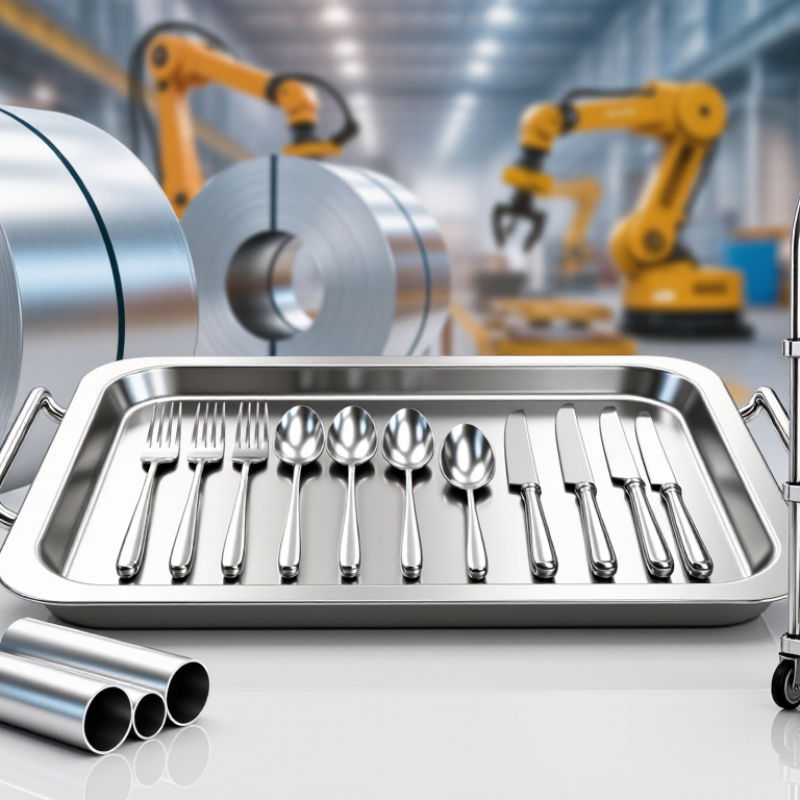
Stainless Steel Hotelware Manufacturing transforms flat coils, tubes, and sheets into durable products for hotels, restaurants, and catering operations. These products include cutlery, trays, cookware, buffet vessels, and service trolleys. Their performance depends on alloy selection, forming accuracy, welding quality, polishing, and strict hygiene control.

The International Stainless Steel Forum reported approximately 58.4 million tonnes of global crude stainless steel production in 2023. That figure shows the material’s enormous industrial scale. It does not measure hotelware alone. However, it reflects a mature supply chain supporting hospitality equipment worldwide. The UN Tourism World Tourism Barometer reported about 1.4 billion international tourist arrivals in 2024. More guests create greater demand for reliable, washable, and visually consistent tableware.

Tim Collins, Executive Director of worldstainless, has emphasized, “Stainless steel’s durability and recyclability support a more circular economy.” His statement explains why manufacturers increasingly consider product lifespan, recycled content, and end-of-life recovery. A well-made serving tray may face thousands of washing cycles, sudden temperature changes, and repeated impacts. Small defects matter. A rough weld can trap food residue, while poor polishing can create visible stains.

The process is not flawless. Energy use, scrap handling, chemical finishing, and transport still require scrutiny. That assumption needs testing. Responsible manufacturers should document material grades, inspection procedures, food-contact suitability, and supplier traceability. This introduction examines how Stainless Steel Hotelware Manufacturing combines metallurgy, production engineering, hygiene requirements, and practical hospitality experience. It also questions whether attractive finishes sometimes receive more attention than long-term serviceability.
What Is Stainless Steel Hotelware Manufacturing?

Definition and Scope of Stainless Steel Hotelware Manufacturing

What Is Stainless Steel Hotelware Manufacturing?

Definition and Scope of Stainless Steel Hotelware Manufacturing

Stainless steel hotelware manufacturing is the controlled production of durable equipment for hotels, restaurants, catering operations, and institutional kitchens. It covers tableware, cookware, trays, buffet units, service trolleys, sinks, and food preparation tools. The process usually begins with sheet, tube, or wire selection. Factories then cut, press, deep-draw, weld, polish, inspect, and pack each item.

Material expertise is essential. Common grades must balance corrosion resistance, strength, cleanability, and cost. World Stainless reported global crude stainless steel production of approximately 58.4 million tonnes in 2023. That figure reflects the material’s broad industrial importance, not hotelware demand alone. The distinction matters. Hotelware uses only a small part of this volume, but it faces unusually frequent washing, heating, stacking, and handling.

The manufacturing scope also includes surface finishing, dimensional control, food-contact safety, and traceable quality checks. A polished serving tray may look simple, yet uneven edges can affect cleaning and user safety. Welding quality matters too. Poor joints may trap residue or weaken under repeated use. The boundary is not perfectly clean. Some suppliers manufacture components, while others provide complete hospitality equipment. This creates inconsistent definitions across market reports. Buyers should examine grade, thickness, testing methods, production experience, and maintenance guidance rather than relying on appearance alone. A shiny surface is not proof of long service life.

Materials, Grades, and Design Requirements

What Is Stainless Steel Hotelware Manufacturing?

Materials, Grades, and Design Requirements

Stainless steel hotelware manufacturing combines food-contact safety, durability, and practical production control. In real workshops, material selection begins with the service environment. Grade 304 suits many trays, pots, serving bowls, and kitchen accessories. Grade 316 offers stronger resistance to salt, acids, and humid coastal conditions. Grade 430 costs less and performs well in many dry indoor applications. However, it may resist corrosion less effectively than 304 or 316. No grade solves every problem.

Thickness affects strength, weight, heating performance, and forming difficulty. A thin tray feels light, but it may warp under repeated use. A thicker body improves rigidity but increases material waste and handling effort. Manufacturers should verify chemical composition, surface condition, and traceability before forming. Polishing must remove sharp scratches without creating deep grooves. Those grooves can retain food residue and complicate cleaning. Welds need smooth finishing, especially around handles, corners, and joints.

Hotelware design also requires stable stacking, comfortable grip areas, and controlled edges. Rounded corners reduce impact points and make washing easier. Flat bases should remain stable on counters and resist rocking. Drainage details matter for dishwashing and storage. In practice, small design choices often cause the largest complaints. A handle may look elegant but become hot during service. A mirror finish may attract buyers yet show fingerprints quickly. Visual inspection is useful, but it cannot replace dimensional checks and practical handling tests. Manufacturers sometimes overlook this gap. Repeated use reveals weaknesses that factory samples may not show.

Key Stages in the Manufacturing Process

What Is Stainless Steel Hotelware Manufacturing?

Key Stages in the Manufacturing Process

Stainless steel hotelware manufacturing turns flat metal sheets into trays, bowls, cutlery, and serving equipment. The process begins with product drawings, material selection, and thickness checks. Manufacturers commonly choose food-contact stainless steel for its corrosion resistance and easy cleaning. However, the correct grade depends on the product’s use, washing conditions, and expected service life.

The sheet is then cut by precise equipment, often using laser or stamping methods. Presses shape it into smooth curves, deep bowls, or reinforced edges. Workers inspect corners carefully because uneven forming can create weak points. Welding may join handles, frames, or separate sections. Good welds should be clean, secure, and free from sharp projections. Small errors still happen. Reworking them takes time.

After forming, polishing removes rough marks and improves the surface appearance. Some hotelware receives a brushed finish, while other pieces need a brighter polish. The surface must remain smooth enough to reduce residue buildup. Each item is then washed, dried, and checked for stains, scratches, dimensional accuracy, and stability on a flat surface. Quality teams may test sample pieces under repeated handling and cleaning conditions. Packaging follows only after inspection, although rushed production can sometimes allow defects to pass. Careful records help trace materials, operators, and inspection results when a problem appears.

Quality Control, Safety, and Hygiene Standards

What Is Stainless Steel Hotelware Manufacturing?

Quality Control, Safety, and Hygiene Standards

Stainless steel hotelware manufacturing turns food-service designs into trays, plates, bowls, pots, and serving tools. Production usually includes cutting, pressing, welding, polishing, washing, and final inspection. Experienced manufacturers select suitable steel grades for strength, corrosion resistance, and repeated cleaning. The wrong material can stain, warp, or release unwanted residues during use.

Quality control begins with incoming material checks. Inspectors verify thickness, surface condition, and heat or batch records. During forming, workers check dimensions, edges, welds, handles, and stability. Smooth finishing matters because scratches can trap food particles and complicate sanitation. Every item should be washed before packing, with particular attention to joints and hollow sections. Clean equipment is essential.

Safety depends on more than appearance. Edges must feel smooth, handles must remain secure, and surfaces must tolerate commercial washing temperatures. Food-contact requirements differ by market, so manufacturers should confirm applicable testing and documentation. Traceability also supports reliable corrective action when a defect appears. A small polishing mark may seem harmless, but it deserves review. No factory is perfect. Strong systems make mistakes visible before products reach kitchens. Regular sampling, staff training, and honest inspection records protect both users and operators.

Applications and Trends in the Hotelware Industry

What Is Stainless Steel Hotelware Manufacturing?

Stainless steel hotelware manufacturing converts corrosion-resistant sheet, tube, and wire into equipment for hospitality operations. Typical products include buffet trays, serving trolleys, kitchen sinks, racks, cutlery, and food containers. Manufacturers cut, bend, weld, polish, and inspect each component. Food-contact surfaces require smooth finishes, clean welds, and suitable stainless steel grades. Grade selection depends on moisture, salt, heat, and cleaning chemicals.

Applications are expanding beyond traditional kitchens. Hotels now use modular stations for breakfast service, compact carts for room service, and stackable containers for smaller storage areas. Open kitchens also demand attractive surfaces that tolerate repeated wiping. Current trends include lighter designs, induction-compatible cookware, recycled metal content, and computer-controlled fabrication. Digital measurement helps reduce fitting errors during renovation. However, automation does not solve every problem. A beautifully formed tray may still feel unstable when fully loaded.

Tips: Check the steel grade, wall thickness, edge safety, and weld quality before purchasing. Ask for cleaning instructions and food-contact documentation. Measure doorways, lifts, and storage shelves first. Test wheels on wet floors. I have seen practical designs fail because handles were too narrow for gloved staff. Sustainability claims also deserve careful review; recycled content, service life, and repairability should be considered together.

Stainless Steel Hotelware: Typical Grades, Applications and Material Trends

Austenitic grade 304 is widely used for kitchen equipment, tableware and food-contact surfaces because of its balanced corrosion resistance and formability. Grade 316 contains molybdenum and offers improved resistance in salty or chemically aggressive environments, while ferritic grade 430 provides a lower-nickel, cost-conscious option for decorative panels and dry-service equipment. The chart uses representative nominal alloy compositions; exact values vary by applicable material standard and product specification.

FAQS

What does stainless steel hotelware manufacturing include?

It includes trays, cookware, tableware, sinks, service trolleys, buffet units, and food preparation tools. Production may involve cutting, pressing, welding, polishing, inspection, and packing.

Which stainless steel grade suits hotelware best?

Grade 304 suits many trays, pots, bowls, and kitchen accessories. Grade 316 handles salt, acids, and humid coastal conditions better. Grade 430 may suit dry indoor use at lower cost.

Does a higher grade solve every performance problem?

No. Grade choice depends on moisture, salt exposure, heat, cleaning routines, and budget. Even suitable steel can fail with poor design or careless maintenance.

How does thickness affect hotelware performance?

Thin material reduces weight but may warp during repeated use. Thicker material improves rigidity but adds weight, cost, and forming difficulty.

Why do welding and polishing matter?

Rough welds may trap food residue or weaken under repeated handling. Smooth polishing supports easier cleaning. Deep grooves can still collect residue.

What design details improve daily handling?

Rounded corners reduce impact points. Stable bases prevent rocking. Comfortable handles improve control. Drainage features support washing and storage.

Can appearance prove product quality?

No. A shiny surface does not guarantee long service life. Buyers should check grade, thickness, dimensions, welds, testing, and maintenance guidance.

What practical problems may appear after installation?

A handle may become hot during service. A mirror finish may show fingerprints quickly. A tray may stack poorly or warp under repeated heating.

Why are testing and traceability important?

They confirm material composition, surface condition, dimensions, and production consistency. Visual inspection alone misses hidden weaknesses. Real use can reveal more.

What should buyers examine before ordering hotelware?

Check the steel grade, thickness, edge smoothness, weld quality, base stability, stacking behavior, and cleaning requirements. Request practical handling tests when possible. Mistakes happen.

Conclusion

Stainless Steel Hotelware Manufacturing is the process of designing, producing, and finishing durable tableware, kitchen equipment, serving items, and related products for hotels, restaurants, catering businesses, and institutional food services. It covers the selection of suitable stainless steel grades according to corrosion resistance, strength, appearance, temperature tolerance, and intended use. Product design must also consider functionality, ergonomics, stackability, cleanability, and efficient use of materials.

The manufacturing process generally includes material preparation, cutting, forming, welding or joining, surface treatment, polishing, assembly, and final inspection. Quality control focuses on dimensional accuracy, smooth surfaces, structural strength, corrosion resistance, and the absence of sharp edges or defects. Hygiene and safety requirements are essential because hotelware comes into frequent contact with food and cleaning chemicals. As the industry develops, manufacturers are emphasizing lightweight designs, resource efficiency, reusable products, improved production automation, and customized solutions that support modern hospitality operations.

Vivienne

Vivienne

Vivienne is a professional marketing specialist dedicated to helping businesses understand products, markets, and customer needs through clear, practical communication. With extensive knowledge of the company’s solutions, she regularly contributes insightful articles to the corporate website,......