
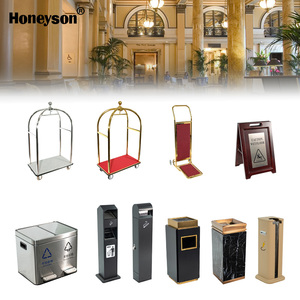
Commercial Kitchen Equipment & Roaster Lineup
Engineered for high-volume commercial catering, hotel chains, and industrial food processing.
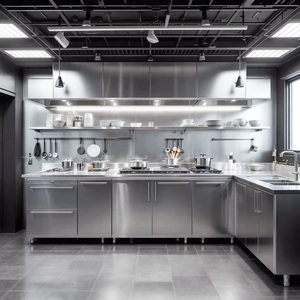
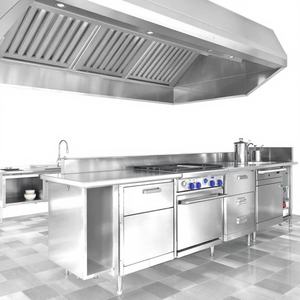
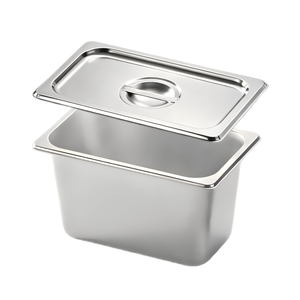
500,000 kg
Monthly Sheet Metal Capacity
19+
Years Manufacturing Excellence
15+
Global Export Markets
100%
CE & EU GN Compliance
Technical Architecture: Metallurgical Integrity in Commercial Roasters
In high-capacity commercial food operations, thermal equipment is subjected to continuous extreme stress, aggressive organic acids, and high-frequency sanitation routines. A CE certified commercial stainless steel roaster must be designed not merely as a cooking vessel, but as a high-precision thermodynamic heat exchanger. Structural durability depends heavily on alloy composition, sheet thickness, deep-drawing stress distribution, and corrosion-resistant surface passivization.
Our manufacturing architecture utilizes premium grade AISI 304 (18/8 Chrome-Nickel) and surgical-grade AISI 316 austenitic stainless steels. Compared to lower-tier ferritic steels (such as 430 grade) or unpassivated 201 alloys, AISI 304 provides superior tensile strength under thermal expansion and exceptional resistance to intergranular corrosion caused by high-salinity marinades and acidic basting agents at temperatures exceeding 300°C.
Information Gain Insights: Commercial roasters manufactured with wall thickness below 1.2mm suffer from rapid thermal warping, uneven radiant distribution, and premature weld failure. Standardizing on 1.5mm–2.5mm deep-drawn AISI 304 steel extends operational lifespan by up to 300% in continuous 24/7 commercial kitchens.
Metallurgical Grade Comparison Matrix for Commercial Roasters
| Stainless Alloy Standard | Chemical Composition (Cr / Ni / Mo) | Thermal Conductivity (W/m·K) | Corrosion Resistance Score | Recommended Commercial Application |
|---|---|---|---|---|
| AISI 304 (1.4301) | 18% Cr / 8% Ni / 0% Mo | 16.2 (at 100°C) | High (Exceptional against food acids) | Standard Heavy-Duty Commercial Roasters & GN Pans |
| AISI 316 (1.4401) | 16% Cr / 10% Ni / 2.0% Mo | 16.3 (at 100°C) | Maximum (Resistant to marine & high-salt environments) | High-Salinity Industrial Roasters & Seafood Steamers |
| AISI 201 (Custom Blend) | 16% Cr / 1.5% Ni / High Mn | 15.0 (at 100°C) | Moderate (Susceptible to pitting over time) | Budget Light-Duty Accessories & Dry Holding Units |
CE Compliance & European Regulatory Standards
Exporting commercial roasters to European and international markets mandates strict adherence to the CE marking protocol. CE certification verifies that the thermal equipment complies with essential health, safety, and environmental protection directives:
- Gas Appliances Regulation (EU) 2016/426 (GAR): For gas-fired commercial roasters, ensuring total combustion efficiency, low NOx emissions, flame-failure safety response times under 2 seconds, and zero gas leakage risks.
- Low Voltage Directive (LVD) 2014/35/EU: For electric rotisserie and convection-assisted roasters, guaranteeing dielectric insulation integrity, ground bonding safety, and thermal overload protection up to 400°C.
- Framework Regulation (EC) No 1935/2004: Guaranteeing that food contact surface materials do not transfer chemical constituents into food in quantities that endanger human health or alter food flavor profiles.
Commercial Product Recommendations & System Architectures
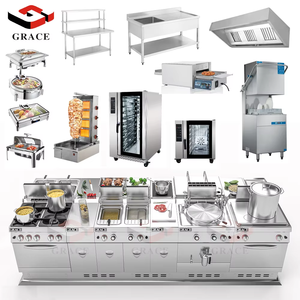
Selecting the optimal commercial roaster system requires evaluating total thermal energy transfer, volume throughput per hour, kitchen space footprint, and modular compatibility with standard European Gastronorm (GN) dimensions (e.g., GN 1/1, GN 1/2, GN 2/1).
Convection Gas Roasters
Designed for rapid searing and uniform heat penetration. Utilizing dual infrared gas burners with micro-perforated burner plates to maximize radiant heat conversion while reducing LPG/NG consumption by up to 22%.
Electric Heavy-Duty Roasters
Featuring precision PID digital thermostatic control capable of holding temperature tolerances within ±1.5°C. Fitted with encased incoloy heating elements to withstand thermal shock during cold pan loading.
Modular GN Integrated Roasters
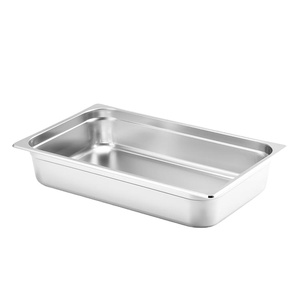
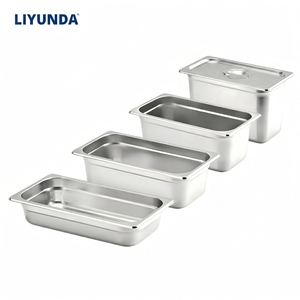
Engineered for seamless integration with standardized GN pans (1/1, 1/2, 1/3, 1/4 standard depths up to 150mm). Deep-drawn seamless corners prevent bacterial harbor points and simplify automated cleaning.
For high-throughput commercial enterprises—such as hotel banquet kitchens, commercial rotisseries, and industrial food processing plants—our OEM engineering department offers customized internal air-baffle design, motorized heavy-duty spit rotisserie assemblies, and automated grease-separation drawers.
Future Procurement & Market Trends (2025–2030 Analysis)
Global sourcing managers for commercial kitchenware and hotel equipment are re-evaluating supply chain resilience, total cost of ownership (TCO), and strict carbon footprint mandates. The commercial roasting equipment sector is undergoing structural evolution driven by three primary technological trends:
1. Transition Toward Carbon-Neutral Manufacturing & Decarbonization
European and North American procurement standards now prioritize suppliers equipped with clean energy manufacturing chains. Utilizing cold-rolled stainless steel sheets produced via electric arc furnace (EAF) recycling methods reduces scope 3 emissions significantly. B2B buyers now request Environmental Product Declarations (EPDs) alongside standard CE and ISO documentation.
2. Integration of Smart IoT Sensors & Predictive Thermal Monitoring
The next generation of commercial stainless steel roasters incorporates embedded high-temperature micro-sensors. These sensors continuously monitor heat distribution across GN pan surfaces, transmitting telemetry to kitchen management networks to eliminate cold spots, optimize roasting times, and minimize food shrinkage loss.
3. Supply Chain Consolidation & Direct OEM Rolling Facility Partnerships
Procurement directors are shifting away from third-party trading intermediaries in favor of direct OEM manufacturing partnerships with integrated metal processing capabilities. Sourcing from manufacturers with parent-company sheet rolling facilities (processing over 500,000 kg of raw material monthly) guarantees raw material consistency, protection against global steel price spikes, and rapid tooling modification cycles.
Enterprise Advantage: Vertical Integration & OEM Capacity
As an ISO-certified stainless steel commercial kitchenware manufacturer with over 19 years of global export leadership across 15+ countries, our manufacturing ecosystem provides unparalleled scale, quality consistency, and private-label customization.
Raw Material Advantage
Direct integration with our parent rolling mill facility outputting 500,000 kg monthly ensures uninterrupted access to prime-grade AISI 304 and 316 stainless steel coils.
In-House Tooling & Die Making
Our dedicated toolmakers design, machine, and maintain complex deep-drawing dies, reducing client prototype development cycles from months to under 14 days.
Rigorous Quality Assurance & Lab Testing
Every commercial roaster batch undergoes spectro-analysis for chemical alloy validation, hydrostatic leak testing, thermal shock testing, and salt spray salt-mist chamber exposure.
Global Certification Compliance
Fully compliant with CE, RoHS, REACH, BSCI, and ISO 9001:2015 standards, satisfying all customs clearance requirements for EU, Middle East, and East Asian ports.
Procurement FAQ: Technical & Sourcing Inquiries
Q1: What specific CE directives apply to custom commercial gas vs. electric roasters?
Commercial gas roasters must comply strictly with the Gas Appliances Regulation (EU) 2016/426 (GAR) and EN 203-1 standards for commercial catering equipment. Electric units must satisfy the Low Voltage Directive (LVD) 2014/35/EU and Electromagnetic Compatibility (EMC) Directive 2014/30/EU. Both systems must carry full EC Type Examination Certificates issued by accredited Notified Bodies.
Q2: How does deep-drawing manufacturing compare to welded assembly in commercial roasters?
Deep-drawn roaster pans are cold-formed from a single continuous sheet of stainless steel under hydraulic press forces exceeding 500 tons. This process eliminates internal weld seams, providing a smooth radius corner profile that eliminates bacterial accumulation zones, facilitates automated washing, and prevents stress-corrosion cracking along weld heat-affected zones (HAZ).
Q3: Why is AISI 304 preferred over AISI 201 for heavy-duty commercial roasting applications?
AISI 304 contains a minimum of 8% Nickel, establishing a stable austenitic molecular structure that resists high-temperature oxidation up to 870°C and guards against pitting corrosion from sodium chloride (salt) present in food. AISI 201 substitutes manganese for nickel; while initial tensile strength is high, 201 rapidly oxidizes under continuous commercial roasting thermal cycles, leading to surface pitting and rust.
Q4: What is the standard lead time for OEM private-label tooling and bulk production?
Thanks to our in-house die-making facility, 3D CAD/CAM prototyping and custom deep-drawing die fabrication are completed within 14 to 21 working days. Upon sample sign-off, standard bulk production lead times range from 25 to 35 days for full container loads (FCL), backed by our 500,000 kg monthly sheet rolling capacity.
Q5: How do you ensure surface passivization and cleanability standards (NSF / EN 1672-2)?
Following deep drawing and fabrication, all roaster components undergo ultrasonic degreasing, electro-polishing, and nitric-citric acid chemical passivation. This removes free iron particles introduced during tooling contact, forming a chromium oxide passive film (minimum 2.0nm thickness) that satisfies European EN 1672-2 hygiene requirements for food processing machinery.
Q6: Can equipment designs be customized to fit regional kitchen dimensions (e.g., US vs. EU GN Standards)?
Yes. We manufacture both standardized European Gastronorm sizes (GN 1/1, 1/2, 1/3, 2/1) and traditional US full-size/half-size steam table pan dimensions. Our engineering team can adjust edge profiles, anti-jam stacking lugs, and handles to match your regional market specs.
Partner with a World-Class Commercial Roaster Manufacturer
Connect directly with our engineering team to request technical specifications, custom tooling quotes, or CAD consultations for your OEM/ODM projects.