
Featured Commercial Stainless Steel Kitchenware Range
Precision-engineered for hotel equipment, fast-food chains, industrial catering, and commercial food container applications.

Star Hotel Supplies Full Set Eco-Friendly Stainless Steel Hotel Equipment
- Material: AISI 304 / 201 Stainless Steel
- Finish: Satin / Mirror Polish
- Scope: Complete Guestroom & Banquet Equipment
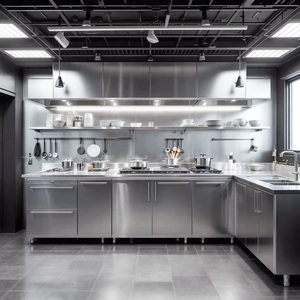
Customized Commercial Restaurant Stainless Steel Kitchen Set Up
- Customization: Full Modular CAD/CAM Layout
- Durability: Heavy-Duty Gauge Sheet Metal
- Certification: NSF & CE Compliant
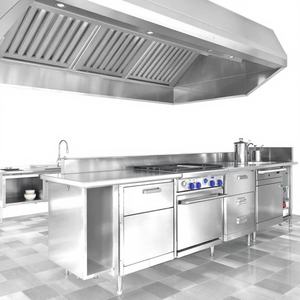
Professional Commercial All-in-One Stainless Steel Kitchenware Design
- Application: Hotel & Restaurant Main Kitchens
- Process: Seamless Deep Drawing & TIG Welding
- Feature: Anti-Bacterial Hygiene Surface
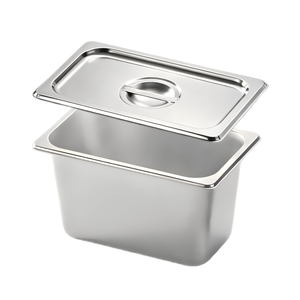
Liyunda 1/4 150mm Stainless Steel Gastronorm GN Pan with Lid
- Standard: EN 631-1 EU Gastronorm Spec
- Depth: 150mm (High Capacity)
- Options: AISI 304 / 201 with Air-tight Lid
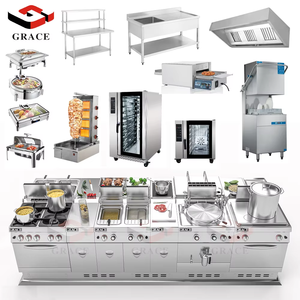
GRACE Commercial Stainless Steel Kitchen Set for Fast Food & Catering
- Target: Fast Food Chains & Industrial Catering
- Material: Food-Grade 304 Stainless Steel
- Design: High-Volume Ergonomic Workflow
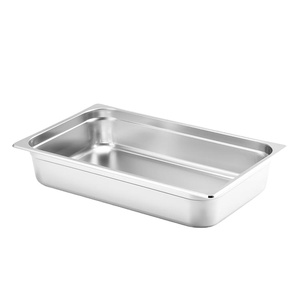
Commercial 1/1 Gastronorm Food Container Pan for Hotels & Gelato
- Dimensions: 530 x 325 mm Standard Size
- Thermal Range: -40°C Cryogenic to +300°C Bake
- Edge Tech: Anti-Jam Stacking Rim Design
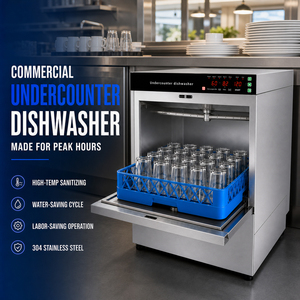
Under Counter Commercial Dishwasher & Automatic Cup Glass Washer
- Core Shell: Heavy 304 Stainless Steel Frame
- Efficiency: High-Temp Thermal Sanitization
- Application: Bars, Cafes, Commercial Kitchens
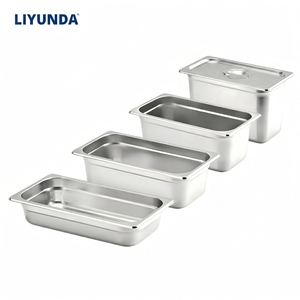
Liyunda EU Standard 1/3 Gastronorm Stainless Steel Buffet Container
- Compliance: European Standard Food Code
- Thickness: 0.6mm - 0.8mm Gauge Options
- Corner Tech: Smooth Punching Easy-Clean Radius
1. Global Market Analysis & Future B2B Procurement Trends (2025–2035)
The global commercial kitchenware and food service equipment market is undergoing a structural transition. Sourcing managers and B2B buyers are pivoting from localized, single-item purchasing toward integrated OEM manufacturing clusters in China. Driven by stringent international hygiene standard updates (NSF/ANSI 2, LFGB, and EC 1935/2004), enterprise procurement requires detailed metallurgical transparency and high-precision deep drawing capabilities.
Key Procurement Shift Drivers in Commercial Stainless Steel Manufacturing:
A. Demand for High-Yield Modular Gastronorm Systems (EN 631-1 Standard): Modern commercial kitchens require exact dimensional uniformity across food pans, steam tables, and refrigerated prep stations. Precision cold-rolling and automated hydraulic stamping eliminate micro-variations, ensuring anti-jam nesting capabilities and maximum thermal conduction speed.
B. Circular Supply Chains and Traceable Metallurgy: Global brands require raw material traceability. Leading Chinese manufacturers now integrate raw steel rolling, cold drawing, and surface passivating under a unified ISO-certified system. Using recycled 304 and 316 austenitic stainless steel decreases carbon footprints without compromising corrosion resistance.
C. Growth of High-Durability PVD Coating & Matte Finishes: Beyond classical electropolished and satin surfaces, commercial hospitality purchasing shows a 34% year-over-year surge in Physical Vapor Deposition (PVD) coated stainless steel kitchenware. Titanium Nitride (TiN) coatings provide scratch resistance and elevated aesthetics for front-of-house buffet servers and luxury hotelware.
Core Technological Capabilities & OEM Standards
How our advanced deep drawing, metallurgical control, and automated surface finishing deliver distinct information gain and product superiority.
Deep Drawing Stamping
Utilizing 1,000-ton hydraulic presses and automated multi-stage die forming to craft deep-drawn stock pots, bowls, and GN pans with uniform wall thickness and zero material stress cracking.
Passivation & Surface Roughness
In-house chemical pickling and electropolishing achieve surface roughness levels of Ra ≤ 0.2µm, creating a self-healing Chromium Oxide (Cr₂O₃) layer that prevents bacterial adhesion.
Automated Robotic Welding
TIG and Laser seam welding for commercial dishwasher frames, worktables, and under-counter units. Delivers structural integrity under extreme vibration and high thermal cycling.
2. Technical Comparison Matrix: Stainless Steel Grade Selection for Commercial Kitchens
Selecting the appropriate stainless steel alloy grade is vital for optimizing cost-to-performance ratios and ensuring compliance with regional food safety regulations. Below is our engineering grade breakdown:
| Alloy Grade | Nominal Composition | Corrosion Resistance | Pitting Resistance (PREN) | Ideal Commercial Applications |
|---|---|---|---|---|
| AISI 304 (18/8) | 18% Cr, 8% Ni | Excellent (High Humidity / Organic Acids) | 18.0 - 20.0 | Gastronorm GN Pans, Stock Pots, Food Containers, Dishwasher Tanks |
| AISI 316L (18/10/2) | 16-18% Cr, 10-14% Ni, 2-3% Mo | Superior (Saline, High Salt, Acidic Foods) | 23.0 - 25.0 | Marine Catering Equipment, High-Saline Sauce Cooking Vessels |
| AISI 201 (J1/J4) | 14-16% Cr, 1-1.5% Ni, 8-10% Mn | Moderate (Dry Storage / Non-Acidic) | 14.0 - 15.5 | Cost-Sensitive Hotel Trolleys, Dining Trays, Outer Structural Covers |
| AISI 430 (Ferritic) | 16-18% Cr, 0% Ni | Basic (Requires dry environments) | 16.0 - 17.5 | Induction Cookware Bottom Plates, Magnetic Cutlery Holders |
Note on PREN (Pitting Resistance Equivalent Number): Calculated as PREN = %Cr + 3.3(%Mo) + 16(%N). Higher values indicate enhanced resistance to localized pitting corrosion in chloride-rich commercial dishwashing and high-salt cooking environments.
3. The OEM/ODM Custom Design Manufacturing Protocol
As a leading Chinese custom stainless steel kitchenware manufacturer, our engineering workflow integrates modern CAD/CAM software, 3D Finite Element Analysis (FEA) for deep draw stress simulation, and rapid tooling creation.
Phase 1: Design for Manufacturability (DFM) & Tooling Engineering
Before launching physical production, our engineers conduct DFM evaluations to optimize draw ratios, corner radiuses, and wall thickness uniformity. Standard drawn items (like 1/1 GN pans or custom deep colanders) undergo metal thinning analysis to prevent tensile failure during high-speed hydraulic stamping.
Phase 2: In-House Precision Mold Fabrication
Operating dedicated CNC machining centers and Wire EDM cutting equipment, our tooling department crafts high-hardness alloy steel dies (Cr12MoV / D2 steel). This internal integration reduces tooling lead times to 7–14 business days while guaranteeing dimensional accuracy to within ±0.01mm.
Phase 3: Multi-Stage Stamping, Annealing, & Seamless Joining
Complex kitchenware components undergoing severe deep drawing undergo intermediate bright annealing in nitrogen-shielded furnaces. This stress-relief treatment restores austenite crystalline ductility, preventing season cracking. Seamless robotic TIG welding ensures smooth, radius-ground internal corners that eliminate food particle entrapment points.
Phase 4: Surface Passivation & Quality Audit
All finished products are treated in automated citric/nitric acid passivation baths to generate an impermeable passivation layer. Quality control specialists verify passivation integrity via Salt Spray Testing (ASTM B117 standards) exceeding 72 to 120 hours of continuous salt fog exposure with zero oxidation pitting.
Why Partner with Our Custom Kitchenware Manufacturing Hub?
Direct factory vertical integration delivers significant cost reductions, robust supply chain resilience, and global export security.
Vertically Integrated Raw Steel Rolling
Unlike assembly-only vendors, our parent production footprint includes an in-house cold-rolling mill processing 500,000 kg of stainless steel coils monthly. We control steel purity, grain structure, and gauge tolerance from source melt to finished product.
Global Compliance & Factory Audits
Our manufacturing facilities hold ISO 9001:2015, ISO 14001, BSCI, and NSF International certifications. We routinely accommodate third-party factory inspection audits by SGS, TÜV Rheinland, and Intertek.
Private Labeling & OEM Packaging
Complete OEM services including laser logo marking, custom retail color box engineering, barcode labeling, and heavy-duty export master carton reinforcement for Amazon FBA or international distributor supply chains.
Frequently Asked Questions (FAQ) for B2B Importers
Direct engineering and commercial answers to clear your sourcing roadmap.
What are the main price and performance differences between 304 and 201 stainless steel GN pans?
AISI 304 contains 8% Nickel, delivering superior resistance against organic acids, salt corrosion, and continuous moisture, making it obligatory for hot food display, NSF food contact, and heavy commercial kitchens. AISI 201 replaces nickel with manganese; it offers high yield strength at a ~25-30% lower raw material cost, ideal for dry storage, bus bins, or budget-sensitive food court tray setups.
What is the lead time for custom OEM tooling and sample approval?
For custom deep-drawn parts or proprietary cookware designs, initial 3D CAD modeling and DFM analysis take 48 hours. Mold fabrication requires 7 to 14 working days depending on die complexity. Golden pre-production samples are dispatched via express courier immediately following trial stamping out of our test press.
How do you prevent anti-jam issues when stacking Gastronorm food pans?
Our GN pans feature precision-engineered anti-jam stacking shoulders along the upper peripheral shoulder. This prevents vacuum lock and metal-to-metal wedge friction when containers are nested dry or wet, significantly speeding up commercial kitchen dishwashing and line prep operations.
What certificates can you provide for European and North American customs clearance?
We provide full food contact compliance documentation, including FDA 21 CFR test reports for North America, LFGB and EC 1935/2004 for Europe, alongside NSF/ANSI Standard 2 certifications. Material Mill Test Certificates (MTC to EN 10204 3.1) are supplied with every shipment batch.
What Minimum Order Quantities (MOQ) do you require for custom OEM projects?
Standard catalog items (like standard 1/1, 1/2, 1/3, 1/4 GN pans) carry low MOQs starting at 500 units per size. Custom engineered tools or proprietary custom-stamped components typically require 1,000 to 3,000 units depending on raw steel coil width and press tonnage requirements.
How does your factory ensure uniform surface finish across large production runs?
We utilize automated 6-axis robotic polishing arms paired with computerized slurry feed systems. Surface roughness is continuously monitored using portable surface profilometers to verify that every batch stays within the specified Ra threshold before final ultrasonic washing and vacuum packaging.