
Featured Deep Drawn & Custom Metal Components
Engineered to exact geometric tolerances, high draw ratios, and flawless surface finishes for global commercial, hotelware, and industrial applications.

Eco-Friendly Stainless Steel Hotel Equipment Sets
Deep-drawn stainless steel combined with durable polymers for heavy-duty commercial hospitality applications.
Inquire Now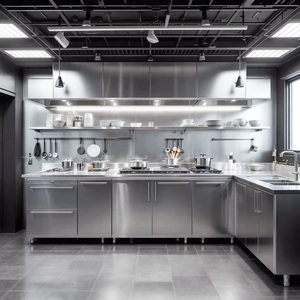
Custom Commercial Restaurant Stainless Equipment
Precision-stamped and drawn kitchen units manufactured to strict sanitation and structural standards.
Inquire Now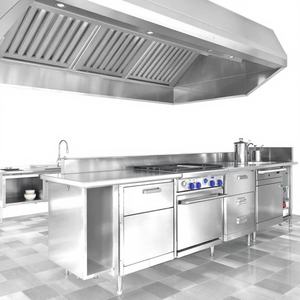
All-in-One Professional Kitchenware System Design
Integrated deep drawn components engineered for seamless assembly, thermal resistance, and long service life.
Inquire Now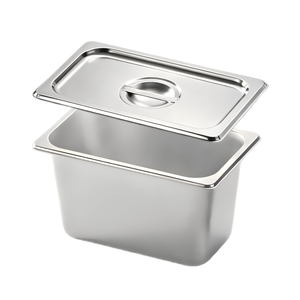
Standard 1/4 150mm Stainless Steel GN Gastronorm Pans
High-depth draw execution utilizing premium AISI 201/304 steel with reinforced anti-jamming corner radiuses.
Inquire Now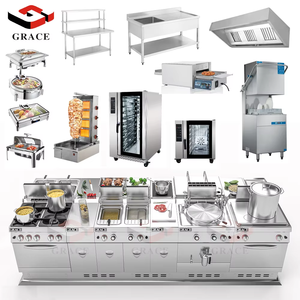
Industrial Catering & Commercial Fast Food Sets
Heavy-gauge deep drawn metal modules featuring seamless corrosion-resistant passivation treatment.
Inquire Now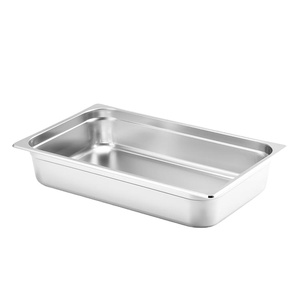
1/1 Deep Drawn Gastronorm Pans (AISI 304/201)
Precision smooth-drawn interior walls optimized for commercial food preparation, freezing, and heating.
Inquire Now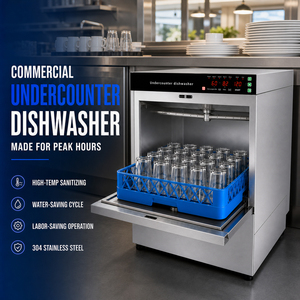
Automatic Commercial Stainless Steel Dishwasher Housing
Complex sheet metal deep drawing and internal chamber stamping designed for high-vibration sealing.
Inquire Now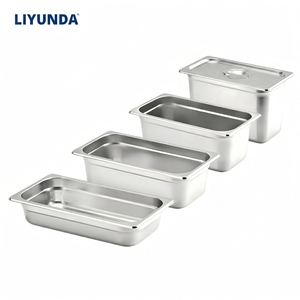
EU Standard 1/3 Gastronorm Deep Drawn Containers
Calibrated wall-thickness distribution guaranteeing zero stress-cracking under intense cyclic thermal shifts.
Inquire Now1. Executive Summary: The Technical Physics of Deep Drawn Sheet Metal Parts
Deep drawing is a fundamental sheet metal forming process where flat sheet metal blanks are radially drawn into a forming die by the mechanical action of a punch. The transition from a two-dimensional planar blank into a three-dimensional hollow axisymmetric or box-shaped container involves complex plastic deformation mechanics. For B2B procurement teams, engineering specifiers, and global brand managers sourcing from lead manufacturing hubs like China and India, mastering the metallurgy and mechanical forces involved in deep drawing is critical to optimizing unit cost, longevity, and structural fidelity.
During the deep drawing process, the metal undergoes simultaneous tension and compression. The central region of the blank forms the base of the component, experiencing planar tension, while the outer annular region (the blank holder zone) experiences severe circumferential compressive stress. If the blank holder force (BHF) is insufficient, the metal buckles under compression, causing severe wrinkling. Conversely, if the BHF is excessively high, frictional resistance between the die, blank, and punch increases tensile stress on the cup wall, causing necking, thinning, or complete tensile fracture at the punch radius.
Technical Insight: Superior deep drawing manufacturers optimize the Limiting Drawing Ratio (LDR)—the ratio of the maximum blank diameter to the punch diameter—by carefully calculating the material's normal strain ratio (r-value) and strain hardening exponent (n-value). Premium stainless steel alloys (such as deep-drawing grade AISI 304L) yield r-values exceeding 1.2, allowing single-draw depth-to-diameter ratios unattainable with commercial-grade carbon steels.
2. Vertically Integrated Enterprise Strengths & Manufacturing Capabilities
Procuring deep drawn components demands reliable vendor partnerships backed by verifiable infrastructure. A premier OEM manufacturer must maintain absolute mastery over every stage of production—from raw metallurgical handling to finalized passivated surface finishes.
500 Ton Capacity Raw Material Mill
Direct access to cold-rolled stainless steel coil processing guarantees strict thickness tolerance (±0.02mm).
In-House CAD/CAM Die Tooling
Dedicated tooling engineers utilize CAD progressive die simulation to prevent springback and wall thinning.
ISO & Compliance Certified
Rigorous audit trails spanning ISO 9001, CE, RoHS, REACH, and BSCI social compliance protocols.
Operating a vertically integrated production ecosystem gives leading exporters a distinct cost and quality advantage. By managing an internal cold-rolling facility producing over 500,000 kilograms of raw metal sheet monthly, raw coil variability is completely eliminated before blanking begins. This level of supply chain integration allows precise control over grain size (ASTM grain size 7 to 8), yield strength, and surface roughness (Ra values below 0.4 µm), ensuring high-draw operations proceed without micro-cracking.
Material Engineering Specifications for Deep Drawing Alloys
| Stainless Steel Grade | Tensile Strength (MPa) | Yield Strength (MPa) | Elongation at Break (%) | Normal Strain Ratio (r-bar) | Primary Application Engineering |
|---|---|---|---|---|---|
| AISI 304 (EN 1.4301) | 520 - 720 | 210 min | ≥ 45% | 1.20 - 1.35 | Deep drawn GN pans, euro bowls, commercial kitchen equipment components. |
| AISI 304L (EN 1.4307) | 480 - 680 | 190 min | ≥ 50% | 1.30 - 1.50 | Ultra-deep drawn vessels requiring post-draw welding without carbide precipitation. |
| AISI 316L (EN 1.4404) | 500 - 700 | 200 min | ≥ 40% | 1.15 - 1.30 | Chemical tanks, severe marine hardware, medical deep drawn shells. |
| AISI 201 (High Mn Austenitic) | 650 - 850 | 350 min | ≥ 35% | 0.95 - 1.10 | Cost-optimized food containers, light drawn housings, decorative covers. |
| AISI 430 (Ferritic EN 1.4016) | 450 - 600 | 260 min | ≥ 22% | 1.00 - 1.25 | Induction-compatible cookware bottoms, appliance outer panels (zero nickel). |
3. Technological Advancement & Development Trends in Deep Drawing
The global deep drawing industry is undergoing a structural transition toward digitilized manufacturing, micro-alloying, and advanced press control dynamics. Manufacturers operating in China and Asia are investing heavily in automated servo-hydraulic presses to replace legacy mechanical flywheel presses. Servo-press technology permits customizable punch velocity profiles within a single stroke, slowing down precisely at the deformation threshold to allow metal crystal structures to slip without tearing, then accelerating on the return stroke to boost operational throughput.
Key Technological Paradigms Driving the Market:
- Finite Element Analysis (FEA) Pre-Forming Simulation: Utilizing software platforms like AutoForm and Dynaform, die designers simulate strain distributions, predicts localized thinning percentage, and detect potential wrinkling before cutting single block of tool steel (D2/SKD11). This reduces tool debugging cycles from months to days.
- Hydroforming Integration: Substituting solid punches with pressurized fluid media allows for complex, asymmetrical geometries with high depth ratios, eliminating surface marring on polished stainless steel blanks.
- Green Lubrication Systems: Moving away from heavy chlorinated paraffin lubricants toward bio-degradable, water-soluble synthetic polymers that wash cleanly off drawn parts at 40°C, drastically lowering VOC emissions and water treatment costs.
- Automated Laser Trimming & Beading: Combining high-tonnage multi-stage deep drawing with 5-axis fiber laser robotic trimming centers to execute precision flange removal, side hole punching, and lip curling in a unified production cell.
4. Strategic Procurement & Global Supply Chain Trends
Procurement directors and B2B buyers sourcing custom sheet metal parts face shifting global trade patterns, carbon border adjustments (such as CBAM in the European Union), and rising demands for traceability. Sourcing strategy is shifting from pure unit-cost bidding to total cost of ownership (TCO) models that account for raw material traceability, tooling amortisation, and compliance risk management.
Near-Zero Defect Mandates
Global OEMs require suppliers to maintain PPM (Parts Per Million) failure rates below 50, supported by automated CMM optical scanning at line exits.
Modular OEM Tooling Ownership
Buyers increasingly negotiate shared tooling investment contracts where die sets are custom-engineered, validated, and held under strict client NDA protocols.
Carbon-Traceable Metal Coils
Full mill test certificates (MTC according to EN 10204 3.1) tracing heat numbers, chemical melt compositions, and recycled content percentages are mandatory for EU/US customs clearings.
Furthermore, standardizations such as the European Gastronorm standard (EN 631-1) for commercial food containers demand extreme consistency. A deviation of just 0.5mm in stackable rim profiles can cause severe jam-ups on automated catering lines. Consequently, leading exporters utilize progressive deep draw dies with integrated sensors that monitor blank thickness continuously, making real-time micro-adjustments to blank holder pressures.
5. Enterprise Advantages: Why Partner With Experienced Manufacturers
When selecting a manufacturing partner for complex deep drawn components, buyers benefit immensely from facilities that merge metallurgical raw material control with advanced die design capabilities. Over 19 years of OEM export experience across 15+ countries translates to a mature operational framework designed to mitigate international sourcing risks.
Key operational highlights include:
- Vertical Integration: Operating internal cold-rolling lines prevents raw sheet supply bottlenecks and insulates clients from volatile stainless steel price surges.
- Dedicated Metallurgical Testing Laboratory: Equipped with spectrographic analyzers, Erichsen cupping testers, micro-Vickers hardness testers, and salt-spray corrosion chambers to ensure every batch exceeds standard corrosion resistance thresholds (ASTM B117).
- Rapid Tooling Prototyping: Utilizing soft tooling techniques for pilot samples within 14 days, allowing fast engineering validation before committing to high-volume multi-station progressive hard dies.
- Comprehensive Surface Finishing: In-house electropolishing, mechanical mirror polishing (8K finish), satin brush finishing, and PVD titanium coating lines provide one-stop component delivery.
6. B2B Procurement FAQ: Technical & Sourcing Queries
Require Custom Deep Drawn Sheet Metal Engineering?
Submit your CAD drawings (.STEP, .IGES, .DWG) or component samples. Our engineering team provides DFM feedback and competitive cost quotes within 24 hours.