


Industrial Technical Whitepaper: Scalable High-Volume Sheet Metal Manufacturing in China
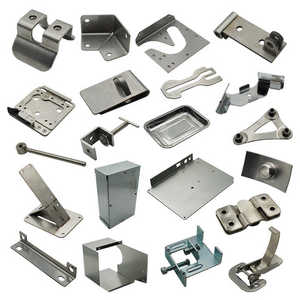
In global supply chain management, purchasing high-volume custom sheet metal components requires a balance between precision engineering, material consistency, and unit cost optimization. China's sheet metal manufacturing ecosystem has transformed from low-cost manual workshops into digitized, highly automated Industry 4.0 smart factories. Today’s top-tier Chinese manufacturers integrate progressive die stamping, 12kW+ fiber laser cutting, automated robotic welding, and automated powder coating lines into unified production workflows capable of delivering millions of parts per month with near-zero failure rates.
Core Procurement Takeaway: Transitioning high-volume component sourcing to China-based OEM manufacturers yields up to a 35% reduction in total landed cost (TCO). This efficiency stems from automated multi-stage tooling, local access to raw mill stock (304SS, 316L, SPCC, SECC, Aluminum alloys), and streamlined logistics infrastructure.
1. Advanced Engineering Processes for High-Volume Production
To achieve optimal production throughput while retaining micro-meter tolerances, top-tier sheet metal exporters leverage three main production paradigms depending on structural geometry and batch sizes:
Progressive Die Stamping
Ideal for runs exceeding 50,000 units. Stamping presses (ranging from 80 to 800 tons) perform punching, bending, blanking, and deep drawing sequentially in a single automated die stroke, minimizing per-unit labor costs.
Fiber Laser & CNC Bending
Used for medium-to-high volumes with complex geometric cutouts. Ultra-fast optical fiber lasers cut at speeds up to 60m/min, feeding directly into multi-axis CNC press brakes equipped with laser angle measurement systems.
Robotic Assembly & Welding
Automated MIG, TIG, and spot-welding robots deliver repeatable joint integrity. Integrated visual sensors verify bead quality, structural stability, and joint alignment in real-time without stopping the line.
2. Material Selection Matrix for OEM Fabrication
Selecting the proper alloy is critical for balancing mechanical yield strength, corrosion resistance, surface finish capability, and overall fabrication cost. Below is a technical cross-reference matrix utilized by our engineering department for global B2B clients:
| Material Grade | Tensile Strength (MPa) | Corrosion Resistance | Primary Applications | Machinability & Formability |
|---|---|---|---|---|
| SUS304 / AISI 304 | ≥ 515 | High (Austenitic) | Kitchenware, Medical, Food Equipment | Excellent deep drawing & stamping |
| SUS316 / AISI 316L | ≥ 620 | Ultra-High (Marine/Chemical) | Chemical Processing, Outdoor Marine Hardware | Good formability, requires higher tonnage |
| SPCC (Cold Rolled Steel) | ≥ 270 | Low (Requires Plating/Powder Coating) | Automotive Enclosures, Appliance Panels | Superior bending and punch accuracy |
| AL 6061-T6 | ≥ 310 | Medium-High | Aerospace, Heatsinks, Structural Framing | Ideal for CNC milling & structural laser cuts |
| C1100 Pure Copper | ≥ 200 | Medium | Busbars, Electrical Terminals, Power Modules | High conductivity, soft stamping profile |