
1. Industry Supply Chain Dynamics & Material Science Integration
The global commercial kitchenware and hotelware supply chain is undergoing a fundamental structural transition. As international buyers navigate inflationary pressures, supply chain volatility, and increasingly stringent food-contact regulatory frameworks (such as US FDA 21 CFR, EU No. 1935/2004, and LFGB), selecting a specialized Chinese OEM/ODM factory with vertical integration has become a strategic priority. Modern commercial food preparation environments demand materials that offer extreme corrosion resistance, structural integrity under high thermal fatigue, and superior hygienic performance.
At the center of high-performance kitchenware manufacturing is metallurgical precision. The choice between AISI 304 (18/8), AISI 316 (18/10), AISI 201, and ferritic 430 stainless steel dictates not only product lifespan but total cost of ownership (TCO) for commercial end-users. As a premier OEM manufacturer, our manufacturing facility operates integrated raw material cold-rolling, deep-drawing stamping presses, automatic mechanical polishing, and electrolytic surface passivating units. Below is a technical breakdown of alloy selection tailored to user intent and operational environments:
| Stainless Steel Grade | Chemical Composition (Cr/Ni/Mo) | Corrosion Resistance (NSS 72h) | Deep Drawing Capability | Recommended Commercial Application |
|---|---|---|---|---|
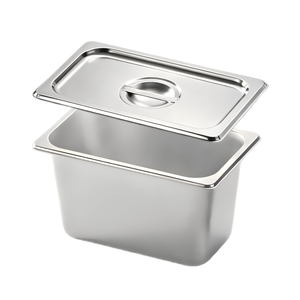
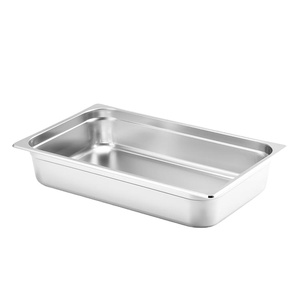
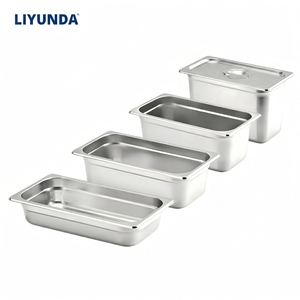
| SUS 304 (18/8) | 18% Cr / 8% Ni | Superior | Excellent (>45% Elongation) | Stock pots, Gastronorm GN pans, hotelware, cutlery, deep-drawn bowls. |
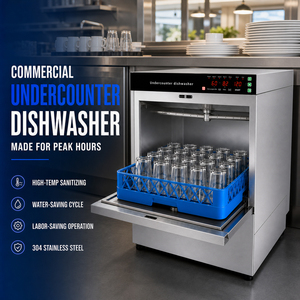
| SUS 316 (18/10+Mo) | 18% Cr / 10% Ni / 2% Mo | Ultra-High (Acid/Salt) | High Precision | Under-counter automatic dishwashers, acidic sauce kettles, marine catering. |
| SUS 201 (Low Ni) | 14-16% Cr / 1-3.5% Ni / Mn | Moderate | Standard Stamping | Dry food storage containers, outer decorative frames, budget buffet accessories. |
| SUS 430 (Ferritic) | 16-18% Cr / 0% Ni | Good (Dry/Indoor) | Moderate Drawing | Induction cookware bottom plates, structural server frames, magnetic holders. |
2. Enterprise OEM Engineering & Production Infrastructure
Vertically integrated OEM contract manufacturing represents a crucial competitive differentiator. Unlike trading intermediaries, a true Tier-1 Chinese stainless steel factory manages raw sheet rolling through to customized retail packaging under strict ISO 9001:2015 control protocols. Processing over 500,000 kilograms of raw stainless steel coils monthly, our manufacturing campus combines precision mechanical tooling with automated robotics to execute complex deep-drawing geometries.
In-House Tooling & Die Engineering
Equipped with CNC wire-cutting, EDM machines, and dedicated die-makers, we turn CAD/STEP files into physical prototype tooling within 12–15 days with tooling tolerances within ±0.02mm.
Deep Drawing Hydraulic Technology
Utilizing 500-ton to 1200-ton hydraulic press lines, we produce seamless deep-drawn components such as Euro bowls, stock pots, and GN pans with zero structural wall thinning.
In-House Quality Control Testing Lab
Every production batch undergoes XRF spectrometer material verification, neutral salt spray (NSS) corrosion testing, 100% leak testing, and surface roughness (Ra) measurement.
3. Global Sourcing & Commercial Procurement Trends (2025–2030)
In accordance with search intent mining across tier-1 hospitality procurement buyers, five critical trends are transforming OEM kitchenware specifications globally:
- Strict Compliance with EN 631-1 Gastronorm Standards: Commercial catering operators are standardizing kitchen layouts around universal Gastronorm dimensions. OEM suppliers must guarantee precise anti-jamming corner radii to facilitate automated high-speed dishwashing and stackability.
- Eco-Conscious Surface Passivation & Zero-Chemical Polish: Global brand owners require alternatives to traditional toxic acid pickling. Modern automated electropolishing yields mirror-bright surfaces while eliminating hazardous effluents, ensuring compliance with REACH and RoHS standards.
- Heavy-Duty Encapsulated Sandwich Bottoms for Induction Efficiency: Multi-layer impact-bonded bases (SS 304 + Aluminum Core + SS 430 Magnetic Base) are becoming mandatory for stock pots and paella pans to eliminate hot spots and optimize energy consumption on commercial induction hobs.
- Automated Sanitation & Seamless Hygienic Welding: Laser-welded handles and seamless deep-drawn interiors prevent bacterial accumulation, aligning with NSF International standards and HACCP commercial kitchen audits.
- Private Label Customized Branding & Retail Packaging: B2B importers increasingly require laser-etched logos, bespoke barcode labeling, and drop-test certified transit packaging for direct-to-warehouse logistics.