
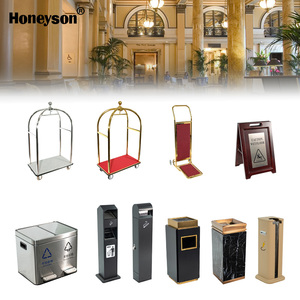
Featured Commercial Kitchenware & OEM Equipment
High-grade austenitic stainless steel supplies engineered for hotel chains, commercial kitchens, food processing units, and global catering brands.
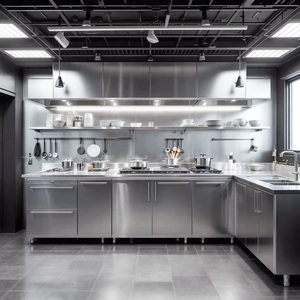
Customized Restaurant Kitchen Setup & Commercial Stainless Steel Equipment
Get Catalog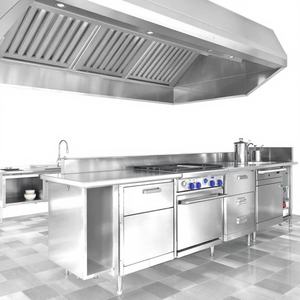
All-in-One Professional Commercial Kitchen Equipment Full Set Engineering
Get Catalog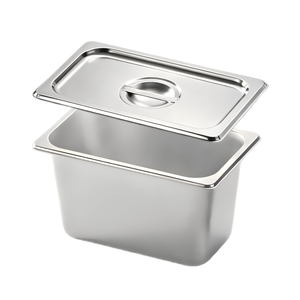
Gastronorm 1/4 150mm GN Pan Stainless Steel Food Container with Lid
Get Catalog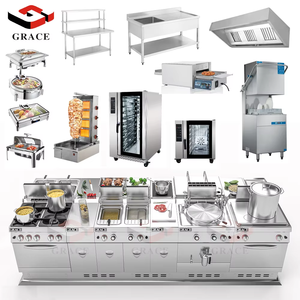
Heavy-Duty Commercial Kitchen Equipment Set for Industrial Catering
Get Catalog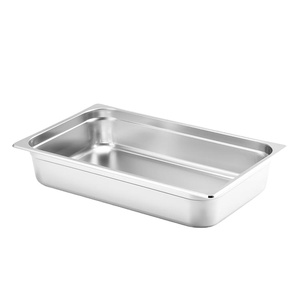
Standard 1/1 European Gastronorm Pan SS304/SS201 Commercial Food Trays
Get Catalog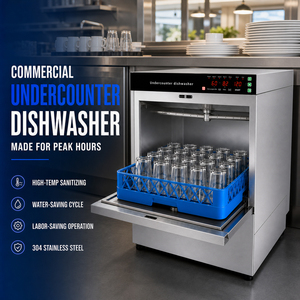
Under-Counter Automatic Stainless Steel Glass & Dishwasher Machinery
Get Catalog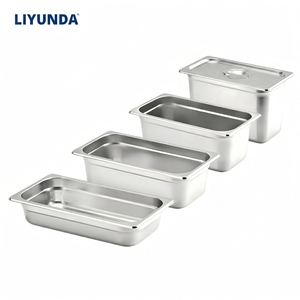
EU Standard 1/3 Stainless Steel Gastronorm Buffet Container System
Get CatalogVertically Integrated Manufacturing Scale & Competence
Backbone infrastructure powered by our parent company's dedicated rolling mills and precision toolrooms. We control every stage of OEM production from cold-rolled steel coils to finished passivated export goods.
19+
Years OEM/ODM Expertise
500,000
kg/Month SS Rolling Output
15+
Global Export Markets
100%
In-House Die Toolroom
ISO 9001
Quality Assurance System
ISO Certified
CE Marking
RoHS Compliant
REACH Certified
BSCI Audited
Lab Tested
Export Grade
Food Grade SS
Engineering Rigor in Commercial Stainless Steel Fabrication
As a specialized contract manufacturer located in Mumbai's prime industrial belt, we bridge product design concepts with mass production efficiency through robust metallurgical science and deep drawing technology.
In-House Raw Material Rolling
Unlike standard fabricators reliant on third-party stockists, our parent manufacturing company processes up to 500 metric tons (500,000 kg) of stainless steel sheet metal monthly. This vertical control ensures consistent gauge thickness, zero batch variance, and superior pricing stability for high-volume B2B orders.
Deep Drawing & Precision Stamping
Equipped with hydraulic presses ranging from 250T to 800T, we specialize in high-draw ratio seamless components including Euro bowls, Gastronorm (GN) pans, stock pots, and deep-drawn kitchenware. Our tooling maintains tight dimensional tolerances compliant with ISO 2768-m standards.
Proprietary Tooling & Prototype Lab
With dedicated in-house die-makers and CAD/CAM re-engineering specialists, we turn initial CAD models or physical samples into production-ready progressive dies within 15–21 days. Rapid prototyping eliminates long lead times for custom private-label branding.
Metallurgical Grade Matrix for Commercial Kitchenware Sourcing
Selecting the right stainless steel alloy balance between corrosion resistance, drawability, and unit cost for commercial kitchen deployment.
| Stainless Steel Grade | Chemical Composition | Corrosion Resistance | Thermal Conductivity | Best Commercial Application |
|---|---|---|---|---|
| AISI 304 (18/8) | 18% Cr / 8% Ni | Exceptional (Passed 96h Salt Spray) | 16.2 W/m·K | Gastronorm Pans, Steam Tables, Heavy Food Prep, OEM Stock Pots |
| AISI 316 (18/10/2) | 16-18% Cr / 10-14% Ni / 2-3% Mo | Superior (Acid & Chloride Proof) | 14.6 W/m·K | Marine Catering Equipment, High-Acid Food Processing, Dishwasher Components |
| AISI 201 (Cu Modified) | 14-16% Cr / 1.5-3.5% Ni / 5.5-7.5% Mn | Moderate (Indoor Dry Storage) | 15.0 W/m·K | Economic Serving Trays, Cutlery Holders, External Hotelware Housing |
| AISI 430 (Ferritic) | 16-18% Cr / 0.75% Ni (Magnetic) | Good (Induction Compatible) | 26.0 W/m·K | Induction Bottom Plates, Worktop Covers, Panel Enclosures |
Future Procurement Trends in Commercial Stainless Steel Kitchenware
Global sourcing directors and commercial kitchen outfitters face shifting regulatory, ecological, and technological demands. Here are the core macroeconomic trends shaping international OEM supply chains.
1. Decarbonization & Green Metallurgy Compliance
With the European Union implementing the Carbon Border Adjustment Mechanism (CBAM) and North American buyers tightening ESG mandates, commercial buyers increasingly favor factories utilizing electric arc furnace (EAF) steel with high recycled scrap ratios (over 75%). Low-carbon mill certification is becoming a mandatory prerequisite for tier-1 hotel contract awards.
2. Standardized Modular Gastronorm Integration
Modern commercial kitchen designs prioritize cross-compatibility across cooking, refrigeration, and transportation units. Strict adherence to European EN 631-1 standard dimensions with anti-jamming stackable rims ensures seamless workflow in high-throughput cloud kitchens and luxury hotel buffets, reducing physical equipment downtime.
3. Advanced Electro-Polishing & Anti-Bacterial Surfaces
Hygiene standards post-pandemic mandate micro-smooth surface topographies. Deep-drawn products finished with electropolishing achieve surface roughness levels of Ra < 0.4 µm, eliminating microscopic crevices where bacteria accumulate and drastically reducing chemical consumption during industrial dishwashing cycles.
4. Supply Chain Resilience & Near-Mill Sourcing
To mitigate geopolitically induced shipping disruptions, international procurement hubs are shifting toward vertically integrated manufacturers located near raw material producers. Single-site operations covering coil rolling, deep drawing, mirror polishing, and export packing eliminate secondary transport delays.
Manufacturing Development Trends in Commercial Kitchenware
How modern stainless steel processing is evolving through automation, robotic finishing, and zero-waste manufacturing engineering.
Automated Servo-Hydraulic Pressing
Transitioning from traditional mechanical presses to CNC servo-hydraulic deep drawing machinery enables real-time pressure profiling during metal deformation. This technical shift minimizes material stress whitening, eliminates micro-fractures in deep cookware pots, and allows thinner gauges to achieve higher structural rigidity.
Fiber Laser Cutting & Robotic TIG Welding
For complex restaurant setup modules and custom under-counter equipment, multi-axis fiber lasers deliver precise cut-outs for handles, drainage channels, and gas fittings without thermal distortion. Automated robotic seam welding yields hermetically sealed joints essential for NSF commercial sanitation compliance.
Eco-Friendly Chemical Passivation
Eliminating traditional hazardous nitric acid baths, progressive factories deploy citric-acid-based passivation combined with ultrasonic cleaning lines. This process enriches the chromium oxide passive layer on stainless surfaces without generating toxic chemical effluents, fully aligning with REACH guidelines.
Commercial Sourcing & Factory OEM FAQ
Direct technical answers for commercial buyers, importers, hotel developers, and supply chain managers.
What is the structural difference between AISI 304 and AISI 201 for Gastronorm (GN) pans?
AISI 304 contains 18% chromium and 8% nickel, rendering it fully austenitic with superior corrosion resistance against organic acids, salts, and high-moisture steam environments standard in commercial kitchens. AISI 201 substitutes a portion of nickel with manganese and copper, offering high yield strength at a lower unit price. For direct food contact, wet steam tables, and hot holding units, SS304 is strongly recommended, whereas SS201 is optimal for dry storage containers, cutlery holders, and external decorative equipment.
How does your factory handle OEM/ODM custom tooling and private label branding?
Our in-house toolroom engineers custom dies directly from 3D STEP/IGES CAD files or physical master samples. Once drawings are approved, we execute die casting, CNC machining, and pilot sampling within 15–20 working days. Brand logos can be applied via fiber laser marking, deep mechanical embossing, or custom packaging design for global export distribution.
What quality assurance standards and lab testing procedures are performed before shipment?
Every production lot undergoes rigorous quality checks: XRF Spectrometry for raw material alloy composition, ASTM B117 Salt Spray Testing (up to 96 hours) for corrosion validation, hydraulic rim pressure testing, and surface roughness (Ra) measurement using contact profilometers. Complete Mill Test Certificates (MTC) according to EN 10204 3.1 are provided with every batch.
What are your typical Minimum Order Quantities (MOQ) and production lead times for B2B export orders?
For standard Gastronorm pans, Euro bowls, and catalog items, our standard MOQ starts at 500 units per specification. For custom deep-drawn OEM components requiring dedicated tooling, the typical MOQ ranges between 1,000 to 3,000 units depending on raw sheet tonnage. Standard production lead time is 25 to 35 days post-sample approval and LC/TT confirmation.
How do your manufacturing facilities assist buyers with anti-dumping duties and global logistics compliance?
Operating from India's primary industrial export corridor in Mumbai, our products benefit from competitive international trade agreements, serving as a reliable alternative to regions subject to heavy anti-dumping surcharges in Europe and North America. We provide complete Form A, GSP Certificate of Origin, ISPM-15 compliant heat-treated wood pallets, and full container load (FCL) packing optimization.
Can you accommodate custom gauge thickness specifications for industrial food machinery parts?
Yes. Because our parent plant operates cold rolling mills, we can supply custom sheet gauges from 0.5mm up to 3.0mm with ultra-tight thickness tolerances (±0.02mm). This eliminates the material stress issues commonly encountered when drawing off-the-shelf commercial sheet metal.
Partner with a Trusted Stainless Steel OEM Exporter
Whether you require full hotel kitchen equipment setups, standardized Gastronorm containers, or custom deep-drawn contract manufacturing, our engineering team delivers precision, competitive raw material pricing, and guaranteed delivery timelines.