
Featured OEM Deep Drawn Metal Shells & Equipment Assemblies
Precision-drawn stainless steel containers, heavy-duty commercial kitchen equipment housings, and custom deep-drawn metal shells manufactured under strict ISO quality standards.

Star Hotel Supplies Full Set Metal & Stainless Steel Equipment Shells
Get Catalog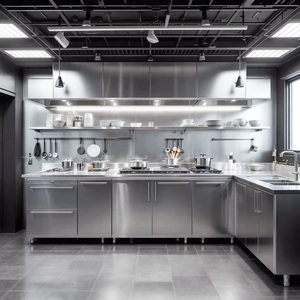
Customized Restaurant Kitchen Stainless Steel Equipment Shell Enclosures
Get Catalog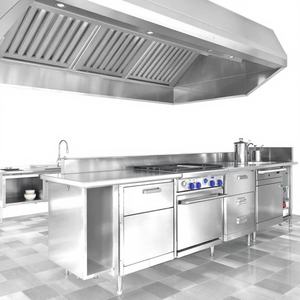
Stainless Steel Professional Commercial Kitchen Equipment Modular Shells
Get Catalog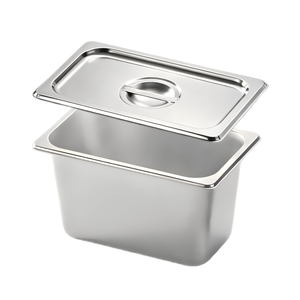
Liyunda 1/4 150mm Gastronorm GN Pan Deep Drawn Metal Shell
Get Catalog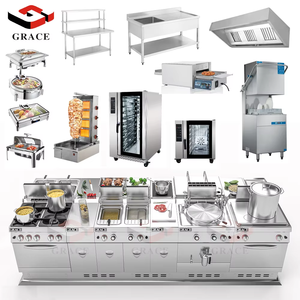
GRACE Commercial Kitchen Equipment & Heavy-Duty Metal Shell Set
Get Catalog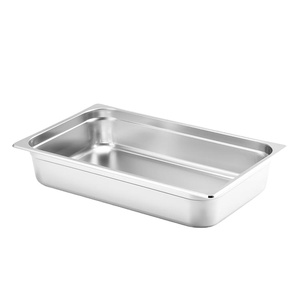
Stainless Steel 1/1 Gastronorm Deep Drawn Metal Shell Container
Get Catalog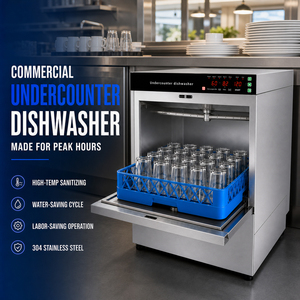
Under-Counter Commercial Dishwasher Stainless Steel Housing Shell
Get Catalog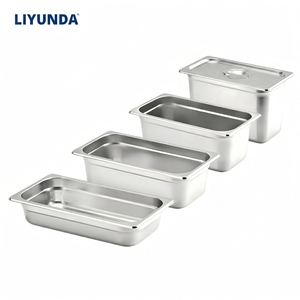
Liyunda Factory EU Gastronorm GN Pan 1/3 Custom Metal Shell
Get CatalogEngineering Excellence in Custom Deep Drawn Metal Shells
Deep drawing metal forming is an essential metallurgical process for modern B2B manufacturing, turning flat sheet metal blanks into complex, seamless three-dimensional hollow metal shells, enclosures, and structural components. As global demand grows for high-integrity, seamless metal bodies across commercial food service, hospitality, HVAC, medical equipment, and automotive industries, evaluating OEM/ODM custom deep drawn metal shells manufacturers requires a deep understanding of metal plasticity, die engineering, work hardening dynamics, and raw material quality control.
Compared to conventional sheet metal fabrication—which relies on cutting, bending, and seam welding—deep drawing offers significant structural advantages. By subjecting sheet metal to high hydraulic or mechanical tonnage within custom-engineered die sets, the metal flows plastically around a punch into a die cavity. This produces a unified, jointless shell with superior structural integrity, leak-proof properties, precise dimensional consistency, and exceptional mechanical resistance. For critical applications such as Gastronorm (GN) food containers, commercial dishwasher chassis, pressure vessel housings, and sanitary metal canisters, deep drawing eliminates weld seams that are prone to microbial accumulation, corrosion, and structural failure.
The Mechanics of Deep Drawing & Tooling Engineering
Designing custom deep drawn metal shells requires controlling multiple mechanical and metallurgical parameters. The transformation of a flat sheet blank into a deep cylindrical, rectangular, or irregular shell involves balanced radial tensile stresses and compressive hoop stresses. Key parameters managed during tooling design and press setup include:
- Limiting Draw Ratio (LDR): The maximum ratio of blank diameter to punch diameter achievable in a single draw pass without tearing. Standard stainless steel grades (such as AISI 304) typically exhibit an LDR of 2.0 to 2.2 under controlled blank holder pressure (BHP).
- Blank Holder Pressure (BHP) Control: Insufficient pressure leads to flange wrinkling due to compressive instability, while excessive pressure restricts material flow, causing tensile failure and wall necking near the punch corner radius. Advanced multi-cylinder hydraulic presses utilize dynamic BHP profiling across the stroke.
- Die & Punch Radius Optimization: Punch corner radii are designed between 4 to 8 times the sheet thickness ($t$) to prevent localized strain concentrations, while die entrance radii are calculated to minimize frictional drag without encouraging flange puckering.
- Annealing Cycles & Strain Hardening: Austenitic stainless steels work-harden rapidly during deep drawing. For deep-shell components requiring draw ratios exceeding the single-stage limit, intermediate bright annealing in hydrogen-nitrogen atmosphere furnaces at 1050°C restores ductility, relieving residual stress prior to secondary redraws.
Material Selection Matrix: Stainless Steels & Alloy Performance
Selecting the optimal material grade is fundamental to balancing deep drawing formability, corrosion resistance, and cost efficiency. Below is an engineering comparison matrix for metals commonly used in OEM metal shell production:
| Material Grade | Tensile Strength (MPa) | Corrosion Resistance | Deep Drawability (PREN) | Primary Industrial Applications |
|---|---|---|---|---|
| AISI 304 (1.4301 / DDQ) | 520 - 720 | High (General Food Grade) | Excellent ($r \ge 1.2$, $n \ge 0.4$) | GN Pans, Hotelware, Dishwasher Basins, Sanitary Shells |
| AISI 316L (1.4404) | 530 - 680 | Superior (Marine/Chemical) | Very Good ($PREN \approx 25$) | Medical Canisters, Marine Enclosures, Chemical Processing Shells |
| AISI 201 (High Mn Alloy) | 650 - 850 | Moderate (Indoor Use) | Good (Requires Precise BHP) | Budget Commercial Cookware, Decorative Outer Equipment Housings |
| Deep Draw Aluminum (3003/5052) | 140 - 230 | Good (Lightweight) | Outstanding (Low Springback) | Electronic Enclosures, Thermal Heat Shields, Lightweight Cases |
| Aluminized Steel (Type 1) | 310 - 450 | High Heat Resistance | Moderate to Good | Gas Roaster Shells, Oven Cavities, Outdoor BBQ Components |
Future Sourcing & Procurement Trends in Metal Shell Manufacturing (2025–2030)
As global supply chains shift toward carbon-neutral manufacturing, higher automation, and total traceabilty, strategic procurement teams must align with OEM manufacturers who invest in modern metal-forming technology. Key trends reshaping the global deep drawn metal shell industry include:
Multi-Station Servo Presses
Direct-drive servo presses offer precise motion control, enabling variable slide speeds during the draw stroke to optimize material flow and eliminate micro-cracking in complex geometries.
Automated Vision Quality Inspection
Inline 3D laser scanners inspect 100% of drawn metal shells for wall thickness variation, flange flatness, and micro-flaws, replacing traditional manual batch sampling.
Sustainable & Recycled Alloys
Global procurement directives prioritize suppliers using low-carbon recycled stainless steel coils alongside eco-friendly water-soluble synthetic drawing lubricants.
Why Partner with Us: Our Enterprise Capabilities & Manufacturing Advantage
With over 19 years of OEM/ODM contract manufacturing expertise, our facility operates at the intersection of metallurgical engineering and precision sheet metal production. We serve B2B clients across 15+ countries, supporting private label brands, commercial food equipment OEMs, and industrial component buyers.
1. Vertically Integrated Material Supply Chain
Our parent organization operates an independent stainless steel sheet rolling plant with a processing capacity of 500,000 kg of raw material monthly. This vertical integration allows us to strictly control raw coil chemical composition, grain size uniformity, gauge tolerances, and surface roughness ($R_a$) from the furnace to the press bed, insulating our global clients from raw material market fluctuations.
2. In-House Tooling Design & Die Making Department
Equipped with 5-axis CNC machining centers, wire EDM, and CAD/CAM simulation software (such as AutoForm for sheet metal forming simulation), our engineering department designs and builds custom progressive and transfer dies in-house. This capability cuts prototyping lead times by up to 40% and ensures rapid response to complex engineering modifications.
3. ISO Certified Quality Control & Testing Facility
Our state-of-the-art testing lab conducts comprehensive quality verification, including chemical alloy spectrometry, tensile and elongation testing, grain boundary corrosion analysis, salt spray testing, hydrostatic leak testing, and 3D CMM dimensional inspection.
Comprehensive B2B Procurement FAQ
What is the maximum draw depth ratio achievable for custom stainless steel shells?
For standard Deep Drawing Quality (DDQ) AISI 304 stainless steel, single-stage drawing can achieve a depth-to-diameter ratio of roughly 0.6 to 0.75. For deeper shells (depth-to-diameter ratio exceeding 1.5 to 2.0+), we engineer multi-stage progressive redraw dies with intermediate bright annealing cycles to relieve work hardening and prevent strain cracking.
How do you handle sheet metal wall thinning during deep drawing?
Wall thinning naturally occurs near the bottom radius of deep drawn shells where tensile strain is highest. Our engineers simulate strain distribution beforehand using AutoForm software to optimize blank geometry, punch radius, and blank holder pressure. We guarantee that wall thinning remains within specified client engineering tolerances (typically non-exceeding 15-20% of original gauge thickness).
What surface finishes are available for custom deep drawn OEM metal shells?
We provide a wide spectrum of industrial and decorative surface finishes: 2B (mill finish), No.4 Satin Polish (brushed finish for kitchen equipment), Electropolishing (for ultra-hygienic medical and food contact surfaces), Mirror Polishing (BA / 8K), and custom Protective Powder Coating or PVD physical vapor deposition coatings for colored finishes.
What are your typical lead times for custom tooling and mass production runs?
For custom OEM/ODM deep drawing tooling, 3D prototype samples are typically completed within 15 to 25 calendar days following drawing approval. Mass production lead times range from 30 to 45 days, depending on order volume, material specification, and secondary finishing processes.
Can you manufacture deep drawn metal shells using client-furnished CAD files or samples?
Yes. Our engineering team routinely works with STEP, IGES, SolidWorks (SLDPRT), and DWG files. If formal CAD drawings are not available, our reverse-engineering department can digitize physical sample parts using 3D optical coordinate measuring instruments to generate full production drawings and die designs.