NSF Certified
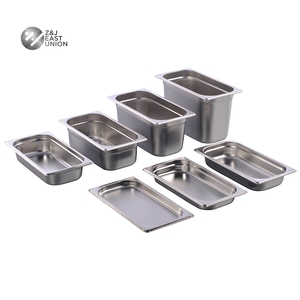
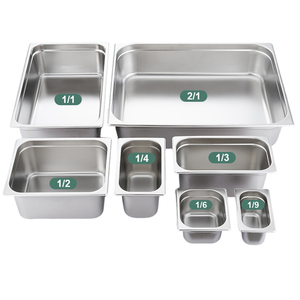
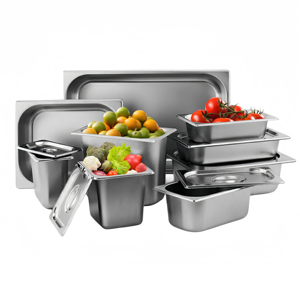
EU Style All Size NSF Stainless Steel Steam Table Pan Gastronorm Container
- Standard EN 631-1 European Sizing
- Electropolished 304/201 Stainless Steel
- Anti-Jam Stacking Shoulder Design

Direct-from-factory OEM/ODM manufacturing engineered with AISI 304/201 food-grade alloys, electrolytic polishing, anti-jam geometry, and full international food contact compliance.
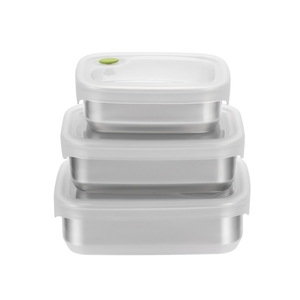
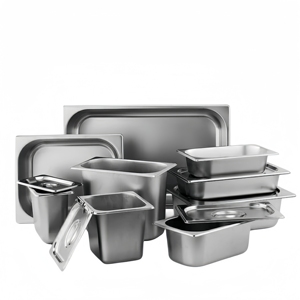
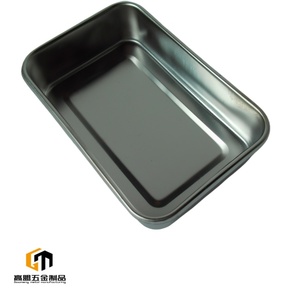
Understanding Pitting Resistance Equivalent Numbers (PREN), Austenitic Granular Structure, and Hydraulic Deep Drawing Dynamics in Professional Kitchenware Supply Chains.
When engineering food-grade containers for high-volume commercial catering, hotelware, and consumer food storage, selecting the optimal metallurgical composition is critical to balancing corrosion resistance, mechanical drawability, thermal stress resilience, and unit cost. As a vertically integrated manufacturer operating our own raw material sheet rolling mills with a monthly capacity of over 500,000 kilograms, we control raw material purity right from coil processing to deep drawing and final passivation.
| Stainless Steel Grade | Chemical Composition (Cr/Ni/Mn/Mo) | PREN Score | Corrosion Resistance | Deep Drawing Ductility | Best Application Intent |
|---|---|---|---|---|---|
| AISI 304 (18/8) | 18-20% Cr, 8-10.5% Ni, 2% Mn | 19.0 - 21.0 | Excellent (Acids/Salts) | Superior (Elongation > 40%) | Gastronorm Pans, Steam Table Vessels, Bento Boxes |
| AISI 316 (18/10/2) | 16-18% Cr, 10-14% Ni, 2-3% Mo | 23.0 - 25.0 | Exceptional (High Chloride/Brine) | High | Marine Catering, Heavy Industrial Food Processing |
| AISI 201 (Cu-Enhanced) | 14-16% Cr, 1.5-3.5% Ni, 8.5-10.5% Mn, 1% Cu | 15.0 - 16.5 | Moderate (Dry / Low Salt) | Medium (Requires Intermediate Annealing) | Institutional Trays, Outer Casings, Budget Hotelware |
| AISI 430 (Ferritic) | 16-18% Cr, 0.75% Ni, 1% Mn | 16.0 - 17.5 | Fair (Induction Compatible) | Moderate Formability | Magnetic Base Plates, Dry Storage Canisters |
Deep drawing subjects sheet metal to extreme circumferential compressive stress and tensile elongation. Improper cold-working without controlled intermediate bright annealing can leave residual stress fields that invite Stress Corrosion Cracking (SCC) when exposed to hot acidic foods (pH < 4.5) or saline environments in steam tables. Our manufacturing facility utilizes automated continuous atmosphere annealing furnaces (1050°C - 1100°C) to recrystallize the austenitic matrix, eliminating work hardening and restoring full corrosion resistance across corner Radii and deep-drawn sidewalls.
From custom 3D CAD modeling and rapid tooling prototyping to mass hydraulic pressing, rim curling, and international compliance packaging.
We maintain a dedicated tooling workshop equipped with 5-axis CNC machining centers, wire EDM, and master die-makers. We engineer custom deep-drawing dies with draft angles and corner radii tailored to prevent wall thinning, reducing prototype lead times to under 15 days.
Our in-house QA laboratory conducts rigorous testing on every production batch: XRF spectrographic chemical analysis for alloy verification, 5% NaCl salt spray chamber testing (up to 96 hours), pass-fail liquid penetrant inspections, and drop tests for latch lid systems.
We offer diverse surface treatments tailored to commercial food service and premium retail market demands: mirror electropolishing, satin brush finishing, PVD titanium coating (gold, rose gold, champagne), ceramic non-stick interior coatings, and high-durability laser etch branding.
Unlike secondary assemblers, our parent entity processes 500,000 kg of stainless steel coils per month. This backward integration guarantees consistent raw sheet thickness tolerance (±0.02mm), eliminates supply chain delays, and yields significant cost savings passed directly to our B2B partners.
All products strictly conform to US FDA 21 CFR 175.300, European Regulation (EC) No 1935/2004, German LFGB, French DGCCRF, and NSF/ANSI Standard 2 for food sanitation. Complete material test certificates (MTC according to EN 10204 3.1) are supplied with every order.
Strategic foresights for commercial kitchen equipment buyers, hotel procurement officers, and private label houseware brand managers for 2025-2030.
Global environmental regulations, such as the European Union’s Single-Use Plastics Directive (SUPD) and extended producer responsibility (EPR) mandates across North America, are forcing hospitality chains, commercial meal delivery services, and institutional catering operations to abandon plastic containers. Stainless steel containers stand out as the ultimate circular alternative due to their infinite recyclability without property degradation, absolute chemical inertness, and zero risk of microplastic shedding or phthalate leaching during thermal cycles.
Procurement directors are increasingly evaluating total cost of ownership (TCO) rather than initial unit purchase price. A heavy-gauge 304 stainless steel Gastronorm pan or lunch container withstands over 3,000 commercial dishwashing cycles, whereas high-density plastic alternatives degrade within 150-300 cycles due to surface scratching, staining, and thermal warping.
Switching to high-durability SUS304 food containers reduces long-term replacement expenditure by up to 64% over a 5-year operating window in commercial kitchen settings, while enhancing brand equity among eco-conscious enterprise clients.
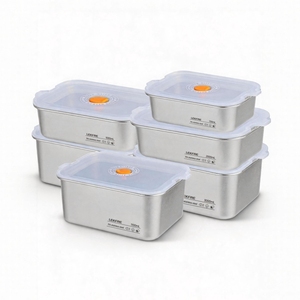
Historically, stainless steel was strictly prohibited from microwave ovens due to the risk of electric arcing caused by sharp metal edges and electromagnetic energy reflection. Breakthroughs in geometric corner radiusing, smooth surface electropolishing, and wave-dampening rim profiles have yielded a new generation of microwave-safe stainless steel food containers (such as our IKOO series).
By eliminating sharp corners where electrical charge accumulates and engineering wall thickness ratios that allow controlled microwave penetration through open tops while reflecting ambient heat, these containers offer unprecedented consumer convenience: seamless transition from freezer storage (-40°C) directly to microwave heating (+100°C) and oven baking (+250°C).
The global market for microwave-safe metal food containers is projected to expand at a CAGR of 11.4% from 2024 to 2030, presenting massive private label opportunities for retail brands and meal-prep subscription operators.
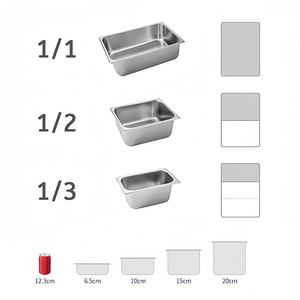
Modern food safety protocols require strict temperature control and cross-contamination prevention across central production kitchens, cold-chain transport, and final serving lines. The future of food containers lies in integrated modular systems: standardized sizing (GN 1/1, 1/2, 1/3, 1/6) equipped with food-grade liquid silicone gasket lids, positive-pressure air-release valves, and heavy-duty locking latches.
Our engineering team specializes in co-molding and press-fit silicone seal geometries that maintain hermetic isolation under hydrostatic pressure, preventing liquid leakage during transit while extending food freshness by up to 40% via reduced oxidative exposure.
We offer custom silicone color-matching (Pantone-certified), dual-injection latch lids, and integrated RFID track-and-trace slots for automated inventory management in institutional kitchens.
Detailed technical responses regarding manufacturing tolerances, material grades, minimum order quantities, surface finishes, and global shipping logistics.
AISI 304 contains 18% Chromium and 8% Nickel, giving it an austenitic crystalline structure with superior corrosion resistance against salty, acidic, or alkaline food substances. It is the gold standard for long-term commercial catering, steam tables, and direct food storage under US FDA and European LFGB standards.
AISI 201 substitutes a portion of the Nickel with Manganese and Nitrogen. While it maintains high mechanical strength and lower raw material cost, its pitting corrosion resistance is lower in high-saline or acidic environments. We recommend 201 grade for dry storage, outer structural casings, and price-sensitive institutional catering markets, while recommending 304 grade for premium heavy-duty cookware and acidic food contact applications.
Jamming occurs when smooth-sided deep-drawn pans create a vacuum seal or wedge tightly against one another during stacking. Our anti-jam Gastronorm containers are engineered with a precision-stamped anti-jamming shoulder (stacking ridge) located just below the top rim.
This perimeter shoulder acts as a physical mechanical stop, preventing the upper pan from wedging deeply into the lower pan. It leaves a calibrated 3mm to 5mm air gap between nested sidewalls, ensuring smooth airflow, eliminating vacuum lock, and allowing kitchen staff to effortlessly separate pans during fast-paced service.
For standard catalog products (such as standard size GN pans, euro bowls, or stock pots), our typical MOQ is 500 to 1,000 units per item size. For fully customized OEM/ODM products requiring new hydraulic stamping dies, our standard terms are as follows:
1. Tooling & Die Development Lead Time: 15 to 25 working days from 3D CAD drawing approval.
2. Initial Sample Provision: 5 to 7 days post-tooling completion.
3. Production Batch Order MOQ: 2,000 to 5,000 units (depending on product size and sheet metal blank dimensions). Full container load (FCL) orders benefit from optimized shipping logistics and reduced unit costs.
Yes. Stainless steel containers engineered specifically for microwave use (such as our IKOO collection) feature continuous smooth curved corner geometry without sharp edges, points, or burrs where electrical charge concentration occurs. When placed in a modern microwave oven without touching the interior metal walls, the microwaves heat the food directly from the open top while reflecting harmlessly off the smooth outer curved base.
Our microwave-safe containers undergo rigorous 1,000-watt laboratory microwave chamber testing, spark emission diagnostic scans, and thermal imaging to guarantee compliance with international microwave safety guidelines. Lids must always be removed or unlatched during microwave operation.
We provide a comprehensive range of mechanical and chemical surface finishing techniques to suit different market positioning:
• Electropolishing: High-gloss ultra-smooth surface that minimizes bacterial adhesion and optimizes cleanability.
• Satin/Brushed Finish: Classic commercial look that resists fingerprint marks and conceals minor surface scratches.
• PVD Titanium Coating: Physical Vapor Deposition in gold, black titanium, copper, or rose gold for luxury buffet presentation.
• Custom Branding: High-precision fiber laser etching, mechanical deep embossing, embossed bottom logos, or custom screen-printed silicone lids.
All our raw material batches are sourced with mill test certificates (MTC) verifying exact metallurgical elemental percentages. Every quarterly production run undergoes third-party lab testing (SGS, TUV, or Intertek) for heavy metal leaching (Lead, Cadmium, Nickel, Chromium release) under EU Regulation 1935/2004, German LFGB 30 & 31, and US FDA 21 CFR 175.300 requirements.
Detailed test reports and certificates of compliance are made available to our importing partners for seamless customs clearance and retail compliance auditing.
We supply standard commercial gauge thicknesses ranging from 0.6mm to 1.0mm, depending on client specification and depth requirements:
• Economy Grade (0.55mm - 0.6mm): Suitable for high-volume light food prep and institutional serving.
• Standard Commercial (0.7mm - 0.8mm): The industry benchmark offering optimal structural strength, dent resistance, and thermal transfer.
• Heavy Duty / Hotelware (0.9mm - 1.0mm): Reinforced construction engineered for demanding central kitchens, heavy transportation, and intensive daily buffet usage.
Our quality assurance workflow follows a strict 4-stage inspection system in accordance with ISO 9001:2015 standards:
1. Incoming Material Inspection (IQC): Spectrographic alloy verification and thickness sheet checking.
2. In-Process Quality Control (IPQC): Dimensional checks after hydraulic drawing, edge trimming, and rim curling.
3. Post-Passivation Inspection: Copper sulfate testing to verify 100% complete passive oxide layer formation after electropolishing.
4. Final Pre-Shipment Inspection (FQC/OQC): AQL 1.5/4.0 sampling standards for cosmetic appearance, stackability, lid sealing performance, and packaging drop durability.
Absolutely. We provide tailored B2B and retail-ready packaging configurations: individual polybags, customized color gift boxes, corrugated inner cartons, master export cartons with GS1-128 barcode labeling, and ISPM 15 compliant heat-treated wooden pallets.
Our packaging design department collaborates directly with your brand team to ensure barcode scannability, structural drop protection for e-commerce transit, and optimized pallet cube utilization to minimize ocean freight costs.
We offer flexible international commercial terms adapted to established global procurement networks:
• Supported Incoterms: FOB (Mumbai / Nhava Sheva), CIF (Destination Port), CFR, DDP (Delivered Duty Paid), and EXW.
• Standard Payment Terms: 30% T/T deposit upon order confirmation, 70% balance payable against presentation of Bill of Lading (B/L) copy; or 100% Irrevocable Commercial Letter of Credit at Sight (L/C at sight) for large volume contract orders.
Partner directly with an ISO-certified stainless steel manufacturer. Send us your CAD drawings, sample specifications, or wholesale product inquiries today for rapid 24-hour engineering feedback.