
Commercial Grade Kitchen Equipment & Heavy Duty Cookware
Explore high-volume OEM/ODM stainless steel stock pots, gastronorm pans, and professional kitchen solutions manufactured with precision deep-drawing and impact-bonding technology.
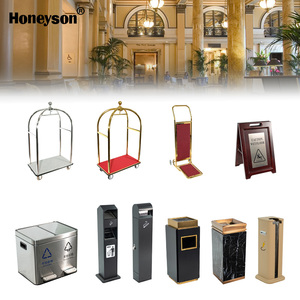
Star Hotel Supplies Full Set Eco-Friendly Stainless Steel Hotel Equipment
- Grade: Heavy Duty AISI 304 / 201 Stainless Steel
- Application: Luxury Hotels & Commercial Kitchens
- Features: Corrosion-Resistant Satin Finish
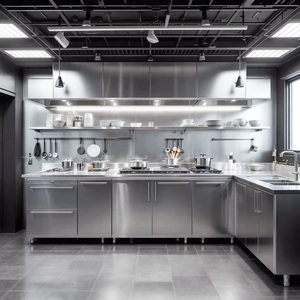
Customized Restaurant Kitchen Setup & Heavy Duty Cookware Modules
- Custom Modular Configurations
- Heavy-Gauge Wall Construction
- Integrated Ergonomic Riveted Handles
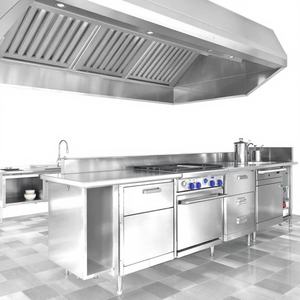
Professional All-in-One Stainless Steel Commercial Kitchen Equipment
- Complete Commercial Cooking Setup
- High-Capacity Thermal Encapsulation
- Food-Grade NSF/CE Compliant
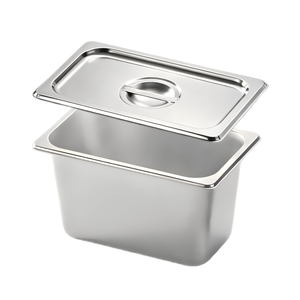
Liyunda 1/4 150mm Gastronorm GN Pan Stainless Steel Food Container
- Standard EU GN Specification (1/4 150mm)
- Available in 304 & 201 Austenitic Steel
- Anti-Jamming Stacking Design
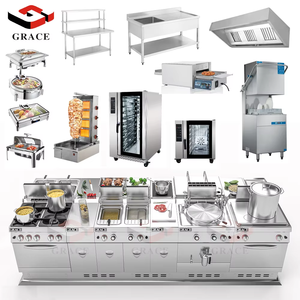
GRACE Commercial Heavy-Duty Stainless Steel Kitchen & Catering Set
- Engineered for Fast Food & Catering Operations
- Reinforced Stress-Point Welding
- High Heat & Thermal Shock Resistance
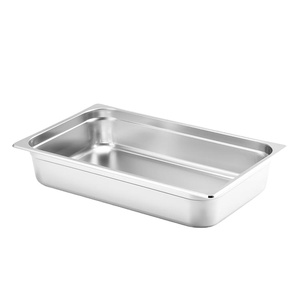
Stainless Steel 1/1 Gastronorm Commercial GN Pan Food Container
- Full Size 1/1 Precision Deep Drawn
- Electropolished Smooth Interior Surfaces
- Compatible with Steam Tables & Chillers
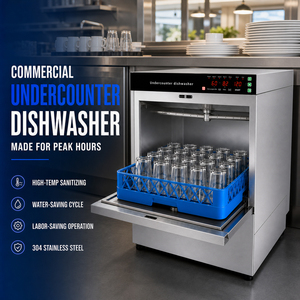
Under-Counter Commercial Stainless Steel Automatic Dishwasher
- Full AISI 304 Stainless Steel Housing
- High-Efficiency Thermal Washing System
- Designed for Bars, Cafes & Hotel Facilities
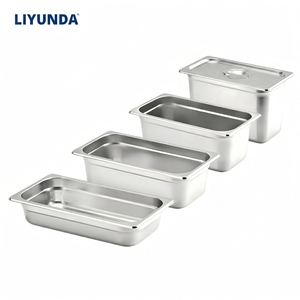
Liyunda 1/3 Commercial Gastronorm EU Standard Food Container
- Heavy-Gauge Rim & Corner Reinforcements
- Direct OEM/ODM Manufacturing Pricing
- ISO 9001 & Food-Safety Certified
Evaluating the World's Top 10 Heavy Duty Stainless Steel Stock Pots Manufacturers
A rigorous benchmark report analyzing manufacturing infrastructure, material integrity, heat transfer engineering, and OEM capabilities for global B2B buyers.
Strategic Sourcing Criteria for Commercial Stock Pots
In high-volume commercial kitchens, hotel catering operations, and food production plants, a stock pot is not merely vesselware; it is a critical thermal vessel subjected to continuous thermal cycling, heavy mechanical loading, and aggressive cleaning chemicals. Selecting the right heavy-duty stainless steel stock pots manufacturer requires assessing core engineering parameters: wall thickness uniformity, bottom encapsulation integrity (impact bonding vs. brazing), metallurgy purity (AISI 304 vs. 316), and handle shear strength.
Information Gain Key Takeaway: Premium commercial stock pots must utilize an impact-bonded sandwich base containing an encapsulated aluminum disk (minimum 4.0mm to 6.0mm thickness) bonded under 2,500+ tons of friction hydraulic pressure to guarantee zero delamination and 100% flat contact on induction burners.
Global procurement directors must evaluate manufacturers based on vertically integrated production—specifically whether the factory controls raw material cold-rolling, deep-drawing pressing, in-house tooling/die fabrication, and automated polishing. Below is an authoritative evaluation of the leading global manufacturing hubs and brand OEMs dominating the commercial heavy-duty stock pot industry in 2025.
| Manufacturer Region / Cluster | Core Metallurgy | Base Construction | Wall Gauge Range | OEM / Private Label Capability |
|---|---|---|---|---|
| 1. PP Impex / Allied India Hub | AISI 304 / 316 / 201 | Impact-Bonded Tri-Ply (Alu + SS430) | 1.2mm – 2.5mm Heavy Gauge | Full OEM / In-House Die Making |
| 2. Solingen / Ruhr Valley (Germany) | 18/10 Stainless (AISI 304) | Cookstar / Encapsulated Core | 1.5mm – 2.0mm Premium | High MOQ / Premium Positioning |
| 3. Guangdong / Zhejiang Cluster (China) | AISI 304 / 201 / 444 | Brazed & Impact Bonded Base | 0.8mm – 1.8mm Commercial | Massive Scale / Standard OEM |
| 4. Northern Italy Cookware Hub | AISI 304 / Copper Clad | 5-Ply Multi-Clad Layering | 1.5mm – 2.2mm Luxury | High-End Culinary OEM |
| 5. Wisconsin / Illinois Hub (USA) | AISI 304 / 316 Surgical Steel | Full Body Tri-Ply Cladding | 1.5mm – 2.5mm Heavy Duty | Domestic US B2B / High Cost |
| 6. Niigata / Tsubame Cluster (Japan) | DP-1 / AISI 304 High Purity | Precision Hammered / Clad | 1.2mm – 2.0mm High Precision | Specialized Artisan OEM |
| 7. Rhône-Alpes Region (France) | 18/10 Stainless / Tri-Ply | Cast Steel & Stainless Base | 1.5mm – 2.0mm Gourmet | Boutique OEM Commercial |
| 8. Turkey Industrial Zone (Istanbul/Izmir) | AISI 304 Austenitic | Encapsulated Solar Base | 1.0mm – 1.8mm Standard | EU Proximity OEM Direct |
| 9. Korea Gyeonggi Industrial Hub | AISI 304 / 430 Induction Core | 5-Ply Impact Bonded | 1.2mm – 2.0mm High Tech | OEM Electronic & Cookware |
| 10. Brazil Cookware Hub (Rio Grande) | AISI 304 Commercial | Tri-Ply Base Sandwich | 1.0mm – 1.8mm Regional Supply | Latin America B2B OEM |
Deep Technical Analysis: Stock Pot Engineering & Metallurgy
Understanding the physics of thermal distribution, structural yield strength, and anti-corrosive passivation in heavy-duty stock pot manufacturing.
1. Austenitic vs. Ferritic Alloy Selection
Commercial stock pots must withstand acidic food stocks (pH < 4.0), saline broths, and caustic commercial dishwashers. Premium manufacturing utilizes AISI 304 (18/10 Cr-Ni alloy) for superior corrosion resistance and ductility during deep-drawing. For high-chloride applications, AISI 316 (containing 2-3% Molybdenum) prevents pitting corrosion.
2. Impact-Bonding vs. Flame Brazing
Cheaper stock pots use brazed bases, which risk air pockets and base separation under thermal shock. High-end factories utilize Friction Impact-Bonding, applying 2,500 to 3,000 tons of instantaneous hydraulic force. This fuses the 304 inner body, 5mm Pure Aluminum thermal-dispersion core, and 430 Magnetic Stainless Steel outer plate into a monolithic solid structure.
3. Handle Ergonomics & Load Shear Resistance
A 100-liter stock pot carries over 100 kg of liquid weight. Handle attachments are engineered using heavy-gauge hollow cast stainless steel handles attached via multi-point spot welding or high-tensile solid stainless steel rivets. This minimizes heat transfer to staff hands while resisting tensile shear forces exceeding 5,000 N.
Deep Drawing Hydraulic Press Technology vs. Metal Spinning
In heavy-duty stock pot production, two primary cold-forming methods dominate: hydraulic deep drawing and CNC flow spinning. Deep drawing utilizes high-tonnage double-action hydraulic presses to draw sheet metal blanks into seamless cylindrical vessels in single or multi-stage operations.
Deep drawing ensures uniform wall thickness throughout the pot body, eliminating structural weak points or micro-fractures. In contrast, spinning can stretch material unevenly. Premium factories maintain strict wall tolerances (e.g., 1.2mm ± 0.05mm), ensuring structural integrity when the stock pot is subjected to high thermal expansion and heavy commercial usage.
Future Procurement & Manufacturing Trends in Commercial Cookware
Strategic analysis of upcoming technological shifts, regulatory mandates, and supply chain evolutions shaping the B2B cookware procurement landscape over the next decade.
1. Universal Induction Optimization (Full-Disk Cladding)
As commercial kitchens migrate from traditional gas burners to high-efficiency induction hobs to comply with decarbonization goals, stock pots require 100% edge-to-edge magnetic induction coverage. Future stock pot designs integrate high-frequency magnetic AISI 444 or AISI 430 bases engineered to prevent deformation under fast high-wattage induction heat ramp rates.
2. Sustainability, Recycled Alloys & CBAM Compliance
With Europe enforcing the Carbon Border Adjustment Mechanism (CBAM), corporate buyers are requiring manufacturers to supply carbon footprint documentation. Production is transitioning to electric-arc furnace (EAF) stainless steel containing up to 80% recycled scrap steel, combined with eco-friendly chemical-free electropolishing processes.
3. Lightweight Multi-Ply Matrix Composites
Commercial kitchen ergonomic regulations are driving demand for lighter yet ultra-durable cookware. Breakthroughs in 5-ply cladding (SS304 + 3-layer Aluminum Alloy core + SS430) reduce overall pot weight by 18% while increasing thermal conductivity speed by 35%, significantly cutting cooking cycles and labor strain.
Vertically Integrated OEM Manufacturing Infrastructure
Why leading global brands, hotel supply distributors, and commercial kitchen chains partner with our specialized production facilities.
Our manufacturing complex represents the pinnacle of vertically integrated metal fabrication. Unlike assembly-only suppliers, our raw material division operates an independent stainless steel sheet rolling facility processing over 500,000 kg of raw stainless steel monthly. This guarantees complete control over alloy chemical composition, surface grain quality, and sheet thickness consistency from step one.
OEM Concept-to-Market Integration: From custom CAD/CAM engineering and in-house die and mold fabrication to deep-drawing press lines, friction impact-bonding, automatic polishing, and private-label laser etching, we provide end-to-end contract manufacturing.
Our facility houses dedicated toolmakers, deep drawing hydraulic presses ranging up to 1,200 tons, automated rim curling machinery, and in-house metallurgy testing laboratories. Every production lot undergoes rigorous quality assurance including spectrographic alloy analysis, salt spray corrosion testing (NSS 72+ hours), handle pull-tension tests, and thermal distortion checks.
International Quality Certifications & Standards
 ISO 9001:2015 Quality Mgmt
 CE European Compliance
 RoHS Environmental
 REACH EU Chemical Safety
 BSCI Social Audit Compliant
 In-House QA Inspection
 Global Export Standard
 Spectro Metal Lab Tested
Commercial Cookware Procurement FAQ
Expert answers to critical technical questions asked by global procurement officers, hotelware importers, and kitchenware brand buyers.
Q1 What stainless steel grade is best for commercial stock pots?
AISI 304 (18/10 Chromium-Nickel) is the industry standard for commercial cookware, offering superior corrosion resistance against salt and food acids. For harsh marine or high-acid food production, AISI 316 is recommended. Economical lines may utilize heavy-gauge AISI 201 with specialized passivation treatments.
Q2 What is impact bonding, and why is it superior to spot welding or brazing?
Impact bonding uses high-tonnage friction hydraulic pressure (2,500+ tons) to weld the pot body, encapsulated aluminum core, and magnetic bottom plate simultaneously without flux. This eliminates internal voids, ensuring 100% flat heat distribution and preventing the bottom plate from peeling or bulging under high-heat commercial burners.
Q3 How do you prevent stock pot handles from loosening or snapping off?
We engineer handle attachments using heavy-duty hollow-cast stainless steel handles welded with multi-point projection resistance welding or solid stainless steel rivets. Handles are pull-tested up to 500 kg of downward shear force to guarantee user safety under heavy liquid capacity.
Q4 Can your factory produce custom stock pot sizes and private label packaging?
Yes. As a primary OEM/ODM manufacturer with an in-house die and mold workshop, we offer custom pot dimensions (diameter and height ratio), custom wall gauge thickness (1.0mm to 2.5mm), laser-etched brand logos, custom handle molds, and retail/commercial export master carton packaging.
Q5 What is the typical Minimum Order Quantity (MOQ) for factory-direct OEM orders?
Standard OEM stock pot production MOQs generally start at 300 to 500 units per size for standard catalog items, and 1,000 units for fully custom die-developed products. Flexible trial batches can be arranged for strategic long-term partners.
Q6 How do you ensure compliance with international food contact safety standards?
All raw materials undergo spectral analysis to verify elemental composition. Final products comply with FDA, LFGB, EU Regulation (EC) No 1935/2004, REACH, and DGCCRF food safety requirements. Third-party testing reports (SGS, TUV, Intertek) are provided per shipment batch.
Request a Custom OEM/ODM Quotation Today
Partner with an ISO-certified, vertically integrated manufacturer. Connect directly with our engineering and procurement team for technical specifications, volume pricing, and custom die development.