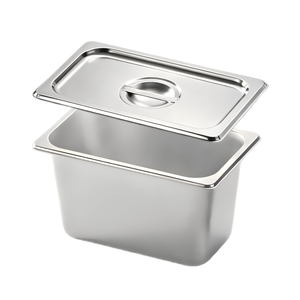
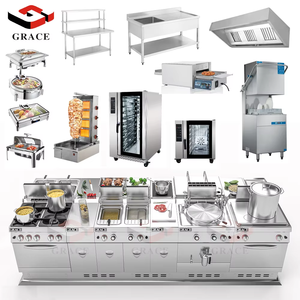
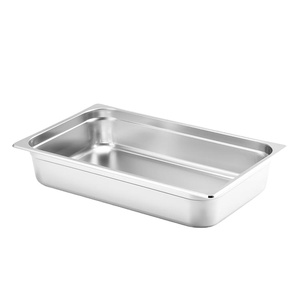
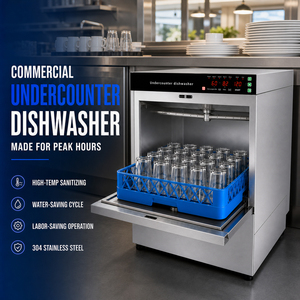
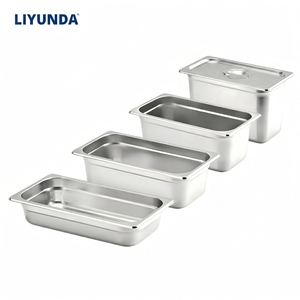
Explore precision-engineered commercial kitchenware, GN portion pans, sauce cups, and automated dishwashing equipment direct from certified OEM manufacturing lines.
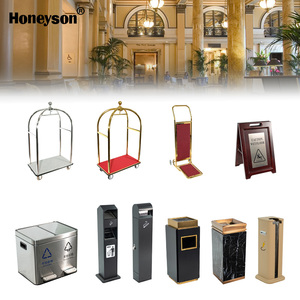
Star Hotel Supplies Honeyson Eco-Friendly Metal Stainless Steel Hotel Equipment Set
In the global commercial foodservice sector, sauce cups—often classified as ramekins, dipping cups, or portion containers—represent a crucial micro-segment of kitchenware. While seemingly simple, manufacturing commercial-grade stainless steel sauce cups requires sophisticated metallurgical control, severe plastic deformation processing (deep drawing), and rigorous chemical surface passivation. Leading Chinese manufacturers leverage advanced progressive hydraulic presses capable of achieving uniform wall thickness across 1.5 oz, 2.5 oz, 4 oz, and custom capacity formats.
The primary technical differentiation in B2B procurement lies between Austenitic Stainless Steel (AISI 304 / EN 1.4301) and Austenitic Modified Stainless Steel (AISI 201 Series). For high-acid food environment applications—such as vinegar-base marinades, tomato salsas, mustard, and citrus dressings—AISI 304 containing 18% Chromium and 8% Nickel is the imperative industry standard. The high nickel fraction stabilizes the austenitic crystal structure, creating a self-healing passive chromium oxide ($Cr_2O_3$) layer that withstands continuous chemical exposure and industrial dishwashing cycles without pitting corrosion.
Material Grade
Chemical Composition (% Cr / Ni / Mn)
Corrosion Resistance Index
Deep Drawing Capability
Primary Commercial Application
AISI 304 (18/8)
18.0 - 20.0% Cr | 8.0 - 10.5% Ni | < 2.0% Mn
Ultra-High (ASTM B117 > 96 hrs)
Optimal (Draw Ratio 2.1)
Fine Dining, Airline Catering, Acidic Sauces
AISI 316 (18/10/2)
16.0 - 18.0% Cr | 10.0 - 14.0% Ni | 2.0% Mo
Maximum (Marine & High Saline)
High Elastic Recovery
High-Salinity Industrial Processing
AISI 201 (Mid-Grade)
14.0 - 16.5% Cr | 1.0 - 3.5% Ni | 5.5 - 7.5% Mn
Moderate (Dry / Non-Acidic)
Standard (Requires Annealing)
Dry Portioning, Fast Food Chains (Budget)
Deep-Drawing Mechanics & Edge Curling Integrity
Superior manufacturing requires multi-stage deep drawing without micro-fracturing along the drawn vertical walls. Leading OEM suppliers in China utilize computer-controlled hydraulic presses with hydraulic die cushions. This maintains consistent blank holder pressure, preventing flange wrinkling while keeping thinning ratios below 12%. Furthermore, the top rim undergoes an automated 360-degree rolled-edge or flared-bead process. Rolled edges eliminate sharp burrs, safeguard staff during rapid service, and structural reinforcement increases resistance to crushing under high-stack weight load.
As global commercial kitchens modernize, sauce cup specifications are evolving from simple utilitarian stampings into high-performance, aesthetically refined service components. China's top tier factories are pioneering several critical technology shifts:
Automated Electropolishing (EP)
Moving beyond mechanical buffing, automated electropolishing removes surface microscopic peaks via galvanic bath, yielding a mirror finish ($Ra < 0.2 \mu m$) that drastically reduces bacterial adhesion and food residue retention.
Precision Nesting Geometry
Engineered taper angles prevent "vacuum locking" when stacked. Internal stack ridges ensure effortless cup separation during high-speed commercial kitchen dish-plating workflows.
PVD Physical Vapor Deposition
High-end hospitality buyers increasingly demand Titanium Matte Black, Rose Gold, and Champagne PVD coatings. These ion-bonded surface layers withstand 85°C commercial dishwashing without flaking.
In tandem with physical refinements, automated visual inspection systems powered by AI cameras are integrated directly onto post-polishing conveyor lines. These systems detect surface scratches, micro-pinholes, rim unevenness, and dimension variances exceeding $\pm 0.05 mm$ in real-time, enforcing near-zero defect dispatch.
Require Custom OEM Die Tooling or Bulk Specifications?
Access our engineering catalogue detailing over 100+ deep-drawn commercial kitchenware specifications, material test reports, and customized branding options.
3. Global Procurement Trends & Supply Chain Dynamics (2025–2030)
B2B procurement directors for multinational restaurant chains, hotel groups, and catering distributors are navigating structural shifts in global sourcing. The transition away from single-use plastics to infinitely recyclable stainless steel is no longer optional—it is driven by legislative mandates across the European Union (Single-Use Plastics Directive) and North America.
Key procurement trends shaping contract negotiations with Chinese suppliers include:
✔Vertical Raw Material Integration: Sourcing buyers favor factories integrated with parent steel-rolling operations. Having direct access to cold-rolled coils (e.g., 500,000 kg monthly rolling capacity) mitigates nickel price volatility and guarantees consistent gauge thickness.
✔ESG & Decarbonized Production: Corporate buyers mandate ISO 14001 environmental management and BSCI social compliance certifications. Automated closed-loop water treatment in electro-polishing plants is now a core requirement for tier-1 vendor audits.
✔Private Label Customization: Advanced laser marking enables high-speed etching of brand logos, volume graduation lines (oz/ml), and QR batch tracking directly onto cup bases without altering surface food-safety integrity.
As an industry leader in commercial kitchenware and deep-drawn metal components, our manufacturing footprint provides an unshakeable competitive foundation for B2B importers, brand owners, and commercial equipment suppliers worldwide.
Raw Material Backing
Backing by dedicated raw material rolling facilities processing over 500,000 kg of stainless steel monthly ensures prime metal availability, ultra-stable pricing structures, and zero compromise on thickness tolerances.
In-House Tooling & Mold Shop
Equipped with high-precision CNC spark erosion machines and wire EDM cutter equipment. Dedicated master die makers develop prototype stamping tools within 7–10 working days for custom OEM designs.
Global Regulatory Compliance
Fully certified across international operational benchmarks including ISO 9001:2015, CE, RoHS, REACH, and BSCI audit standardizations. Products strictly pass FDA and EU 1935/2004 food contact safety tests.
With over 19 years of continuous B2B exporting expertise across 15+ countries throughout Europe, North America, the Middle East, and East Asia, our enterprise understands complex international logistics, palletization rules, custom packaging designs, and strict delivery timelines.
5. Comprehensive B2B Sourcing FAQ & Technical Knowledge Base
Q1: What is the optimal wall thickness for commercial stainless steel sauce cups?
For commercial foodservice applications, wall thickness typically ranges between 0.5 mm and 0.8 mm. A thickness of 0.5 mm provides an ideal balance of lightweight stacking strength and cost-efficiency for quick-service chains. Premium dining establishments and institutional catering usually opt for 0.7 mm–0.8 mm heavy-gauge construction to ensure maximum impact resistance against denting during high-speed automated dishwashing.
Q2: How do your factories ensure food contact safety compliance for FDA and EU standards?
All raw material coils undergo spectro-analysis verification upon arrival to guarantee exact chemical alloy composition. Finished sauce cups undergo continuous ultrasonic degreasing to eliminate drawing lubricants, followed by citric acid passivation. Batches are regularly tested by third-party laboratories (SGS, TUV, Intertek) to verify zero heavy metal leaching (Lead, Cadmium, Chromium, Nickel) under EU 1935/2004 and US FDA food contact guidelines.
Q3: Can your factory produce custom capacity sizes and branded laser logo etchings?
Yes. We provide complete OEM/ODM customized manufacturing. Our in-house mold tooling shop can engineer dies for any shape, volumetric capacity (e.g., 0.5 oz up to 12 oz), or contour design. We also provide fiber laser marking for permanent, high-precision logo etching, custom barcoding, or fill-line calibrations on the bottom or exterior walls.
Q4: What is the minimum order quantity (MOQ) and lead time for private label production?
For standard stock catalog designs (1.5 oz, 2.5 oz, 4 oz sauce cups), our standard production MOQ starts at 3,000 units. For custom OEM deep-drawn tooling configurations, the typical MOQ is 10,000 units per size. Production lead time is generally 20 to 30 days following sample sign-off and deposit confirmation.
Q5: How do you prevent surface scratching during transit and international shipping?
We utilize specialized export-grade protective packaging protocols. Sauce cups are nested with tissue paper interleave or protective poly-bags between individual units to prevent metal-on-metal friction. Multi-count inner boxes are packed inside double-wall corrugated master cartons, fully shrink-wrapped on ISPM-15 heat-treated wooden or plastic pallets for containerized ocean freight.
Q6: What corrosion testing standard is applied to verify dishwasher resistance?
Our stainless steel products undergo standardized neutral salt spray testing (ASTM B117) exceeding 96 hours without signs of red rust or pitting. Furthermore, finished samples undergo rigorous thermal-shock and aggressive commercial detergent immersion cycles to ensure zero dulling, staining, or structural degradation.
Partner with China's Premier Stainless Steel OEM Manufacturer
Streamline your commercial kitchenware supply chain with certified direct factory pricing, rapid mold development, and uncompromised quality assurance.