
Featured Precision Stainless Steel Products & Components
High-precision OEM deep-drawn metal shells, Gastronorm food pans, and commercial restaurant equipment manufactured under strict ISO quality standards.

Star Hotel Supplies Honeyson Full Set Eco Friendly Metal Stainless Steel Equipment
Inquire Now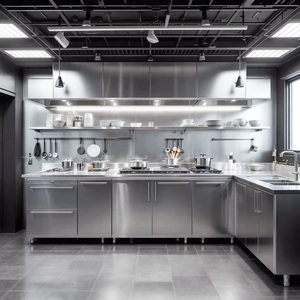
Customized Restaurant Commercial Stainless Steel Kitchen Equipment Setup
Inquire Now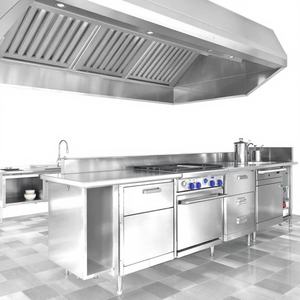
Stainless Steel Professional Commercial All-in-One Hotel & Restaurant Equipment
Inquire Now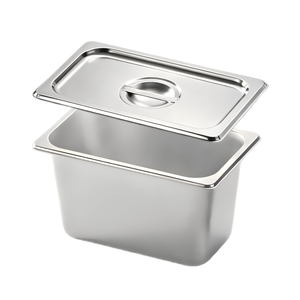
Liyunda 1/4 150mm Gastronorm GN Pan Stainless Steel Deep Drawn Food Container
Inquire Now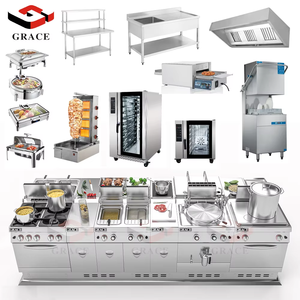
GRACE Stainless Steel Industrial Kitchen & Catering Commercial Equipment Set
Inquire Now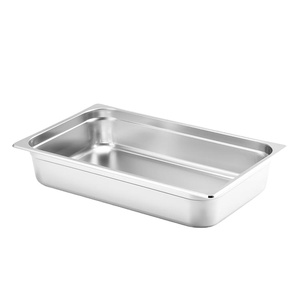
Stainless Steel 1/1 GN Pan Deep Drawn 304/201 Commercial Food Container
Inquire Now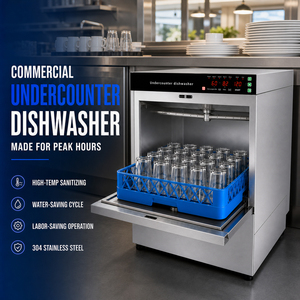
Under Counter Commercial Dishwasher Stainless Steel Automatic Glass Washer
Inquire Now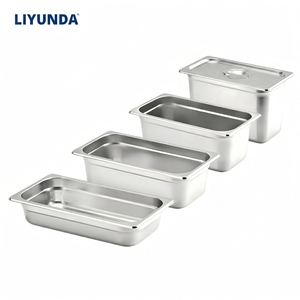
Liyunda Factory EU GN Pan 1/3 Commercial Stainless Steel Buffet Container
Inquire NowVertically Integrated Deep Drawing Manufacturing Excellence
Combining advanced metallographic laboratory testing, robust in-house tool design, and an extensive monthly material throughput to guarantee zero-defect precision metal shell production.
In-House Die & Mold Facility
Equipped with high-precision CNC machining centers, EDM wire-cutting, and master die-makers to shorten tool development lead times from months to weeks.
Strict Metallurgical QA & Testing
In-house spectrometry analysis, intergranular corrosion testing, tensile strength testing, and CMM dimension verification compliant with CE, RoHS, and REACH.
Deep Drawing & Pressing Automation
Heavy-duty hydraulic presses ranging up to 1,000 tons capability. Specialized in deep depth-to-diameter ratio shells without material fracturing or earing.
Industry Whitepaper: Precision Deep Drawing Stainless Steel Shell Sourcing & Engineering Guide
An authoritative technical analysis of metal forming mechanics, alloy selection, manufacturing risk mitigation, and global procurement trends for enterprise B2B buyers.
1. Fundamentals of Deep Drawing Mechanics in Stainless Steel Fabrication
Deep drawing is a fundamental metal sheet forming process where a flat sheet metal blank is radially drawn into a forming die by the mechanical action of a punch. The transition of flat sheet metal into a seamless three-dimensional hollow cylindrical, rectangular, or complex shaped shell involves severe plastic deformation. When working with austenitic stainless steel grades such as AISI 304 and AISI 316, manufacturing engineers must manage high work-hardening rates, significant springback, and friction forces that far exceed those encountered in standard carbon steel stamping.
During the deep drawing cycle, the material in the outer blank area experiences high circumferential compressive stress alongside tensile stress along the side walls of the drawn shell. If the circumferential compressive stresses exceed the structural threshold, the flange of the shell will experience instability, leading to wrinkles. Conversely, if excessive blank holder pressure (BHP) is applied to suppress wrinkling, radial tensile stresses along the shell cup wall increase drastically, risking longitudinal necking or catastrophic wall rupture. Leading Chinese deep drawing factories mitigate these failure modes through rigorous calculation of the Limiting Drawing Ratio (LDR) and multi-stage progressive drawing sequences.
Key Formula Dynamics in Shell Forming
The drawability of a stainless steel alloy is governed by its Limiting Drawing Ratio (LDR), defined as the maximum ratio of blank diameter ($D_{max}$) to punch diameter ($d$):
LDR = D_{max} / d
For standard AISI 304 stainless steel blanks, the theoretical maximum LDR in a single draw operation typically ranges from 2.0 to 2.2. Achieving deeper cylindrical geometries—such as high-aspect ratio filter housings, sensor casings, commercial kitchenware, or motor enclosures—requires multi-pass deep drawing featuring intermediate bright annealing heat treatments in hydrogen-atmosphere furnace lines to restore material ductility.
2. Comparative Metallurgy: Stainless Steel Alloy Selection for Deep Drawing
Selecting the optimal stainless steel alloy grade directly dictates production yield rates, corrosion resistance performance, tool wear, and total unit manufacturing costs. China’s premier deep drawing manufacturers leverage a broad spectrum of austenitic, ferritic, and duplex grades tailored to specific B2B end-use applications.
| Stainless Steel Grade | Microstructure Type | Tensile Strength (MPa) | Elongation at Break (%) | Deep Drawing Suitability | Primary B2B Applications |
|---|---|---|---|---|---|
| AISI 304 (1.4301) | Austenitic | 520 - 720 | ≥ 45% | Excellent | Commercial kitchenware, food containers, GN Pans, automotive shells |
| AISI 304L (1.4306) | Austenitic (Low Carbon) | 480 - 680 | ≥ 48% | Superior | Welded pressure vessels, chemical containers, sanitary valve housings |
| AISI 316 / 316L | Austenitic (Moly-Alloyed) | 530 - 680 | ≥ 40% | High | Marine grade enclosures, pharmaceutical vessels, harsh chemical shells |
| AISI 430 (1.4016) | Ferritic | 450 - 600 | ≥ 22% | Moderate (LDR < 1.8) | Induction-compatible kitchenware, household appliances, decorative trim |
| AISI 201 / 202 | Austenitic (Mn-Ni Substitute) | 650 - 850 | ≥ 35% | Moderate (High Work Hardening) | Budget catering equipment, dry environment food service hardware |
Austenitic stainless steels (300 series) exhibit exceptionally high strain-hardening exponents (n-values around 0.45 to 0.50), allowing significant uniform elongation before localized necking occurs. However, this high work-hardening rate requires heavy press tonnage and specialized high-pressure lubrication systems containing chlorinated paraffin or synthetic extreme-pressure (EP) additives to prevent die galling and surface scoring.
3. Advanced Manufacturing Processes & Tooling Engineering
Top China deep drawing factories distinguish themselves by integrating precision die design, servo-hydraulic press automation, and advanced surface finishing technologies within a single facility.
A. Die Design & Tool Material Selection
The friction generated during deep drawing of stainless steel can cause rapid tool wear and material transfer (pick-up). Advanced tooling systems utilize premium tool steel grades such as Cr12MoV, SKD11, or tungsten carbide inserts for high-wear draw rings and punch tips. Additionally, physical vapor deposition (PVD) coatings like Titanium Aluminum Nitride (TiAlN) or Chromium Nitride (CrN) are applied to tooling surfaces to reduce the coefficient of friction below 0.1, extending tool lifespan past 500,000 press cycles.
B. Hydraulic Press Control & Servo Technology
Modern China stamping facilities deploy CNC servo-hydraulic presses capable of precise multi-stage velocity profiles and variable blank holder pressure controls. By dynamically adjusting blank holding force during the draw stroke—increasing pressure at initial contact to prevent flange wrinkling and decreasing pressure as the shell wall extends—manufacturers minimize shell wall thinning to less than 12% across critical corner radii.
C. Post-Forming Surface Treatments
After deep drawing, stainless steel shells undergo mandatory secondary finishing operations tailored to customer requirements:
- Bright Annealing: Heated in a hydrogen/nitrogen atmosphere furnace at 1050°C to relieve internal stresses and restore austenitic corrosion resistance without oxidation scaling.
- Chemical Passivation: Citric or nitric acid treatment to dissolve free iron contaminants from the surface, enhancing the protective chromium oxide ($Cr_2O_3$) passive layer.
- Electro-Polishing: Electrochemical removal of surface micro-peaks, producing a ultra-clean, mirror-like finish ideal for pharmaceutical and food-contact hygiene standards.
- PVD Color Coating: Deposition of titanium alloys to achieve premium aesthetics (Gold, Rose Gold, Matte Black, Champagne) for luxury hotelware and architectural hardware.
4. Procurement Trends & Supply Chain Strategies for Global Buyers
As global supply chains navigate economic realignments, industrial B2B buyers sourcing stainless steel deep drawn components face evolving procurement dynamics. Successful international purchasing managers focus on total cost of ownership (TCO), quality governance, and supply chain transparency.
A. Shift Towards Vertical Supply Chain Integration
Disruptions in raw material supply chains have highlighted the advantage of sourcing from vertically integrated Chinese manufacturers. Facilities that house their own cold-rolling mills and raw material slitting lines possess direct control over raw coil thickness tolerances (down to ±0.01mm) and grain size uniformity. This raw material consistency directly eliminates batch-to-batch variations in sheet drawability, drastically lowering scrap rates during mass production.
B. ESG Compliance & Closed-Loop Scrap Recycling
Environmental, Social, and Governance (ESG) mandates are transforming global manufacturing. Top China deep drawing factories now implement closed-loop stainless steel scrap recovery systems. Off-cut edge trimmings and blanking waste are recycled directly back to smelting furnaces, reducing the carbon footprint per kilogram of finished shell product by up to 35%—a vital factor for European and North American enterprise buyers facing CBAM carbon compliance standards.
C. Advanced Quality Control Automation
Quality assurance has migrated from manual post-production sampling to automated in-line inspection. Leading OEM factories incorporate 3D laser scanners, automated optical vision systems (AOI), and continuous coordinate measuring machines (CMM) directly onto press lines. These systems detect micro-cracks, wall thinning breaches, or dimensional deviations in real-time, enforcing a 0 PPM (Parts Per Million) defect target for critical industrial shells.
Why Partner With China’s Leading Deep Drawing OEM Factory?
Empowering international brands, industrial equipment vendors, and hotelware distributors with high-volume, precision-engineered metal solutions.
500,000 kg Monthly Throughput
Unrivaled raw material processing capacity ensures uninterrupted high-volume production schedules and stable B2B wholesale pricing.
100% Custom OEM Design
From technical CAD/STEP drawings or samples to rapid prototype tooling, we bring your proprietary metal shell concepts to volume production.
Competitive Factory Direct Pricing
Eliminate middleman markups. Benefit from direct Chinese manufacturing efficiencies and optimized material utilization yields.
Rapid Tooling & Delivery
In-house die makers enable sample prototype delivery in as fast as 15 business days, with streamlined sea/air freight dispatch.
Frequently Asked Questions (FAQ)
Clear, technical answers to common B2B procurement, engineering, and quality control inquiries.
Ready to Source Precision Deep Drawn Stainless Steel Shells?
Submit your engineering drawings, material specifications, or RFQ details today. Our senior metallurgical engineers and export specialists will provide a technical assessment and competitive quotation within 24 hours.