Executive Sourcing Report: Evaluating Top China High Quality Stainless Steel Cookware Manufacturers
The global commercial and residential cookware market is undergoing a seismic paradigm shift driven by technological advances in multi-ply metallurgical cladding, automated deep drawing, induction-compatibility requirements, and stringent international chemical safety protocols (such as EU LFGB and US FDA FCM standards). Sourcing executives, brand managers, and commercial kitchen suppliers face complex procurement choices when evaluating leading manufacturing hubs in China.
High-quality stainless steel cookware production requires absolute precision across the entire manufacturing lifecycle—from initial raw material slitting and circle blanking to multi-stage deep hydraulic pressing, impact bonding of heavy encapsulation bases, robotic surface polishing, and rigorous stress testing for corrosion and thermal deformation resistance. Partnering with top-tier China factories offers unprecedented economies of scale, customized private label tooling, and rapid product development cycles essential for remaining competitive in today’s dynamic global market.
Procurement Information Gain Insight: Vertically Integrated Manufacturing vs. Assembly Plants
A primary failure point in B2B cookware procurement is sourcing from non-integrated assembly factories that outsource raw sheet rolling and deep drawing tooling. Vertically integrated manufacturers that control raw material processing (handling over 500,000 kg of stainless steel monthly) eliminate raw coil gauge variances, ensure metallurgical consistency (such as strict Nickel and Chromium ratios in AISI 304 and 316), and lower total unit costs by 12% to 18%.
In-House Tooling & Die Making
Equipped with dedicated master toolmakers and CAD/CAM progressive die infrastructure. We shorten custom OEM sample production from the industry standard 45 days down to under 14 days, minimizing time-to-market for proprietary shapes.
Advanced Deep Drawing Tech
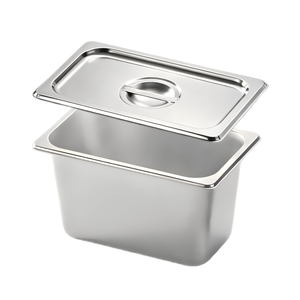
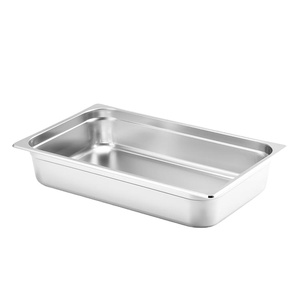
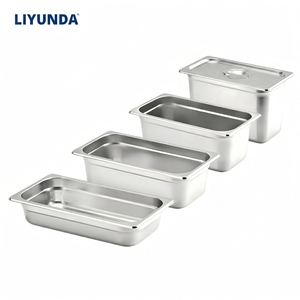
State-of-the-art hydraulic double-action deep drawing presses capable of shaping stock pots, Euro bowls, and complex gastronorm pans up to 1.5mm wall thickness without material thinning or micro-fracturing.
Lab Tested & Certified Quality
Comprehensive in-house laboratory testing facility including spectrographic metal composition analysis, 72-hour salt spray corrosion resistance testing, impact resistance testing, and thermal shocking audits.
Metallurgical Engineering & Structural Innovations in High-End Cookware
Understanding raw material metallurgy is critical for B2B procurement decisions. The performance, durability, thermal responsiveness, and corrosion resistance of commercial cookware are directly dictated by alloy composition and cladding architecture.
1. Austenitic vs. Ferritic Stainless Steel Alloys
Top China cookware factories utilize distinct grades tailored for specific heating performance and budget thresholds:
- AISI 304 (18/8 & 18/10 Stainless Steel): The gold standard for interior cooking surfaces and premium commercial food pans (GN Pans). Containing 18% Chromium and 8-10% Nickel, SS304 exhibits exceptional resistance to organic acids, food dyes, and harsh industrial dishwasher detergents.
- AISI 316 (18/12 Marine/Pharma Grade): Utilized in high-end culinary cookware and medical/industrial processing vessels. Added Molybdenum (2-3%) dramatically improves resistance to chloride pitting, making it ideal for heavily salted culinary applications.
- AISI 430 (18/0 Ferritic Stainless Steel): Magnetic and highly thermal-conductive. Essential for forming the exterior layer of induction-compatible multi-ply cookware bottoms.
2. Clad Metal Technology: 3-Ply & 5-Ply Composite Architecture
Pure stainless steel has relatively low thermal conductivity (approx. 15 W/m·K) compared to aluminum (237 W/m·K) or copper (401 W/m·K). To overcome hot spots and thermal scorching, top factories employ multi-ply clad sheet technology:
| Cookware Construction |
Layer Architecture (Inside to Outside) |
Thermal Efficiency |
Primary Commercial Application |
| Impact-Bonded Encapsulated Bottom |
SS304 + Heavy Pure Aluminum Core Disc (4-6mm) + SS430 Base |
High (Bottom Only) |
Commercial Stock Pots, High-Volume Catering Pans |
| Tri-Ply Full Body Clad |
SS304 Interior + Pure Aluminum Core (1.5mm) + SS430 Exterior |
Exceptional (Uniform Rim-to-Rim) |
Professional Fry Pans, Saute Pans, Chef Cookware |
| 5-Ply Heavy-Duty Clad |
SS304 + Al Alloy + Pure Al Core + Al Alloy + SS430 Exterior |
Ultra-Maximum Heat Retention |
Luxury Retail Cookware Lines, Precision Thermal Skillets |
| Copper-Core 5-Ply Clad |
SS304 + Aluminum + Pure Copper Core + Aluminum + SS430 |
Instant Thermal Response |
Gourmet Commercial Kitchens, High-End Culinary Artware |
3. Impact Bonding vs. Friction Brazing
For encapsulated-bottom cookware, top Chinese factories employ high-tonnage (1,500 to 2,500 ton) impact bonding friction welding presses. Under intense force and heat, aluminum liquefies slightly and forms a complete, void-free molecular bond between the cookware body and the magnetic bottom plate. This eliminates air pockets that cause base detachment, warping, or hot-spot scorching during high-heat commercial usage.
Future Sourcing & Procurement Trends in Stainless Steel Cookware (2025–2030)
As global supply chains realign toward sustainability, automated traceability, and ergonomic performance, procurement directors must anticipate key industry trends over the next decade:
1. Automated & Robotic Manufacturing Integration
Leading factories in China are transitioning toward fully automated smart manufacturing cells. Robotic arm polishing ensures 100% surface finish consistency (achieving mirror polish roughness Ra < 0.2µm), while automated laser seam welding eliminates weak joints in pot handles, rivets, and rim reinforcements. This automation reduces labor variance and drives lower defect rates (< 0.05%).
2. Non-Toxic, Eco-Friendly Ceramic & PVD Surface Coatings
Global regulatory bans on traditional PFAS/PTFE "forever chemicals" have shifted procurement demand toward eco-friendly surface treatments. Modern factories are integrating high-durability ceramic non-stick coatings, plasma-etched honeycomb stainless steel surfaces, and Physical Vapor Deposition (PVD) titanium coatings that offer scratch-resistant color aesthetics (Gold, Rose Gold, Matte Black) without compromising food safety.
3. Energy-Efficient & Smart Commercial Equipment Compatibility
With commercial kitchens worldwide adopting high-efficiency induction cooktops to lower carbon footprints and kitchen heat output, cookware must feature ultra-flat, multi-layer magnetic bases. Furthermore, integration of smart thermal sensor pockets within heavy-bottom stock pots and GN food pans is emerging as a critical requirement for smart kitchen monitoring systems.
Why Partner With Our Vertically Integrated China Manufacturing Facility?
With over 19 years of dedicated manufacturing experience, our enterprise stands at the forefront of stainless steel houseware, commercial hotelware, bakeware, and customized deep-drawn metal components. Our state-of-the-art facilities offer unique competitive advantages to international buyers, OEM partners, and private label importers across Europe, North America, the Middle East, and East Asia.
500,000 kg Monthly Capacity
Our parent rolling facility processes 500 metric tons of premium stainless steel coil monthly, granting our buyers direct cost protection against raw material market volatility and guaranteeing uncompromised delivery schedules.
Full OEM/ODM Private Labeling
From custom logo laser engraving and branded packaging design to custom mold creation for unique handle profiles and cookware geometries, we turn your product vision into high-margin market reality.
Strict Quality Audit Standards
Operating under ISO 9001 and BSCI social compliance guidelines, every production batch undergoes dimensional inspection, wall thickness ultrasonic testing, drop testing, and chemical composition spectroanalysis.
Confidentiality & Global Export Assurance
We respect international IP rights and operate under strict Non-Disclosure Agreements (NDAs). Exporting to over 15 countries, our logistics team manages full customs compliance, ocean container loading consolidation, and complete export documentation (Form E, CO, LFGB, FDA certificates).