
Commercial Product Showcase
Direct Factory OEM/ODM Solutions for Hotelware, Restaurant Outfitting, Gastronorm Systems & Heavy-Duty Kitchen Appliances

Star Hotel Supplies Honeyson Full Set Eco Friendly Metal Plastic Stainless Steel Hotel Equipment
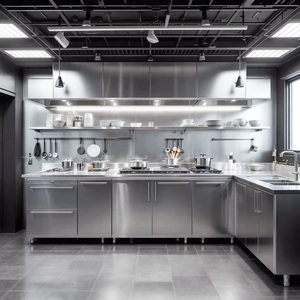
Customized Restaurant Kitchen Set Up Kitchen Equipment & Stainless Steel Kitchen Equipment For Restaurant
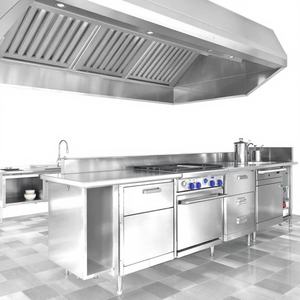
Stainless Steel Professional Commercial Kitchen Equipment Hotel Restaurant All-in-One Full Set Design
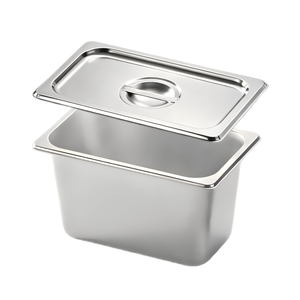
Liyunda 1/4 150mm Gastronorm GN Pan Stainless Steel Buffet Food Container 201 304 Material With Lid
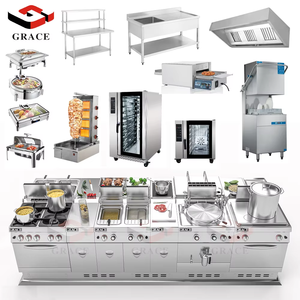
GRACE Stainless Steel Commercial Kitchen Equipment Set for Fast Food & Industrial Catering
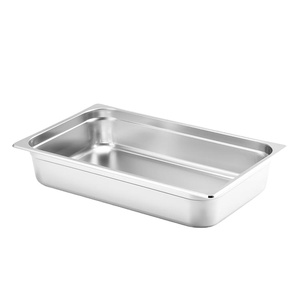
Stainless Steel 1/1 Gastronorm 304/201 GN Pan Food Container Commercial Kitchenware
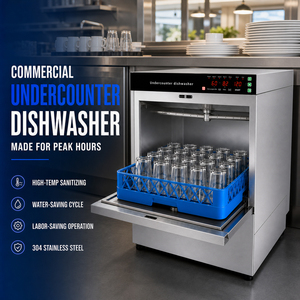
Under Counter Commercial Dishwasher Automatic Stainless Steel Cup & Glass Washer
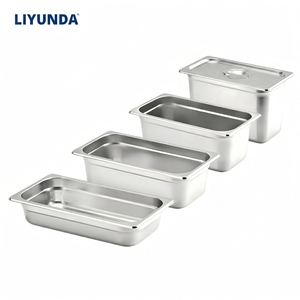
Liyunda Factory Stainless Steel EU GN Pan 1/3 Commercial Gastronorm Buffet Container
Vertically Integrated Industrial Manufacturing Superiority
How Direct Raw Material Rolling and In-House Tooling Establish Strategic Cost & Quality Dominance in Global Sourcing
In the global B2B procurement ecosystem for commercial kitchenware, institutional hotelware, and food service equipment, international buyers face a recurring dilemma: balancing rigorous food-contact safety compliance with escalating cost pressure. The key to resolving this tension lies in vertical integration—an operational model where manufacturing facilities control the entire production life-cycle, from cold-rolling stainless steel coils to final robotic surface finishing.
Information Gain Benchmark: Unlike traditional assembly-based trading intermediaries, vertically integrated Chinese manufacturers control the microstructural grain density during raw sheet rolling. This eliminates structural micro-fissures during deep drawing, reducing quality defect rates (AQL) to less than 0.15% across volume shipments.
1. Direct Mill Operations & 500,000 kg Monthly Raw Material Throughput
Our parent enterprise operates a dedicated stainless steel sheet cold-rolling mill with an active monthly processing capacity of 500,000 kg of prime raw metal. Control over the rolling stage allows us to maintain tight gauge tolerances (±0.02mm) across stainless steel grades (AISI 304, 316, and 201). This raw material autonomy provides two strategic advantages to global B2B buyers:
- Unrivaled Pricing Stability: Direct coil processing decouples production costs from middle-tier steel stockist markups, shielding OEM buyers from short-term nickel and chromium commodity market volatility.
- Metallurgical Purity Control: Raw coils undergo rigorous optical emission spectrometry (OES) chemical analysis before stamping, ensuring nickel content in AISI 304 strictly meets the >8.0% threshold mandated by European LFGB §30/31 and US FDA compliance rules.
2. In-House CAD/CAM Tooling & Progressive Deep-Drawing Engineering
Deep drawing is the technological backbone of commercial kitchenware fabrication—used to convert flat metal discs into deep-walled Gastronorm (GN) pans, stock pots, and seamless sink bowls without structural failure. Our facility houses an internal tool-and-die workshop staffed by senior metallurgical tooling engineers.
Utilizing 500-ton to 1,000-ton hydraulic pressing equipment paired with computerized progressive draw dies, our factory achieves exceptional depth-to-diameter draw ratios. Special lubricants and intermediate annealing ovens allow stress-free plastic deformation, ensuring uniform wall thickness, zero corner tearing, and stress-corrosion resistance in heavy commercial kitchens.
3. Laboratory Rigor & Multi-Tier Testing Infrastructure
Product longevity in commercial food service depends on surface passivation and micro-structural density. Our in-house testing laboratory subjects every production batch to rigorous quality assurance standards:
- Neutral Salt Spray Testing (ASTM B117): Continuous 96-hour to 240-hour exposure to validate corrosion resistance against aggressive salt-laden food liquids.
- Intergranular Corrosion Testing (ASTM A262 Practice E): Verifies that high-temperature welding zones maintain immunity against intergranular carbide precipitation.
- Passivation Depth Measurement: X-ray photoelectron spectroscopy (XPS) checks ensure a robust chromium oxide (Cr2O3) passive layer, essential for hygienic maintenance.
Stainless Steel Metallurgy & Material Selection Guide
An Engineering Breakdown of Chemical Composition, Corrosion Indices, and Recommended Foodservice Applications
Selecting the correct stainless steel alloy is crucial when specifying commercial kitchen equipment. Misapplication of materials often leads to premature pitting, stress corrosion cracking, or regulatory non-compliance during international customs audits.
| Steel Grade (AISI / EN) | Chemical Composition (Nominal %) | Pitting Resistance Equivalent (PREN) | Corrosion Resistance | Primary Industrial Applications |
|---|---|---|---|---|
| AISI 304 (EN 1.4301 / 18-8) |
Cr: 18.0 - 20.0% Ni: 8.0 - 10.5% C: ≤ 0.07% |
18.0 - 20.0 | Excellent resistance to organic acids, dairy, moisture, and high-heat steam. | Gastronorm pans, commercial cookware, restaurant worktables, automatic warewashers. |
| AISI 316 (EN 1.4401 / 18-10-2) |
Cr: 16.0 - 18.0% Ni: 10.0 - 14.0% Mo: 2.0 - 3.0% |
23.0 - 25.0 | Superior resistance to chloride pitting, acidic sauces (tomato/citrus), and marine environments. | Heavy industrial food processing plants, high-salinity boiling kettles, marine catering gear. |
| AISI 201 (EN 1.4372 / Low-Ni) |
Cr: 14.0 - 16.0% Ni: 1.0 - 3.5% Mn: 8.5 - 10.0% |
14.0 - 16.0 | Moderate indoor corrosion resistance. Susceptible to acid pitting under high humidity. | Dry food storage shelves, outer decorative paneling, budget-tier serving trays, utility carts. |
| AISI 430 (EN 1.4016 / Ferritic) |
Cr: 16.0 - 18.0% Ni: ≤ 0.75% Ferritic (Magnetic) |
16.0 - 17.5 | Good heat scaling resistance; magnetic properties enable induction heating. | Induction pot bases, equipment outer skins, splashbacks, magnetic cutlery holders. |
Formula Insight — PREN Calculation: PREN = %Cr + 3.3(%Mo) + 16(%N). Higher PREN values indicate greater resistance to localized pitting in acidic sauce preparation and commercial dishwashing cycles using halogen-based sanitizers.
Surface Finishing Benchmarks for Commercial Hygiene
Mechanical surface roughness directly influences bacterial adhesion. Our factory offers specialized surface treatments tailored to international sanitation standards:
- No. 4 Satin / Hairline Finish (Ra 0.4μm - 0.6μm): Standard directional polish providing high aesthetic appeal while minimizing visible fingerprints and scratches in active restaurant kitchens.
- 8K Mirror Polish (Ra ≤ 0.1μm): Micro-smooth optical reflectivity achieved through multi-stage mechanical buffing. Prevents organic residue buildup in buffet presentation and hotelware.
- Electropolishing (Chemical Passivation): Electrochemical removal of surface iron contamination. Enhances the passive oxide layer while leaving a smooth surface ideal for high-hygiene food processing equipment.
Product Future Procurement & Manufacturing Development Trends
Market Intelligence for Importers, Wholesalers, and Commercial Kitchen Procurement Directors (2025–2030 Horizon)
The global commercial kitchenware market is undergoing a structural transition driven by automated food service operations, stringent energy efficiency mandates, and heightened international health regulations. B2B buyers must align their procurement strategies with four key technical trends currently redefining Chinese manufacturing capabilities:
Trend 1: Multi-Ply Clad Metal & Smart Induction Compatibility
With global commercial kitchens rapidly transitioning from open-flame gas burners to high-efficiency induction ranges, traditional single-ply stainless steel cookware is being replaced by multi-ply clad metal systems. Chinese factories are now deploying high-tonnage thermal cladding processes to bond layered alloys:
- 3-Ply Cladding (304 Stainless Steel + Pure Aluminum Core + 430 Magnetic Stainless Steel): Delivers rapid, even heat distribution across the entire pan geometry while eliminating localized hot spots that burn food.
- Impact-Bonded Capsule Bases: 5mm to 8mm thick aluminum discs encapsulated by magnetic stainless steel sheets, applied under 2,000-ton hydraulic pressure to eliminate air pockets and prevent base warping under extreme thermal shocks.
Trend 2: Zero-Crevice Robotic Welding & Ultra-Sanitary Designs
Health inspections in North America and Western Europe have intensified scrutiny on food-contact equipment seams. Traditional manual spot welding leaves microscopic voids where food bacteria (e.g., Listeria monocytogenes, Salmonella) colonize. Advanced Chinese OEMs are incorporating robotic laser seam welding and automatic TIG orbital welding lines.
Robotic welding creates a solid-state metallurgical bond with coved internal radii (≥ 3mm), completely eliminating sharp 90-degree internal corners. This design enables true Clean-In-Place (CIP) performance, significantly reducing water and chemical consumption during commercial kitchen sanitation cycles.
Trend 3: High-Toughness Thin-Gauge Engineering & Weight Reduction
Rising international ocean freight costs and ergonomic workplace regulations have accelerated demand for lighter yet structurally resilient commercial kitchenware. Through cold-work hardening and micro-alloying (e.g., adding trace amounts of Titanium or Nitrogen), modern deep-drawing factories can reduce sheet thickness by 15% to 20% without sacrificing structural yield strength or dent resistance.
Trend 4: Decarbonized Production & Closed-Loop Supply Chains
European Union Carbon Border Adjustment Mechanism (CBAM) regulations are forcing importers to audit the carbon intensity of their supply chains. Leading industrial factories in China are adopting closed-loop environmental management systems:
- 100% recycling of scrap stainless steel off-cuts back into electric arc furnace (EAF) steelmaking mills.
- On-site acid recovery plants to recycle pickling fluids and neutralize industrial wastewater, meeting ISO 14001 Environmental Standards.
- Implementation of rooftop solar photovoltaic arrays to offset electrical consumption during stamping and annealing operations.
Commercial Procurement & Engineering FAQ
In-depth Technical Guidance Addressing Quality Verification, Custom Tooling, Certification Compliance, and Logistics
Verifying raw material integrity requires a combination of non-destructive chemical testing and formal laboratory certification:
1. Portable XRF Spectrometry: Buyers or third-party inspection agencies (SGS, TÜV, Bureau Veritas) should conduct handheld X-Ray Fluorescence spectro analysis at the factory. Authentic AISI 304 must display Nickel content ≥ 8.0% and Chromium ≥ 18.0%.
2. Chemical Reagent Spot Testing: Manganese-based chemical drop tests immediately turn red/pink on 201 grade due to high manganese levels (>5.5%), whereas 304 stainless steel remains clear or reacts extremely slowly.
3. Mill Test Certificates (MTC): Every shipment should be accompanied by EN 10204 Type 3.1 Mill Test Certificates directly tracing the heat number of the steel coil to the raw material melt shop.
For custom OEM/ODM stainless steel components, the engineering workflow follows a structured schedule:
- CAD/CAM 3D Design Approval (3-5 Days): SolidWorks / STEP file evaluation, draft angle verification, and deep-draw stress simulation.
- Tooling & Die Fabrication (20-30 Days): Precision CNC milling, wire EDM cutting, and heat treatment of high-grade D2 tool steel dies.
- First Article Inspection (FAI) Samples (5-7 Days): Pressing initial samples, dimensional laser scanning, and surface roughness measuring.
- Mass Production (25-35 Days): Triggered immediately upon formal client sample sign-off and lab approval.
During deep drawing, metal stretches as it is pulled into the die cavity. Poorly calibrated press speeds or improper draw die radii cause excessive "wall thinning" at the lower corners of deep containers (e.g., 150mm depth GN pans). Thin corners are prone to cracking under thermal shock when transitioning from -40°C blast freezers to +180°C combi-steamers. Our advanced progressive hydraulic pressing ensures corner wall thickness retention of at least 80% relative to the original sheet gauge.
Depending on the destination market, stainless steel kitchenware must pass specific heavy metal leaching tests:
- European Union (LFGB §30/31 & EU Regulation No 1935/2004): Tests for specific release limits (SRL) of heavy metals including Nickel, Chromium, Manganese, Lead, and Cobalt using citric acid stimulant solutions.
- United States (FDA CPG 7117.05 & NSF/ANSI Standard 2): Mandates that food contact surfaces be corrosion resistant, non-toxic, smooth, and cleanable without chipping or flaking.
- Germany (DIN 10531): Special thermal shock and mechanical sanitation standards for food service equipment.
Mass production shipments are audited according to the ISO 2859-1 (ANSI/ASQ Z1.4) single sampling scheme. Standard acceptable quality levels are set to AQL 0 Critical Defects, AQL 1.0 Major Defects, and AQL 2.5 Minor Defects. Inspection protocols include structural dimension checking, rim safety deburring evaluation, stackability tests, and barcode readability verification.
Yes. We offer turnkey private label OEM integration. Our factory capabilities include fiber laser etching for high-resolution logo marking, hydraulic logo stamping, custom barcode color box packaging, barcode labeling, drop-test compliant master cartons, and palletized container loading for FCL/LCL global shipping.
Enterprise Factory Certifications & Quality Systems
Verified Compliance Frameworks Supporting Global Import & Institutional Supply Contracts
International B2B buyers require complete transparency regarding environmental, social, and quality management credentials. Our modern manufacturing complex maintains active certification under global auditing bodies:
Quality System
EU Standard
Chemical Safety
Social Compliance
Food Contact Safe
Partner with China's Premier Stainless Steel OEM Exporter
Access direct factory pricing, custom CAD/CAM tooling support, and rigorous ISO-certified quality management for your next commercial kitchenware procurement cycle.
Contact Us