
Precision Deep-Drawn Components & Commercial Assemblies
Engineered for extreme structural durability, dimensional consistency, and seamless surface hygiene across global commercial food service, hospitality, and industrial sectors.

Star Hotel Supplies Full Metal & Stainless Steel Commercial Equipment
Heavy-gauge deep-drawn stainless steel hotelware assemblies. Engineered with multi-stage drawing dies to guarantee seamless, seam-free surfaces, high tensile rigidity, and zero-crevice hygienic compliance.
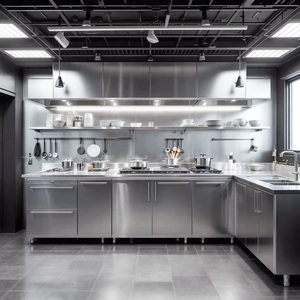
Customized Restaurant Kitchen Setup & Deep-Drawn Stainless Assemblies
Precision deep-drawn food service stations and prep hardware manufactured from AISI 304 steel. Optimized for mechanical load resistance, corrosion resistance, and thermal stability under continuous commercial use.
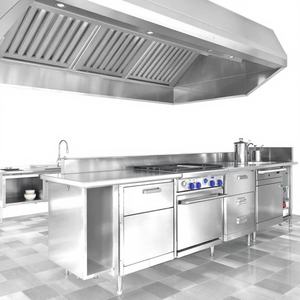
Professional All-in-One Commercial Kitchen Hardware & Deep Drawn Vessels
Engineered kitchenware components requiring extreme draw depths and uniform wall thickness. Formed using advanced hydro-mechanical presses and stress-relief annealing to prevent stress corrosion cracking.
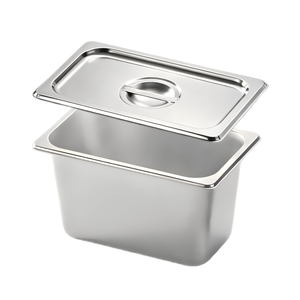
Liyunda 1/4 150mm Gastronorm GN Pan Stainless Steel Deep Draw Containers
Standardized 1/4 GN pans (150mm depth) deep-drawn from premium 201/304 Deep Drawing Quality (DDQ) sheet metal. Feature reinforced anti-jam stacking rims and electropolished interior corners adhering to EN 631 standards.
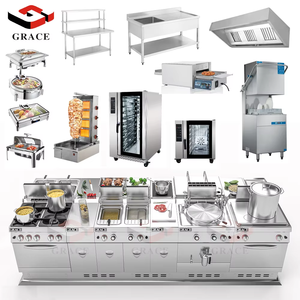
GRACE Fast Food & Industrial Catering Deep-Drawn Equipment Systems
High-tonnage deep-drawn metal sub-assemblies for fast-food chains and industrial catering platforms. Built to withstand aggressive chemical sanitization, mechanical vibration, and continuous thermal cycling.
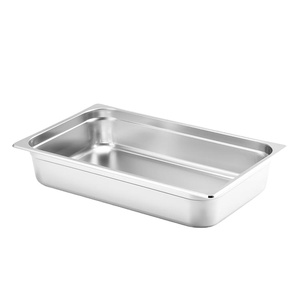
Stainless Steel 1/1 Gastronorm 304/201 GN Pan Heavy-Duty Containers
Full-size 1/1 GN containers formed via multi-station transfer tooling. Characterized by uniform corner radii, zero wall thinning defects, and precision-flat flanges designed for hermetic steam table fitment.
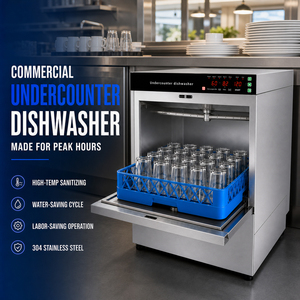
Under Counter Commercial Dishwasher Stainless Steel Deep Drawn Tanks
Seamless deep-drawn washing sumps and glasswasher internal tanks manufactured without corner welds to eliminate water stagnation, bacterial accumulation, and structural corrosion in high-speed dishwashers.
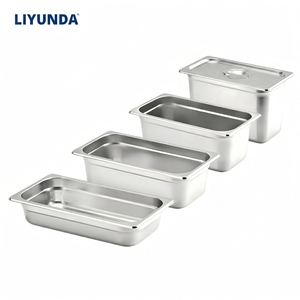
Liyunda Factory EU Standard GN Pan 1/3 Commercial Deep Drawn Containers
Precision 1/3 EU-spec gastronorm containers engineered for buffet displays and commercial refrigeration. Produced with ultra-smooth surface finishes, controlled earring ratios, and high dimensional repeatable accuracy.
Vertically Integrated Stainless Steel OEM Manufacturing Infrastructure
PP Impex India represents the gold standard in deep-drawn sheet metal engineering, operating a fully unified supply chain from raw material rolling to final international export delivery.
Parent Sheet Rolling Mill Control
Unlike standard stamping contractors, our parent company operates an in-house cold-rolling mill processing over 500,000 kilograms of stainless steel coil per month. This affords complete control over chemical composition, grain refinement, plastic strain ratios, and strip thickness tolerances ($\pm 0.02\text{mm}$).
Global Export & Compliance Track Record
With 19+ years of dedicated export experience spanning North America, Western Europe, the Middle East, and East Asia, our plant operates under strict non-disclosure agreements (NDAs) and international compliance standards including ISO 9001:2015, CE, RoHS, REACH, and BSCI social compliance.
In-House Tooling & Finite Element Design
Our die-making workshop utilizes advanced CAD/CAM modeling, AutoForm forming simulation, and wire-EDM tooling centers. We engineer multi-stage progressive and transfer dies designed for high-cycle longevity exceeding 1,000,000 draw operations without dimensional drift.
Engineering Principles & Metallurgical Science of Precision Deep Drawing
Precision deep drawing is a radial draw-forming process whereby a flat sheet metal blank is plastically deformed into a three-dimensional hollow axisymmetric or non-symmetrical component by the mechanical action of a punch forcing the material into a die cavity. The process is defined by deep depth-to-diameter ratios, often exceeding 0.5, requiring meticulous control over material anisotropy, blankholder force, draw radii, and friction dynamics to prevent structural defects such as flange wrinkling, sidewall fracture, and earring.
1. Metallurgical Selection: Austenitic vs. Ferritic Grades for Deep Draw Applications
The success of extreme draw depths depends fundamentally on the material's mechanical properties, specifically the strain hardening exponent ($n$-value) and the plastic strain ratio ($r$-value / Lankford parameter). Austenitic stainless steels—most notably AISI 304, 304L, 316, and specialized Deep Drawing Quality (DDQ) 201 formulations—possess face-centered cubic (FCC) crystal structures that deliver exceptional work-hardening capabilities ($n$-values typically between 0.40 and 0.50) and high uniform elongation percentages (>45%).
| Steel Grade | Yield Strength (MPa) | Tensile Strength (MPa) | Elongation (%) | $r$-Value (Plastic Strain Ratio) | Primary Deep Drawing Application |
|---|---|---|---|---|---|
| AISI 304 DDQ | 210 - 240 | 580 - 640 | ≥ 52% | 1.2 - 1.4 | Deep drawn gastronorm pans, deep stock pots, complex sink bowls. |
| AISI 316 / 316L | 240 - 290 | 560 - 620 | ≥ 48% | 1.1 - 1.3 | Marine hardware, chemical processing tanks, high-salinity food containers. |
| AISI 430 (Ferritic) | 260 - 310 | 450 - 500 | ≥ 25% | 1.0 - 1.2 | Shallow cups, trim components, induction-compatible base inserts. |
| SS 201 High-Mn DDQ | 270 - 320 | 650 - 720 | ≥ 45% | 1.1 - 1.3 | Cost-effective hotelware, decorative canisters, commercial trays. |
2. Mechanics of Deformational Stress & Defect Mitigation
During the stroke of the draw punch, the sheet blank experiences complex multi-axial stress fields. The flange area undergoes intense circumferential compression combined with radial tension. If the circumferential compressive stress exceeds the critical buckling limit of the sheet material, flange wrinkling occurs. Conversely, if the hydraulic or mechanical blankholder force ($BHF$) applied to suppress wrinkling is excessive, frictional forces at the die radius increase tensile stress in the vertical cup wall beyond its ultimate tensile strength, resulting in bottom-corner necking or tensile fracture.
PP Impex India utilizes Finite Element Analysis (FEA) to calculate the precise Limiting Draw Ratio ($LDR$), defined as:
For standard single-stage draws, $LDR$ values for stainless steel are mathematically governed to remain under 2.0 to 2.2. For deeper geometries (such as 150mm depth 1/4 Gastronorm pans), our die designers deploy multi-stage progressive reduction steps, recalculating intermediate punch diameters and executing controlled stress-relief anneal cycles at 1050°C to restore ductile FCC matrix structures before final sizing.
3. Surface Finishing, Passivation, and Dimensional Metrology
Post-drawing operations dictate the functional hygiene and aesthetic quality of the component. Micro-friction during high-tonnage drawing can embed microscopic iron particles into the stainless steel surface matrix. To combat this, our components undergo an automated chemical process involving:
- Aqueous Ultrasonic Degreasing: Complete removal of extreme-pressure hydro-drawing oils and synthetic lubricants.
- Electropolishing & Mechanical Satin Finishing: Achieving micro-surface roughness values as low as $R_a < 0.2\,\mu\text{m}$, eliminating micro-pores where bacteria could colonize.
- Nitric-Citric Passivation (ASTM A967): Chemical stripping of free iron contaminants to instantly regenerate the protective chromium-oxide ($\text{Cr}_2\text{O}_3$) passive film.
- Coordinate Measuring Machine (CMM) Inspection: 100% dimensional verification ensuring wall thickness variation remains under $\pm 0.05\text{mm}$ and flange flatness within $\pm 0.1\text{mm}$.
Future Procurement Trends in Deep Drawing Metal Components
Global B2B procurement strategies are undergoing structural shifts driven by supply chain risk mitigation, carbon compliance legislation, and total cost of ownership (TCO) optimization.
1. ESG & Carbon-Border (CBAM) Compliance
European and North American B2B buyers are demanding fully traceable supply chains. Suppliers with parent steel mills utilizing high recycled scrap ratios (EAF route) and renewable power are replacing energy-intensive legacy manufacturers to satisfy upcoming Carbon Border Adjustment Mechanism (CBAM) declarations.
2. Vertically Integrated Single-Source OEM
The friction of managing separate raw material vendors, die shops, press shops, and polishing subcontractors is forcing major brands to consolidate vendor bases. Working with integrated entities that control raw strip mill operations to final export eliminates multi-tiered markups and lead-time volatility.
3. Near-Net-Shape Engineering & Waste Minimization
With raw material accounting for 60-70% of total product cost, procurement managers prioritize suppliers capable of computerized nesting, optimized circular blank shearing, and tight-tolerance deep drawing to minimize trim scrap loss and reduce piece-part pricing.
Technological Development Trends in High-Precision Deep Drawing
Next-generation metal forming relies on digitized control loops, advanced tribology, and intelligent press automation.
Servo-Electric Press Ram Motion Profiling
Traditional mechanical flywheel presses exhibit fixed sinusoidal speed curves. Modern servo-electric presses allow customized ram speed profiles—slowing velocity during initial material deformation to reduce shock loads and prevent necking, then accelerating through the draw stroke to increase production yields by up to 40%.
AI-Powered In-Line Optical Inspection
Integrating multi-camera computer vision and laser line scanners directly onto transfer press beds allows 100% real-time surface topography scanning. Optical sensors detect micro-cracks, earring asymmetry, and draw-mark scratches instantly, automatically ejecting defective parts without slowing down mass-production speeds.
Dry-Film Nanostructured Lubrication
Transitioning away from heavy chlorinated paraffin oils toward environmentally benign polymer dry films and nanostructured ceramic die coatings (such as TiAlN and DLC). Dry-film lubricants eliminate solvent degreasing stages, reduce water consumption, and prevent galling under extreme contact pressures.
Frequently Asked Questions (FAQ) for Deep Draw Sourcing
Direct technical answers to common engineering, quality control, and commercial inquiries from global OEM buyers.
What is the primary engineering difference between deep drawing and standard metal stamping?
Standard metal stamping primarily involves piercing, bending, or shallow blanking where material thickness remains largely unaffected and plastic deformation is localized along bend lines. Deep drawing intentionally pulls blank material into a die cavity under blankholder pressure, causing significant three-dimensional plastic flow, radial tension, and circumferential compression. Deep drawing produces seamless hollow bodies with depth dimensions frequently exceeding half their width, requiring precise material $r$-value control.
How does PP Impex India prevent sidewall thinning and tearing during extreme depth draws?
We control sidewall thinning through a three-tier engineering protocol: First, using our parent rolling mill, we supply Deep Drawing Quality (DDQ) steel with certified high plastic strain ratios ($r \ge 1.3$). Second, we optimize punch ($r_p$) and die cavity ($r_d$) radii via finite element simulation to prevent localized stress concentration. Third, we utilize hydraulic multi-cushion blankholders to dynamically modulate blankholder force ($BHF$) across the stroke, preventing localized thinning from exceeding the industry threshold of 15-20%.
What standard dimensional tolerances can be achieved on custom deep drawn OEM components?
Under standard high-volume production, we reliably maintain linear dimensions and diameter tolerances to $\pm 0.05\text{mm}$ ($\pm 0.002\,\text{inches}$). Flange flatness is maintained within $\pm 0.1\text{mm}$. For precision high-specification components requiring secondary CNC trimming or re-striking, tighter tolerances down to $\pm 0.025\text{mm}$ can be specified.
What die tooling steel materials are used, and what is the typical tooling lifespan?
We engineer our deep draw dies using premium D2, SKD11, or Cr12MoV cold-work tool steels hardened to 58-62 HRC. For extreme high-volume runs or stainless grades prone to galling, inserts are constructed from Tungsten Carbide (WC) or coated with Physical Vapor Deposition (PVD) TiAlN. Tooling lifespan ranges from 500,000 to over 2,000,000 strokes with routine scheduled die maintenance.
Which international quality testing documentation accompanies export shipments?
Every export container is accompanied by a comprehensive Quality Documentation Package. This includes Material Test Reports (MTR / EN 10204 3.1 certification) detailing melt chemical analysis and mechanical testing, CMM Dimensional Inspection Sheets, Surface Roughness ($R_a$) Logs, Corrosion Salt-Spray Certificates, and Compliance Statements for ISO 9001, REACH, RoHS, and EU 1935/2004 food-contact requirements.
What are the typical lead times from CAD design to mass production delivery?
Tooling development and DFM (Design for Manufacturability) analysis typically require 15 to 25 days. Initial T1 prototype samples are provided within 7 days of tooling completion. Upon customer sample approval and final sign-off, mass production lead times generally range from 20 to 35 days depending on batch volume and specialized packaging requirements.
Accelerate Your Deep-Drawn Metal Manufacturing Program
Leverage our 500,000 kg monthly sheet rolling capacity, in-house die laboratory, and 19+ years of global OEM export experience. Request a direct engineering review or quotation today.