
Featured Deep Drawn & Stainless Steel Equipment
Explore our top-tier stainless steel deep drawing parts, commercial gastronorm pans, and specialized catering equipment engineered for rigorous global industrial applications.

Star Hotel Supplies Honeyson Full Set Eco Friendly Metal Plastic Stainless Steel Hotel Equipment
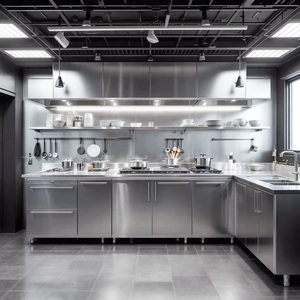
Customized Restaurant Kitchen Set Up Kitchen Equipment & Stainless Steel Kitchen Equipment For Restaurant
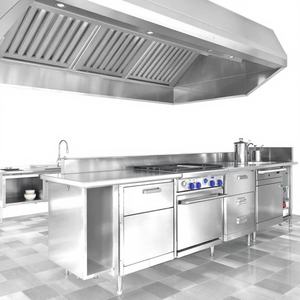
Stainless Steel Professional Commercial Kitchen Equipment Hotel Restaurant All-in-One Full Set Equipment Design
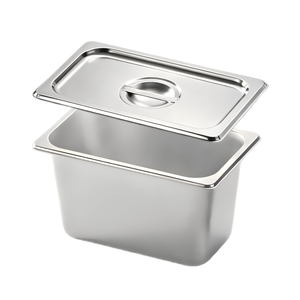
Liyunda 1/4 150mm Gastronorm Gn Pan Stainless Steel Buffet Food Container 201 304 Material With Lid
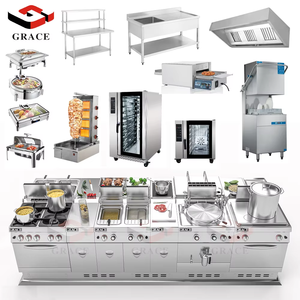
GRACE Stainless Steel Commercial Kitchen Equipment Set, Ideal for Fast Food Restaurant, Industrial Kitchen & Catering
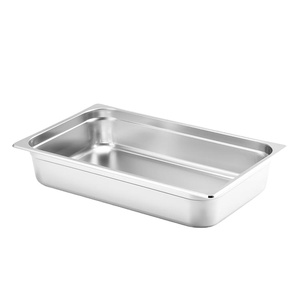
Stainless Steel 1/1 Gastronorm 304/201 Gn Pan Food Container Commercial Kitchenware For Gelato & Restaurants
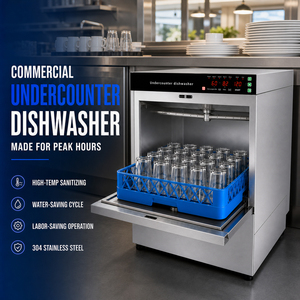
Under Counter Commercial Dishwasher Stainless Steel Automatic Cup Glass Washer for Restaurant Bar Hotel
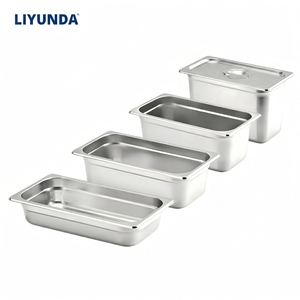
Liyunda Factory Stainless Steel EU GN Pan 1/3 Commercial Gastronorm Kitchenware Buffet Food Container
Understanding Deep Drawing Technology in Stainless Steel Component Manufacturing
Deep drawing is a fundamental metal forming process in which sheet metal blanks are radially drawn into a forming die by the mechanical action of a punch. The process transitions flat metal sheets into seamless, three-dimensional hollow vessels, enclosure shells, and intricate structural shapes without seam welding. For high-volume manufacturing across commercial catering, automotive, aerospace, and medical sectors, deep drawing offers unmatched structural integrity and material efficiency.
When working with austenitic and ferritic stainless steel grades—such as AISI 304, AISI 316L, AISI 201, and AISI 430—the deep drawing process involves complex plastic deformation mechanics. The success of a deep drawing operation depends on maintaining a delicate balance between radial tensile stress and tangential compressive stress to prevent wrinkling, tearing, or severe wall thinning.
Draw Ratio Mechanics
The Limiting Draw Ratio (LDR) defines the maximum ratio of blank diameter to punch diameter achievable in a single stroke without fracturing. Stainless steel 304 typically exhibits an LDR between 2.0 and 2.2, enabled by its high strain-hardening exponent (n-value ~0.45).
Work Hardening Control
Austenitic stainless steels undergo strain-induced martensitic transformation during drawing. Controlled multi-stage deep drawing requires inter-stage bright annealing at 1050°C to relieve stress and restore ductility for subsequent draws.
Tooling & Tribology
Tool design utilizes hardened tool steels (D2, SKD11) or tungsten carbide inserts with mirror-polished surfaces (Ra < 0.1 µm). High-pressure extreme-pressure (EP) lubricants prevent galling and die pick-up during deep draw cycles.
Metallurgical Properties Comparison for Deep Drawing Applications
| Stainless Grade | Tensile Strength (MPa) | Yield Strength (MPa) | Elongation (%) | Drawability Index | Primary Industry Applications |
|---|---|---|---|---|---|
| AISI 304 (1.4301) | 520 - 720 | 210 min | ≥ 45% | Excellent | Gastronorm pans, Euro bowls, cookware, architectural parts |
| AISI 316L (1.4404) | 500 - 700 | 200 min | ≥ 40% | Very Good | Marine equipment, chemical containers, pharmaceutical vessels |
| AISI 201 (1.4372) | 650 - 850 | 350 min | ≥ 35% | Moderate | Cost-effective food containers, structural shells, indoor hardware |
| AISI 430 (1.4016) | 450 - 600 | 260 min | ≥ 20% | Fair (Ferritic) | Induction cookware bottoms, appliance panels, trim components |
Enterprise Competitiveness & Fully Integrated Supply Chain Mastery
When evaluating high-precision stainless steel deep drawing parts manufacturers, tier-one global buyers demand absolute consistency, financial stability, technical autonomy, and rigorous compliance. Established in 2005, our operations (headquartered with extensive production infrastructures in India) stand out as a premier global OEM and private-label contract manufacturing partner.
500,000 kg Monthly Raw Material Rolling Capacity
Our parent group operates dedicated stainless steel cold-rolling mills capable of processing over 500 metric tons of steel coils monthly. This vertical integration guarantees raw material chemical purity, precise thickness tolerance (±0.02 mm), surface finish control (2B, BA, No.4), and complete immunity from raw material market volatility.
In-House Tooling & Progressive Die Engineering
Tooling precision governs deep drawing accuracy. We maintain a state-of-the-art die-making center equipped with CNC Machining Centers, Wire EDM, and CAD/CAM simulation software (AutoForm/FEA). Our dedicated toolmakers design multi-station progressive dies and deep draw tooling with minimal lead times for rapid prototyping.
Global Quality Certifications (ISO, CE, RoHS, REACH, BSCI)
Quality assurance is embedded in every stage of production. Facilities are certified to ISO 9001:2015 standards, while our consumer and commercial products comply with CE, RoHS, REACH, and BSCI social responsibility standards. In-house metallurgical laboratories perform optical emission spectrometry, salt spray corrosion testing, and mechanical draw tests.
Global Footprint Across 15+ Export Destinations
With over 19 years of international export expertise, we supply tier-1 brands, hospitality chains, and industrial catalog distributors across Europe, the Middle East, North America, and East Asia. Strict non-disclosure agreements (NDAs) protect our clients' custom designs, proprietary shapes, and private-label packaging specs.
Future Procurement & Technological Trends in Deep Drawing Manufacturing
The global metal forming and deep drawing industry is undergoing a profound paradigm shift driven by automation, material science innovations, carbon neutrality targets, and supply chain realignments. B2B procurement leaders and engineering directors must align their sourcing strategies with these five core macro trends to ensure cost-efficiency, product longevity, and risk mitigation over the next decade.
1. Simulation-Driven Forming & Near-Zero Scrap
Advanced Finite Element Analysis (FEA) software allows tool designers to simulate material thinning, stress concentrations, and springback behavior before cutting die steel. This virtual prototyping reduces die development time by 40% and optimizes blank layout geometry to minimize metal scrap rates below 5%.
2. Ultra-High Precision Multi-Stage Servo Pressing
Traditional mechanical presses are rapidly being replaced by direct-drive servo presses. Servo-electric control provides customized motion profiles, enabling precise punch velocity management during deep draw strokes. This eliminates micro-cracking in high-work-hardening stainless alloys.
3. Sustainable Metallurgy & Green Stainless Steel
Environmental regulations (such as the EU's CBAM) require low-carbon manufacturing. Leading manufacturers utilize stainless steel produced in electric arc furnaces (EAF) powered by renewable energy, featuring over 80% recycled scrap content with complete material trace-ability.
4. Autonomous Vision-Based In-Line Inspection
High-speed automated optical inspection (AOI) systems integrated directly into press lines utilize 3D laser scanners and AI computer vision to detect surface micro-scratches, dimensional deviations, and flange burrs in real time at rates exceeding 60 parts per minute.
5. Supply Chain Diversification: The India Manufacturing Advantage
Global buyers are aggressively shifting toward "China+1" sourcing strategies. India has emerged as the premier manufacturing powerhouse for stainless steel deep drawing components, offering competitive labor costs, vast domestic raw material reserves, skilled toolmaking engineering, and favorable trade logistics.
Step-by-Step Deep Drawing Manufacturing Process Workflow
Producing flawless, defect-free deep drawn stainless steel components requires meticulous adherence to a standardized multi-stage manufacturing sequence:
Step 1: Blanking & Slitting
Coils are precision-slitted and stamped into circular or customized flat blanks. Edge quality is strictly controlled to eliminate micro-cracks that could initiate fractures during drawing.
Step 2: Pre-Forming & First Draw
The blank is positioned on the die cushion. Hydraulic or servo blank holders apply uniform pressure while the punch forces the blank into the cavity to form the initial cup geometry.
Step 3: Redrawing & Sizing
For deep parts exceeding the LDR threshold, consecutive redraw cycles progressively reduce diameter while increasing depth, establishing precise wall thickness uniformity.
Step 4: Trimming & Piercing
Irregular flanges resulting from material anisotropy (earring effect) are precision-trimmed. Handles, drain holes, or mounting slots are punched simultaneously.
Step 5: Surface Polishing
Components undergo mechanical robotic polishing, electro-polishing, or satin brushing to achieve specified surface roughness (Ra values down to 0.2 µm for sanitary applications).
Step 6: Ultrasonic Cleaning & QC
Parts pass through multi-stage ultrasonic degreasing to remove drawing lubricants. Final CMM dimensional audit and pass/fail laboratory testing precede export packaging.
Frequently Asked Questions (FAQ) for B2B Sourcing & Deep Drawing OEM
In a single draw pass, the depth-to-diameter ratio for austenitic stainless steel (such as 304) is typically 1:1 (corresponding to an LDR of ~2.0 to 2.2). However, by implementing multi-pass redrawing operations combined with intermediate bright annealing, depth-to-diameter ratios of 4:1 or higher can be successfully achieved without fracturing or material degradation.
Wrinkling occurs due to compressive instability in the flange area, whereas tearing occurs when tensile stress in the side wall exceeds the ultimate tensile strength. We control these defects through FEA simulation, optimizing blank holder force (BHF), utilizing draw beads, applying high-film-strength synthetic lubricants, and selecting materials with high r-values (plastic strain ratio) and n-values.
Standard commercial tolerances on drawn diameters range from ±0.1 mm to ±0.25 mm. With precision sizing dies, secondary restriking, and CNC trimming, critical dimensions can be held to tight tolerances of ±0.03 mm to ±0.05 mm, depending on material thickness and part geometry.
Grade 304 contains 18% Chromium and 8% Nickel, offering superior intergranular corrosion resistance, deep drawability, and long-term durability in acidic or saline culinary environments. Grade 201 replaces nickel with manganese/nitrogen; while cost-effective for dry indoor storage, it has higher work-hardening rates and lower corrosion resistance compared to 304.
Tooling costs depend on part complexity, size, and annual production volumes. Single-action draw dies for simple bowls may range from $2,500 to $5,000, while complex progressive multi-station dies range from $12,000 to $35,000. Typical tooling development lead times—from initial CAD approval to T1 sample submission—span 3 to 6 weeks.
We execute legally binding bilateral Non-Disclosure Agreements (NDAs) prior to receiving client drawings. Private-label execution includes custom logo stamping/laser etching, customized barcode labeling, bespoke retail color boxes, and neutral master carton packaging to protect client IP completely.
Every shipment is dispatched with comprehensive EN 10204 3.1 Material Test Certificates (MTR) detailing chemical analysis and mechanical testing. Additionally, we provide dimensional inspection reports, surface roughness charts, salt spray test reports, and FDA/LFGB food contact compliance certifications upon request.
For custom OEM deep drawing components requiring dedicated tooling, standard MOQs typically start at 1,000 to 3,000 units per production run. For standardized catalogue products (e.g., standard Gastronorm pans or Euro bowls), lower MOQs starting at 500 units per SKU are available.
Partner with a Globally Trusted Deep Drawing Manufacturer
Whether you require custom OEM deep-drawn metal stampings, high-volume Gastronorm food containers, or contract manufacturing for commercial equipment, our engineering team is ready to assist.