In the rapidly evolving global hospitality and restaurant procurement market, Hammered Stainless Steel Thali Plates have transitioned from regional cultural servingware into a premier choice for commercial dining establishments, luxury resorts, and high-volume catering operations worldwide. Driven by the expansion of South Asian fusion dining, authentic regional concepts, and experiential communal eating trends across North America, Europe, the Middle East, and East Asia, procurement executives are actively seeking long-lasting, aesthetically distinctive platter solutions.
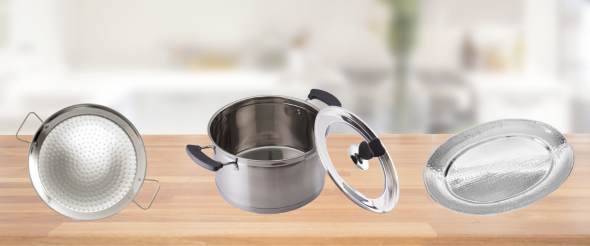
Unlike flat or polished smooth stainless steel plates—which frequently exhibit visible surface scratches, water spotting, and thermal flex under industrial high-temperature dishwashing—hammered metalware utilizes micro-dimpled surface geometry. This hand-hammered or mechanically dimpled topography scatters light reflection, hides operational wear, and delivers a tactile, artisanal dining experience while preserving all the hygienic, non-porous benefits of metallurgical-grade stainless steel.
From an industrial design perspective, the hammering process is not merely decorative; it serves a crucial mechanical engineering function called work hardening (strain hardening). When cold-rolled stainless steel sheets undergo localized mechanical impacts during the dimpling cycle, the crystal lattice structure of the alloy realigns, increasing the material's yield strength and flexural rigidity. This enables a lighter gauge plate to achieve equivalent or superior structural resistance against warping compared to a significantly heavier smooth plate.