
Strategic Sourcing of Bulk Stainless Steel Houseware & Kitchenware in Ho Chi Minh City
As the economic engine of Vietnam and the primary industrial gateway of Southern Vietnam, Ho Chi Minh City (HCMC) has rapidly emerged as a dominant global hub for stainless steel houseware manufacturing, commercial kitchenware sourcing, and OEM metal fabrication. Global procurement executives, hotel procurement managers, and commercial kitchenware distributors are shifting supply chain allocations toward HCMC to leverage favorable international trade agreements, optimized sea freight logistics, and mature metallurgy infrastructure.
In this technical whitepaper, we examine the structural advantages of sourcing stainless steel houseware from Ho Chi Minh City factories, compare raw material grades under high-humidity tropical microclimates, evaluate deep-drawing tooling capabilities, and outline actionable risk-mitigation frameworks for international B2B buyers.
Key Takeaway for B2B Procurement Officers: Sourcing stainless steel houseware directly through Ho Chi Minh City industrial corridors yields an average 14–18% logistics cost reduction for APAC and European shipments compared to secondary inland manufacturing zones, while benefiting from zero-tariff rules under EVFTA, CPTPP, and RCEP frameworks.
Metrological & Material Grade Selection Matrix for Tropical Commercial Environments
Selecting the appropriate metallurgical grade is critical for stainless steel houseware deployed in Southeast Asian environments or exported to stringent regulatory regimes across the European Union and North America. Industrial kitchens in Ho Chi Minh City face high ambient relative humidity (averaging 78%–85%) and elevated atmospheric salinity due to coastal proximity.
Factories in the Greater HCMC industrial ecosystem specialize in processing two primary austenitic alloys (AISI 304 and AISI 201) alongside ferritic grades (AISI 430) engineered for specific thermal and structural applications:
| Stainless Steel Grade | Chemical Composition (Cr / Ni / Mn) | Corrosion Resistance Rating | Yield Strength (MPa) | Optimal Application Scenarios in HCMC Ecosystem |
|---|---|---|---|---|
| AISI 304 (18/8) | 18% Cr / 8% Ni / < 2.0% Mn | High (Salt Spray Test > 72 hrs) | 205 - 240 | Heavy-duty Gastronorm pans, hotel chafing dishes, acidic food storage, commercial glass washers, seafood processing line units. |
| AISI 201 (Low-Ni) | 14–16% Cr / 1.5–3.5% Ni / 5.5–7.5% Mn | Moderate (Dry / Indoor use) | 310 - 350 | Economy food trays, serving platters, indoor waste receptacles, dry spice containers, non-acidic storage hardware. |
| AISI 430 (Ferritic) | 16–18% Cr / 0.75% Ni / < 1.0% Mn | Moderate-High (Induction-compatible) | 275 - 310 | Induction cooker bottoms, stock pot base plates, table countertops, outer cabinet cladding for restaurant machinery. |
Deep Drawing Technology & Tooling Precision
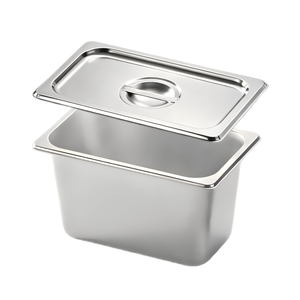
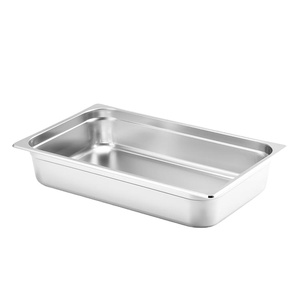
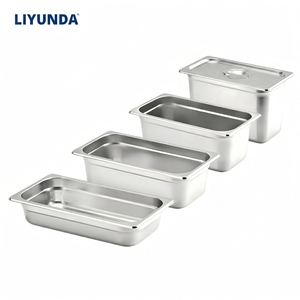
Modern stainless steel houseware manufacturing requires rigorous cold-working press processes. Advanced factories in Ho Chi Minh City utilize high-tonnage hydraulic deep drawing presses ranging from 250 tons to 1,200 tons. This machinery facilitates seamless stamping of complex geometry items such as Euro bowls, high-depth stock pots, rice washing colanders, and heavy-gauge Gastronorm (GN 1/1, GN 1/3, GN 1/4) pans.
By enforcing precise draw ratio controls (β = D/d ≤ 2.1) and applying specialized synthetic drawing lubricants, our manufacturing lines prevent micro-fissures, orange-peeling surface defects, and localized wall-thinning. In-house toolmakers fabricate hardened chrome-coated dies (D2 and SKD11 steel), ensuring dimensional tolerances within ±0.15mm across multi-thousand unit production runs.
Localized Application Scenarios in Ho Chi Minh City & Vietnam Regional Markets
Understanding local operational environments within Southern Vietnam provides essential context for OEM engineering and product customization:
Luxury Hospitality & Resort Clusters
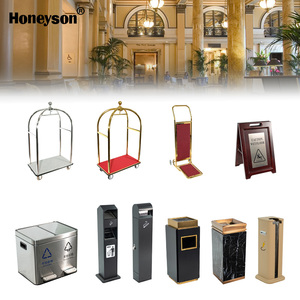
High-density hotel developments in HCMC's District 1, District 7 (Phu My Hung), and nearby coastal resorts (Phu Quoc, Nha Trang) demand mirror-polished AISI 304 buffet equipment, eco-friendly metal-plastic hybrid amenities, and heavy-gauge warming pans capable of withstand continuous 24/7 banqueting operations.
Industrial Kitchens in VSIP & Export Zones
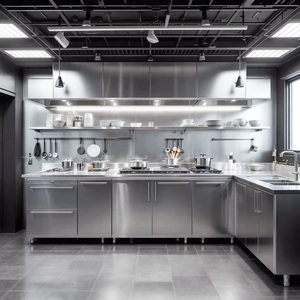
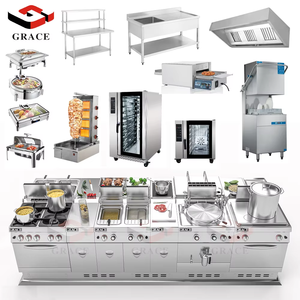
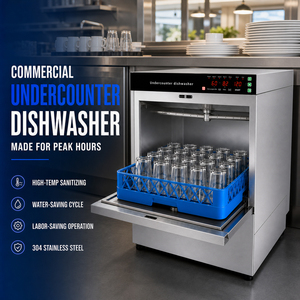
Industrial parks such as Tan Binh IP, Long Hau IP, and VSIP (Vietnam Singapore Industrial Park) feature high-capacity central kitchens serving tens of thousands of factory workers daily. Procurement officers specify deep-drawn stackable GN food containers, heavy stock pots, and automated under-counter dishwashers designed for rapid turnarounds.
Modern Retail & Supermarket Chains
Leading retail chains across Vietnam (such as Co.opmart, WinMart, and Mega Market) require consumer-grade stainless steel houseware featuring anti-fingerprint PVD coatings, color-accented silicone covers, and retail-ready color box packaging compliant with local GS1 barcode regulations.
2025–2030 Localized Manufacturing & Supply Chain Trends in Southern Vietnam
1. The Shift to Integrated Cold-Rolling & In-House Stamping
Historically, stainless steel fabricators imported cold-rolled coil stock from third-party mills, creating supply bottlenecks and lead-time volatility. Leading modern suppliers in Ho Chi Minh City operate vertically integrated ecosystems. By coupling parent-facility steel sheet rolling (with monthly outputs exceeding 500,000 kg) directly with automated press lines, factories eliminate middleman markups, guarantee uniform thickness tolerances, and maintain stable FOB pricing even during raw nickel market fluctuations.
2. Carbon Footprint Reduction & CBAM Compliance
With the European Union's Carbon Border Adjustment Mechanism (CBAM) entering phased implementation, Ho Chi Minh City stainless steel exporters are rapidly retrofitting manufacturing infrastructure. Factory roofs across suburban industrial estates are being fitted with solar photovoltaic arrays, reducing Scope 2 grid emissions during stamping and electropolishing phases by up to 28%.
3. Adoption of Advanced Passivation & Eco-Electropolishing
Traditional acid-pickling methods are being systematically replaced by eco-friendly citric-acid passivation and high-efficiency electropolishing baths. This transition eliminates hazardous chemical runoff, protects nearby waterways in the Saigon River basin, and produces ultra-smooth surface finishes (Ra < 0.35 μm) that surpass European LFGB and US FDA food contact standards.
Enterprise Manufacturing Capabilities & OEM Standards
Our underlying manufacturing architecture integrates raw material processing with custom product engineering, allowing international buyers to transition seamlessly from product concept to full-scale production:
- In-House Metallurgical Testing Laboratory: Every incoming batch of stainless steel coil undergoes spectral chemical analysis, Rockwell hardness testing, and intergranular corrosion testing prior to press operations.
- Dedicated Die & Mold Workshop: Custom logo embossing, modified rim profiles, and proprietary container dimensions are created in-house using 5-axis CNC machining centers, reducing custom tooling lead times from 45 days down to 14 days.
- Automated Surface Finishing: Multi-station automated polishing machinery offers satin matte, high-mirror, electro-plated gold, and PVD titanium coating finishes tailored to brand specifications.
- Full Export Compliance Package: Complete compliance documentation including ISO 9001:2015, ISO 14001, CE certificates, RoHS, REACH, and BSCI social audit certifications.
 ISO 9001:2015 Certified
 CE Standards Verified
 15+ Global Destinations