
Featured Deep-Drawn Shells & Commercial Equipment
Engineered stainless steel deep-drawn shells, gastronorm vessels, and commercial processing components built to international ISO standards.

Metallurgical Mechanics & Engineering Standards of Deep Drawn Stainless Steel Shells
An authoritative guide for B2B procurement managers, design engineers, and industrial equipment manufacturers in Toronto and the Greater Toronto Area (GTA).
1. Deep Drawing Mechanics & Material Strain Behavior
Deep drawing is a fundamental cold-forming process used to transform flat stainless steel blank discs into seamless, deep, cylindrical, rectangular, or complex shaped metal shells. When evaluating deep drawing stainless steel shells manufacturers for Toronto's rigorous industrial applications, understanding the strain rate sensitivity and work-hardening characteristics of austenitic stainless steel (such as AISI 304, 304L, 316, and 316L) is critical.
During the deep drawing operation, the blank is drawn into a die cavity via a mechanical or hydraulic punch. The flange area undergoes radial tensile stress and circumferential compressive stress. Austenitic stainless steels exhibit a high strain-hardening coefficient ($n$-value around 0.45 to 0.50), meaning the metal gains tensile strength rapidly during deformation. This property prevents localized necking, allowing for extreme draw depths—provided the blank holding pressure (BHP) and drawing lubrication are calculated with mathematical precision.
2. Limiting Draw Ratio (LDR) & Tooling Radius Optimization
The Limiting Draw Ratio (LDR) defines the maximum ratio of blank diameter ($D_b$) to punch diameter ($d_p$) achievable without fracturing the shell shell base ($LDR = D_b / d_p$). For standard 304/316 stainless steel grades, optimal LDR values range between 2.0 and 2.3. Achieving deeper draws requires multi-stage re-drawing processes combined with intermediate bright annealing inside atmosphere-controlled furnaces to restore ductility and eliminate residual internal stresses.
Die profile radii and punch radii are micro-engineered to avoid tearing. A die radius that is too small generates excessive bending stress and thins the sidewall, while a radius that is too large causes flange wrinkling. PP Impex India’s tooling division maintains die corner radii strictly within 4 to 8 times sheet thickness ($t$), guaranteeing wall thickness uniformity within $\pm 0.05\text{mm}$ across deep-drawn cylindrical shells.
| Stainless Grade | Yield Strength (MPa) | Tensile Strength (MPa) | Deep Drawability (LDR) | Corrosion Resistance | Typical Toronto Industry Application |
|---|---|---|---|---|---|
| AISI 304 (1.4301) | 215 | 505 - 750 | 2.10 - 2.25 | High | Commercial Food Containers, GN Pans, Restaurant Shells |
| AISI 316L (1.4404) | 290 | 580 - 800 | 2.05 - 2.20 | Superior (Molybdenum) | Biotech Vessels, Pharmaceutical Tanks, Marine Enclosures |
| AISI 430 (1.4016) | 260 | 450 - 600 | 1.80 - 1.95 | Moderate (Ferritic) | Appliance Housing Shells, Kitchen Decorative Trims |
| AISI 201 (1.4372) | 350 | 750 - 900 | 1.90 - 2.05 | Standard Indoor | Economy Catering Hardware, Hotelware Shell Components |
3. Deep Drawing vs. Metal Spinning vs. Welded Sheet Enclosures
Engineers in Toronto frequently evaluate whether to specify deep-drawn metal shells, spin-formed components, or fabricated/welded sheet assemblies. Deep drawing provides distinct advantages for volume B2B manufacturing:
- Structural Integrity: Seamless one-piece construction eliminates weld seams, preventing bacterial growth traps and leak points in hygienic applications.
- Unit Cost Efficiency: While initial die tooling costs are higher, unit production costs drop exponentially during high-volume production cycles compared to labor-intensive welding and grinding.
- Surface Uniformity: Achieves a consistent surface roughness ($R_a < 0.4\,\mu\text{m}$ after electropolishing), critical for sanitary food handling and cleanroom specifications in Ontario.
Localized Application Scenarios in Greater Toronto Area (GTA)
Providing precision OEM stainless steel shells tailored to Ontario's primary industrial, architectural, and commercial sectors.
1. Commercial Food & Hospitality
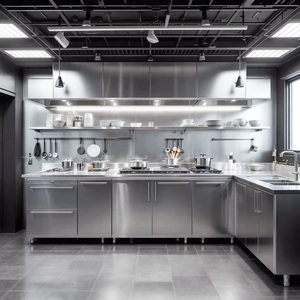
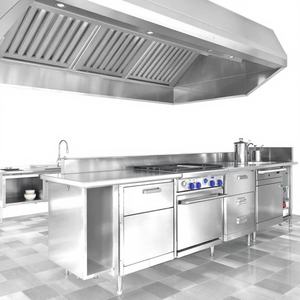
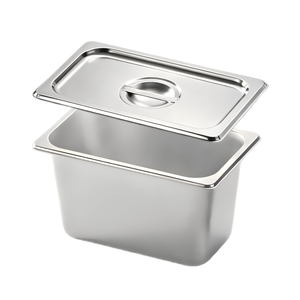
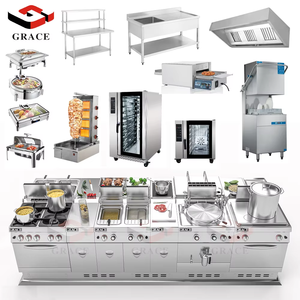
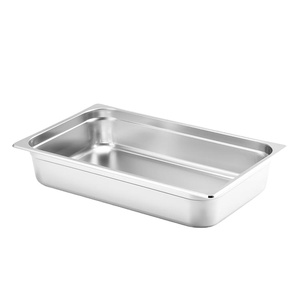
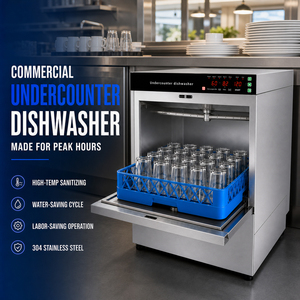
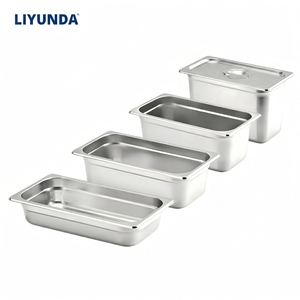
Toronto’s thriving hospitality corridor (Downtown, Mississauga, Markham) relies on NSF-standard deep-drawn gastronorm pans, buffet food containers, under-counter dishwasher shells, and heavy-duty stock pots engineered for intense sanitization cycles.
2. Bio-Tech & Pharma Cleanrooms
Serving Toronto's Discovery District and Markham innovation hubs with seamless 316L stainless steel deep-drawn pressure caps, filter housings, and bio-vessel shells built to resist corrosive chemical washdowns.
3. HVAC & Environmental Systems
Industrial equipment hubs in Etobicoke and Scarborough utilize drawn stainless steel motor enclosures, fan housings, and condensation drain pans engineered for extreme Canadian winter/summer thermal expansion cycles.
Industrial Manufacturing Trends Across Ontario
Key shifts impacting OEM component sourcing, sustainability mandates, and supply chain resilience in Canada.
Nearshoring Hybrids & Inventory Resilience
Toronto-based original equipment manufacturers (OEMs) are increasingly adopting hybrid supply chain strategies. By partnering with high-capacity ISO-certified overseas deep drawing specialists, local buyers reduce raw material costs while keeping safety stock in GTA warehousing hubs like Brampton and Vaughan, guaranteeing uninterrupted production timelines.
Zero-Carbon & Recyclability Mandates
Ontario's strict environmental compliance frameworks favor 100% recyclable austenitic stainless steel over short-lifespan plastics. Deep drawn shells eliminate material waste during production (via optimized circular blank nesting), matching Canada's green procurement requirements for industrial infrastructure.
Enterprise Capabilities & OEM Manufacturing Advantages
Vertically integrated production capabilities delivering precision deep drawing components from concept to international delivery.
In-House Tooling & Die Making Facility
Our dedicated internal toolroom builds progressive dies, compound deep draw tooling, and custom punches. This eliminates middleman delays, reducing prototyping turnaround times by up to 40% for Toronto custom projects.
500,000 kg Monthly Raw Sheet Rolling Capacity
Backed by our parent company's cold rolling mill operations, we maintain direct control over stainless steel coil quality, gauge tolerance, surface finish, and metallurgical chemistry from raw ingot to finished deep-drawn shell.
Global OEM/Private Label Expertise
With over 19 years of OEM export experience across 15+ countries, PP Impex India provides end-to-end B2B contract manufacturing: re-engineering buyer drawings, deep-draw pressing (up to 500-ton hydraulic presses), rim trimming, bead rolling, laser cutting, polish finishing, surface passivating, and custom branding/packaging.
Toronto Local Procurement FAQs
Answers to common B2B sourcing questions from procurement managers in Ontario, Canada.
Ready to Accelerate Your Deep Drawing Stainless Steel Project in Toronto?
Partner with an ISO-certified OEM manufacturer with 19+ years of technical excellence, 500,000kg monthly raw material capacity, and dedicated custom die-making facilities.