Custom Deep Drawing & Stamping Component Portfolio
Engineered for severe duty, industrial durability, and seamless integration into North African supply chains
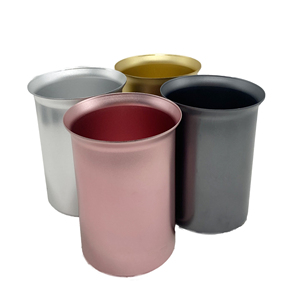
ISO 9001 Certified Custom Sheet Metal Deep Drawing Parts
Precision-drawn metal shells and enclosures engineered with progressive die tooling for high-repeatability applications in industrial machinery and housing units.
Inquire Now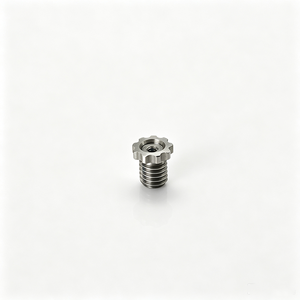
EDM Precision Steel & Aluminum Deep Drawn Components
High-grade electrical discharge machining (EDM) processed steel and aluminum drawn components tailored for heavy machinery and automotive assemblies.
Inquire Now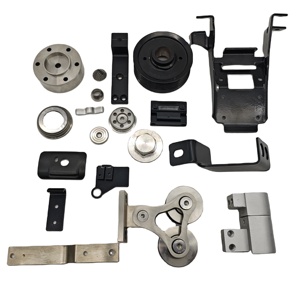
Multi-Material Copper, Aluminum & Stainless Steel Drawn Parts
Versatile deep drawing service capable of handling high-conductivity copper, lightweight aluminum alloys, and corrosion-resistant stainless steels.
Inquire Now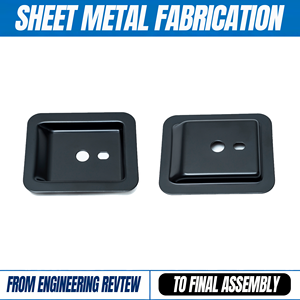
Aluminum Alloy Heavy Stamping & Hydroformed Shells
Lightweight high-strength aluminum alloy structural components designed for desert HVAC systems, outdoor enclosures, and transport units.
Inquire Now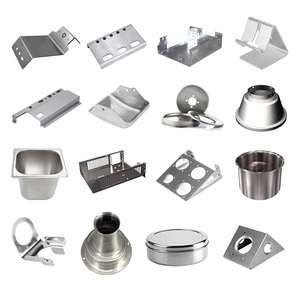
304 / 316 Stainless Steel & Carbon Steel OEM Stamping Parts
Austenitic 304/316 grade stainless deep-drawn vessels providing robust resistance against aggressive Saharan ambient heat and marine coastal salt spray.
Inquire Now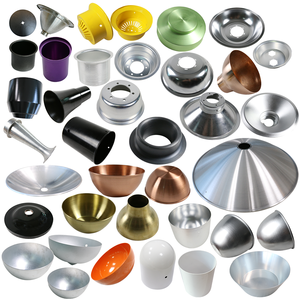
1.4mm Q235 Steel Deep Draw CNC Spinning & Hydroformed Cylinders
Custom 1.4mm structural Q235 steel deep drawn cylinders treated with fine brushed surfaces, suited for oilfield filtration housings and pressure vessels.
Inquire Now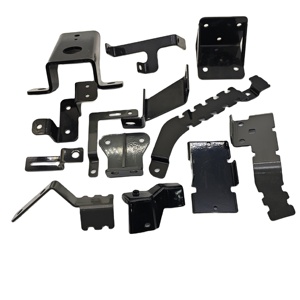
Direct Factory Custom Stainless & Aluminum Drawn Assemblies
High-volume OEM deep-drawn metal components manufactured with in-house progressive dies to drastically reduce unit cost and lead time.
Inquire Now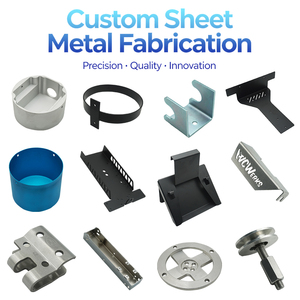
Integrated Laser Cutting & Precision Metal Deep Drawing Parts
Comprehensive fabrication combining high-speed fiber laser cutting, precision bending, and deep drawing for complex geometrical hardware.
Inquire NowTechnical Whitepaper: Engineering Deep Drawing Excellence for North African Industrial Demands
Deep drawing is a fundamental cold-forming process that transforms flat sheet metal blanks into seamless axisymmetric or complex cup-shaped, box-shaped, or spherical hollow bodies. When executed at enterprise scale for demanding destination markets such as Algeria, the manufacturing process requires strict metallurgical analysis, precise calculation of limiting draw ratios (LDR), advanced tribological lubrication dynamics, and finite element method (FEM) die simulation.
In deep drawing, the plastic deformation of sheet metal occurs under combined tensile and compressive stress states. The central disk portion of the metal blank forms the base of the drawn vessel, while the outer annular portion (flange) is pulled radially inward toward the die opening. As the material moves inward, radial tensile stresses elongate the sheet while circumferential compressive stresses induce a high risk of wrinkling or buckling. To mitigate flange instability, our hydraulic press systems utilize dynamic numerical blank holding force (BHF) controls. By maintaining optimal blank holding pressures, our production lines eliminate flange wrinkling while keeping punch force below the ultimate tensile strength (UTS) of the workpiece, preventing necking and catastrophic wall rupture.
The maximum blank-to-punch diameter ratio ($LDR = D_{blank} / d_{punch}$) dictates whether a component can be drawn in a single operation or requires multi-stage intermediate annealing steps. For standard AISI 304 stainless steel, our presses achieve single-stage LDR values of up to 2.1 to 2.25 under automated hydraulic lubrication.
The mechanical behavior during drawing is heavily governed by two material properties: the plastic strain ratio ($r$-value, or Lankford parameter) and the strain hardening exponent ($n$-value). A higher average plastic strain ratio ($\bar{r}$) signifies superior resistance to wall thinning during deep drawing, whereas a higher $n$-value permits uniform stretchability without premature localized strain localization.
| Material Specification | Yield Strength (MPa) | Tensile Strength (MPa) | Plastic Strain Ratio ($\bar{r}$) | Primary Application in Algeria |
|---|---|---|---|---|
| AISI 304 (1.4301) Stainless | 205 – 240 | 520 – 720 | 1.2 – 1.4 | Food processing equipment, coastal HVAC units, desalination components |
| AISI 316L (1.4404) Marine Grade | 220 – 260 | 530 – 680 | 1.3 – 1.5 | Oil & gas fluid containment, Sonatrach chemical refineries, offshore platforms |
| Q235 Carbon Steel (1.4 mm) | 235 | 370 – 500 | 1.0 – 1.2 | Heavy structural agricultural housings, construction machinery, chassis caps |
| Aluminum 6061-T6 (Hydroformed) | 275 | 310 | 0.8 – 0.95 | Lightweight vehicular panels, outdoor desert telecom enclosures, heat exchangers |
| Copper C1100 (Electrolytic) | 69 – 150 | 220 – 380 | 0.9 – 1.1 | Electrical switchgear shells, specialized heat sinks, power distribution modules |
To maintain extreme dimensional fidelity across large production batches, our factory utilizes high-tonnage hydraulic presses ranging from 250T to 1200T equipped with multi-action CNC die cushions. Combined with CNC metal spinning for large-diameter cylindrical bodies and high-pressure hydroforming for non-symmetric geometry, we overcome springback issues inherent in high-strength metals. Edge trimming via multi-axis fiber laser systems ensures square, burr-free edges ready for automated robotic welding or immediate assembly.
Localized Application Scenarios Across Algeria's Industrial Sectors
Algeria's rapid industrialization and strategic economic diversification drive high demand for custom OEM sheet metal deep-drawn components. Our precision manufacturing services directly align with the distinct environmental and operational challenges across key Algerian industrial regions:
Localized Development Trends & Trade Dynamics in Algeria
The Algerian industrial manufacturing domain is undergoing structural evolution under government initiatives aimed at reducing import dependence and building robust local value chains (Loi de Finances and Algeria Vision 2030). Understanding these localized regulatory shifts is vital for Algerian procurement executives and foreign OEM investors alike:
- Import Substitution Policy & Local Integration Mandates: Algerian executive decrees strongly incentivize domestic manufacturing plants (e.g., home appliances, automotive, HVAC) to increase their integration rate (Taux d'intégration nationale). By partnering with our factory as a qualified international OEM supplier of deep-drawn components, local manufacturers acquire precision sub-assemblies that simplify final assembly within Algerian borders.
- Strict Customs Inspection & Certificat de Contrôle de Qualité: The Ministry of Commerce and Bank of Algeria require rigorous proof of quality compliance for imported industrial components. All our export shipments include complete Mill Test Reports (MTR) according to EN 10204 3.1, ISO 9001 quality certificates, and dimensional CMM inspection sheets, guaranteeing smooth customs clearance through major sea gateways like the Port of Algiers, Oran, Bejaia, and Skikda.
- Commercial Banking & Letter of Credit Compliance: We maintain complete fluency in Algerian import payment regulations, including Letter of Credit (L/C - Crédit Documentaire) and Cash Against Documents (Remise Documentaire). Our documentation team ensures 100% error-free execution of Bill of Lading (B/L), Certificate of Origin, and Commercial Invoices formatted to Bank of Algeria standards.
- Climate-Resilient Material Engineering: Products deployed in Algeria face dual environmental challenges: extreme thermal fluctuations (exceeding 50°C in Saharan regions) and aggressive atmospheric salinity along the 1,200 km Mediterranean coastline. Our deep drawing technology incorporates stress-relief annealing and electro-passivation finishes to prevent stress corrosion cracking (SCC) and pitting corrosion.
Our Corporate Manufacturing Advantages & Engineering Infrastructure
As a dedicated OEM sheet metal deep drawing manufacturer with over 16 years of international export heritage, our industrial ecosystem offers unmatched advantages to Algerian enterprise buyers:
Frequently Asked Questions for Algerian Procurement Managers
Clear answers on payment terms, technical compliance, shipping logistics, and custom manufacturing workflows
How do you handle Bank of Algeria requirements for Letter of Credit (L/C)?
We fully accept Irrevocable Letters of Credit (L/C at sight) and Cash Against Documents (CAD) issued by major Algerian financial institutions such as Banque Nationale d'Algérie (BNA), BEA, CPA, and BADR. Our export documentation team prepares accurate Commercial Invoices, Packing Lists, Certificates of Origin, and Clean Shipped-on-Board Bills of Lading in total alignment with Bank of Algeria directives to ensure zero clearance delays.
What documentation is provided for Algerian customs inspection (Certificat de Contrôle de Qualité)?
Every shipment is dispatched with a formal Quality Inspection Certificate, EN 10204 3.1 Mill Test Reports (MTR) covering chemical composition and mechanical properties, CMM dimensional measurement reports, and SGS or Intertek third-party inspection reports upon buyer request. This satisfies all Ministry of Commerce requirements for customs duty assessment and quality authorization.
Can deep-drawn components be customized according to 3D CAD models or physical samples?
Yes. Our engineering department accepts CAD files in STEP, IGES, SolidWorks (SLDPRT), and DWG formats. If you only possess a physical sample or conceptual sketch from an existing installation, our team utilizes 3D laser scanning and reverse engineering to create detailed production drawings and die designs for complete customer sign-off.
What are the standard lead times for custom tooling and mass production shipping to Algeria?
Tooling design and sample fabrication typically take 20 to 30 days depending on part complexity and drawing stages. Upon sample approval, mass production takes 15 to 25 days. Direct maritime shipping transit time from our port to major Algerian seaports (Algiers, Oran, Skikda, or Bejaia) is approximately 18 to 28 days.
How do you prevent metal surface corrosion and humidity damage during ocean transit to North Africa?
All deep-drawn components undergo automated ultrasonic cleaning and drying. Parts made of carbon steel or aluminum are treated with anti-rust oil immersion or VCI (Vapor Corrosion Inhibitor) film packaging. Packed goods are sealed in heavy-duty polybags with active desiccant packs inside heat-treated fumigated wooden cases to guarantee rust-free arrival.
Who owns the tooling dies after custom manufacturing setup?
The customer retains 100% ownership of all custom tooling, dies, and fixtures paid for during development. We store, maintain, and insure customer tooling free of charge in our climate-controlled die vault for future repeat orders, and we strictly enforce Non-Disclosure Agreements (NDAs) to protect proprietary designs.
Accelerate Your Manufacturing Procurement for Algeria
Partner with an ISO 9001 certified OEM deep drawing manufacturer. Submit your CAD technical drawings or project specifications today for a rapid engineering review and competitive quote.
Inquire Now