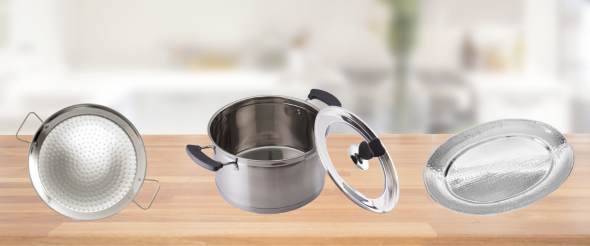
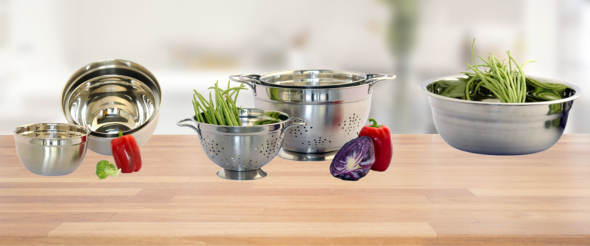
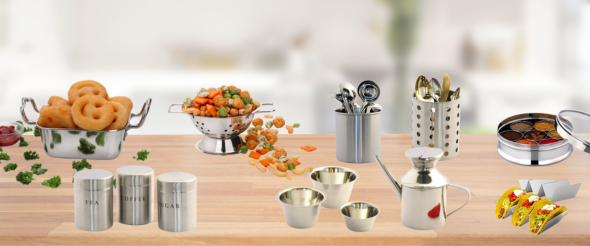
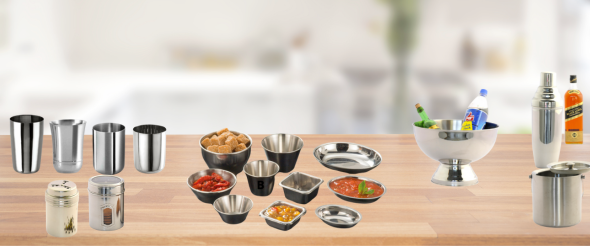
1. Metallurgical Evolution: 300 Series vs. 400 Series and Advanced Ferritics
Global procurement teams are moving past generic "18/10" marketing labels to specify precise metallurgical formulations tailored to distinct kitchen applications. While AISI 304 (18/8 Chromium-Nickel) remains the gold standard for prep bowls and storage due to its exceptional deep-drawing ductility and corrosion resistance, high-salinity cooking environments (such as seafood stock pots and acidic sauce reductions) increasingly demand AISI 316 (18/10/2 Chromium-Nickel-Molybdenum) to prevent localized pitting corrosion.
Simultaneously, the global shift toward energy-efficient induction cooking in hotel kitchens has catalyzed the integration of ferritic stainless steels (such as AISI 430 and AISI 444). These magnetic grades are cladding materials bonded to cookware bases to maximize magnetic flux absorption and reduce energy consumption by up to 30% compared to traditional gas ranges.
| Stainless Steel Grade | Chemical Composition | Key Properties | Primary Hotelware Application |
| AISI 304 (18/8) | 18% Cr, 8% Ni | High ductility, excellent corrosion resistance, non-magnetic | Deep-drawn mixing bowls, Euro colanders, GN pans, food containers |
| AISI 316 (18/10/2) | 18% Cr, 10% Ni, 2% Mo | Superior chloride pitting resistance, high temperature strength | Saline boiling pots, acidic sauce kettles, coastal outdoor resort ware |
| AISI 430 (17/0) | 17% Cr, 0% Ni | Ferromagnetic, high thermal conductivity, low thermal expansion | Outer layer of tri-ply induction bottom pots, flatware, chafing bases |
| Tri-Ply Encapsulated | SS 304 + Pure Al + SS 430 | Eliminates hot spots, rapid lateral heat transfer, induction ready | Commercial heavy-duty stock pots, sauté pans, banquet chafers |
2. Precision Hydraulic Deep Drawing vs. Conventional Metal Spinning
Historically, round hotelware items like deep stock pots and bowls were produced via manual metal spinning, leading to uneven wall thickness, micro-stretches, and premature burn-through under intense gas flames. Modern commercial hotelware manufacturing relies on multi-stage hydraulic deep drawing presses. By applying thousands of kilonewtons of balanced pressure with precision dies, deep drawing achieves uniform wall thickness from rim to base, structural stress elimination, and flawless seamless interiors compliant with strict HACCP food hygiene guidelines.
3. Advanced Physical Vapor Deposition (PVD) & Surface Engineering
As luxury hotel dining transitions toward immersive visual experiences, traditional polished silver-look tableware is being augmented by PVD (Physical Vapor Deposition) nano-coatings. By depositing titanium nitride compounds under vacuum conditions, manufacturers create durable, scratch-resistant finishes in Matte Black, Rose Gold, Champagne Gold, and Burnished Copper. Unlike electroplating, PVD produces zero toxic effluents, is 100% food-safe, and survives high-temperature commercial dishwashing environments without flaking.