B2B Sourcing & Technical Manufacturing Guide

High-Performance Stainless Steel Stock Pots: Engineering Specifications, Sourcing Matrix & Future OEM Trends

An authoritative guide for global procurement directors, hotelware brand owners, and commercial kitchenware importers seeking high-gain insights on raw material selection, impact bonding technology, structural durability, and sustainable OEM supply chain strategies.

Author: Senior OEM Engineering & Sourcing Team Publisher: PP Impex India Updated: 2025 Edition Reading Time: 14 min read

Executive Procurement Strategy for Stainless Steel Stock Pots

In the global commercial cookware ecosystem, the Stainless Steel Stock Pot represents a mission-critical procurement category. Unlike standard domestic pots, commercial stock pots deployed in high-volume hospitality, institutional catering, food processing, and professional kitchens are subjected to continuous thermal cycling, acidic culinary environments, and demanding physical handling. For procurement managers, wholesale distributors, and private-label brand managers, selecting the optimal manufacturing partner requires far more than comparing surface-level unit prices.

True total cost of ownership (TCO) and brand equity depend on underlying metallurgy, deep drawing accuracy, base encapsulation techniques, handle weld shear strength, and regulatory compliance (such as FDA, EU No 1935/2004, and NSF standards). As global supply chains realign to mitigate geopolitical risks and anti-dumping tariffs, India has emerged as a premier manufacturing powerhouse for deep-drawn stainless steel cookware.

Key Information Gain Insight for B2B Buyers

"Thermal delamination and bottom warping remain the leading causes of warranty claims in commercial stock pots. Specifying 2,500-ton friction-impact bonded encapsulated bases with 304-grade austenitic stainless steel interior surfaces reduces field failure rates to near zero while enhancing thermal transfer efficiency by up to 38% on modern commercial induction ranges."

Why Material Engineering Matters in High-Volume Boiling & Simmering

Stock pots are engineered specifically for liquid-heavy cooking processes—boiling stocks, preparing broth reductions, processing large-volume soups, and boiling seafood or pasta. This requires sustained heat distribution without localized hotspots that cause scorching. Austenitic stainless steel (AISI 304 / EN 1.4301), containing 18% chromium and 8% nickel, provides superior resistance to organic acids and salty solutions. However, because stainless steel possesses a relatively low thermal conductivity (~16 W/m·K), high-performance stock pots integrate encapsulated aluminum disk bases (thermal conductivity ~237 W/m·K) or tri-ply clad structures to achieve rapid, uniform heat diffusion across the entire bottom plane.

Product Recommendations & B2B Portfolio Taxonomy

PP Impex India designs and manufactures a comprehensive spectrum of stainless steel stock pots engineered to meet distinct commercial performance tiers and retail market positions. Below is our strategic buyer recommendation matrix:

Commercial Heavy-Duty Tier

Impact-Bonded Encapsulated Stock Pots (20L – 150L)

Designed for high-intensity HORECA applications, commercial kitchens, and institutional caterers. Features a heavy-gauge SS304 body reinforced with a 5mm–7mm aluminum core encapsulated by a magnetic SS430 bottom plate.

  • Body Thickness: 1.0mm – 1.5mm AISI 304
  • Base Type: 3-Ply Impact Bonded Capsule
  • Handles: Multi-Point Spot Welded / Riveted Tubular
  • Compatibility: Gas, Electric, Induction, Halogen
Retail & Premium Brand Tier

Full Tri-Ply Clad Stock Pots (8L – 24L)

Engineered with a seamless 3-layer composite body (SS304 Interior + Pure Aluminum Core + SS430 Exterior). Delivers edge-to-edge heat conduction for precise simmer control and luxury retail appeal.

  • Body Structure: 2.5mm Full Clad Tri-Ply
  • Rim Finish: Sealed Rolled Drip-Free Pouring Rim
  • Handles: Ergonomic Cast Stainless Steel
  • Surface Finish: Mirror Polish / Satin Interior
Specialized Culinary Tier

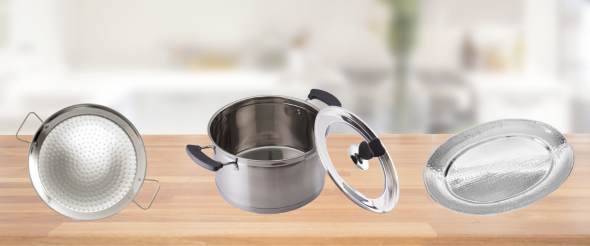
Stock Pots with Perforated Strainer & Steamer Inserts

Integrated multi-piece boiling systems ideal for seafood boils, pasta preparation, and vegetable steaming. Includes deep-drawn perforated basket accessories.

  • Component: Deep Drawn Stock Pot + Insert Basket
  • Perforations: Precision Punched 4mm-6mm Holes
  • Material: Food Grade SS304 / SS201 Options
  • Target Market: Specialty Restaurants & Retail Sets
Institutional Volume Tier

Standard Commercial Stock Pots (Straight Wall)

Cost-optimized, robust single-ply or encapsulated stock pots designed for government tenders, military bases, school cafeterias, and high-volume catering contracts.

  • Guaging: Optimized 0.8mm – 1.2mm SS304/201
  • Rim Type: Reinforced Beaded Rim
  • Lid Type: Heavy Flat / Dome Stainless Steel Lid
  • Logistics: Stackable Design for Container Efficiency

Technological Developments & Manufacturing Engineering Evolution

The manufacturing methodology of commercial stainless steel stock pots has undergone a revolutionary shift over the past decade. Traditional manual spinning and flame-brazed encapsulated bases have been largely replaced by automated deep drawing and high-tonnage friction impact bonding. Understanding these technical processes is vital for buyers seeking long-lasting product performance.

1. Advanced Deep Drawing & Grain Structure Control

A stock pot requires a high draw ratio (depth-to-diameter ratio). Producing a seamless 50-liter or 100-liter pot from a flat stainless steel blank requires multi-stage hydraulic deep drawing presses equipped with precision hydraulic cushions. At PP Impex India, our deep drawing operations utilize controlled binder pressures and specialized synthetic lubricants to maintain uniform wall thickness while preventing micro-fissures or stress corrosion cracking.

Between drawing passes, intermediate bright annealing in protective atmosphere furnaces relieves strain hardening, restoring ductility to the grain structure of the steel. This process ensures that the finished vessel possesses high tensile strength and structural integrity even under physical abuse.

2. Impact Bonding vs. Flame Brazing: The Science of Base Integrity

The bottom plate of a stock pot is its most critically stressed component. Older manufacturing techniques relied on torch or induction brazing using flux and silver-alloy solder to attach an aluminum plate to the pot bottom. This method frequently left microscopic voids and air pockets, leading to uneven expansion, hot spots, and eventual separation of the bottom plate under commercial heat load.

PP Impex India utilizes state-of-the-art Friction Impact Bonding Technology. Under intense mechanical pressure (up to 2,500 metric tons), the stainless steel vessel, pure aluminum heating core, and magnetic stainless steel bottom plate are struck simultaneously. This extreme pressure causes the metals to interlock at the molecular level without solder, creating a solid, 100% void-free thermic base. The result is superior thermal conductivity, zero risk of plate detachment, and complete compatibility with high-power commercial induction cooktops.

3. Ergonomic Handle Joining & Weld Integrity

Stock pots filled with liquid represent substantial weight (a 50-liter pot weighs over 50 kg when full). Handle failure poses severe safety risks in commercial kitchens. PP Impex India employs dual joining methodologies based on client specifications:

  • Robotic Multi-Point Resistance Spot Welding: Utilizes 12 to 16 heavy-duty spot welds per handle bracket. This leaves a clean, hygienic interior wall free of rivet heads, preventing bacteria buildup and simplifying cleaning.
  • Heavy-Duty Stainless Steel Riveting: Uses solid 304-grade rivets driven with pneumatic presses, preferred by traditional European and American commercial food service markets for maximum shear strength visual assurance.

Comparative Technical Matrix: Stainless Steel Grades & Base Structures

Selecting the right material specification balances performance, longevity, and price point. Use the following engineering matrix to evaluate options for your OEM order:

Steel Grade / Base Type Chemical Composition Corrosion Resistance Thermal Conductivity Induction Readiness Optimal Commercial Application
AISI 304 (18/8 - 18/10) 18% Cr, 8-10% Ni Excellent (High Acid/Salt) 16.2 W/m·K No (Non-magnetic body) Premium Commercial Vessels, Food Contact Walls, High-End Retail
AISI 316 (18/12/2) 18% Cr, 10-12% Ni, 2% Mo Superior (Marine/High Chloride) 16.3 W/m·K No Specialized Industrial Food Processing & Highly Acidic Boiling
AISI 430 (18/0) 16-18% Cr, 0% Ni Moderate 26.0 W/m·K Yes (Ferritic/Magnetic) Outer Encapsulated Base Plate for Induction Compatibility
AISI 201 14-16% Cr, 1-3% Ni, 5.5-7.5% Mn Moderate (Standard Cookware) 15.0 W/m·K No Cost-Sensitive Institutional & Budget Wholesale Lines
3-Ply Impact Capsule Base SS304 + Pure Al + SS430 High Interior / High Base Protection 220+ W/m·K (Base Zone) Yes (100% Flat Induction Surface) Heavy-Duty HORECA, Commercial Stock Pots (20L to 150L)
Full Tri-Ply Clad Composite SS304 / Al Core / SS430 High Throughout Entire Vessel 180 W/m·K (Edge-to-Edge) Yes (Full Vessel Induction) Gourmet Retail Cookware, Specialty Sauce & Stock Preparation

Future Procurement & Market Trends (2025–2030)

The global commercial cookware market is shifting rapidly under the influence of energy transition policies, macroeconomic realignments, and changing kitchen ergonomics. B2B buyers must anticipate these trends to maintain market competitiveness.

1. The Surge in Commercial Induction Adoption

Commercial kitchens across Europe, North America, and East Asia are transitioning from gas burners to high-efficiency induction cooktops driven by carbon reduction targets and kitchen heat mitigation. Standard single-ply stainless steel stock pots do not work on induction surfaces. Consequently, demand for stock pots featuring full-diameter, impact-bonded SS430 induction bases has grown by over 24% year-over-year. Buyers are specifying larger induction disk diameters to ensure maximum energy transfer efficiency and prevent sensor fault codes on high-wattage commercial induction hobs.

2. Supply Chain Diversification: The "China + 1" Shift to India

Global importers are actively reducing single-source dependency. India’s robust steel manufacturing infrastructure, competitive labor market, skilled metallurgical engineering talent, and favorable trade agreements make it the primary destination for alternative cookware sourcing. Furthermore, Indian suppliers operating vertically integrated facilities—such as PP Impex India—offer raw material price stability that insulates buyers from global metal market volatility.

3. Demand for Smart Ergonomics & Hygiene Standards

Modern kitchen safety regulations (such as OSHA and EU workplace guidelines) require improved vessel handling ergonomics. Next-generation stock pots incorporate:

  • Stay-Cool Hollow Handles: Fabricated from stainless steel tubing designed to dissipate thermal heat build-up.
  • Laser-Etched Internal Capacity Markings: Permanent metric and imperial liquid measurements etched onto interior walls eliminating the need for separate measuring tools.
  • Drip-Free Pouring Rims: Precision-formed rim profiles that prevent hot liquids from spilling down the exterior sidewalls during tilting and pouring.

Partner with a Vertically Integrated OEM Manufacturer

Looking for custom-engineered stainless steel stock pots, private-label branding, or contract manufacturing with low defect rates and guaranteed delivery timelines? Consult with our technical engineering team today.

Get a Quote

Frequently Asked Questions (FAQ) for Global B2B Buyers

Below are technical answers to the most common queries raised by global procurement teams, sourcing agents, and brand managers when specifying stainless steel stock pots.

Q1: Why is SS304 preferred over SS201 for commercial stock pots?

SS304 contains 18% Chromium and 8-10% Nickel, creating a passive chromium oxide surface layer that delivers superior corrosion resistance against food acids, salt solutions, and heavy commercial washing detergents. SS201 replaces nickel with manganese, making it more vulnerable to pitting corrosion and rust over extended commercial use. While SS201 is acceptable for dry storage or budget items, SS304 is the global benchmark for commercial cookware longevity and food safety compliance.

Q2: How does impact bonding prevent encapsulated base detachment?

Impact bonding applies up to 2,500 tons of friction hydraulic pressure to join the pot body, aluminum disc, and magnetic bottom plate simultaneously without solder or adhesive. This extreme force forces the metals to bond at a molecular level, eliminating air gaps and hot spots. Traditional brazing uses solder flux which can degrade under rapid thermal shocks (such as plunging a hot pot into cold water), causing the bottom plate to warp or detach.

Q3: What customized options are available for private label OEM orders?

PP Impex India offers comprehensive OEM customization, including tailored vessel dimensions (diameter-to-height ratios), wall thicknesses (0.8mm to 2.0mm), custom lid designs (flat, domed, glass, or stainless), handle styles (cast, tubular, wire, silicone-coated), interior capacity laser etching, custom bottom stamping, and retail or bulk master carton packaging aligned with your brand standards.

Q4: What international quality and food safety certifications do your stock pots meet?

Our manufacturing processes and raw materials comply with ISO 9001:2015 quality management standards. Our products pass heavy metal leaching tests in accordance with US FDA food contact standards, European Union EU No 1935/2004, LFGB (Germany), REACH, RoHS, and BSCI social compliance guidelines, making them ready for seamless export to European, North American, and Asian markets.

Q5: How do you optimize factory container packing for high-volume stock pot shipments?

Deep stock pots are high-volume items that can increase freight costs if not packed efficiently. PP Impex India offers nested product design sets (e.g., placing smaller capacity stock pots inside larger pots with protective foam separators), nestable handles, or modular semi-knockdown shipping solutions that optimize CBM (cubic meters) utilization in 20ft and 40ft HQ containers, dramatically reducing landed freight costs per unit.

Q6: What quality assurance testing is conducted prior to export shipment?

Every production batch undergoes in-house laboratory testing, including: 1) Spectrometer material chemical composition analysis to verify nickel/chromium content; 2) Handle weld shear strength load tests (exceeding 450 kg pull force); 3) Base planarity thermal deformation testing under extreme heat; 4) Salt spray corrosion resistance testing; and 5) Leakage tests on liquid vessel joints.

Enterprise Advantages: Why Global Buyers Trust PP Impex India

Selecting a manufacturing partner is a long-term strategic decision. PP Impex India combines vertical integration, technical expertise, and decades of international trade experience to provide global buyers with an unparalleled competitive edge.

In-house tooling and die making facility

Vertical Integration

500,000 kg Monthly Raw Material Capacity

Our parent company operates its own stainless steel sheet cold-rolling mill, processing over 500 metric tons of raw stainless steel per month. This raw material independence grants us direct control over gauge tolerances, surface finish consistency, chemical purity, and material cost stability—passing direct cost savings to our OEM partners.

Precision deep drawing press facility

Tooling Engineering

In-House Die Making & Rapid Prototyping

We maintain a dedicated in-house die making tooling shop equipped with CNC machining and master die makers. This allows us to transition from client CAD drawings to physical prototypes and pilot tooling in record time, significantly lowering tooling development costs for custom OEM cookware designs.

In-house quality control laboratory

Quality Control

In-House Quality Laboratory Testing

Our factory is equipped with an internal metallurgical testing laboratory. We conduct chemical XRF spectrometer scans, drop testing, base impact resistance testing, handle shear testing, and surface roughness measuring on every lot to guarantee zero-defect shipments.

Global export network

Global Export Experience

19+ Years Serving 15+ Export Nations

With over 19 years of OEM exporting experience to major buyers across Western Europe, North America, the Middle East, and East Asia, we are intimately familiar with international trade documentation, customs clearance compliance, strict NDA protocols, and supply chain logistics.

Ready to Scale Your Stainless Steel Stock Pot Program?

Whether you are developing a new line of induction-ready commercial stock pots, seeking an OEM supply partner to replace existing suppliers, or looking for high-volume contract manufacturing in India, PP Impex India delivers engineered excellence from coil to container.

Get a Quote