Industry Intelligence & B2B Trends Future Development Trends for Aluminum Alloy Saucepan Sets (2025–2030)
Key technological and market shifts every global buyer, retail buyer, and brand manager must prepare for.
1. Regulatory Acceleration Towards Total PFAS-Free & Fluorine-Free Cookware
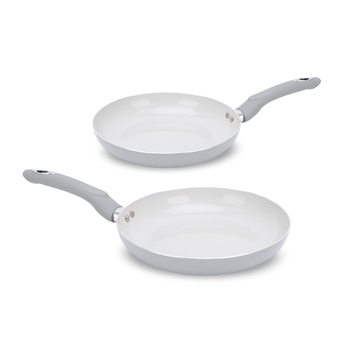
Global regulatory pressure—including the EU REACH directive, US EPA restrictions, and state-level PFAS bans—is forcing a total industry transformation. Importers sourcing aluminum alloy saucepan sets are shifting away from traditional PTFE toward advanced organo-silicon Sol-Gel Ceramic Coatings and water-based, inorganic mineral granite coatings. Zhejiang MEIS Kitchenware Co., Ltd. leads this transition, offering certified 100% PFOA, PFAS, Lead, and Cadmium-free saucepan lines that guarantee smooth regulatory clearance worldwide.
2. Universal Cooktop Compatibility & Full-Bound Induction Bases
With induction cooking adoption exceeding 40% across European and Asian households, standard gas-only saucepans are quickly losing market share. Modern aluminum alloy saucepans are now equipped with Impact-Bonded Stainless Steel Induction Discs or Full-Flame Spray Stainless Bases. This ensures seamless magnetic coupling, rapid heat transfer on induction cooktops, and absolute warp prevention under intense thermal shock.
3. Modular Living & Detachable Handle Innovations
Urban space constraints and skyrocketing international ocean freight costs have driven massive buyer demand for nestable cookware sets with detachable handles. A single 5-piece or 7-piece aluminum alloy saucepan set with a universal quick-release handle mechanism can be nested into a fraction of traditional packaging volumes, directly reducing shipping costs per unit while appealing to modern minimalist consumers.
4. Circular Economy & Recycled Alloy Ingot Sourcing
Environmental, Social, and Governance (ESG) mandates are prompting global department stores and chain retailers to mandate eco-friendly manufacturing materials. The industry is rapidly adopting Post-Consumer Recycled (PCR) 3003 Aluminum Alloys, which consume 95% less energy during raw material smelting compared to primary aluminum bauxite extraction, without sacrificing tensile strength or thermal performance.