Choosing the best Nonstick Cookware Sets in China takes more than comparing prices or counting pieces. A glossy finish can look convincing under store lights, yet pan weight, coating consistency, handle comfort, and heat performance matter more in daily use. A small egg pan should release an omelet cleanly; a larger skillet should sit steadily on the hob. No set is perfect.
Grand View Research estimated the global cookware market at USD 27.05 billion in 2023 and projected continued growth through 2032. That figure covers cookware broadly, not China’s nonstick-set sales, so it offers context rather than a direct ranking. For buyers in China, practical checks include whether the set matches their cooktop, whether replacement pieces are available, and whether care instructions are clear. Marketing claims alone are not enough.
Cookware tester Sharon Franke’s testing perspective can be paraphrased this way: “Judge a nonstick pan by how reliably it releases food and how well it suits your cooking tasks.” That is not a verbatim quotation. It is a useful reminder to look beyond a high piece count. Compare coating durability, temperature guidance, construction, warranty terms, and independent test results. Some details are easy to overlook. A lid that fits poorly or a handle that feels awkward can matter after months of use. The comparisons ahead focus on those real kitchen trade-offs, while recognizing that one set may not suit every household.
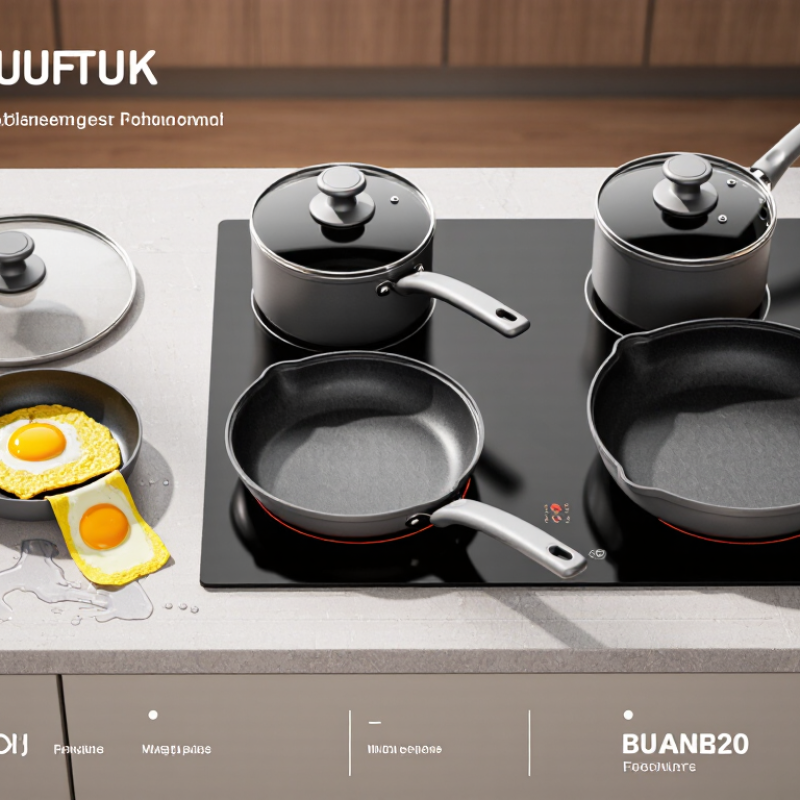
What Nonstick Cookware Sets Include
A nonstick cookware set usually combines frying pans with one or more covered pots. Common pieces include a small skillet for eggs, a larger pan for vegetables, a saucepan for oatmeal, and a deeper pot for soup or noodles. Some sets sold in China also include a wok-shaped pan, which can suit stir-frying in a compact kitchen. The exact mix varies, so check each listed piece rather than relying on the set’s name.
Lids are often included for the pots and larger pans. Glass lids make it easier to watch simmering food without lifting the cover, while vent holes can help release steam. A set may also contain removable handles, spatulas, or storage protectors, but these extras are not guaranteed. That matters.
Check the stated diameter and base type before buying. A 24-centimeter pan may feel roomy for one person but crowded when cooking for a family. Induction cooktops require compatible magnetic bases; nonstick coating alone does not ensure compatibility. I would not assume every included pot works on every hob. Even the product photographs can make a set look more complete than its item list. Read the specifications for the number of lids, handle material, and whether utensils are included.
FAQS
PTFE usually releases eggs and pancakes with little oil. Ceramic-style coatings may release food easily at first, but performance can fade sooner.
Use low or medium heat, soft utensils, and let the pan cool before washing. These habits slow wear, but cannot stop it completely.
No. A heavier base may heat more steadily, but weight alone proves little. Check how evenly it heats and feels in your hand.
Hold a magnet against the underside. Magnetic stainless steel or iron is generally needed for induction cooking.
Check each pan’s size, base compatibility, handle weight, and lid fit. Piece counts can include lids or utensils instead of useful pans.
A two-person home may manage with a 20-centimeter saucepan and a 26-centimeter frying pan. More pieces are not always better.
A deep pot works well for soup. A broad skillet is more useful for eggs, dumplings, and quick stir-fries.
Guidance cited in the article estimates induction is 5–10% more efficient than conventional electric cooking and about three times as efficient as gas. That measures energy use, not cookware quality.
No. “Nonstick” does not mean scratch-proof, and frequent high heat or rough utensils can wear a coating. I would not trust broad durability claims without checking the care instructions.
Conclusion
Choosing the best Nonstick Cookware Sets in China starts with understanding what a set includes, such as frying pans, saucepans, stockpots, and lids. The right combination depends on the meals you prepare and the amount of storage space you have. Sets can be evaluated by their cooking performance, ease of cleaning, durability, handle comfort, compatibility with your cooktop, and overall value. A useful comparison looks beyond the number of pieces to consider whether each item serves a practical purpose.
Coating type also affects how cookware performs and how it should be cared for. Different coatings may vary in heat tolerance, food release, and resistance to everyday wear, so follow the care guidance provided with each set. When comparing options available in China, consider materials, construction, included accessories, and warranty terms. Match these features to your cooking habits, household size, budget, and preferred maintenance routine to find a set that is convenient for everyday use.