TÜV Rheinland On-site Verified Custom Manufacturer · OEM / ODM Jinhua, Zhejiang, China
0%

Choosing cookware is less about owning the largest set than finding pans that suit your stove, meals, and daily routine. Aluminium Cookware Sets attract home cooks because aluminium is lightweight and transfers heat efficiently. Heat moves quickly. That matters when warming soup, sautéing vegetables, or preparing a weekday breakfast. A responsive pan can make temperature adjustments easier, though results still depend on its thickness, construction, and the burner beneath it. Not every set performs the same way.

Before choosing, consider which pieces you will actually use, such as a saucepan for oatmeal or a broad frying pan for eggs. Check the manufacturer’s details for stovetop compatibility: many aluminium pans work on gas, electric, or ceramic cooktops, while induction usually requires a magnetic base. The finish matters, too. Anodized and coated surfaces have different care requirements, so follow the supplied instructions and avoid assuming every pan can handle the same utensils or cleaning products. Small details count. A well-chosen set can make everyday cooking simpler, but a crowded bundle may leave unused pans in the cupboard. Compare construction, handles, lids, and care guidance—not just the number of pieces. The right choice depends on your kitchen habits, and that is worth thinking through.
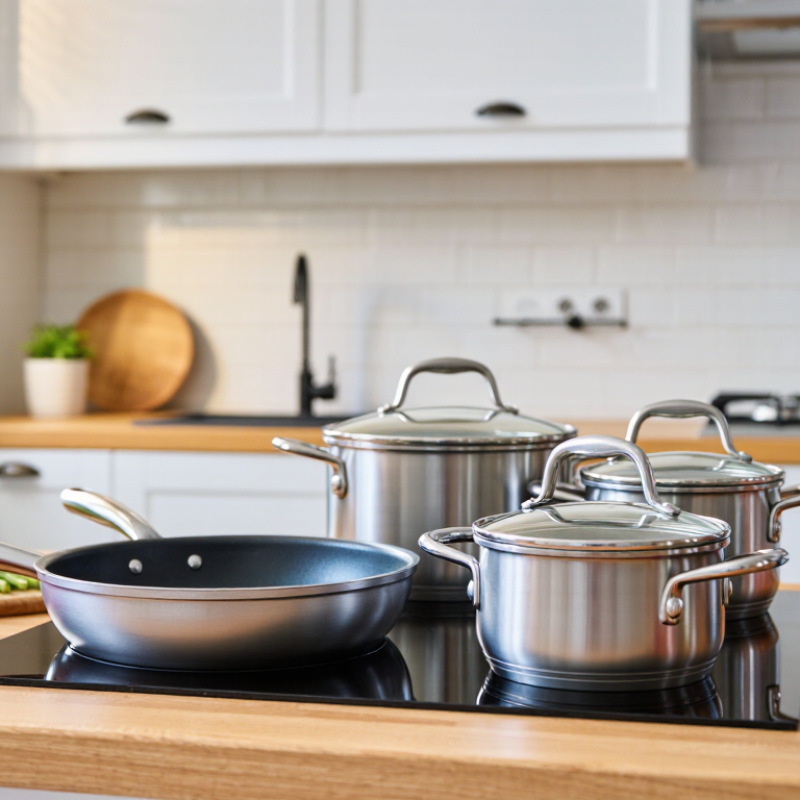
Why Choose Aluminium Cookware Sets for Your Kitchen?

What an Aluminium Cookware Set Typically Includes

A typical aluminium cookware set includes a small saucepan, a larger saucepan, a frying pan, and a lidded stockpot. Some sets add a sauté pan or a shallow casserole dish. The exact mix varies, so check the listed diameters and capacities rather than relying on the piece count. A 20-centimetre frying pan suits eggs or one portion; a larger pot handles pasta, soup, or batch cooking. Lids matter, too. Glass lids make it easier to watch simmering food, while metal lids are less fragile.

Grand View Research valued the global cookware market at USD 27.18 billion in 2023 and projected a 6.9% compound annual growth rate from 2024 to 2030. That broad market figure does not tell shoppers which set is best, but it reflects a crowded category with many configurations. Check whether the aluminium is bare or coated, and confirm that the handles feel secure and stay clear of the flame or heating element. Small detail, big difference. A matching set can look efficient, yet include a pan too small for regular family meals. The piece count is not the whole story.

Why Choose Aluminium Cookware Sets for Your Kitchen?

What a Typical 10-Piece Set Includes

This example set contains six cookware pieces and four lids. Aluminium cookware is valued for its relatively light weight and efficient heat conduction. Set contents vary, and lids are often included in the advertised piece count.

How Aluminium Transfers Heat During Cooking

Aluminium cookware responds quickly because heat travels through the metal efficiently. MatWeb’s 6061-T6 aluminium data sheet lists thermal conductivity at about 167 W/m·K at room temperature. That is a material reference, not a measurement of every pan; cookware alloys and thicknesses differ. Still, it helps explain why a pan can warm rapidly when set over a burner.

Heat moves from the base into the cooking surface, then into the food. A thin aluminium pan may respond fast, but can also develop hot spots over a small flame or uneven electric element. Stirring a sauce near the edges can reveal the difference. The U.S. Department of Energy’s Energy Saver guidance notes that flat-bottomed cookware makes better contact with electric elements, improving heat transfer. Fit matters.

Layered pans use aluminium to spread heat, often alongside a more durable cooking surface. Their performance depends on the full construction, not the metal alone. That detail is easy to overlook. I would not call aluminium “even-heating” in every kitchen: burner size, pan thickness, and food volume all matter. For delicate eggs, lower heat and a preheated pan can help; for a quick sauté, its responsive temperature changes are useful. The trade-off is real.

Key Benefits of Aluminium Cookware in Daily Use

Aluminium cookware feels light in the hand and responds quickly when the burner changes. That matters when lowering heat for a simmer or lifting a pan to stop a sauce from reducing too far. ASM International’s ASM Handbook lists pure aluminium’s thermal conductivity at roughly 237 W/m·K at room temperature; cookware alloys conduct differently, but the figure helps explain the metal’s strong heat-transfer reputation. Good contact with the burner matters, too. A thin, uneven pan can still create hot spots.

For everyday cooking, lighter pans are easier to move from stove to sink, especially when filled with vegetables or pasta. Small details count. A comfortable handle helps, though balance varies between designs. Bare aluminium may react with acidic foods, such as tomato sauce, so check whether a pan has a suitable coating or anodized surface. The International Aluminium Institute reports that recycling aluminium uses about 5% of the energy needed to make primary aluminium. That is a useful materials statistic, not a promise that every local recycling program accepts cookware. Coatings, handles, and local collection rules can complicate disposal.

How Coatings and Construction Affect Performance

Aluminium spreads heat quickly, but a pan’s construction determines how evenly it reaches the food. ASM International’s ASM Handbook, Volume 2, reports pure aluminium’s thermal conductivity at about 237 W/m·K near room temperature; cookware alloys vary. This helps explain aluminium’s responsive heating. Yet a thin pan can still scorch sauce over a strong burner.

Check for a flat, sufficiently thick base and a securely attached handle. A bonded magnetic stainless-steel layer can add durability and induction compatibility, while an interior coating helps food release more easily. Coatings are not magic. Abrasion, overheating, and metal utensils can shorten their service life. A scratched surface deserves reassessment, not wishful thinking. Compare stated thickness and care instructions rather than judging by a glossy finish alone.

Tips: Preheat over medium heat, add oil once the pan warms, and avoid rinsing a hot pan with cold water. Check that the base sits level on your hob; even well-made cookware can disappoint if it rocks or heats unevenly.

What to Consider When Choosing an Aluminium Set

When choosing an aluminium cookware set, start with the pan’s construction, not the piece count. A thick, flat base is less likely to develop hot spots or wobble on the hob. Check that handles feel secure and stay comfortable when you lift a full saucepan. If you cook on induction, look for a clearly marked compatible base; aluminium alone usually will not work on induction. Small details matter.

Surface finish deserves a closer look. Anodized or coated interiors can make cleaning easier, but inspect the care instructions and avoid sets with vague coating information. For uncoated aluminium, be cautious with long cooking or storage of acidic, salty foods. Germany’s Federal Institute for Risk Assessment warns that these foods can increase aluminium transfer. EFSA’s 2008 scientific opinion set a tolerable weekly intake of 1 mg of aluminium per kilogram of body weight, from all sources. That is a useful context, not a cookware-specific limit. Compare the set’s weight, warranty, and replacement-part availability, too. A large set can look like value, yet unused pans still take up cupboard space. I would rather buy fewer pans that suit my burners and daily meals.

Why Choose Aluminium Cookware Sets for Your Kitchen? - What to Consider When Choosing an Aluminium Set
Consideration What to Know About Aluminium Cookware What to Check When Choosing a Set Practical Takeaway
Heat response Aluminium conducts heat well and responds relatively quickly to changes in the heat source. Look for cookware with a flat, even base and choose pan sizes that match your burners. Useful for everyday cooking, but adjust the heat as needed to avoid overheating food.
Weight and handling Aluminium cookware is generally lighter than cookware made from cast iron. Check the weight of each piece, handle shape, and how securely the handles are attached. A lighter set may be easier to lift and maneuver, especially when full.
Cooktop compatibility Plain aluminium is not magnetic, so it usually does not work directly on induction cooktops. For induction, confirm that the product is specifically labeled compatible and has a magnetic base. Compatibility depends on the cookware’s base construction, not just its aluminium body.
Surface and lining Aluminium may be uncoated, anodized, or covered with a nonstick surface. These finishes have different care requirements. Read the manufacturer’s instructions for utensils, cleaning, oven use, and replacement of worn coatings. Choose a finish that suits your cooking habits and the maintenance you are willing to do.
Food and reactivity Uncoated aluminium can react with acidic or salty foods, which may affect flavor or appearance. Check whether the cooking surface is coated or anodized if you often prepare tomato-based or other acidic dishes. For frequent acidic cooking, a protected cooking surface can be a practical option.
Construction and durability Performance and durability vary with thickness, base design, finish, and how the cookware is used. Inspect the base for even contact, check joints and handles, and review the care instructions. A well-made set should feel stable and suit the heat levels and cooking tasks you use most.
Set contents Sets can include different combinations of saucepans, frying pans, stockpots, and lids. Compare piece sizes and capacities with your usual recipes, storage space, and household needs. Choose useful pieces rather than paying for items that are unlikely to be used.
Care and cleaning Cleaning requirements depend on the surface; abrasive tools can damage some coatings and finishes. Confirm whether pieces are dishwasher-safe and follow the care guidance for the specific set. Hand washing when recommended can help preserve the cookware’s surface and appearance.

FAQS

Why does aluminium cookware heat up quickly?

Aluminium conducts heat efficiently, so a pan can warm quickly over a burner. One material reference gives about 167 W/m·K at room temperature, but cookware alloys and thicknesses vary.

Does a thin aluminium pan heat evenly?

Not always. A thin pan may develop hot spots over a small flame or uneven electric element. Stir sauce near the edges to check.

What helps a pan transfer heat on an electric hob?

Choose a flat base that makes good contact with the element. A wobbly or uneven base may heat less consistently. Fit matters.

Can aluminium cookware be used on induction?

Aluminium alone usually does not work on induction. Check for a clearly marked compatible base before buying.

What should I check about the pan’s surface?

Anodized or coated interiors may be easier to clean. Read the care instructions, and be cautious when coating details are vague.

Can I cook or store acidic, salty foods in uncoated aluminium?

Long cooking or storage can increase aluminium transfer into food. A weekly intake guideline of 1 mg per kilogram of body weight covers all sources, not cookware alone.

How should I choose the size of a cookware set?

Consider base thickness, handle security, weight, warranty, and replacement parts. A large set can look like a bargain, but unused pans still fill cupboards. I would choose pieces that suit my burners and daily meals.

Conclusion

Aluminium Cookware Sets are a practical choice for everyday kitchens because they usually bring together useful essentials, such as saucepans, frying pans, and lids, in a coordinated collection. Aluminium transfers heat efficiently across the cooking surface, helping food warm evenly and making it easier to adjust to changes in temperature. Its relatively light weight can also make cookware easier to lift, move, and clean during daily meal preparation.

Performance depends on more than the material alone. Coatings can affect food release and cleaning, while the thickness and construction of each piece influence its sturdiness and heat distribution. When choosing a set, consider which pan sizes and shapes suit your cooking habits, whether the handles feel comfortable, and how the pieces fit your storage space. Check care instructions and choose a construction that matches the kinds of meals you make most often.

Vivian

Vivian

Vivian is a professional marketing specialist with a strong understanding of the company’s products, services, and the needs of the customers they are designed to support. She regularly contributes expert articles to the company website, turning product knowledge and industry insights into clear,......