High-Performance Nonstick Cookware Solutions
Engineered for global wholesale distributors, retail brand owners, and commercial buyers requiring CE, LFGB, and FDA food-grade compliance.
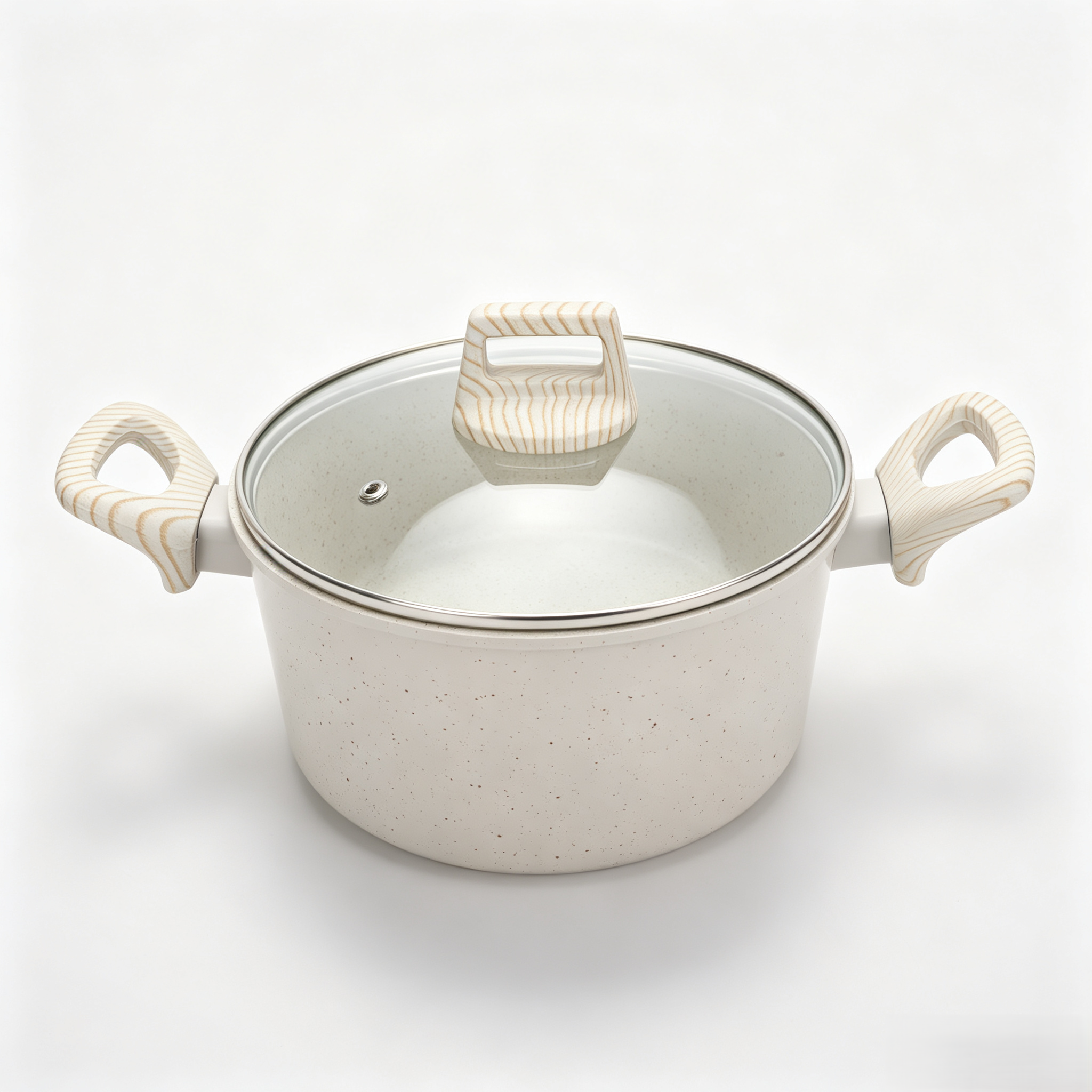
Large Capacity Durable Nonstick Aluminum Cookware Pot Casserole
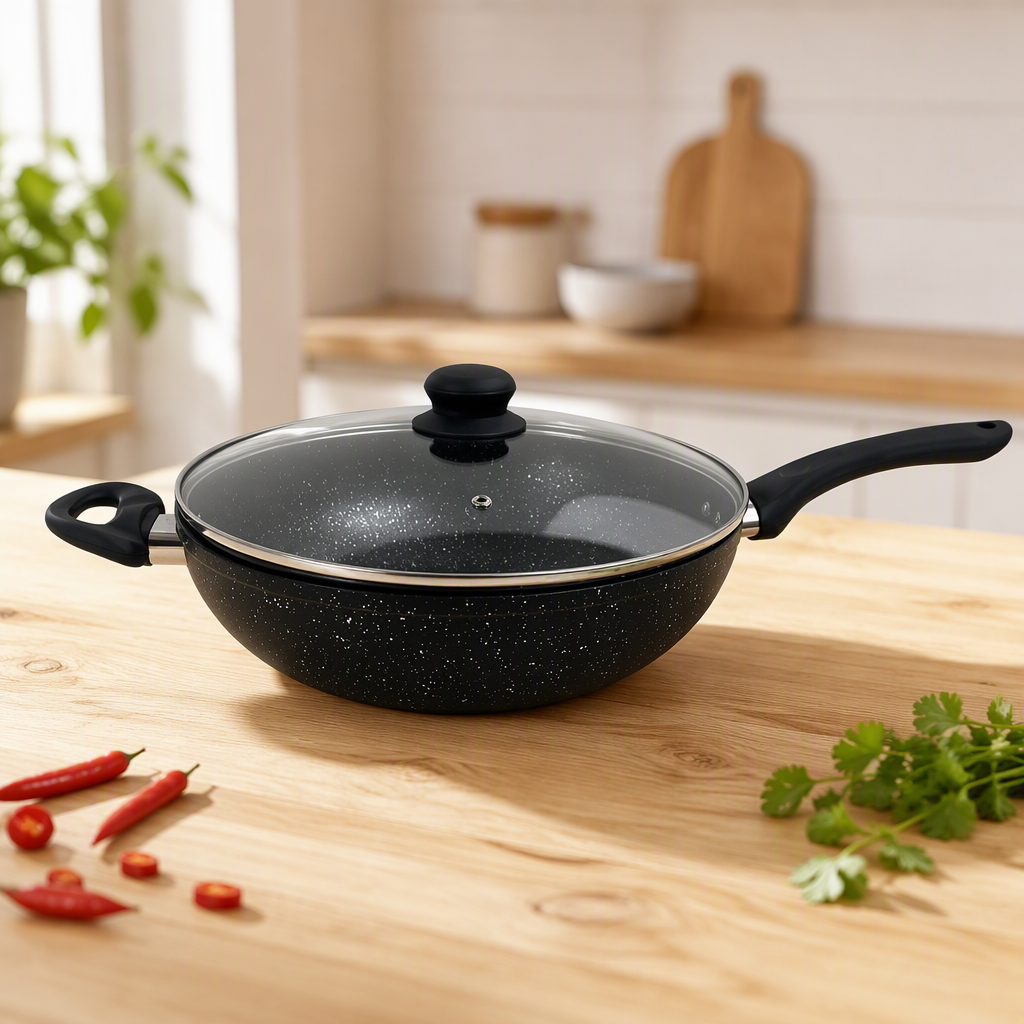
32 cm Granite Coating Non Stick Forged Wok 5.5L Aluminum Fry Pan
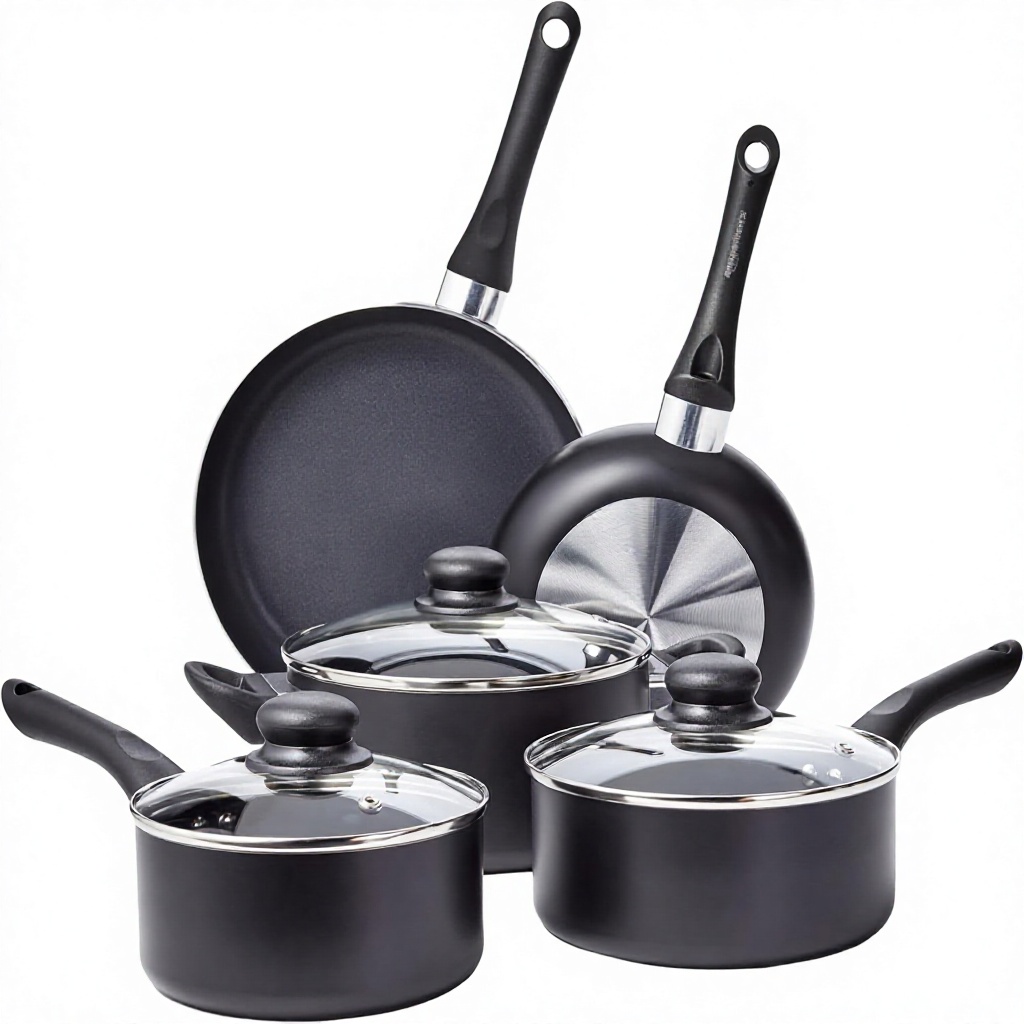
Basics Aluminum Ceramic Non-Stick 8-Piece Cookware Set
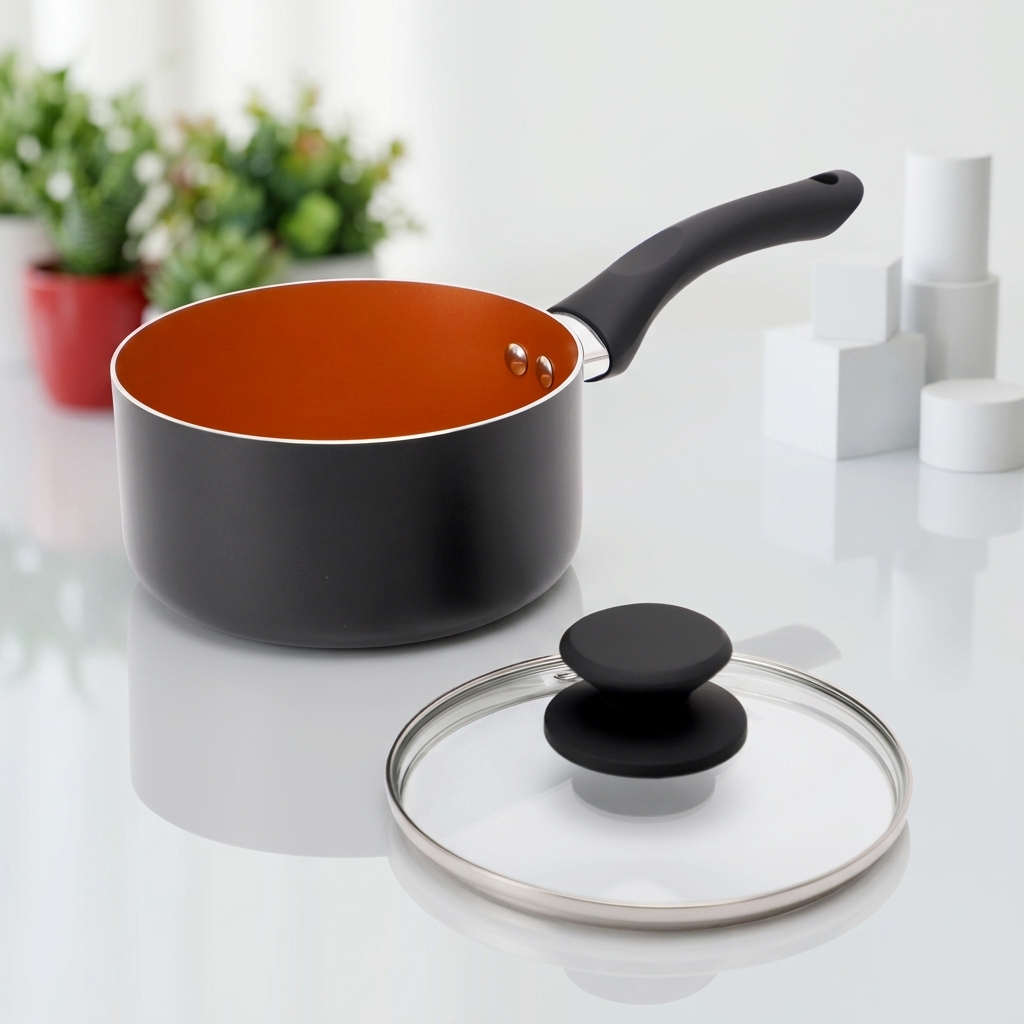
1.5QT Modern Metal Sauce Pan Glass Lid Non-Stick Coating
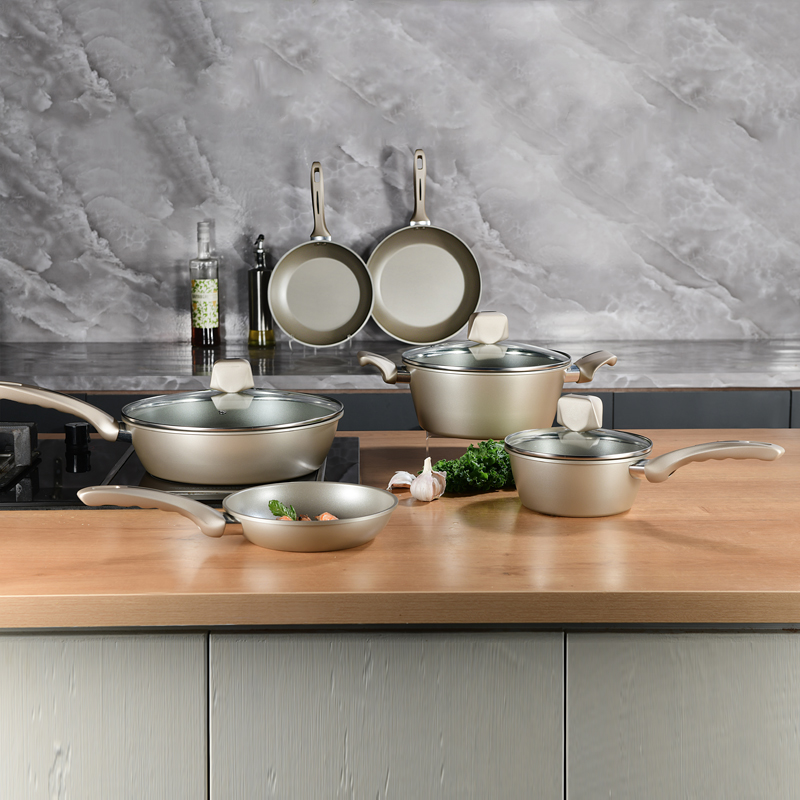
9 Piece Modern Design Titanium Non-Stick Coating Cookware Set

30cm Carbon Steel Round Wok Nitrided Surface Wood Handle
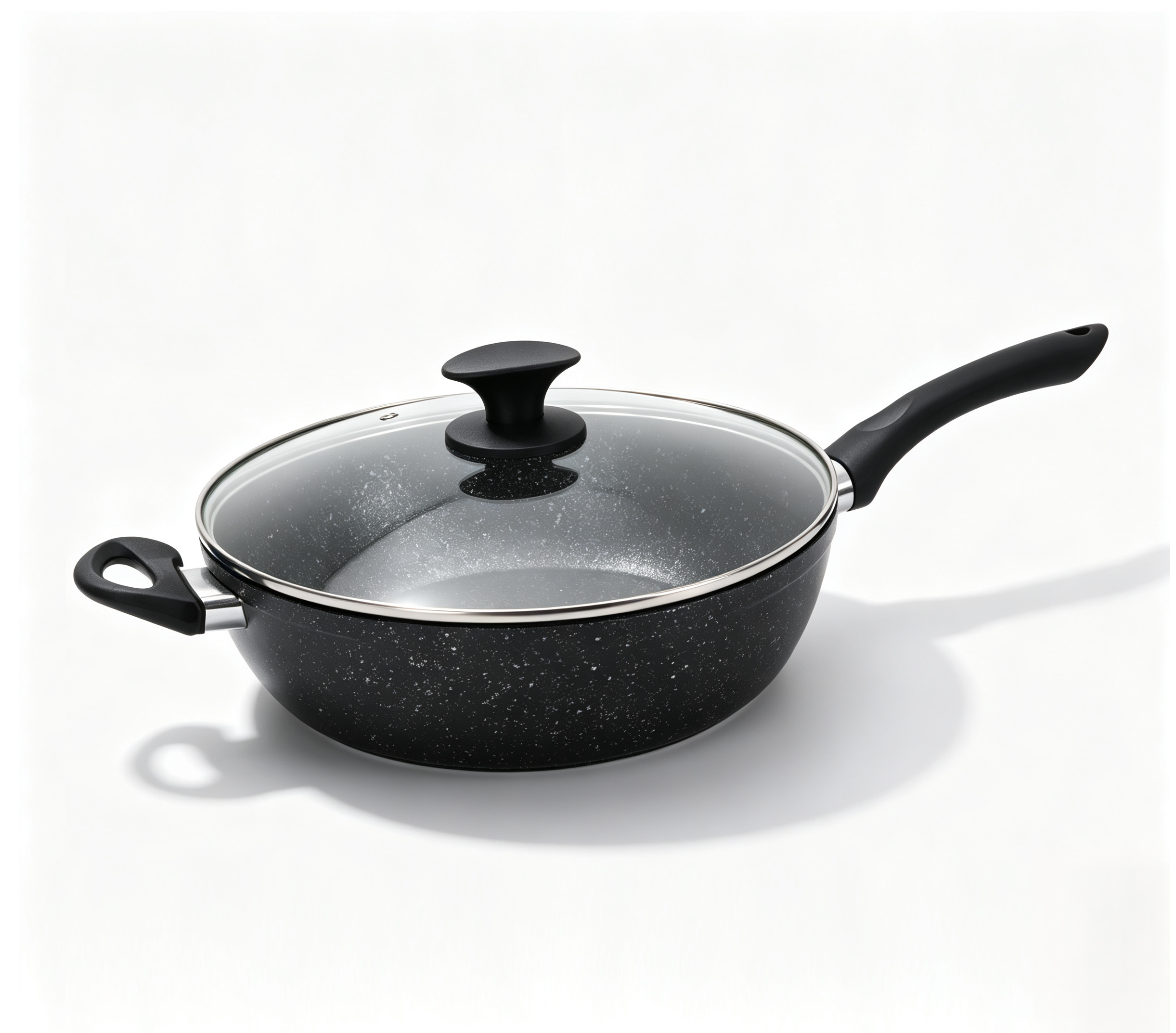
Easy Cleaning Modern Granite Nonstick Deep Fry Pan Glass Lid
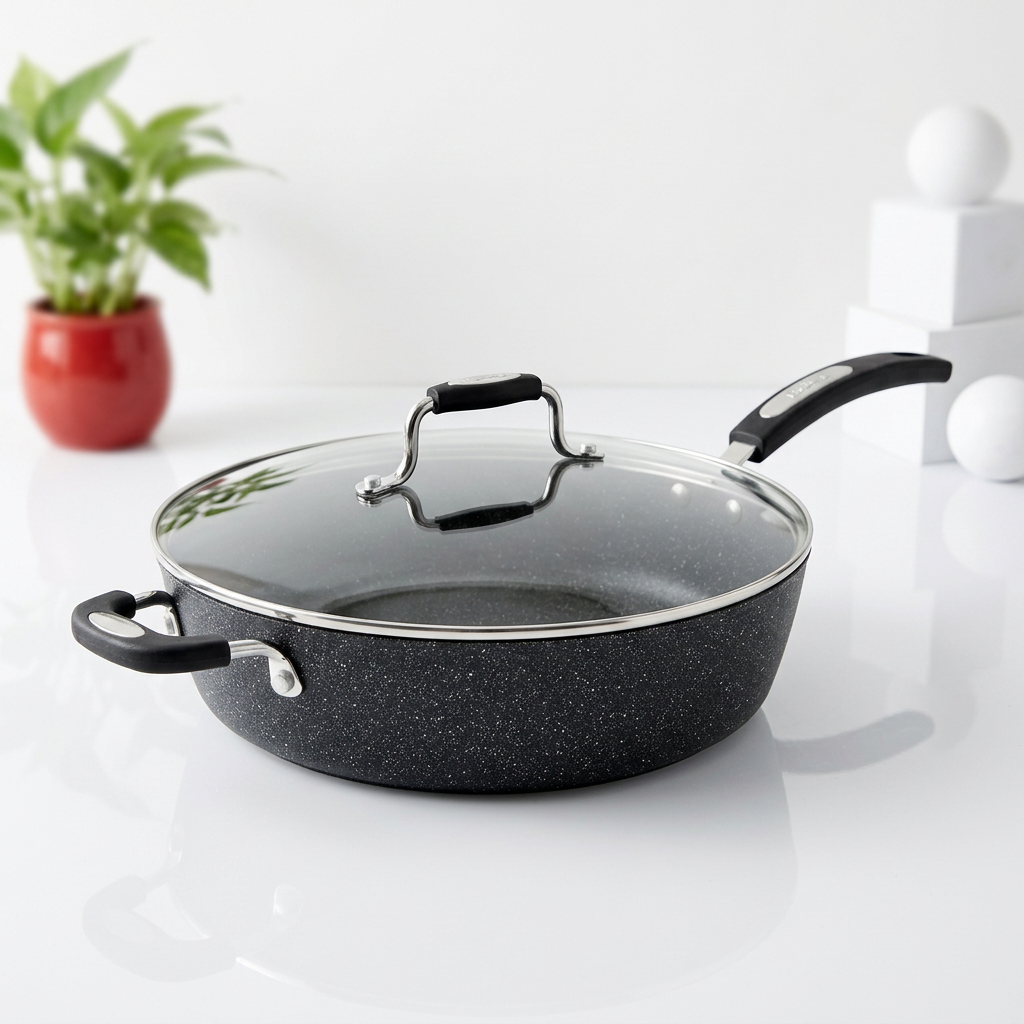
Classic 11 Inch (28cm) Non-Stick Deep Fry Pan Helper Handle
Zhejiang MEIS Kitchenware Co., Ltd.
A Verified Custom Manufacturer Operating Specialized Heavy-Gauge Aluminum & Carbon Steel Production Lines in Jinhua, Zhejiang.
Fully Integrated In-House Production
Located in the Dongnan Industrial Zone, Shuxi Street, Jinhua, our facility houses high-tonnage hydraulic presses, CNC finishing lathes, automated sandblasting chambers, state-of-the-art nonstick spray coating tunnels, and final assembly lines.
Rigorous Quality Assurance & Testing
Every production batch undergoes mandatory raw material spectroscopic analysis, coating cross-hatch adhesion testing (ISO 2409), handle fatigue and mechanical torsion load tests, and 5% salt-spray corrosion resistance evaluation in our testing laboratory.
Agile OEM/ODM Customization
Equipped with internal mold-making, die-tooling, and dedicated design engineers, MEIS Kitchenware transforms technical drawings and brand pantones into commercial production samples within short lead times, lowering your time-to-market.
In-House Manufacturing & Testing Infrastructure
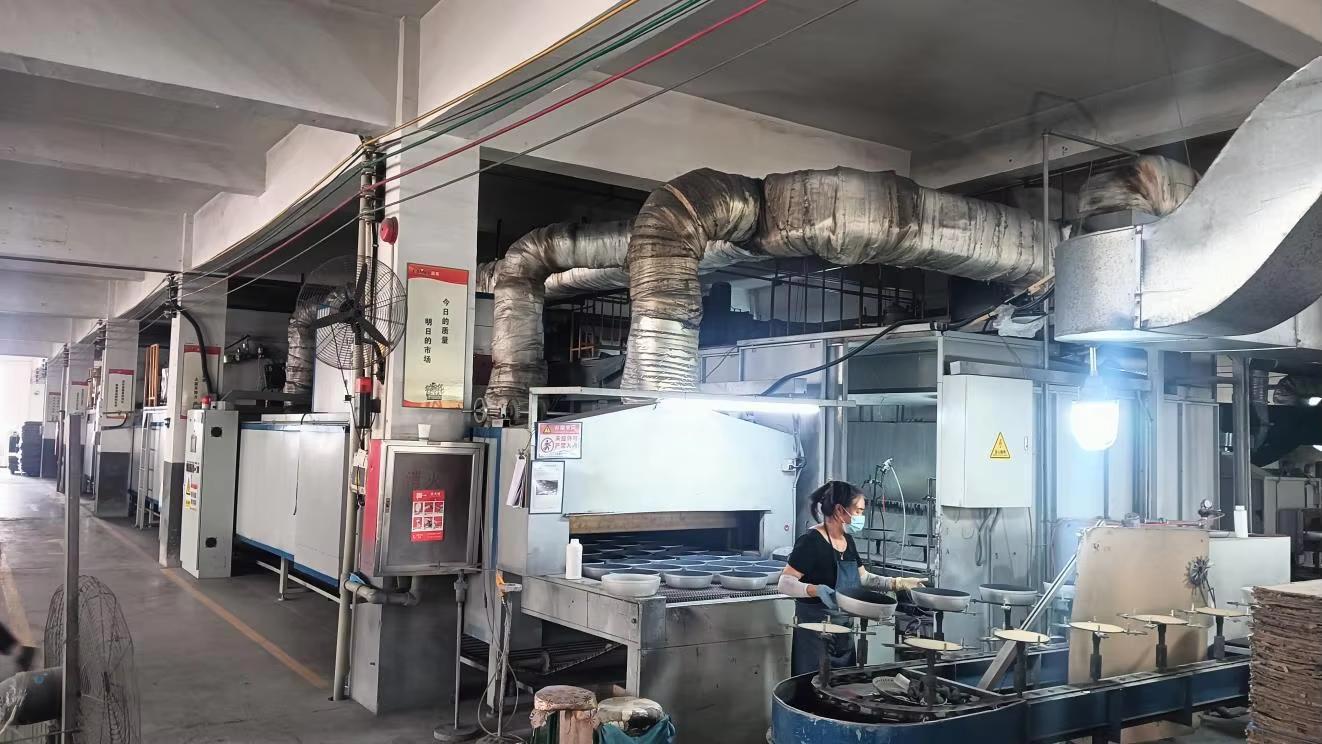
Automated Spray Coating Line
Multi-layer ceramic and PTFE electrostatic spray application guaranteeing uniform dry film thickness (DFT).
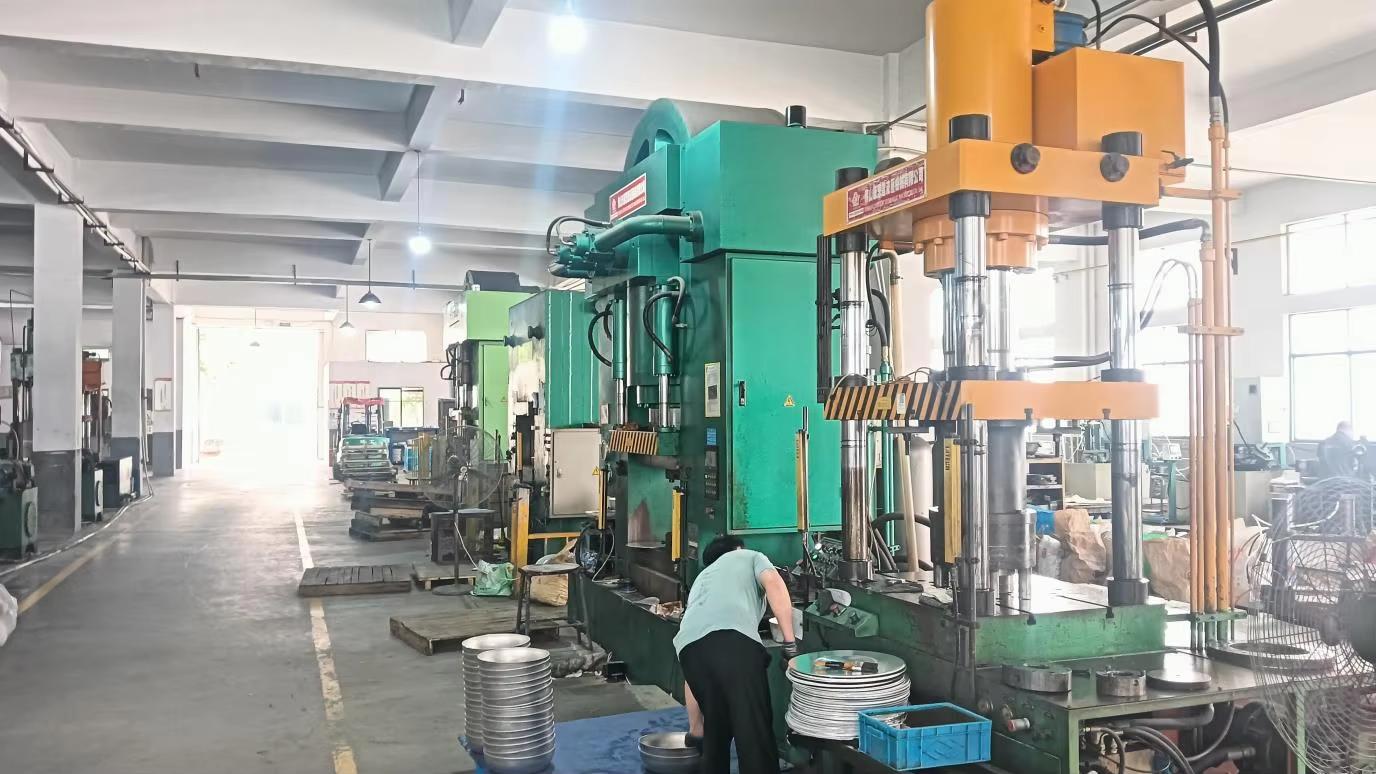
Heavy Hydraulic Forming Presses
High-tonnage cold forging and pressing equipment ensuring warp-free bases under extreme thermal cycle stress.
CE Certified Nonstick Sauce Pot Sourcing & Compliance Guide
An in-depth technical analysis for global procurement officers, quality control managers, and private-label brand strategists.
1. Regulatory Compliance Framework: Navigating CE Standards & Food Contact Regulations
In the competitive global cookware market, achieving CE Certification for nonstick sauce pots is not merely a marketing claim—it is a rigorous technical qualification demonstrating compliance with European safety, health, and environmental protection requirements. For B2B importers distributing across the European Economic Area (EEA), sauce pots and cookware sets must satisfy specific harmonized directives and safety testing standards:
- EN 12983-1 Compliance (Domestic Cookware Safety): Evaluates mechanical stability, handle fatigue strength, thermal insulation performance of cookware handles, and base resistance to thermal bowing. Sauce pots manufactured at MEIS undergo strict handle torque testing (subjected to twisting moment limits) and bending force resistance to ensure zero risk of handle failure during high-temperature liquid handling.
- EU Regulation (EC) No 1935/2004 & EU 10/2011: Mandates that food contact materials do not transfer their constituents into food in quantities that could endanger human health. Chemical testing includes overall migration, heavy metal leachable residue tests (Pb, Cd, Cr, Ni), and primary aromatic amines (PAA) screening.
- PFAS / PFOA / GenX Environmental Regulations: Modern European buyers require nonstick sauce pots formulated completely free of Perfluorooctanoic Acid (PFOA), Perfluorooctane Sulfonate (PFOS), and related fluorinated chemicals, complying with European REACH Annex XVII limitations.
Information Gain Insights: Technical Metallurgy Comparison
Alloy 3003 vs. Alloy 3004 in Sauce Pot Extrusion: While entry-level cookware manufacturers utilize standard Commercial Grade 1050 pure aluminum discs, Zhejiang MEIS Kitchenware utilizes high-density 3003 (Aluminium-Manganese alloy) and 3004 structural alloys for forged sauce pots. Manganese addition increases tensile strength by 20–30% and significantly reduces thermal deformation when subjected to rapid quenching (e.g., placing a hot sauce pot directly under cold tap water).
2. Substrate Structural Engineering: Cold-Forged Aluminum vs. Pressed Aluminum
A primary failure point in commercial sauce pots is base warping and uneven heat distribution, leading to hot spots that degrade the nonstick coating prematurely. Understanding the physical differences between substrate formation methods is essential for brand positioning:
Pressed Aluminum Cookware (Gauge: 1.8mm – 2.5mm): Stamped from cold-rolled aluminum sheets. Pressed sauce pots offer an outstanding warmth-to-weight ratio and fast thermal transfer rates ($k \approx 200 \text{ W/m}\cdot\text{K}$). This technology is ideal for cost-optimized retail programs, promotional sets, and high-turnover supermarket SKUs where landed cost efficiency is paramount.
Forged Aluminum Cookware (Gauge: 3.5mm – 5.0mm Base, 2.2mm Rim): Manufactured using high-pressure hydraulic forging presses that re-align the metallic crystal grain structure of aluminum billets. Forging allows engineers to design a extra-thick heat retention base while maintaining a lighter sidewall weight. The resulting dimensional stability prevents central pan bulge on flat-top induction or ceramic glass hobs.
3. Coating Chemistry: Sol-Gel Ceramic vs. Titanium Matrix Fluoropolymer
The nonstick internal surface dictates consumer retention and product lifespan. Zhejiang MEIS Kitchenware applies two distinct advanced coating technologies tailored to global market demands:
Advanced Sol-Gel Ceramic Coatings: Synthesized through the hydrolysis and condensation of metal alkoxide precursors, forming a inorganic dense silicon dioxide ($SiO_2$) ceramic matrix. Ceramic nonstick coatings provide extreme surface hardness (6H to 8H Pencil Hardness), thermal resistance up to 450°C without releasing toxic fumes, and brilliant aesthetic color customization options (pastel tones, granite, and marble speckles).
Titanium-Reinforced Multi-Layer Systems: Incorporates micronized titanium particles into a high-temperature resistant matrix resin base coat, followed by a mid-coat barrier layer and a microscopic fluoropolymer top coat. This composite structure achieves over 25,000 cycles in standard abrasive pad wear tests (BS 7069 / ISO 2409), delivering exceptional food release performance for sticky sugar sauces, gravies, and milk-based preparations.
Future Procurement Trends in Nonstick Sauce Pots (2025–2030)
Key shift factors influencing B2B sourcing decisions, import logistics, regulatory burdens, and consumer preferences.
1. Mandatory PFAS Transparency & Fluorine-Free Sourcing
Regulatory mandates across North America and Western Europe (such as US State PFAS Disclosure Acts and proposed ECHA RESTRICTIONS) are forcing importers to transition toward 100% organofluorine-free nonstick coatings. Procurement directors are actively replacing standard legacy coatings with Sol-Gel ceramics and nitrided mineral matrix structures to prevent supply chain litigation and import blockages at customs border control.
2. Universal Induction Bottom Compatibility
With gas stove phase-out incentives and the rapid adoption of high-efficiency induction cooktops across Europe and East Asia, over 82% of global sauce pot RFQs now demand full induction compatibility. Modern procurement requires full-bound impact induction discs (AISI 430 stainless steel) attached via high-pressure hot stamping to prevent disc peeling or corrosion during dishwasher washing cycles.
3. Freight Optimization & Space-Saving Modular Packaging
Ocean freight volatility has positioned CBM (Cubic Meter) utilization as a critical metric for profitability. Global buyers are prioritizing nestable sauce pot sets equipped with detachable handle mechanisms (Click-Lock ergonomics). Removing fixed side handles reduces package volume by up to 45%, dramatically reducing landed freight cost per unit and optimizing e-commerce shipping dimensions.
Future Technical Trends in Nonstick Pot Manufacturing
How advanced material science and automated manufacturing are revolutionizing next-generation cookware performance.
1. Plasma-Sprayed Ceramic Sub-Layers for Extreme Durability
To overcome the historical wear limitations of nonstick coatings when exposed to metal utensils or commercial dishwasher detergents, leading factories are deploying Thermal Plasma Spraying technology. By atomizing titanium dioxide ($TiO_2$) or aluminum oxide ($Al_2O_3$) at temperatures exceeding 10,000°C, a microscopic, glass-hard anchor layer is fused directly onto the aluminum substrate before nonstick application. This creates an impermeable wear barrier that extends coating lifespan by up to 500%.
2. Recycled Secondary Aluminum Billets & Carbon Neutrality
In accordance with global ESG (Environmental, Social, and Governance) targets, the cookware industry is transitioning to certified recycled aluminum (minimum 95% post-consumer recycled alloy content). Utilizing recycled aluminum smelting consumes 95% less energy than primary bauxite extraction, drastically reducing the embodied carbon footprint of every sauce pot manufactured without compromising grain structure, yield strength, or thermal performance.
3. Smart Thermal Sensing & Ergonomic Smart Handles
Future consumer kitchenware integrated features include thermochromic silicone rings and handle sensors that visually shift color when the sauce pot reaches optimal cooking temperature (180°C). This prevents end-users from overheating empty pans—a major cause of thermal degradation in fluoropolymer coatings—thereby preserving nonstick properties and promoting low-oil cooking habits.
Technical Benchmark Comparison Matrix
Comprehensive engineering evaluation of common cookware substrates to assist procurement selection.
| Evaluation Criterion | Pressed Aluminum | Forged Aluminum | Nitrided Carbon Steel | Tri-Ply Stainless Steel |
|---|---|---|---|---|
| Base Gauge Range | 1.8mm – 2.5mm | 3.5mm – 5.0mm | 1.2mm – 2.0mm | 2.2mm – 3.0mm |
| Thermal Conductivity | Very High (~205 W/mK) | High (~190 W/mK) | Medium (~50 W/mK) | Medium-High (Encapsulated) |
| Thermal Deformation Resistance | Moderate | Superior (Warp-Proof) | High | Excellent |
| Induction Efficiency | Requires Impact Base | Requires Impact Base | Native (100% Magnetic) | Native Outer Magnetic Layer |
| Unit Weight Ratio | Lightest | Optimal Balance | Medium-Heavy | Heavy |
| CE Compliance Suitability | Passed (Standard) | Passed (Premium Retail) | Passed (High Temp) | Passed (Commercial Grade) |
| Target Retail Price Band | Mass Market / Value | Mid-to-High Retail | Specialty / Specialty Retail | Luxury / Commercial Catering |
Frequently Asked Sourcing Questions
Direct answers to essential commercial, technical, and regulatory questions from international cookware buyers.