Engineering Rigor, Surface Coating Metallurgy & Supply Chain Benchmark for Global Cookware Importers
Navigating the complex supplier landscape for aluminum cookware requires deep technical clarity into metal alloy grades, cold-forging tonnages, substrate pretreatment, and nonstick coating polymer matrix chemistry. Designed for institutional procurement officers, private-label enterprise buyers, and retail category managers, this strategic report analyzes performance metrics, manufacturing standards, and future market shifts across top-tier China aluminum fry pan manufacturers.
Featured Aluminum & Cookware Product Portfolio
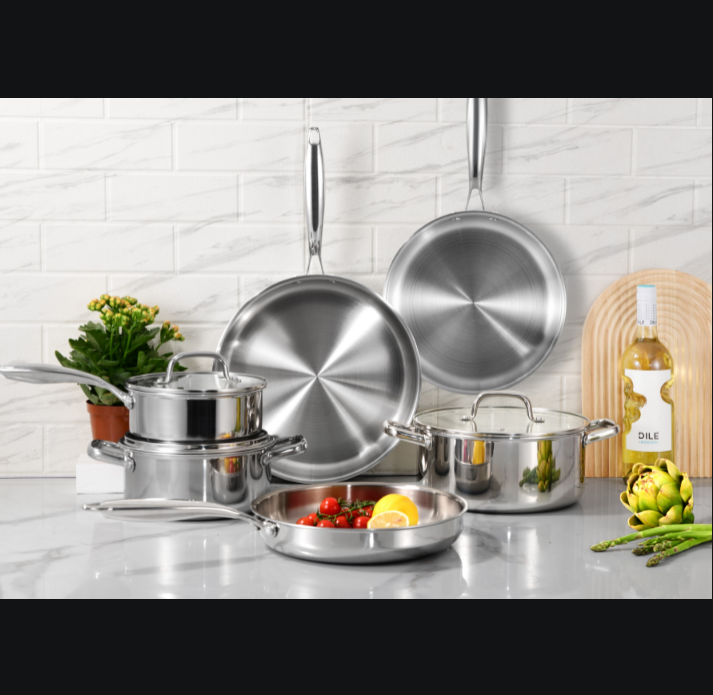
Tri-Ply Clad Cookware Set
Base Type: Full-Bound Induction Base
Feature: Oven Safe, Tempered Glass Cover
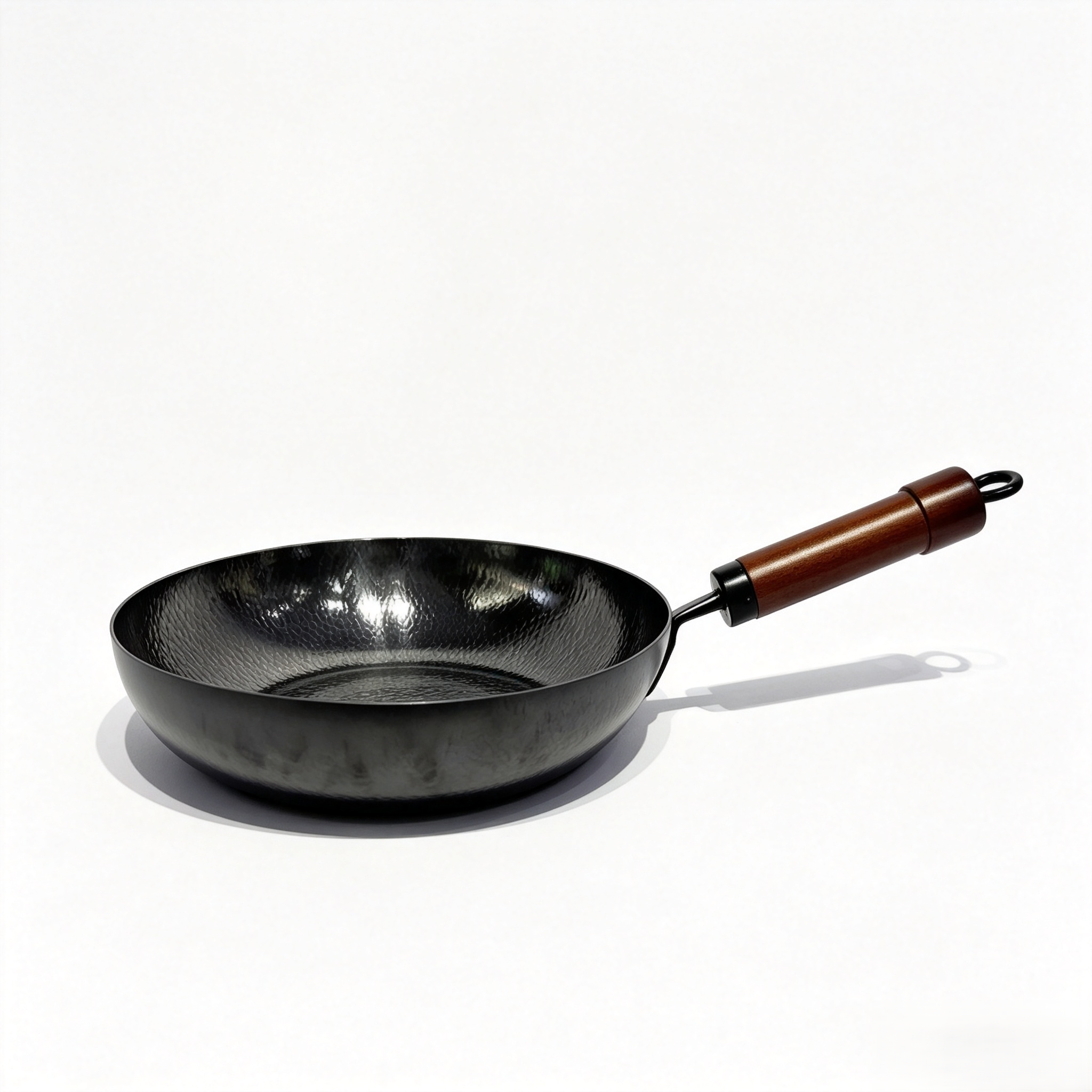
Hammered Carbon Steel Wok
Capacity: 2-3L Heavy Duty Gauge
Handle: Ergonomic Wooden Grip
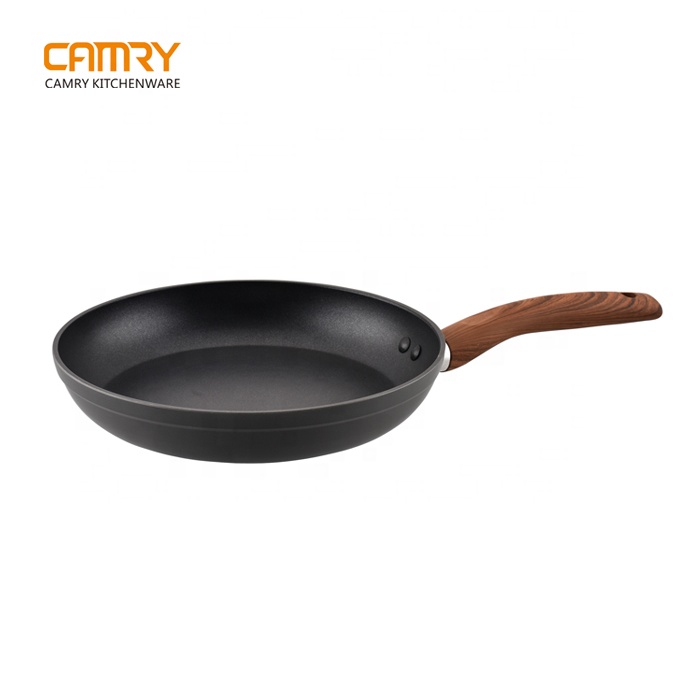
7PCS Forged Aluminum Cookware Set
Coating: Multi-layer Reinforced Speckle
Handle: Soft-Touch Bakelite Finish
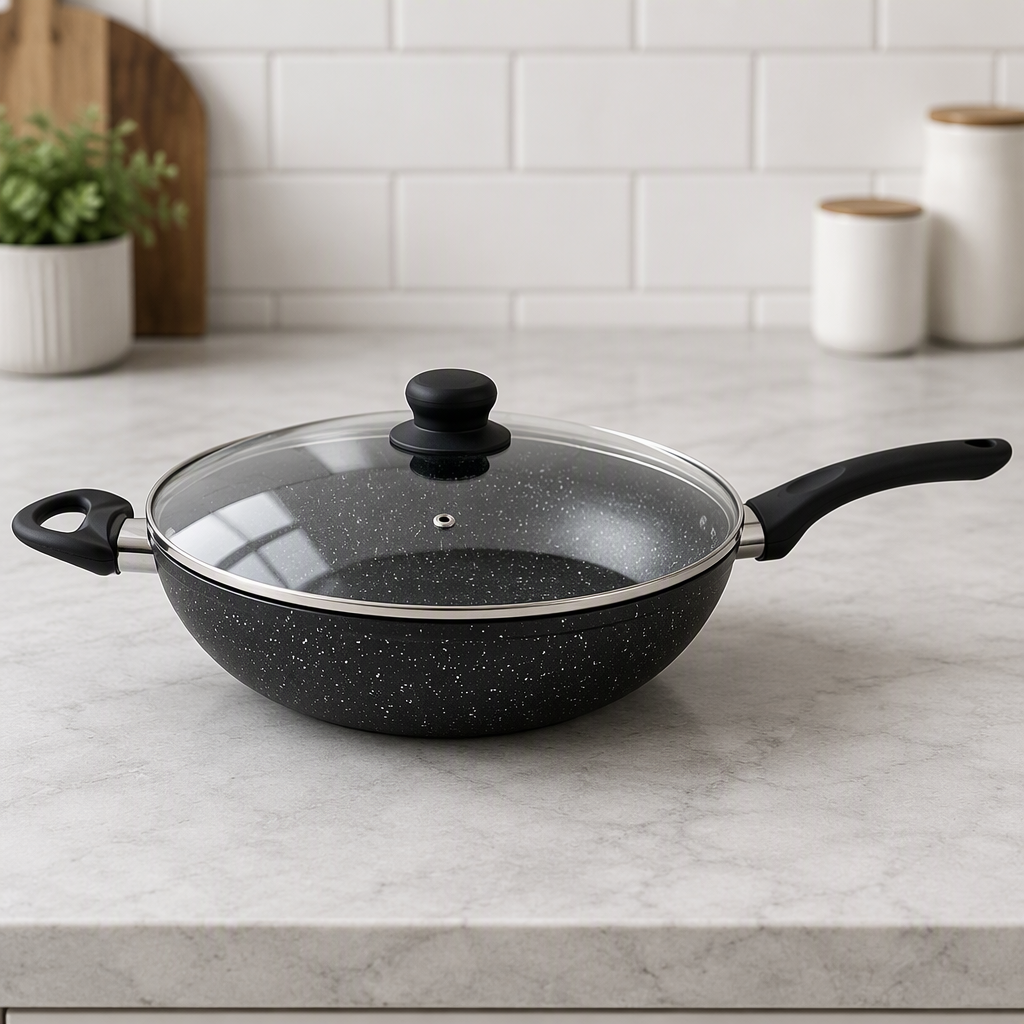
24cm Forged Marble Deep Fry Wok
Thermal Base: Stainless Steel Impact Base
Includes: Heat Resistant Glass Lid
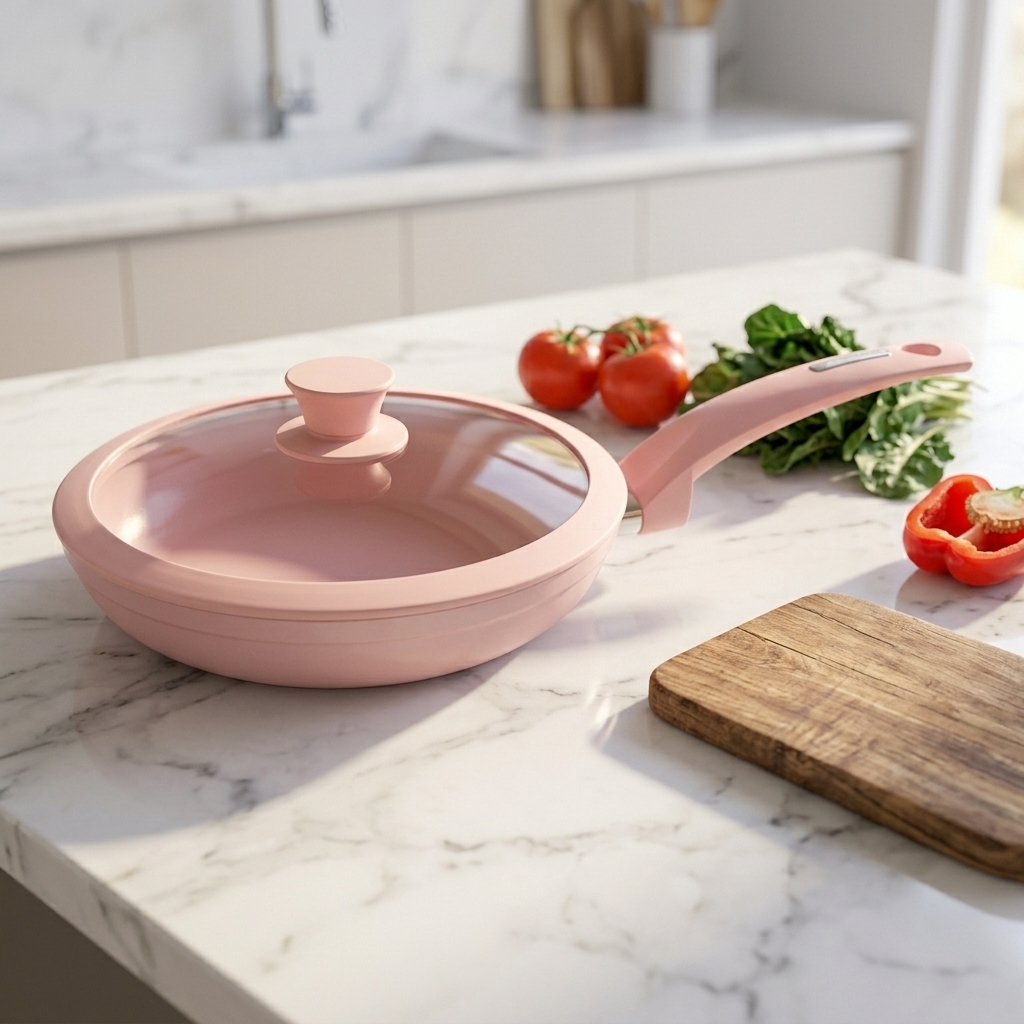
22cm Customized Forged Fry Pan
Customization: OEM Color Pantone Matching
Compatibility: All Cooktops (Induction/Gas)
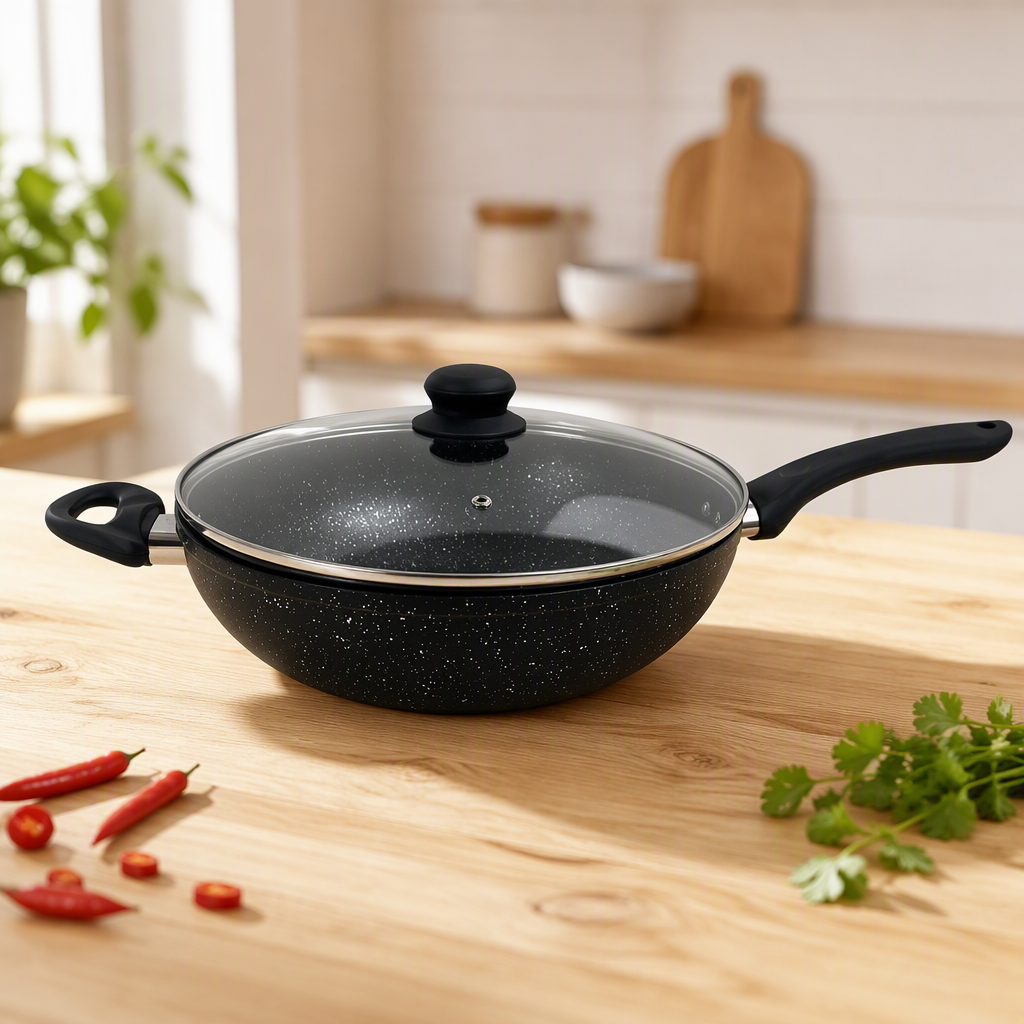
32cm Granite Non-Stick Forged Wok
Durability: Scratch-Resistant Granite Sol-Gel
Engineering: Anti-Warp Thick Base Design
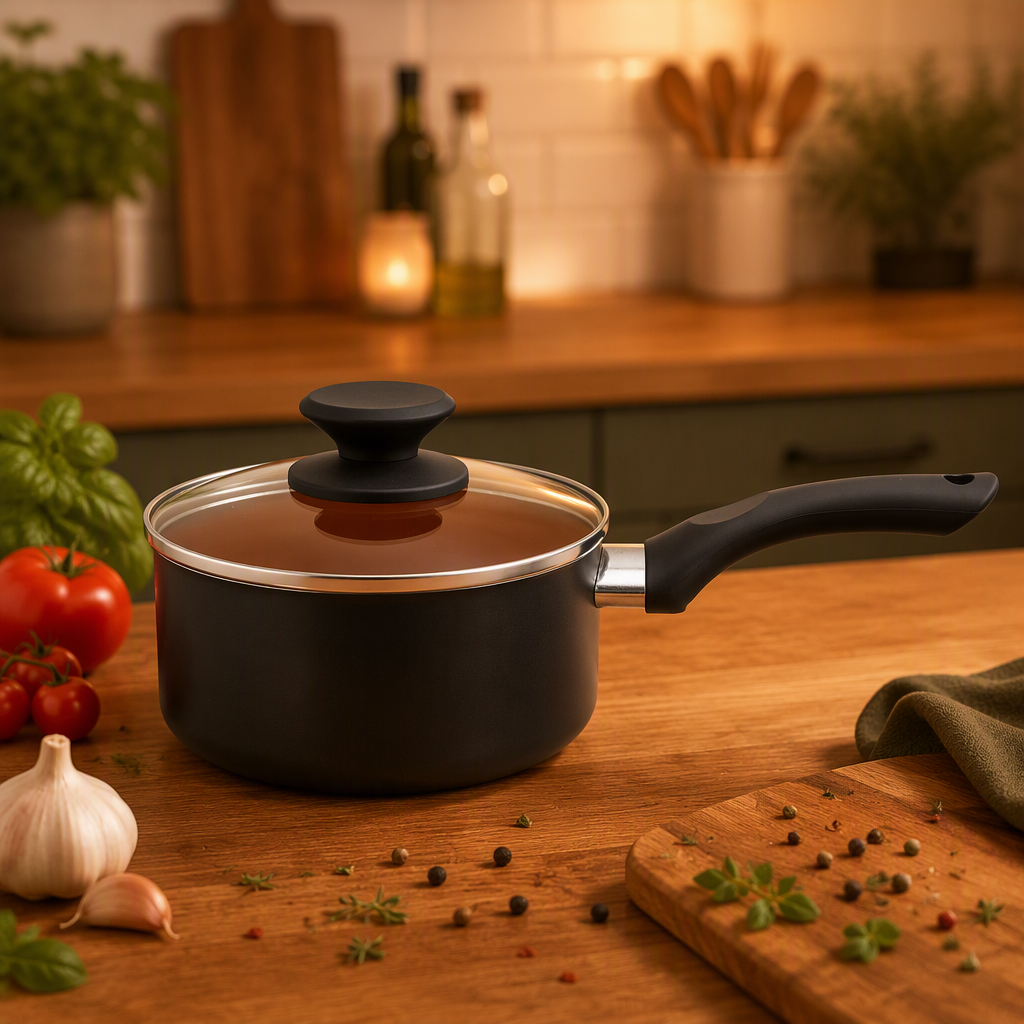
24cm Non-Stick Aluminum Saucepan
Coating Matrix: Multi-Layer Water-Based PTFE
Accessories: Vented Tempered Glass Lid
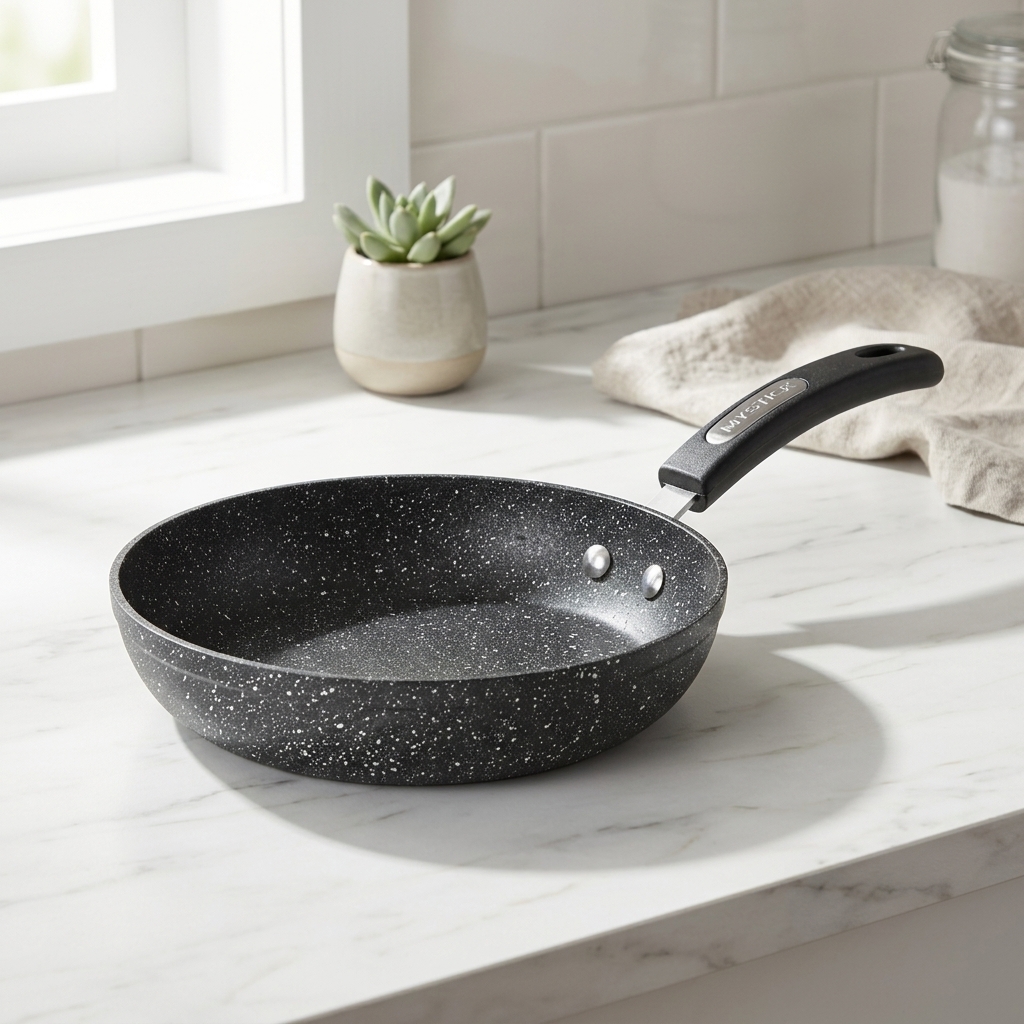
20cm Shot-Blast Aluminum Fry Pan
Safety: 100% PFOA / Heavy Metal Free
Feature: Dishwasher Safe & Compact Design
Understanding Aluminum Alloy Selection & Cold-Forging Dynamics
In the high-volume procurement of cookware, structural reliability stems directly from raw alloy metallurgy and mechanical forming processes. Premium Chinese cookware factories like Zhejiang MEIS Kitchenware Co., Ltd. systematically select raw materials based on precise tensile strength, thermal conductivity, and grain structure alignment.
Alloy Grades (3003 vs 4006 vs 1050)
High-tier pressed and forged cookware utilizes 3003-H14 aluminum alloy enriched with Manganese (Mn 1.0–1.5%). This provides 20% higher tensile strength over pure 1050 grade discs, rendering the pan body immune to thermal warping under rapid thermal cycling up to 260°C.
Forging Ton Matrix & Rim Wall Gauge
Cold die-forging employs heavy hydraulic presses ranging from 2,500 to 4,000 tons. This process redistributes aluminum mass, forcing material to the top rim (4.5mm–5.0mm) and base (3.5mm–4.0mm) while maintaining a lightweight wall (2.2mm), optimizing thermal inertia.
Impact-Bonded Induction Bases
To ensure 100% magnetic efficiency on induction hobs, 430 stainless steel perforated plates are fused to aluminum bases using high-energy friction or hydraulic impact bonding at forces exceeding 1,200 tons, guaranteeing zero thermal delamination over tens of thousands of uses.
Coating Tribology: Sol-Gel Ceramic vs. Multi-Layer Fluoropolymer
Surface performance determines consumer satisfaction and retail longevity. Nonstick coatings are categorized into fluoropolymer systems (PTFE) and inorganic silica sol-gel ceramic matrices. China's top manufacturers apply multi-stage spray lines coupled with precision shot-blasting pretreatment to achieve optimal cross-hatch mechanical adhesion.
| Coating System | Layer Architecture | Max Temp Tolerance | Abrasion Resistance Cycle (BS 7087) | Global Regulatory Compliance | Target Market Application |
|---|---|---|---|---|---|
| Sol-Gel Ceramic Coating | 2-Layer (Primer + Silica Top) | 450°C (Extreme Heat) | 15,000 - 25,000 Cycles | FDA, LFGB, REACH, PFAS-Free, EU 1935/2004 | Eco-Friendly Luxury & Health-Conscious Retail |
| Granite / Marble Speckle | 3 to 5-Layer Reinforced PTFE | 260°C (Standard Culinary) | 30,000 - 50,000 Cycles | PFOA-Free, GenX-Free, FDA 21 CFR 175.300 | Heavy-Duty Daily Cooking & Mass Supermarkets |
| Titanium-Reinforced PTFE | 4-Layer (Ti Plasma Bonded) | 260°C (Standard Culinary) | 60,000+ Cycles | LFGB Food Grade, DGCCRF (France), US FDA | Professional Chef & High-End Gourmet Brands |
| Hard-Anodized Aluminum | Electro-Chemical Oxide layer | 500°C+ (Raw Substrate) | 100,000+ Cycles (Ultra Scratch) | 100% Inert Mineral, Heavy Metal Free | Commercial Restaurant & Premium Department Stores |
Substrate Pretreatment Metrology: Before spray application, raw cookware bodies undergo automated 8-stage chemical degreasing followed by micro shot-blasting using ceramic beads. This increases surface anchor pattern roughness ($Ra$) to 3.5–4.5 $\mu m$, creating micro-mechanical locks that eliminate peeling, blistering, and flaking under prolonged thermal shock tests (rapid immersion from 200°C water bath).
2025–2030 Global Cookware Sourcing Trends
1. Total Elimination of PFAS & Forever Chemicals
Regulatory mandates across the EU (REACH restrictions on PFAS) and US state laws (e.g., California AB 1200, Minnesota, Maine bans) are forcing global buyers to transition toward 100% fluoropolymer-free coatings. Leading manufacturers in Jinhua have upgraded spray booths exclusively for 3rd-generation water-based sol-gel ceramic nonstick systems.
2. Space-Optimized & Modular Detachable Handles
Rising global ocean freight rates and Amazon FBA storage costs have driven massive demand for stackable cookware with detachable handles. By engineering quick-release ergonomic handles with double-safety locking mechanisms, packaging volume is reduced by up to 55%, yielding substantial landed cost savings.
3. Recycled Secondary Aluminum (PCR Integration)
Corporate ESG benchmarks mandate lower carbon footprints. Leading Chinese factories are adopting 85% to 100% Post-Consumer Recycled (PCR) aluminum alloy discs certified by UL or SGS. Remelting recycled aluminum consumes 95% less energy than primary smelting, offering a strong marketing narrative for European and North American retail brands.
4. Automated CNC & Robotic Quality Inspection
To eliminate human error in high-volume runs, top factories utilize 6-axis robotic arm spraying and computer-vision laser metrology to measure coating thickness in real-time ($25–35\mu m$ range), ensuring zero variance across tens of thousands of production units.
Why Partner with Zhejiang MEIS Kitchenware Co., Ltd.
Located in the Dongnan Industrial Zone, Shuxi Street, Jinhua, Zhejiang, Zhejiang MEIS Kitchenware Co., Ltd. stands as an authoritative manufacturer and export partner for international cookware brands. With over 20 years of operational experience and an on-site audit verification by TÜV Rheinland, MEIS operates fully integrated manufacturing lines under one roof.
End-to-End Vertical Integration
From raw aluminum sheet blanking, hydraulic drawing, and cold forging to automated shot-blasting, nonstick spray curing, CNC edge turning, handle assembly, and retail box packing—every step is executed internally for strict quality control.
In-House Tooling & Mold Workshop
Featuring advanced lathes and CNC machining equipment, MEIS develops custom OEM/ODM molds in as little as 14 days, drastically accelerating prototype turnaround and new product introduction (NPI) cycles for global buyers.
Rigorously Tested Laboratory QA
Every batch undergoes strict testing: Salt Spray Testing (corrosion resistance), Handle Fatigue & Thrust Testing (joint strength), Handle Torsion Testing, Thermal Shock Testing, and Cross-Hatch Coating Adhesion Tests.
Frequently Asked Questions by Global Procurement Officers
1. What distinguishes Zhejiang MEIS Kitchenware from trading intermediaries?
2. What are the Minimum Order Quantities (MOQ) and lead times for OEM production?
3. Which international food contact and chemical safety standards are met?
4. How do I choose between Pressed Aluminum, Forged Aluminum, and Carbon Steel?
Forged Aluminum: Die-forged under heavy hydraulic pressure; features thick rims and bottoms (3.5mm–5.0mm) with thinner side walls; offers superior heat distribution, exceptional warp resistance, and high-end feel for premium retail brands.
Carbon Steel: Extremely rigid and naturally magnetic (no induction plate needed); excellent heat retention and searing capability; cost-effective for high-volume woks, pans, and bakeware.
5. What handle attachment methods and custom ergonomic options are available?
6. How does MEIS handle custom color matching and private label branding?
Accelerate Your Cookware OEM Procurement Project
Request an institutional product catalog, request custom tooling quotations, or schedule an on-site/virtual factory tour with our engineering team today.
Get Catalog