Featured OEM/ODM Cookware Lines
Directly from Zhejiang MEIS Kitchenware manufacturing plant. Engineered for high thermal efficiency, nonstick endurance, and global regulatory compliance.
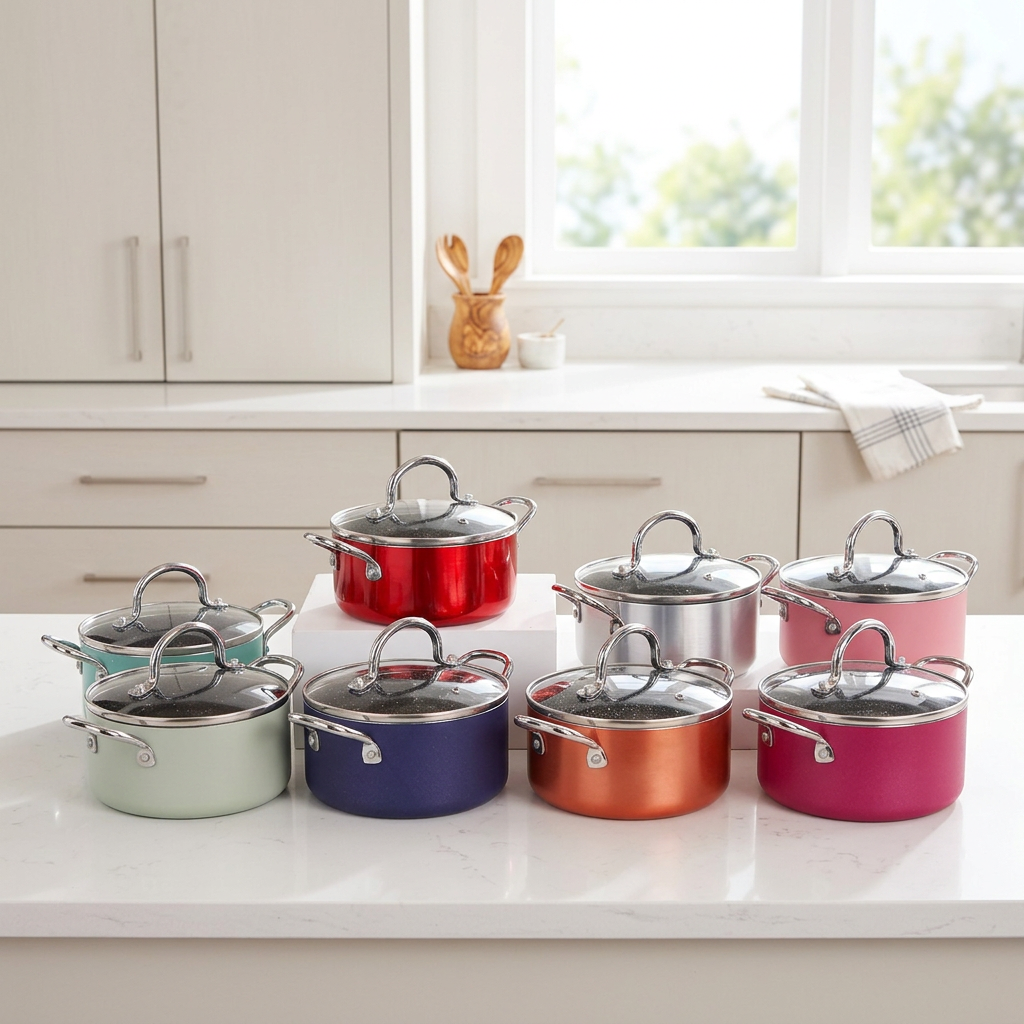
14cm Mini Sauce Pan with Glass Lid Colorful Non Stick Cookware for Induction and Gas Stoves Home Kitchen Use
View Product Specs →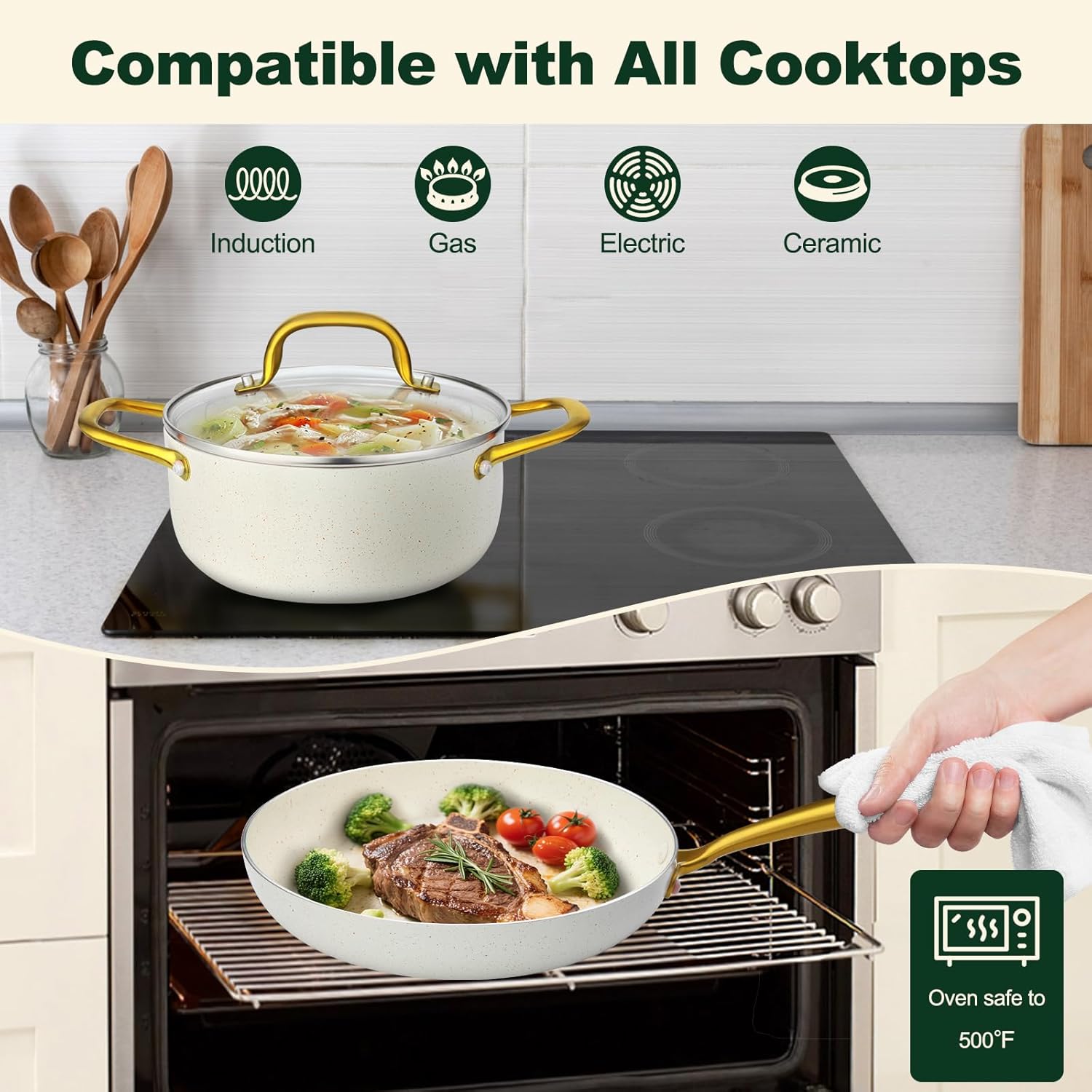
5-PIECE Classic Kitchenware Set Stainless Steel Handle PVD Ceramic Coating Interior Glass Lid Induction Bottom Eco-Friendly
View Product Specs →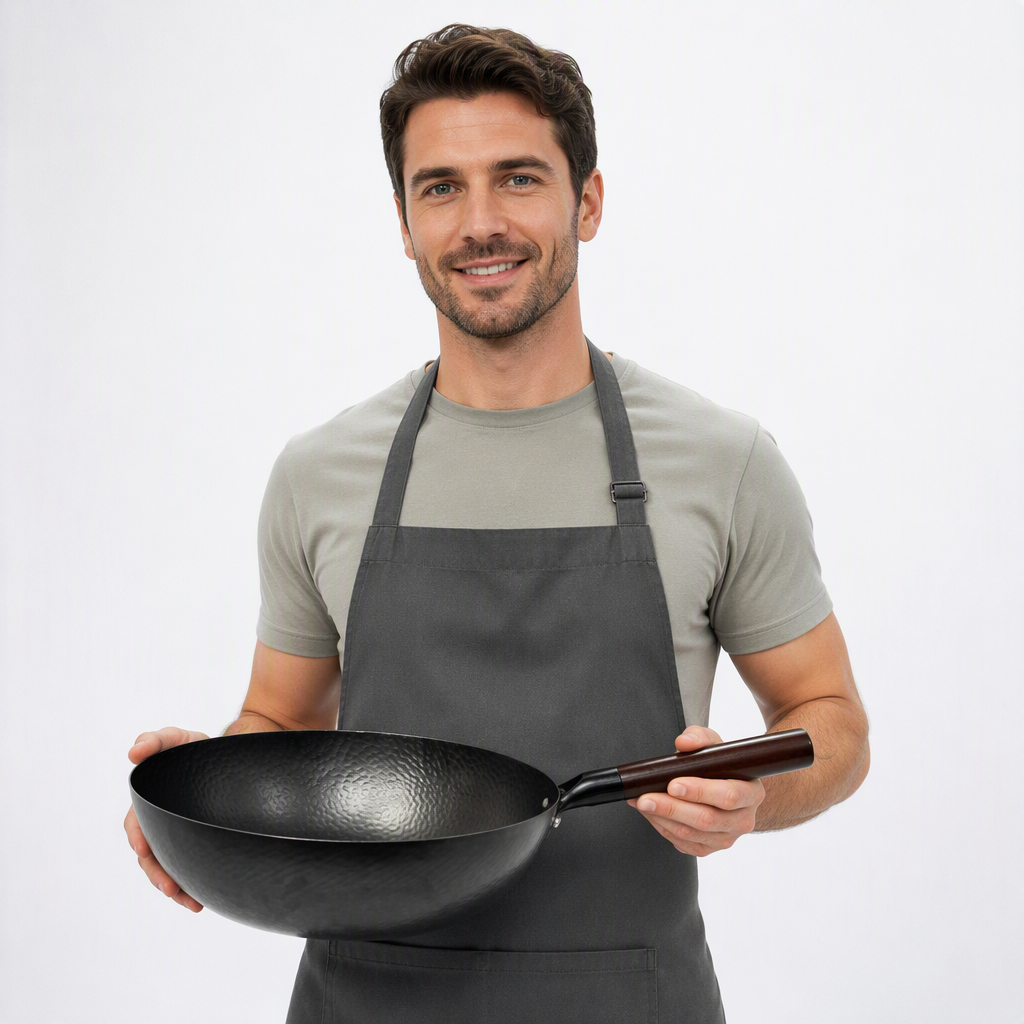
30cm Carbon Steel Round Wok Nitrided Surface Wood Handle Non Stick Stir Fry Pan for Gas and Induction Cookers
View Product Specs →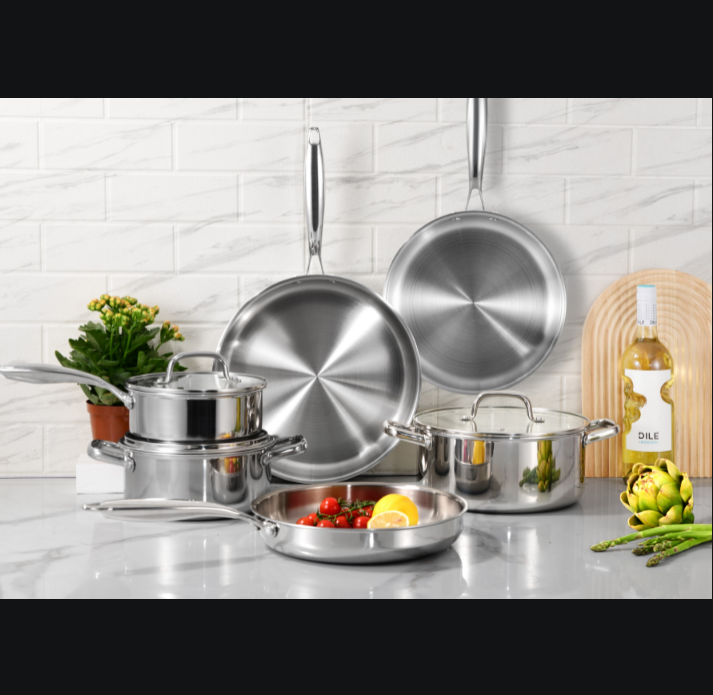
Factory Price Tri-ply Stainless Steel Cookware Set Non-Stick Interior Glass Cover Oven Safe Classic Design Flat Bottom for Home
View Product Specs →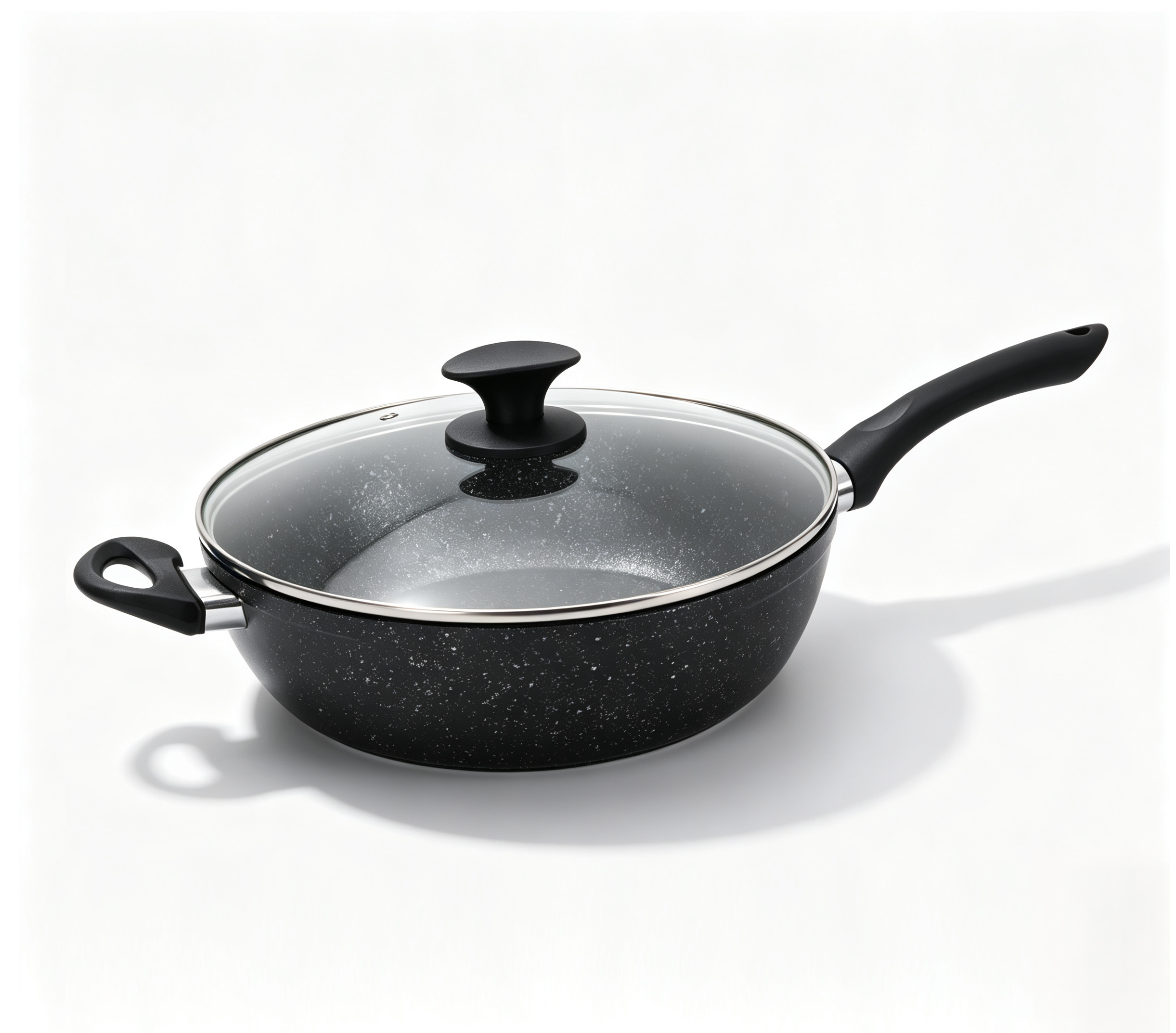
Easy Cleaning Modern Granit Nonstick Aluminum Cookware Pot Multi-function Deep Fry Pan Glass Lid Induction Ready Bakelite Handle
View Product Specs →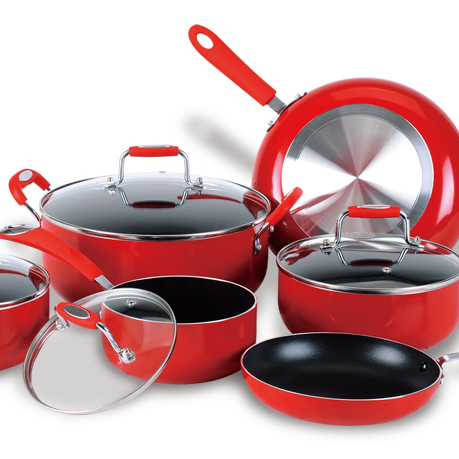
Fashion Kitchen Set of Nonstick Cookware
View Product Specs →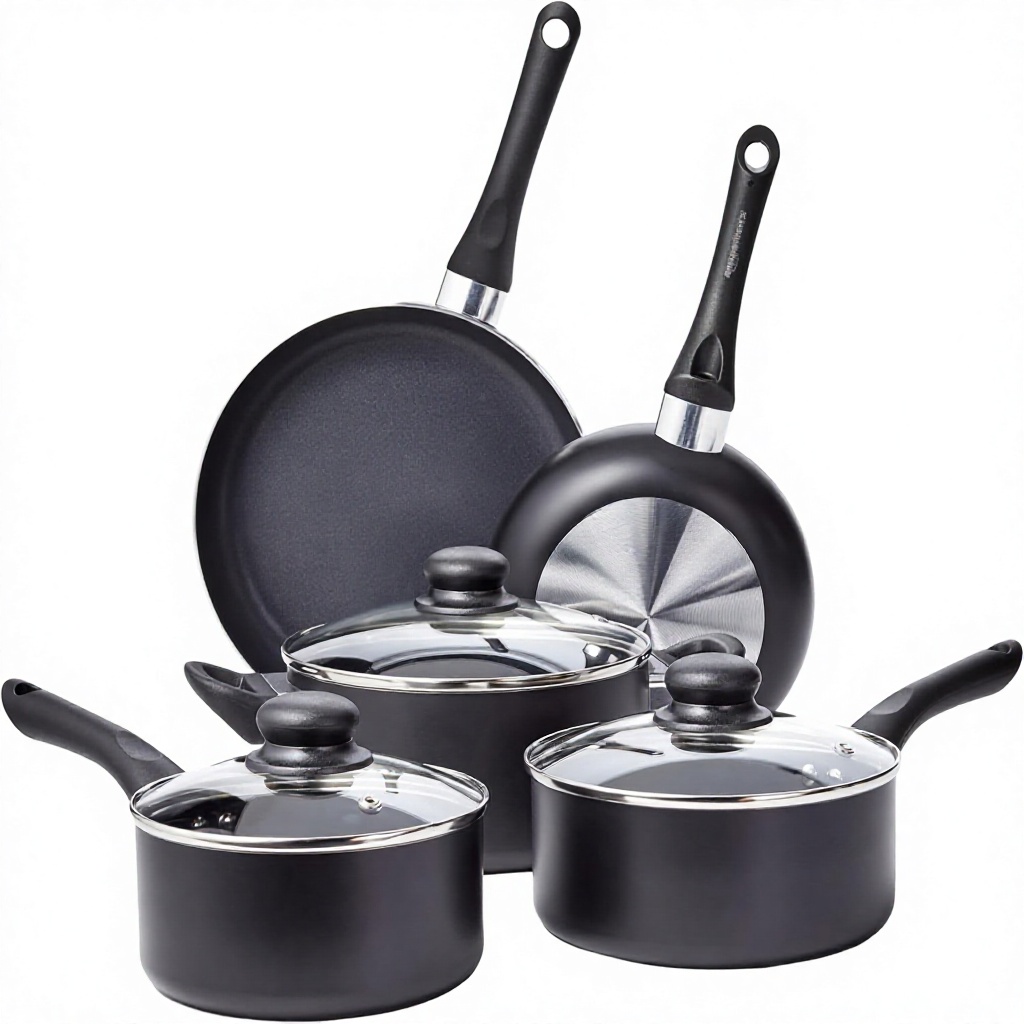
Basics Aluminum Ceramic Non-Stick 8-Piece Cookware Set with Gas & Induction Ready Pots Pans Plastic Hand Grip Pot Cover Black
View Product Specs →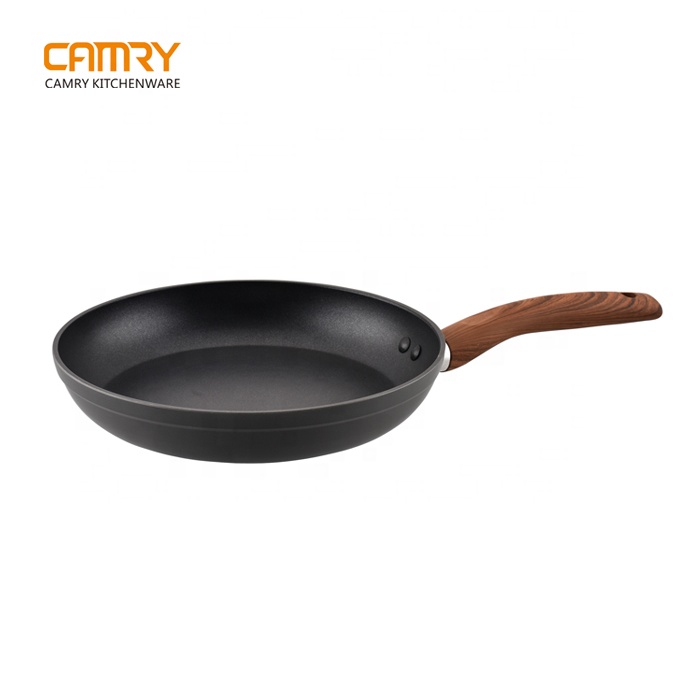
7PCS Dark Grey Forged Aluminum Megaware Cookware With Wooden Soft-touched Handle
View Product Specs →1. Global Procurement Dynamics for Forged Aluminum Cookware
The commercial culinary equipment market has undergone a structural transition over the past decade. Sourcing directors, retail buyers, and private-label cookware brand managers are increasingly pivoting away from legacy stamped (pressed) cookware toward heavy-gauge forged aluminum frying pans. This transition is driven by consumer demand for professional thermal performance, structural durability, and energy efficiency across modern cooking surfaces—specifically full-surface induction cooktops.
Forged aluminum occupies a crucial technical middle ground between cost-effective pressed aluminum and heavy cast iron or stainless steel. Through precision die-forging under intense hydraulic pressure, manufacturers manipulate metal density, allowing heavy gauge walls and reinforced rims while optimizing bottom thickness. This structural advantage virtually eliminates warping under rapid thermal cycles—a frequent failure point in thin-gauge pressed cookware.
Energy-Efficient Induction Demand
With induction stovetop penetration accelerating in Western Europe and North America, B2B procurement requires pans integrated with stainless steel impact-bonded bases. Forged bodies ensure zero thermal distortion, preserving flat hob contact.
Clean Chemistry & Sustainable Coatings
Regulatory pressures (such as EU REACH and US EPA guidelines) require absolute elimination of PFOA, PFOS, and GenX fluoropolymers. Next-generation multi-layer ceramic and granite-reinforced PTFE matrices are non-negotiable standards.
Modular & Space-Saving Design
Modern urban consumers demand versatile cookware that moves from cooktop to oven to table. Detachable handles, nestable stackability, and dual-pour spouts represent high-margin procurement features for retail expansion.
2. Manufacturing Science: Cold Pressing vs. Hot Die-Forging
To properly evaluate a Chinese cookware supplier, engineering teams must understand the physical micro-structure differences between alternative manufacturing methodologies. Below is an engineering comparison of metal flow, rim structural integrity, and heat dissipation parameters.
| Performance Metric | Pressed Aluminum (Stamped) | Forged Aluminum (MEIS Standard) | Cast Aluminum |
|---|---|---|---|
| Raw Material Base | 1050/3003 Flat Aluminum Sheets | 3003 / 4006 Heavy Gauge Aluminum Discs | Molten Ingot Alloy Recycled Metal |
| Forming Force & Tech | Low-Pressure Mechanical Stamping | Multi-Stage Hydraulic Die Forging (up to 4,000T) | Gravity or Vacuum Die Casting |
| Base vs. Rim Profile | Uniform thickness (e.g., 2.0mm - 2.5mm) | Engineered profile (4.5mm Base / 3.2mm Rim) | Thick variable wall (3.5mm - 6.0mm) |
| Warping Resistance | Moderate (Prone to high thermal shock) | High (Optimized molecular grain alignment) | Exceptional (Heavy body mass) |
| Unit Weight & Handling | Ultra-Light (Budget-focused) | Optimal Balance (Premium feel, easy lift) | Heavy (High freight costs) |
| Unit Production Cost | Low | Moderate to High (Maximum ROI) | High |
Zhejiang MEIS Kitchenware utilizes high-tonnage automated hydraulic forging presses. Aluminum alloy discs (Grade 3003) are subjected to heavy hydraulic forces within high-precision steel molds. This structural deformation forces metal into varying thicknesses: maximizing material at the base to retain thermal mass, while tapering the vertical walls to preserve balanced hand control and minimize shipping weight.
3. Nonstick Coating Systems & Surface Engineering
A nonstick pan’s operational life depends entirely on surface pre-treatment and internal coating cross-linking. Zhejiang MEIS Kitchenware integrates an automated 5-stage ultrasonic degreasing, acid-etching, and sandblasting line before applying nonstick topcoats. This creates microscopic mechanical anchors that double coating adhesion strength (evaluated via ASTM D3359 cross-hatch testing).
Sol-Gel Ceramic Coatings
Derived from inorganic silica minerals. Completely free of PTFE, PFOA, Lead, and Cadmium. Cured at lower temperatures, ceramic coatings offer scratch resistance (up to 9H hardness) and withstand extreme thermal spikes up to 450°C without releasing harmful fumes.
Granite & Marble Speckle
Multi-layer reinforced fluoropolymer or hybrid matrices embedded with mineral particles. Offers exceptional food release, aesthetically pleasing natural stone appearance, and outstanding release performance through 20,000+ abrasion cycles (BS 7069 standard).
Titanium-Infused Systems
Engineered for heavy-duty commercial kitchen environments. Pure titanium plasma particles are fused to the aluminum substrate prior to topcoat application, creating a durable shield against metal utensils and high-frequency scrubbing.
4. Enterprise E-E-A-T: Why Source from Zhejiang MEIS Kitchenware Co., Ltd.
Located in the Dongnan Industrial Zone, Shuxi Street, Jinhua, Zhejiang, Zhejiang MEIS Kitchenware Co., Ltd. is a verified custom manufacturer operating dedicated production lines for pressed aluminum, forged aluminum, and carbon steel cookware. With over 20 years of operational experience, our manufacturing hub serves major importers, retail chains, and private labels globally.
TÜV Rheinland Audited
On-site verified facilities, working conditions, and quality control protocols. Full traceability from raw aluminum disc ingestion to export packing.
Complete In-House Tooling
Equipped with internal lathe, CNC tooling, and mold fabrication shops. Prototype turnaround reduced to 10–14 days for custom geometry requests.
Rigorous QA Laboratory
In-house Salt Spray Testers, Handle Torsion/Thrust Testers, Curing Ovens, and Coating Fatigue Testers validate every production batch.
5. Future Trends in Aluminum Frying Pan Sourcing (2025–2030)
As procurement strategies evolve, international brand owners must align product development pipelines with key technological shifts:
1. Full-Coverage Induction Plate Integration
Legacy hole-punched induction bases are being replaced by full-surface spray-bonded or mesh-welded stainless steel bases (SUS430). This maximizes electromagnetic energy absorption, reduces heating times by up to 22%, and eliminates base distortion.
2. Smart Ergonomics & Detachable Systems
Click-lock detachable handle systems (passing 10,000-cycle load endurance tests) allow flat-packing, reducing container transport volume by up to 40% and providing significant freight cost advantages.
3. Recycled Aluminum Substrates
Environmental compliance policies push brands toward 100% certified post-consumer recycled aluminum discs. Recycled 3003 alloy yields identical thermal conductivity while cutting carbon emissions by over 80% per pan body produced.
6. Frequently Asked Sourcing Questions (FAQ)
Zhejiang MEIS Kitchenware Co., Ltd. is an audited Manufacturer and Trading Company operating proprietary pressing, die-forging, CNC machining, nonstick spray-coating, and assembly lines in Jinhua, Zhejiang. Our facility is verified on-site by TÜV Rheinland.
MOQ varies depending on tooling requirements and customization depth. Standard production runs for custom-coated forged aluminum frying pans generally start at 1,000 to 1,500 pieces per size/color way. Selected standard items can be ordered in smaller trial batches starting from 50 to 500 units.
All nonstick formulations applied in our factory comply with global regulations including US FDA 21 CFR, EU Regulation 1935/2004, German LFGB, and French DGCCRF. Material Safety Data Sheets (MSDS) and testing certificates are provided with mass production shipments.
Yes. We specialize in OEM and ODM services. Our engineering center utilizes internal CNC facilities to produce custom tooling for pan bodies, specialized pour spouts, custom bakelite/soft-touch handles, and Pantone-matched exterior high-temperature coatings.
Pressed aluminum is stamped out of uniform sheet metal, creating a lightweight pan ideal for entry-level price points. Forged aluminum uses heavy hydraulic press dies to shape a thicker bottom (e.g., 4.5mm) and tailored wall profile, delivering far greater heat retention, superior balance, and thermal warp resistance.
Every lot undergoes raw disc checking, automated cleaning inspection, coating thickness gauging (dry film thickness), cross-hatch adhesion tests, handle static fatigue load testing, drop packaging tests, and final AQL 2.5/4.0 visual inspections.
Scale Your Cookware Brand with China's Premier Manufacturer
Whether launching a private-label ceramic cookware collection or sourcing heavy-gauge forged aluminum frying pans for retail distribution, our engineering team provides direct factory pricing and technical support.