Executive Procurement Overview & Market Dynamics
In the global commercial culinary supply chain, pressed aluminum cookware remains the benchmark for volume retail programs, promotional market strategies, and high-turnover culinary inventories. As retail brands, global importers, and supermarket purchasing directors navigate volatile material costs, tightening chemical safety regulations (such as EU REACH and US FDA guidelines), and evolving consumer preferences for healthy nonstick solutions, selecting a verified manufacturing partner in China is a critical strategic decision. This industrial whitepaper analyzes the physical properties, metallurgical engineering, quality assurance frameworks, and market forecasts defining modern aluminum cookware manufacturing at Zhejiang MEIS Kitchenware Co., Ltd.
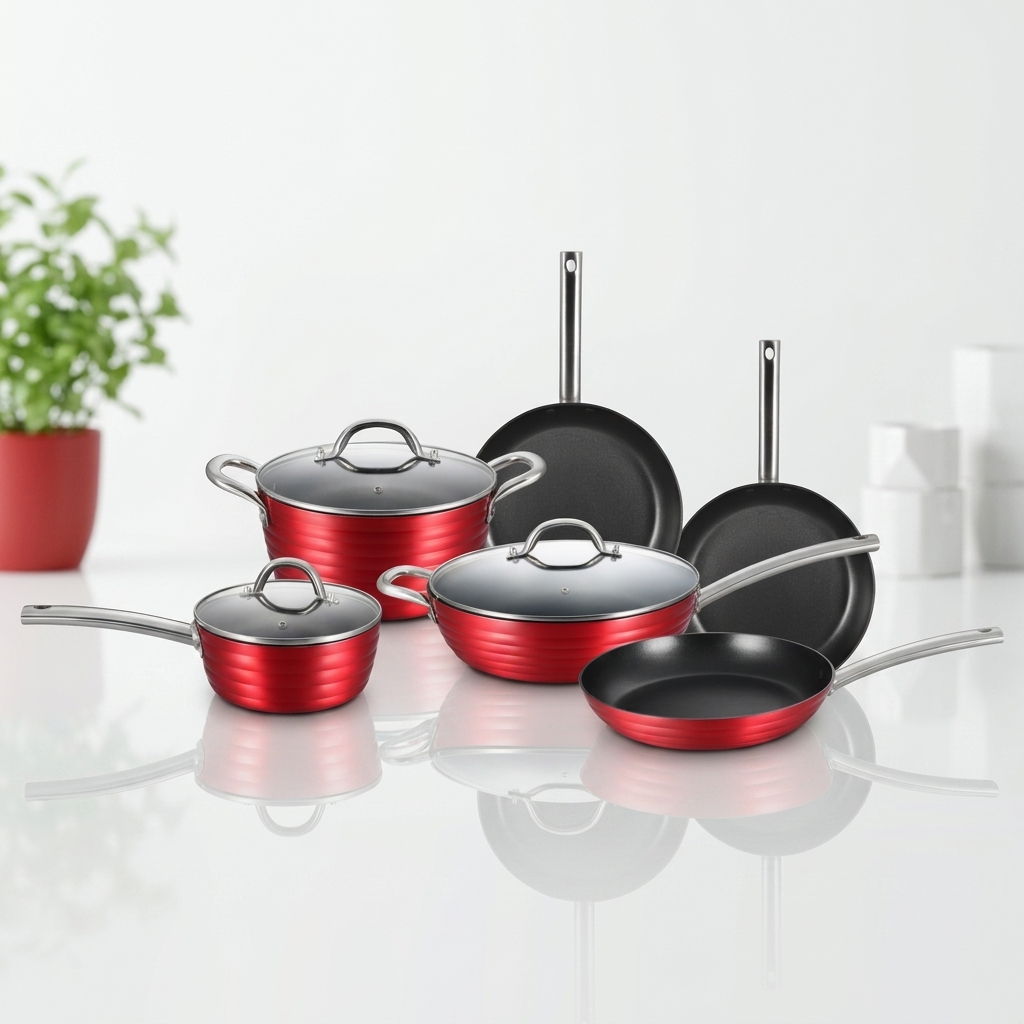
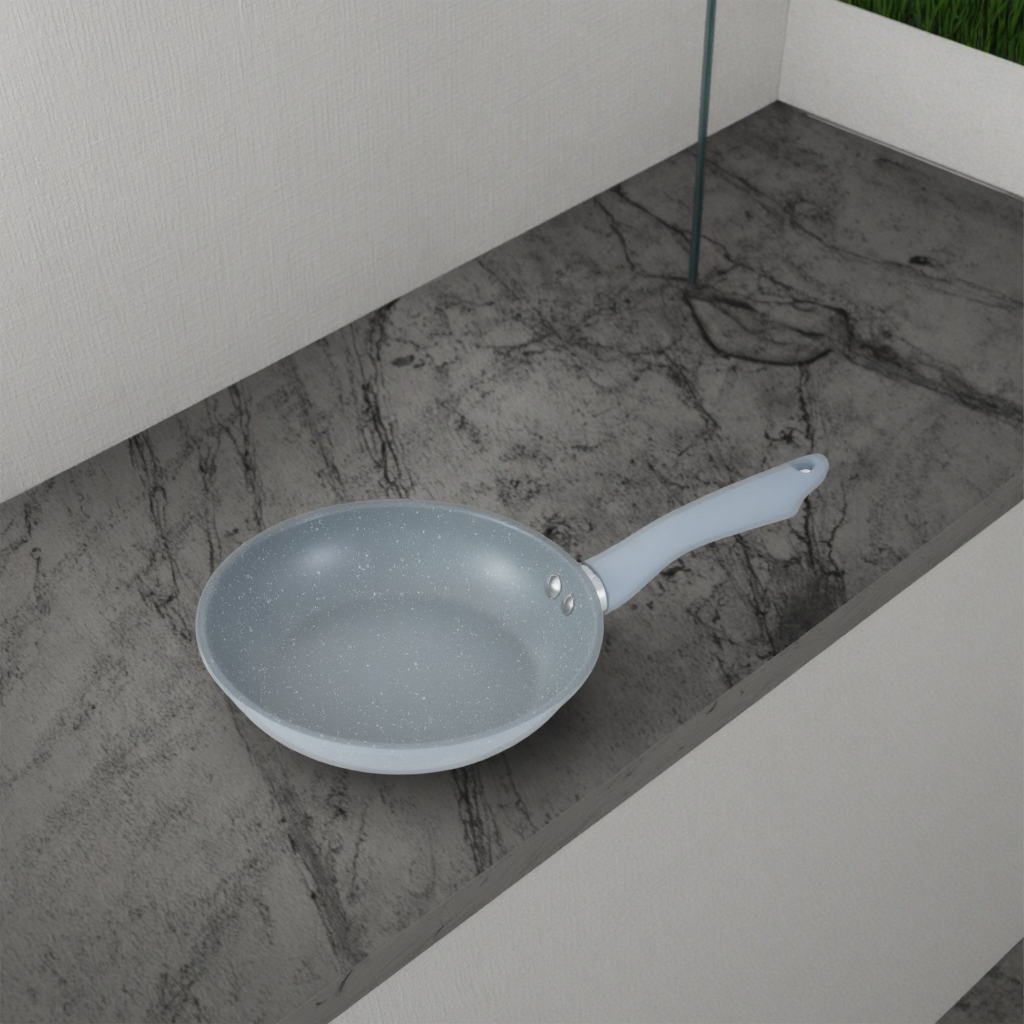
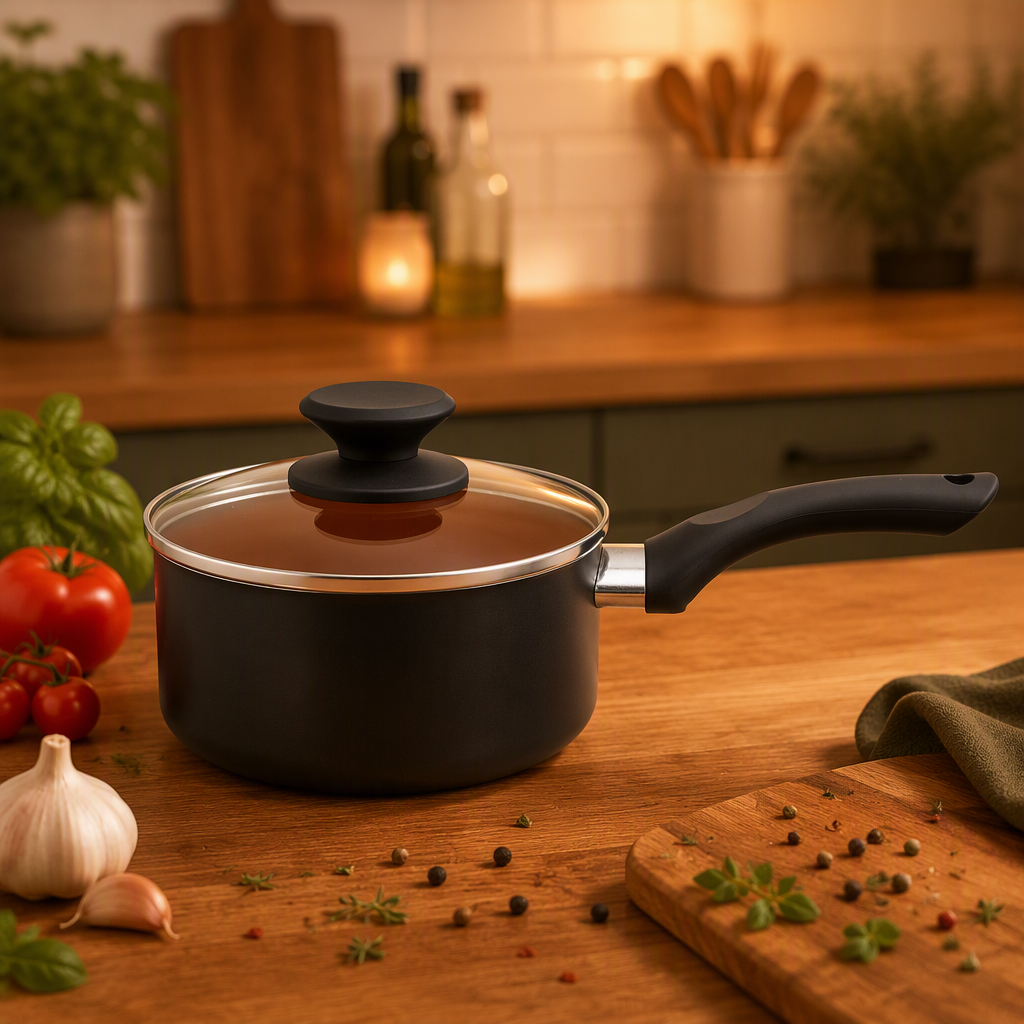
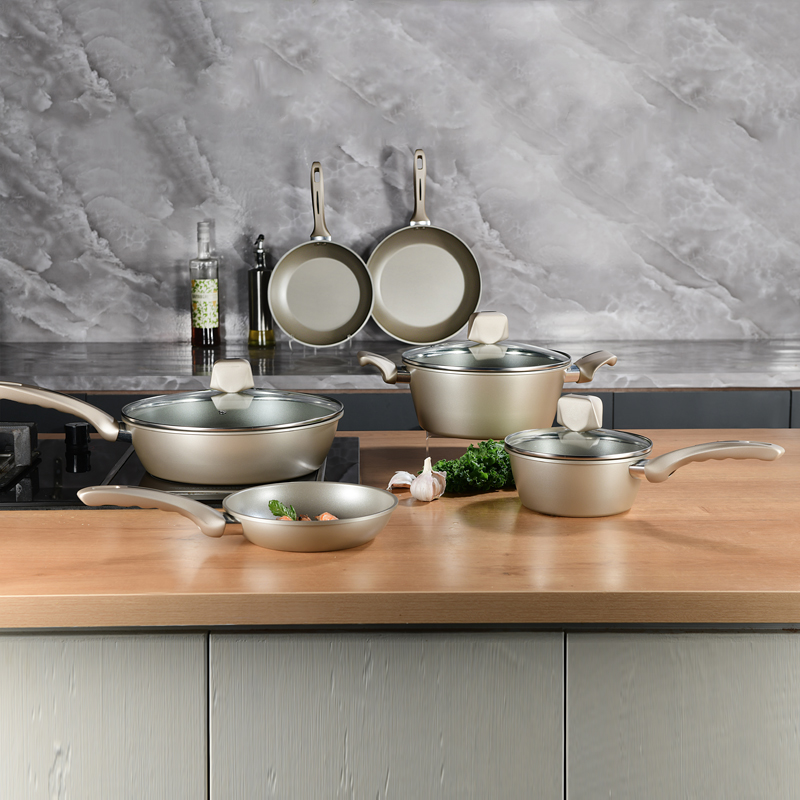
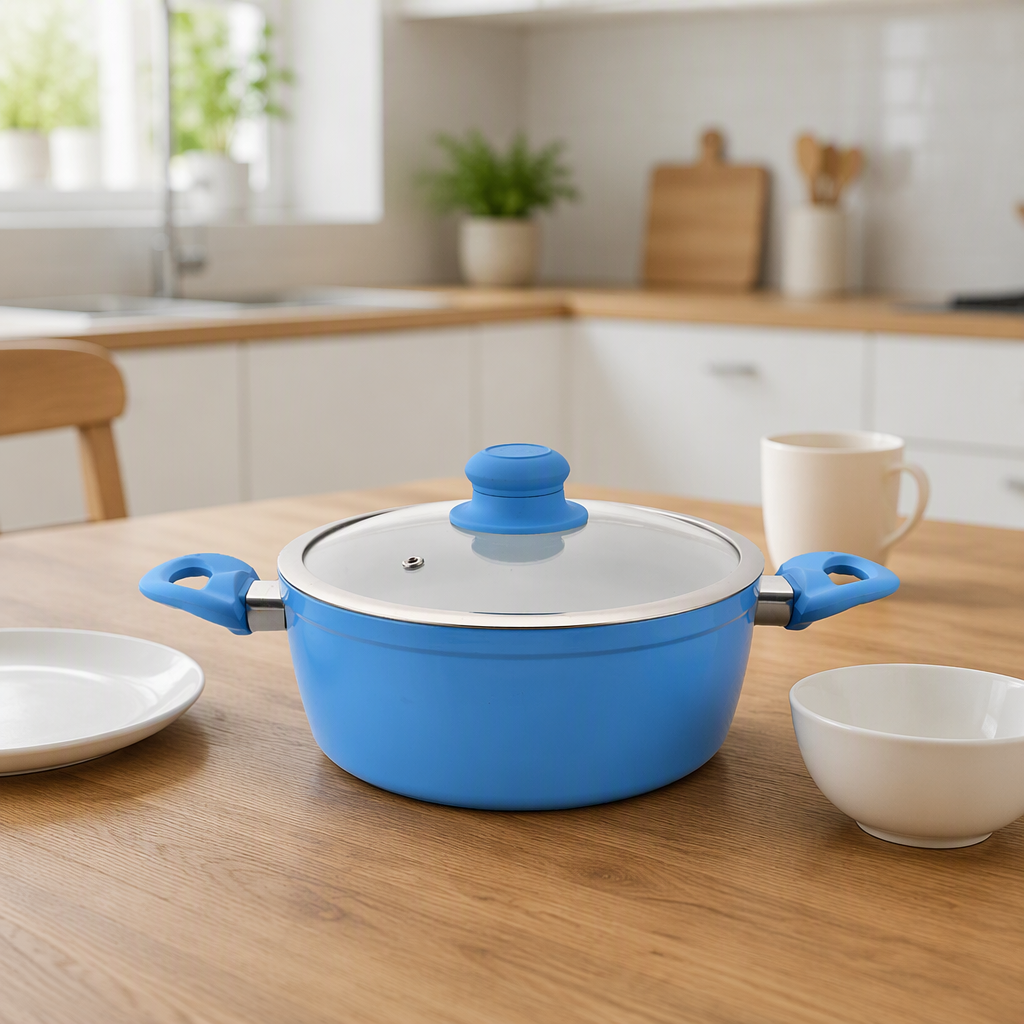
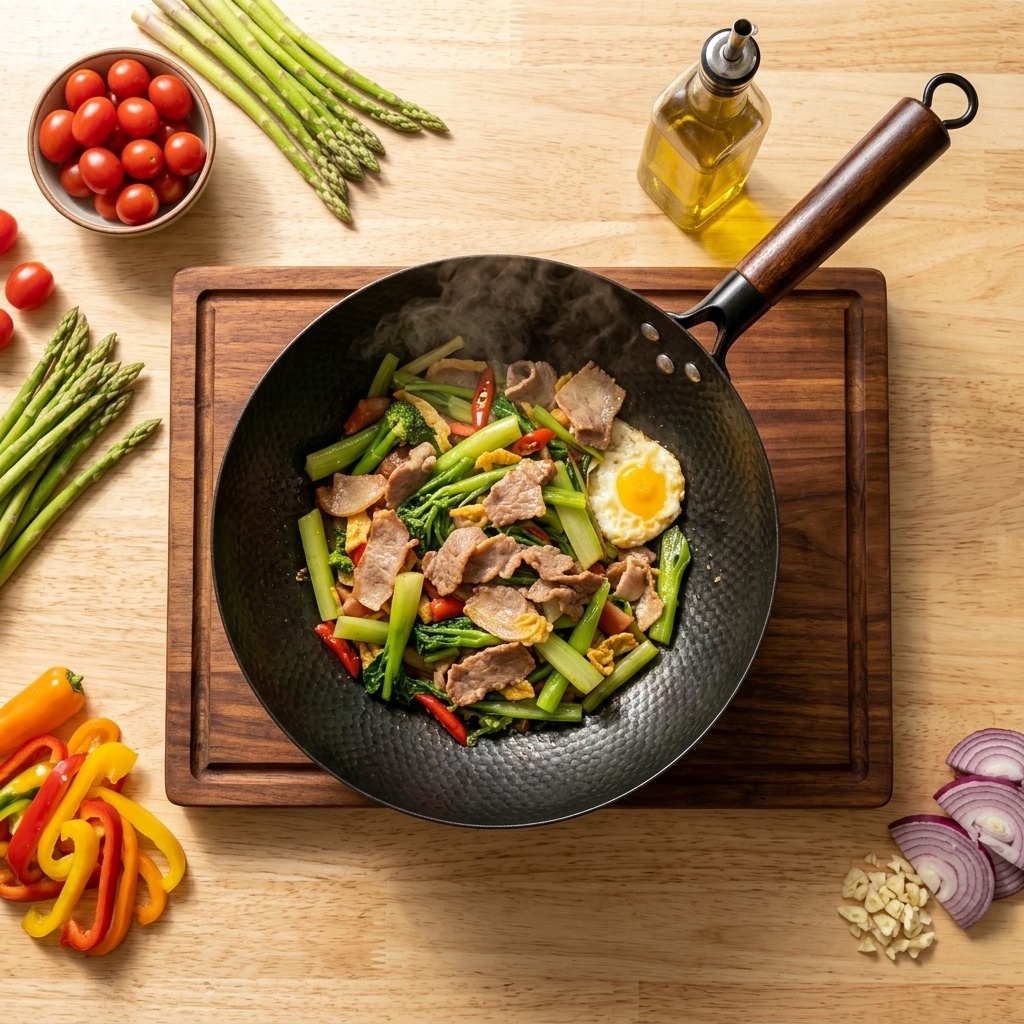
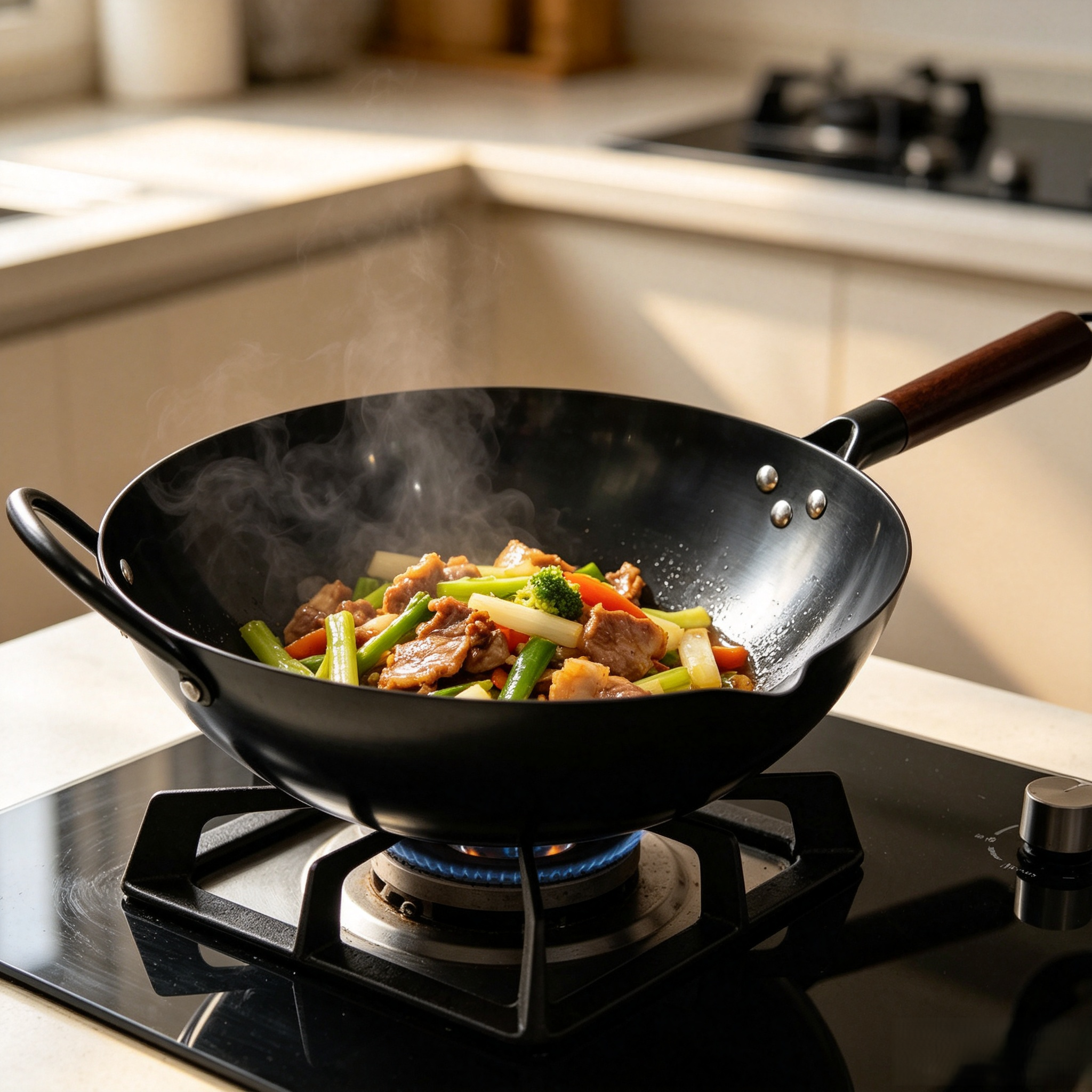
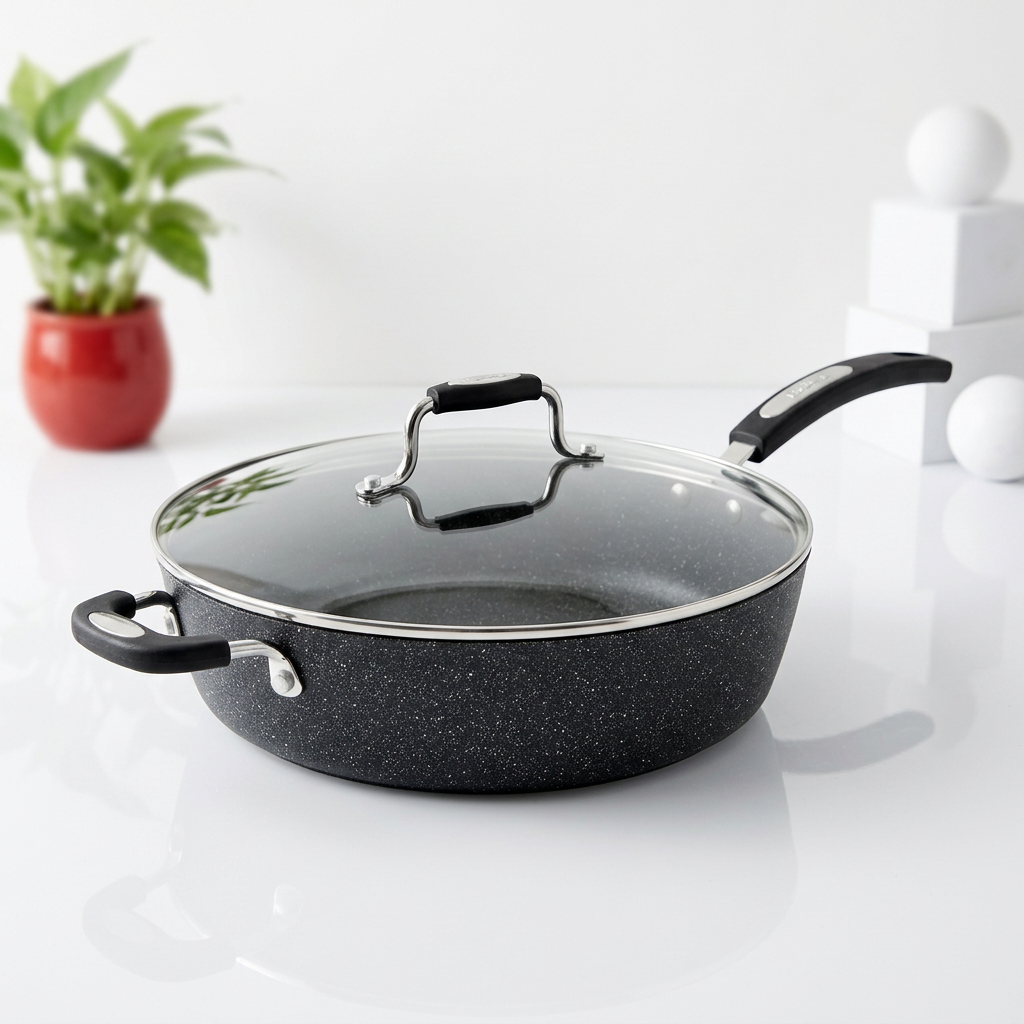
Featured OEM/ODM Cookware Solutions
Direct-from-factory nonstick cookware engineered for high durability, rapid thermal induction, and custom retail packaging.
Verified Manufacturing Infrastructure
Zhejiang MEIS Kitchenware Co., Ltd. – Operating full-scale pressing, CNC finishing, automated coating, and assembly lines in Jinhua, Zhejiang.
Industrial Engineering: Metallurgical Physics of Pressed Aluminum
Understanding cold-stamping grain deformation, thermal transfer efficiency, and structural integrity in volume manufacturing.
3003-H14 Aluminum Alloy
The foundational substrate for premium pressed cookware is high-purity 3003-H14 aluminum disc alloy (containing manganese additives). This alloy balances cold-stamping ductility with mechanical yield stress, preventing microscopic wall fractures during high-tonnage hydraulic stamping.
Cold Stamping Mechanics
Unlike cast aluminum which relies on liquid pouring, pressed aluminum utilizes mechanical stamping presses (ranging from 200 to 600 tons). High-speed progressive dies press circular sheet discs into vessel shapes, preserving a uniform crystalline structure and delivering rapid, even thermal conductivity across the pan base.
Thermal Conductivity & Dynamics
Aluminum exhibits a thermal conductivity rating of ~237 W/m·K—nearly five times higher than stainless steel (16 W/m·K). Pressed cookware minimizes thermal lag, enabling instant response to heat source adjustments on gas, electric, and induction cooktops.
Surface Science: Advanced Nonstick Coating Systems
A technical evaluation of multi-layer PTFE, Sol-Gel Ceramic matrices, and rock-granite dispersion layers.
Polymer Chemistry & Adhesion Mechanical Pre-Treatment
The operational lifespan of nonstick cookware depends on chemical bonding and mechanical interlock at the aluminum interface. At Zhejiang MEIS Kitchenware Co., Ltd., raw stamped aluminum vessels undergo strict automatic surface preparation before entering automated liquid spray coating booths:
- Automated Alkaline Degreasing & Acid Etching: Oil residues from deep-drawing presses are removed in automated wash tunnels, creating a microscopic etch profile (Ra 3.5–4.5 µm).
- Primer Coat Application: A specialized high-adhesion polyether sulfone (PES) or PTFE primer coat is sprayed, establishing a permanent chemical bond with the etched aluminum substrate.
- Mid-Coat Matrix with Mineral Hard Particles: Silicon carbide (SiC) or titanium oxide particles are integrated into the mid-layer to provide scratch resistance against kitchen utensils.
- Top-Coat Hydrophobic Fluoropolymer: High-density PTFE or Sol-Gel ceramic topcoats deliver ultra-low surface energy (<18 mN/m), ensuring food release and oil-free cooking capabilities.
- Precision Curing Ovens: Vessels pass through multi-stage infrared curing ovens reaching up to 420°C, cross-linking the fluoropolymer chains into a non-porous matrix.
2025–2030 Global Cookware Sourcing & Procurement Trends
Key technological shifts shaping importer purchasing strategies, sustainability compliance, and consumer demand.
1. Complete Transition to PFAS-Free & Organic Ceramic Sol-Gel
Regulatory mandates across Northern Europe and US states (such as California AB 1200 and Maine PFAS restrictions) are accelerating the phase-out of traditional per- and polyfluoroalkyl substances. Global brand procurement is rapidly shifting toward inorganic Sol-Gel ceramic coatings (silicon dioxide matrix). Ceramic coatings provide temperature stability up to 450°C without thermal degradation, offering a strong marketing narrative for health-conscious retail channels.
2. Universal Induction Bottom Integration
As induction cooktops gain market share in Europe and Asia-Pacific, pure aluminum cookware requires ferromagnetic base enhancement. The industry standard has evolved from flame-sprayed iron powder to impact-bonded stainless steel mesh discs (AISI 430 grade). High-tonnage friction welding presses press the stainless disc into the soft aluminum base, achieving seamless heat transfer without risk of disc delamination under thermal shock.
3. Compact Living & Detachable Handle Ergonomics
Urbanization and smaller kitchen footprints drive demand for space-saving cookware sets with click-on detachable handles. By removing fixed side handles, cookware stackability increases by up to 60%, significantly reducing ocean freight logistics costs per unit. Dual-action safety lock mechanisms tested to EN 12983-1 standards ensure handle stability while enabling seamless transition from cooktop to oven to refrigerator.
4. Hybrid Material Portfolios (Pressed Aluminum + Carbon Steel)
Leading retail buyers are moving away from single-material catalog sourcing toward hybrid catalog integration. Combining lightweight pressed aluminum saucepans for quick water boiling with heavy-gauge carbon steel woks and fry pans for high-heat searing optimizes purchasing cost structures while meeting diverse culinary requirements.
Substrate & Manufacturing Engineering Matrix
A technical comparison guide to assist B2B purchasing managers in material selection.
| Evaluation Parameter | Pressed Aluminum | Forged Aluminum | Heavy Gauge Carbon Steel |
|---|---|---|---|
| Raw Material Substrate | Stamped 3003 Aluminum Sheet Discs | Die-Forged High-Density Aluminum Alloy | Low-Carbon Cold-Rolled Steel Plate |
| Base Wall Thickness Range | 1.8 mm – 3.2 mm (Lightweight & Fast) | 3.5 mm – 5.0 mm (Heavy Rim & Base) | 1.0 mm – 2.5 mm (Rigid Structure) |
| Thermal Response Rate | Ultra-Fast (Instant Temperature Rise) | High Thermal Mass (Superior Heat Retention) | Fast Linear Heating |
| Induction Compatibility | Requires Stamped / Bonded Stainless Disc | Requires Impact-Bonded Stainless Disc | Naturally Ferromagnetic (100% Native) |
| Structural Warp Resistance | Standard (Ideal for Light Cooking) | Maximum Resistance to Thermal Deformation | High Rigidity & Stress Endurance |
| Landed Unit Cost Position | Highly Competitive / Ideal for Volume Retail | Mid-to-Premium Retail Positioning | Cost-Effective / High Utility Value |
Quality Assurance & Compliance Testing Laboratory
Inside the in-house quality control testing facility at Zhejiang MEIS Kitchenware Co., Ltd.
Coating Abrasion Resistance (BS 7069)
Conducted using linear mechanical reciprocating abrasion testers equipped with Scotch-Brite 3M pads under a continuous 1.5 kg downward force load. Samples must exceed 10,000 to 20,000 cycles without exposing the underlying aluminum substrate.
Cross-Hatch Adhesion (ASTM D3359)
A precision lattice pattern of 11 cut lines (1mm spacing) is made through the nonstick coating down to the metal base. Standard adhesive tape is applied firmly and pulled rapidly at a 90° angle. A 5B rating (zero film detachment) is required for production batch approval.
Handle Torsion & Fatigue (EN 12983-1)
Mounted cookware handles undergo pneumatic mechanical stress tests, enduring 15,000 cycles of vertical deflection loading with full capacity weights, followed by a 10 Nm torsion twist test to verify rivet joint and weld integrity.
Executive B2B Sourcing FAQ
Direct answers to critical procurement, factory audit, custom tooling, and supply chain questions.
Is Zhejiang MEIS Kitchenware Co., Ltd. a verified direct manufacturer or a trading company?
Zhejiang MEIS Kitchenware Co., Ltd. is an on-site verified cookware manufacturer located in Dongnan Industrial Zone, Shuxi Street, Jinhua, Zhejiang, China. Assessed on-site by TÜV Rheinland, the factory operates complete in-house production lines—including high-tonnage sheet pressing presses, lathe tooling, CNC base finishing machines, automated surface washing systems, multi-booth nonstick spray painting lines, and final assembly lines. Employing over 105 verified staff, MEIS manages both OEM/ODM custom manufacturing and direct export trade execution.
What is the standard Minimum Order Quantity (MOQ) for OEM/ODM orders?
Standard Minimum Order Quantities (MOQ) depend on the structural specification and customization tier of the product:
• Custom Pressed Aluminum Cookware Sets: 1,000 to 1,500 full sets per item/colorway.
• Single Frying Pans & Saucepans: 1,500 to 3,000 units per size/coating spec.
• Trial Orders & In-Stock Models: Select high-volume running models can accommodate initial trial market orders starting from 50 to 500 units to support brand development.
What nonstick coating formulations can be specified for private-label production?
We offer a full spectrum of certified food-contact nonstick coating systems tailored to regional regulatory requirements:
• Sol-Gel Organic Ceramic Coatings: 100% PTFE-free, PFOA-free, and lead/cadmium-free, heat resistant up to 450°C.
• Granite & Marble Speckle Coatings: Multi-layer reinforced fluoropolymer systems with natural stone aesthetic particle dispersions for enhanced scratch resistance.
• Titanium Matrix Coatings: Hard-density multi-coat systems engineered for extreme durability and commercial kitchen environments.
• Hard-Anodized Surface Treatments: Electrochemical conversion layers forming a hardened aluminum oxide surface prior to nonstick application.
What is the typical lead time from design approval to FOB container delivery?
For standard OEM customization (brand logo application, custom color Pantone matching, and printed retail gift box packaging), sample turnaround takes 7 to 10 working days, with mass production completed in 35 to 45 days upon deposit confirmation. For custom ODM projects requiring new stamping die molds, our in-house lathe and CNC tooling workshop manufactures prototype tooling in 20 to 25 days, followed by pre-production sample sign-off.
How does pressed aluminum cookware compare to forged aluminum cookware for supermarket procurement?
Pressed aluminum cookware is stamped from rolled aluminum sheets of uniform thickness, making it lightweight, fast-heating, and cost-effective. It is well-suited for high-volume promotional retail, entry-level cookware sets, and price-sensitive retail chains. Forged aluminum cookware is formed under heavy forging presses, creating a thicker base and thin walls, offering higher thermal mass and warp resistance for mid-to-premium cookware lines.
Partner with China's Premier Nonstick Cookware Manufacturer
Connect directly with our engineering and export team at Zhejiang MEIS Kitchenware Co., Ltd. Request product samples, custom mold quotes, or factory audit documentation today.
Send an Inquiry