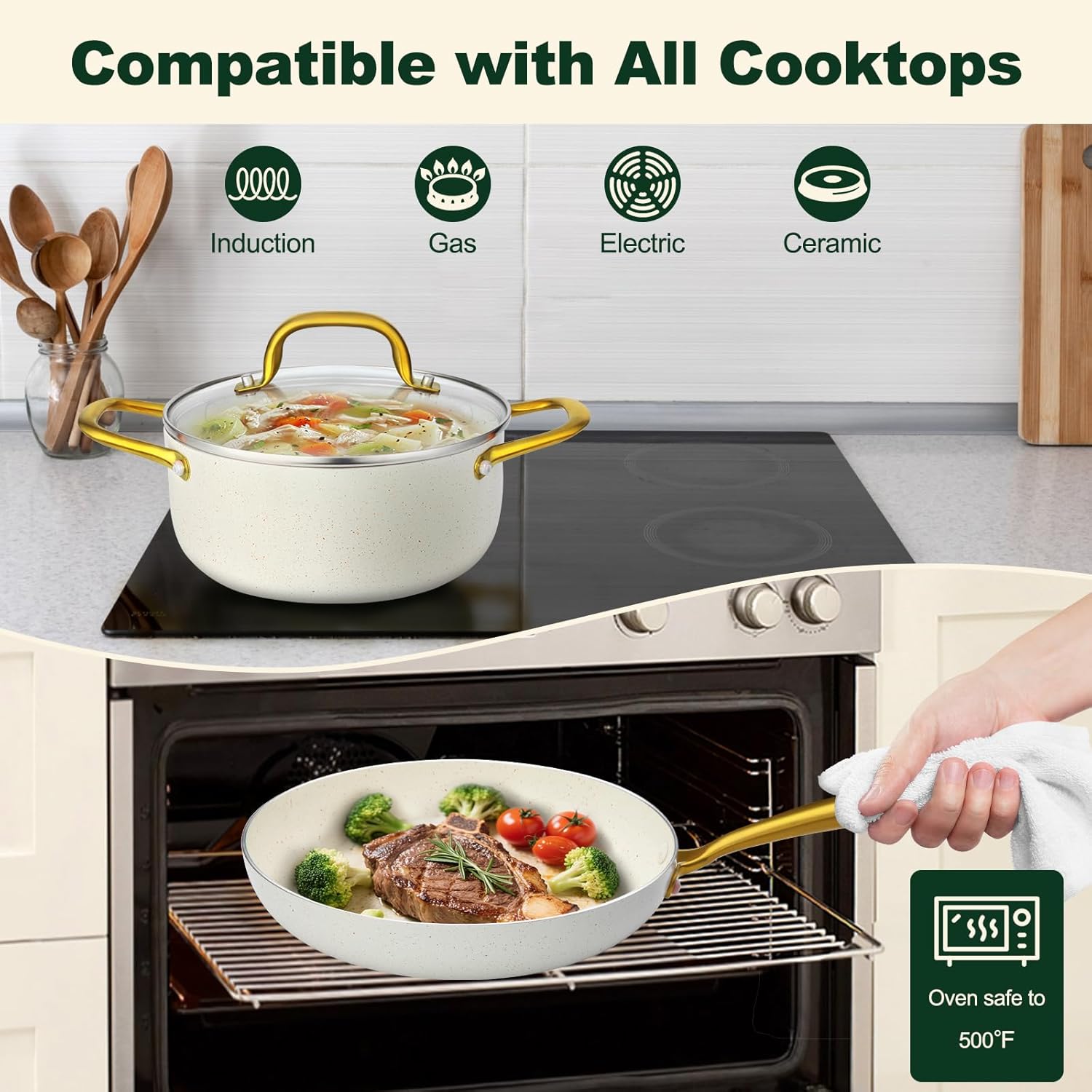
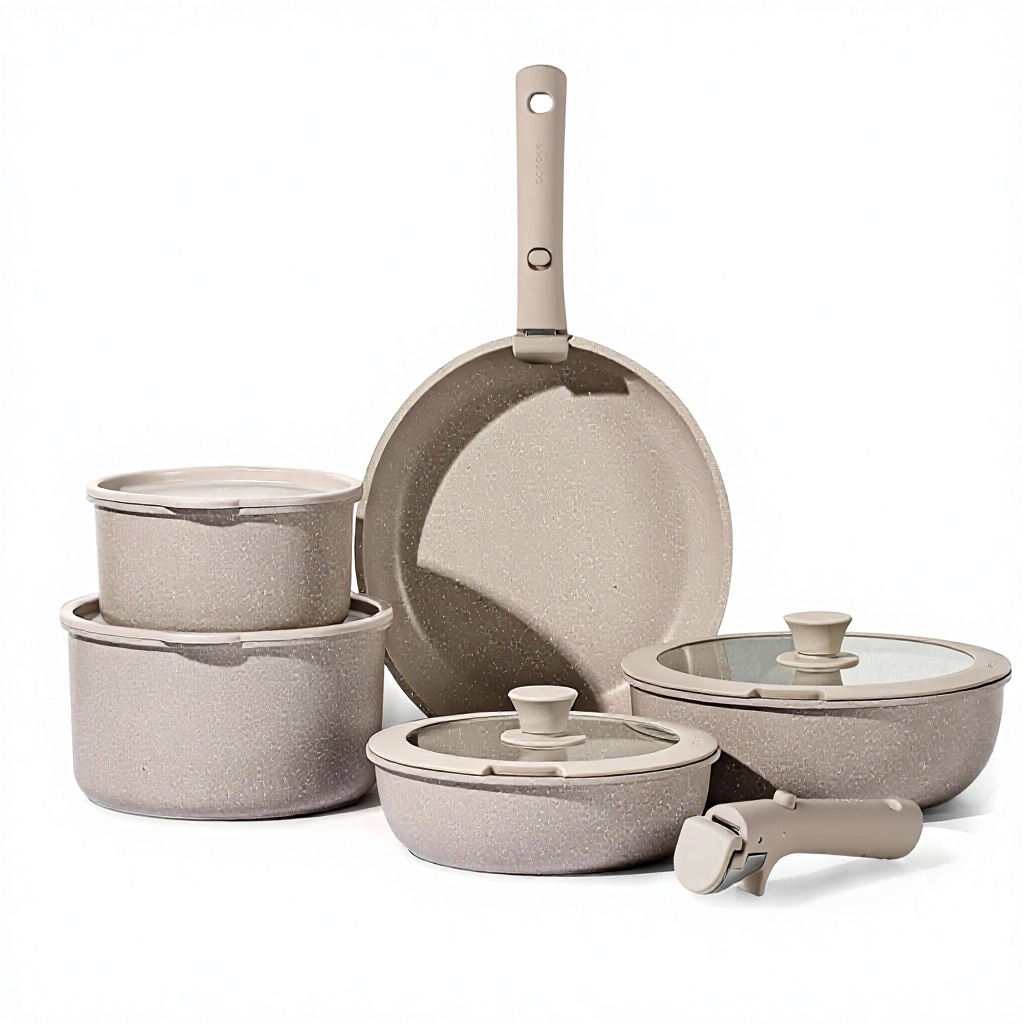
CAROTE 19-Piece Non-Stick Cookware Set Detachable Handles
Modular space-saving system featuring quick-release click-lock handles, oven-safe build up to 260°C, stackable saucepan structures, multi-hob magnetic induction bottom.
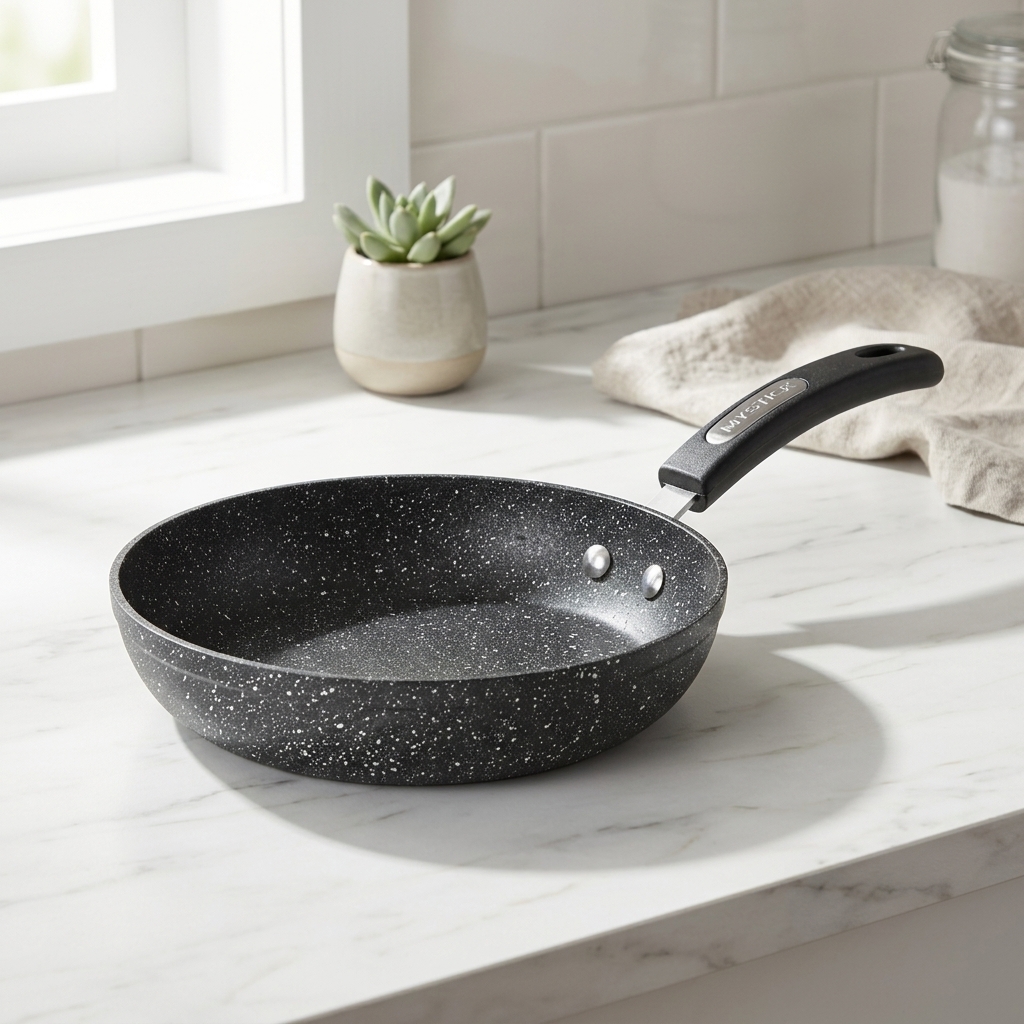
Die-forged heavy-gauge rim and base structure, scratch-resistant marble speckle nonstick system, rapid heat retention core ideal for high-heat frying and simmer saucing.
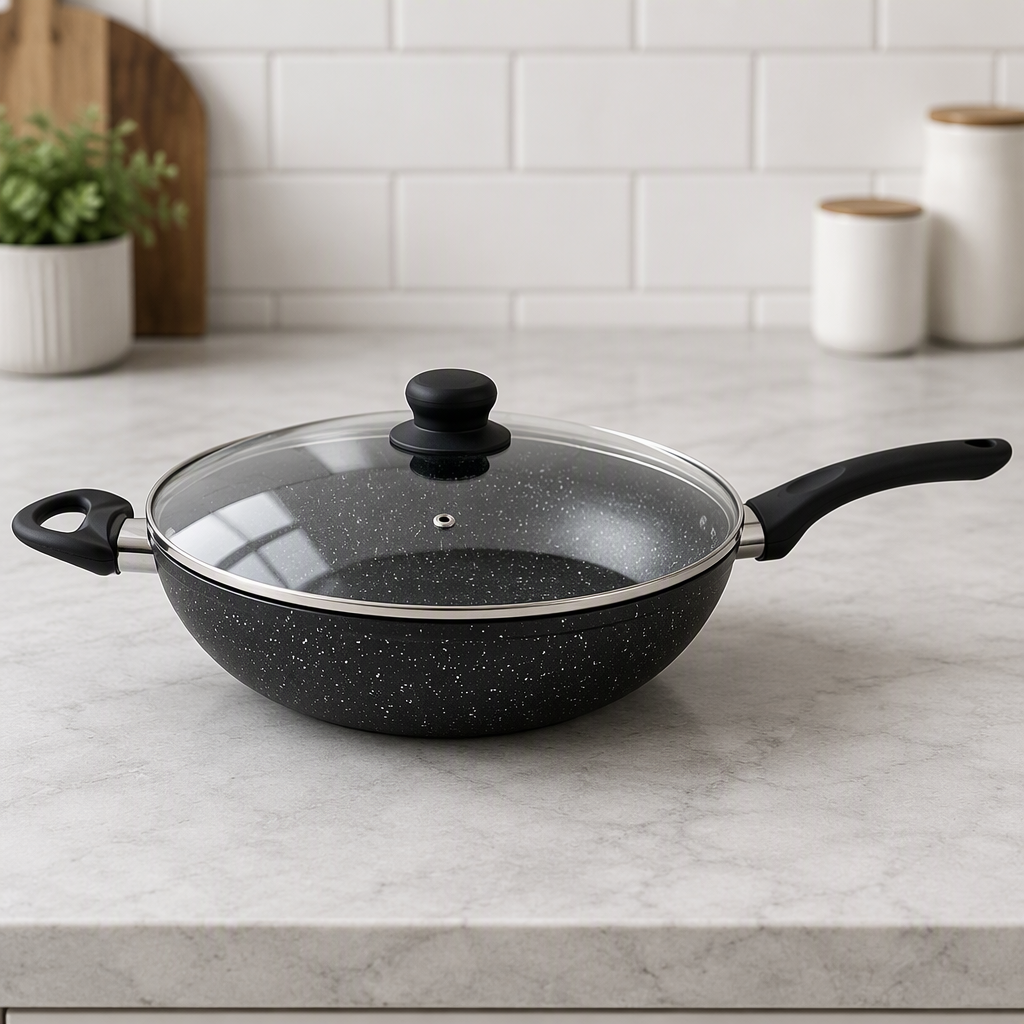
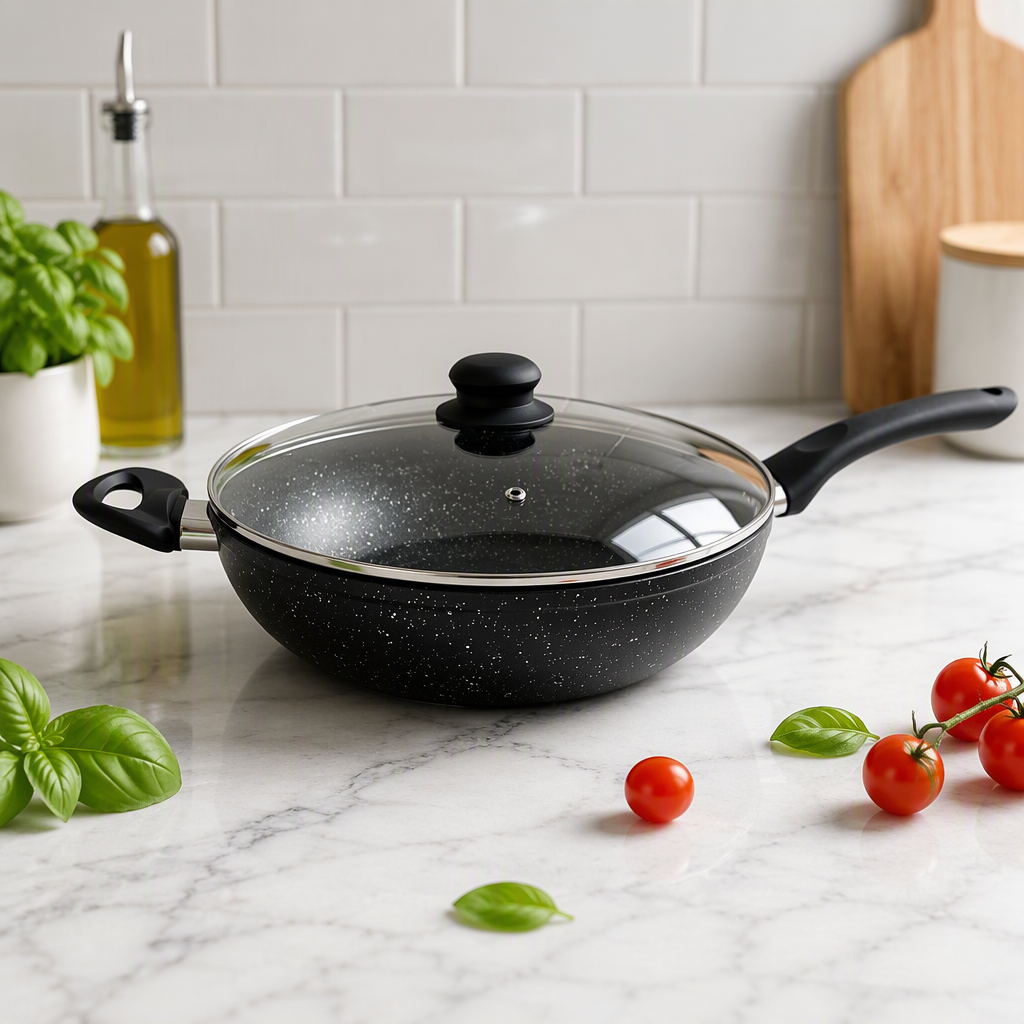
Commercial-grade 3.5-liter deep saucepan/wok hybrid with soft-touch stay-cool Bakelite handle, dual pour spouts, and warp-resistant induction base plate.
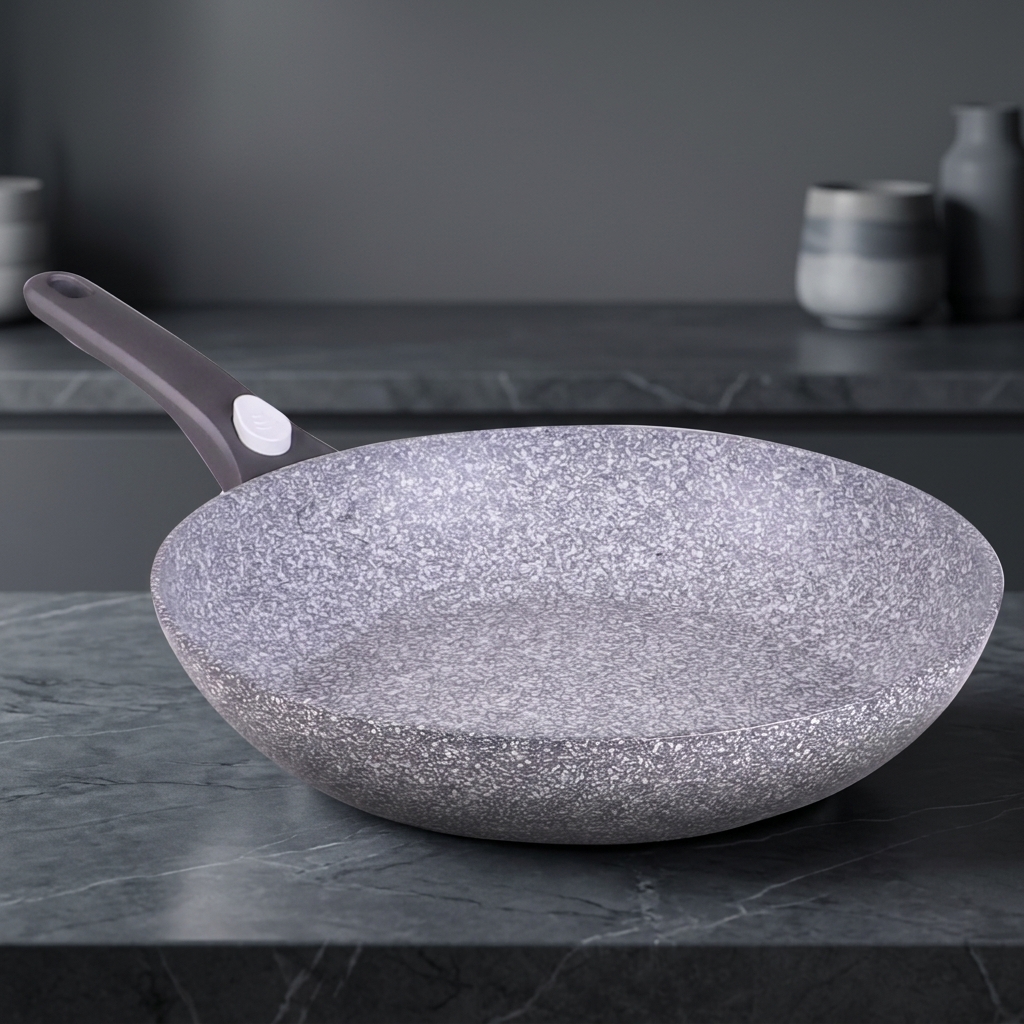
9 Inch 24cm Granite Forged Pan with Detachable Handle
Reinforced granite stone particle nonstick coating, die-cast forged body with extra-thick thermal retention base, detachable soft-touch handle for oven versatility.
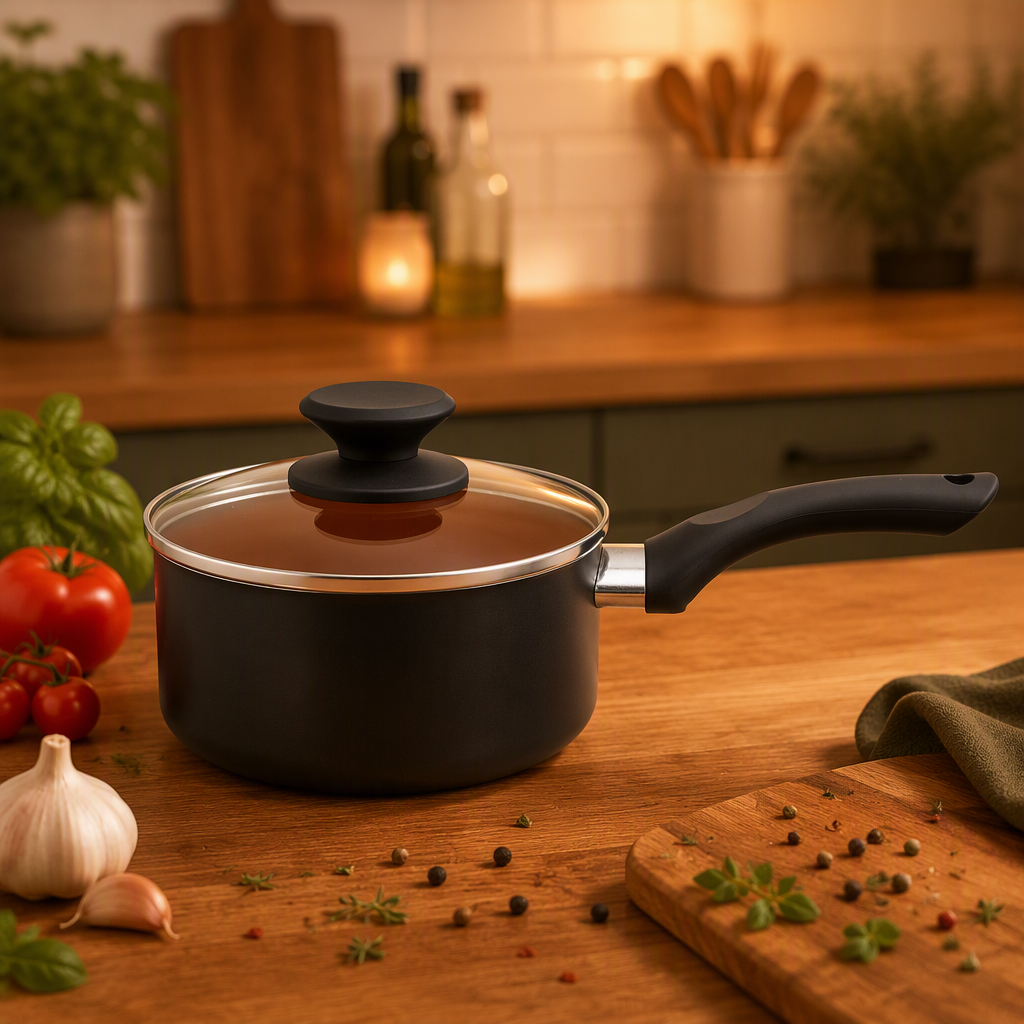
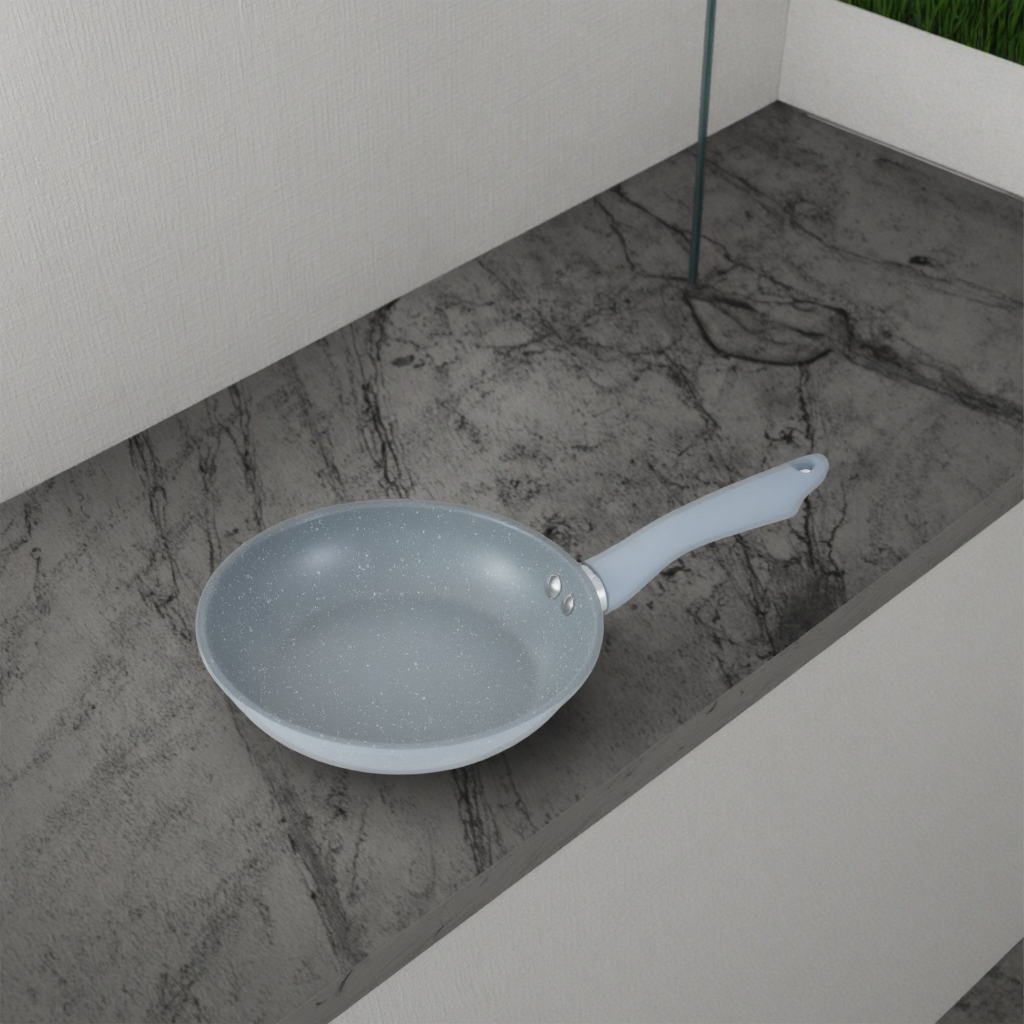
1-2L capacity compact saucepan treated with mechanical shot-blasting surface prep for maximum mechanical coating adhesion. Compatible with all modern hobs.
China's Premier Saucepan Ecosystem & Manufacturing Excellence
In the global culinary hardware supply chain, selecting a top-tier Chinese saucepan manufacturer requires evaluating metallurgical integrity, precision stamping/forging machinery, coating adhesion physics, and rigorous international quality compliance. Situated in the Dongnan Industrial Zone, Shuxi Street, Jinhua, Zhejiang, Zhejiang MEIS Kitchenware Co., Ltd. stands as an authoritative force in nonstick aluminum and heavy-gauge carbon steel cookware manufacturing.
Operating over 20 years with verified TÜV Rheinland on-site audit accreditation, MEIS Kitchenware bridges the gap between raw material metallurgy and high-volume OEM/ODM export standard fulfillment. With 105 dedicated production specialists, an internal tooling shop, and automated multi-station spray lines, MEIS delivers reliable private-label solutions for importers, major retail syndicates, and digital DTC brands across North America, Europe, the Middle East, and Southeast Asia.
Core E-E-A-T Sourcing Benchmark: Unlike trading intermediaries, true factory direct sourcing guarantees absolute control over aluminum alloy grain structures (3003 vs. 1050 grade), dry-film coating thickness (DFT) measured in micrometers, and induction disc stamping tension preventing base bowing at high temperatures.
In-House CNC Tooling & Molds
Rapid prototype tooling cycles under 14 days with precise lathe and CNC mold centers for custom saucepan geometry and lip contours.
Automated Surface Cleaning
Multi-stage ultrasonic degreasing and shot-blasting lines that establish optimum anchor profiles for multi-layer non-stick primer bonding.
Rigorous Metrology Testing
In-house laboratories executing cross-hatch adhesion tests (ASTM D3359), thermal shock cycles (260°C to water quenching), and salt spray corrosion resistance.
Engineering Insights: Pressed Aluminum vs. Die-Forged vs. Carbon Steel Saucepans
For B2B buyers and brand managers, choosing the core substrate dictates the saucepan's thermal diffusivity, landed cost, stovetop versatility, and consumer durability ratings. Below is a technical metallurgical breakdown prepared by MEIS senior engineers.
Evaluation Parameter
Pressed (Stamped) Aluminum
Die-Forged Aluminum
Heavy-Gauge Carbon Steel
Metallurgical Process
Cold-stamped from 2.0mm–3.0mm 3003 aluminum alloy disc.
High-pressure hydraulic forging altering rim & base thickness.
Cold-rolled carbon steel sheet deep-drawn into saucepan shape.
Base Wall Structure
Uniform wall thickness across vessel body.
Thick bottom (4.0mm–5.5mm) with tapered lightweight walls.
Rigid 1.2mm–2.0mm high-density steel walls.
Thermal Conductivity
Ultra-rapid heat transfer (237 W/m·K); fast boiling times.
Optimal heat accumulation & retention; eliminates hot spots.
Moderate conduction; rapid response to induction flux.
Induction Efficiency
Requires impact-bonded or sprayed SS430 magnetic bottom plate.
Requires heavy impact-bonded SS friction-welded plate.
Natively ferromagnetic; 100% efficient without added plate.
Coating Compatibility
Sol-Gel Ceramic, 2-Layer PTFE, Decorative Color Lacquers.
Saucepan longevity is directly linked to the chemical composition and mechanical lock of its coating layers. MEIS Kitchenware offers three distinct non-stick architectures engineered for modern food contact compliance (EU LFGB, US FDA, DGCCRF, PFAS/PFOA-free directives):
1. Inorganic Sol-Gel Ceramic Matrices: Formed through liquid-to-gel hydrolysis of silicon alkoxides, ceramic coatings yield a vitreous, quartz-like surface capable of enduring thermal spikes up to 450°C without toxic fume release. Ideal for eco-conscious consumer positioning.
2. Multi-Layer Granite & Marble Reinforced Systems: Utilizing PEEK or PTFE primer bases spiked with mineral micro-particles, these systems achieve exceptional mechanical abrasion resistance (>20,000 dry cycles under standard oscillation testing). The speckle aesthetics conceal minor wear while maintaining superior food release properties.
3. Hard-Anodized Aluminum Electro-Chemical Conversion: Anodization converts the surface aluminum into an aluminum oxide matrix twice as hard as stainless steel. When combined with interior non-stick application, hard-anodized saucepans deliver commercial kitchen durability with non-reactive acidic food resistance.
Global Sourcing Trends: Saucepan Procurement Dynamics (2025–2030)
Navigating the saucepan import market over the next decade requires aligning product developments with shifting regulatory frameworks and evolving consumer cooking preferences. Leading global buyers are prioritizing three structural shifts:
1. Regulatory PFAS/PFOA Sunset Phase
Global legislation across North America (US State PFAS bans) and the EU REACH framework is mandating complete elimination of fluorinated compounds. Sourcing strategies are rapidly pivoting to ceramic sol-gel matrices and silicon-polyester coatings.
2. Space-Saving Modular & Detachable Systems
Urban dwelling trends have accelerated demand for stackable cookware with removable handle mechanisms. Detachable handles convert saucepans seamlessly from stovetop to oven to refrigerator while slashing packaging volume and freight container costs by up to 35%.
3. All-Hob Universal Induction Compatibility
As residential induction cooktop adoption approaches 40%+ in major European and Asian markets, saucepans without high-efficiency magnetic base plates are losing shelf presence. Full-bound punched stainless steel bottoms are now standard B2B procurement baselines.
Frequently Asked Questions for Sourcing Managers
Critical commercial and technical answers for OEM buyers, importers, and retail procurement teams.
QIs Zhejiang MEIS a direct manufacturer or a trading entity?
Zhejiang MEIS Kitchenware Co., Ltd. is a verified custom manufacturer and direct exporter. Our integrated production facilities in Jinhua, Zhejiang operate complete pressing, CNC lathe finishing, automatic spray coating, curing ovens, handle assembly lines, and internal quality control stations assessed on-site by TÜV Rheinland.
QWhat is the typical Minimum Order Quantity (MOQ) for saucepans?
Standard production MOQs range from 1,000 to 3,000 pieces per item/size for custom color coatings, custom handle molds, and private-label packaging. For select baseline fry pan and saucepan stock configurations, trial orders starting at lower volume thresholds can be accommodated upon consultation.
QWhat food contact safety certifications do your saucepans carry?
All coating matrices applied in our facilities—including ceramic, granite, and multi-layer nonstick—comply fully with international standards including US FDA 21 CFR, EU LFGB regulations, DGCCRF, and chemical compliance tests for PFOA, PFOS, Lead, and Cadmium migration limits.
QCan MEIS handle customized OEM handle & lid tooling?
Yes. We specialize in ODM and OEM private label customization. Supported by our internal mold design and lathe engineering teams, we supply customized soft-touch Bakelite handles, stainless steel cast handles, silicone-rimmed tempered glass lids, laser-engraved bottom logos, and custom retail color box packaging.
QHow do you prevent induction plate detachment over extended heating cycles?
We utilize heavy-tonnage hydraulic impact-bonding machines that fuse SS430 stainless steel plates onto the aluminum base disc under intense heat and friction pressure. This metallurgical bond prevents thermal expansion variances from delaminating the plate during rapid induction heating cycles.
QWhat are the standard lead times for OEM saucepan production?
Prototype sampling requires 7 to 14 days depending on custom color matching (Pantone) or mold creation. Mass production generally ships within 35 to 45 days post-deposit confirmation and artwork approval for initial orders, with expedited timelines for recurring reorders.
Partner with China's Premier Saucepan Manufacturer
Request technical specifications, factory audit documentation, or custom OEM quote proposals from our senior engineering export team today.