Featured OEM/ODM Cookware Solutions
Engineered for high thermal conductivity, extreme abrasion resistance, and international food contact compliance.
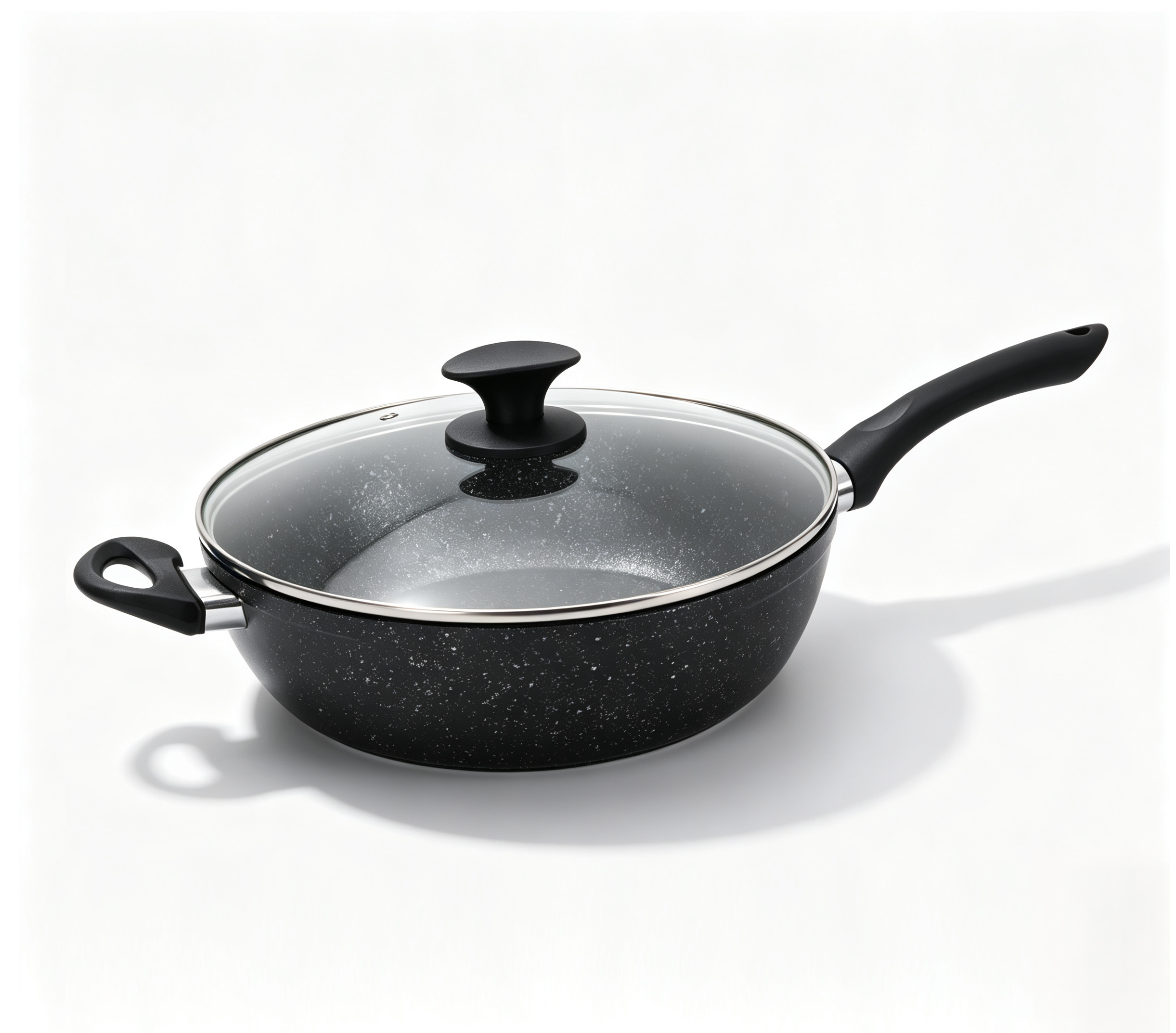
Easy Cleaning Modern Granit Nonstick Aluminum Cookware Pot Multi-function Deep Fry Pan Glass Lid Induction Ready Bakelite Handle
View Details & Specs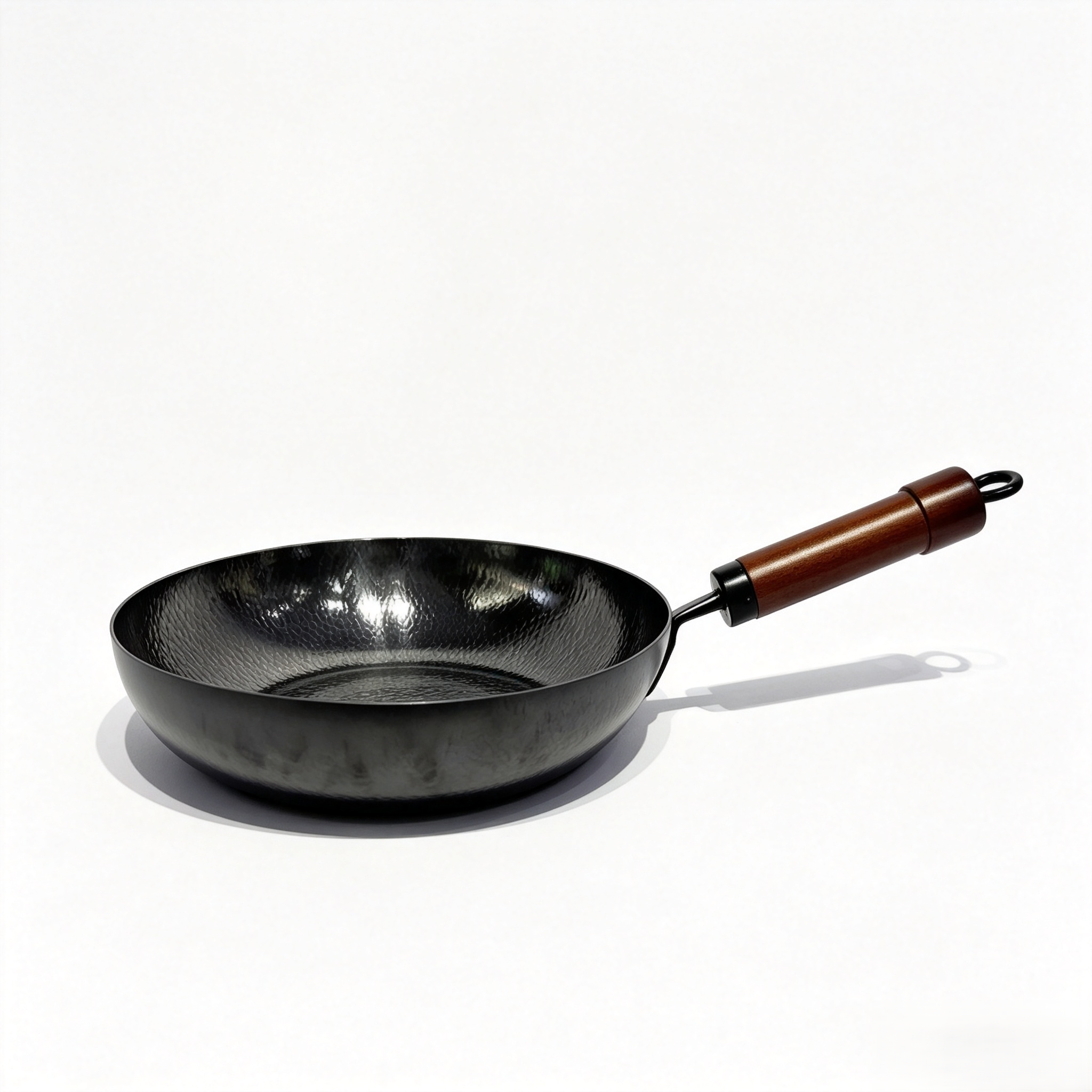
Modern CAMRY Eco-friendly No Coating Nitrided Hammered Carbon Steel Wok Cookware Wooden Handle 2-3L Capacity Gas Induction
View Details & Specs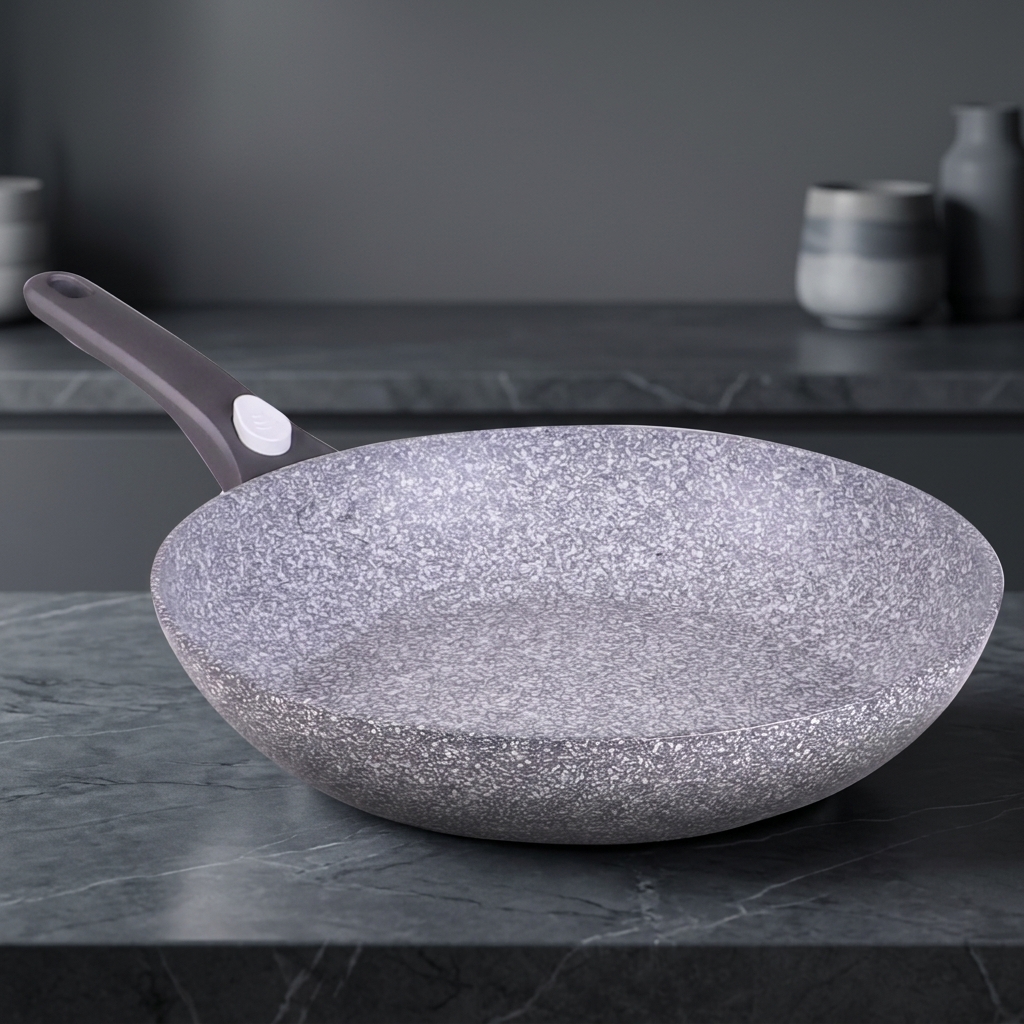
Granite Coating Non-Stick 9 Inch 24cm Forged Aluminum Fry Pan with Detachable Handle Soft Touch Coating Induction Ready
View Details & Specs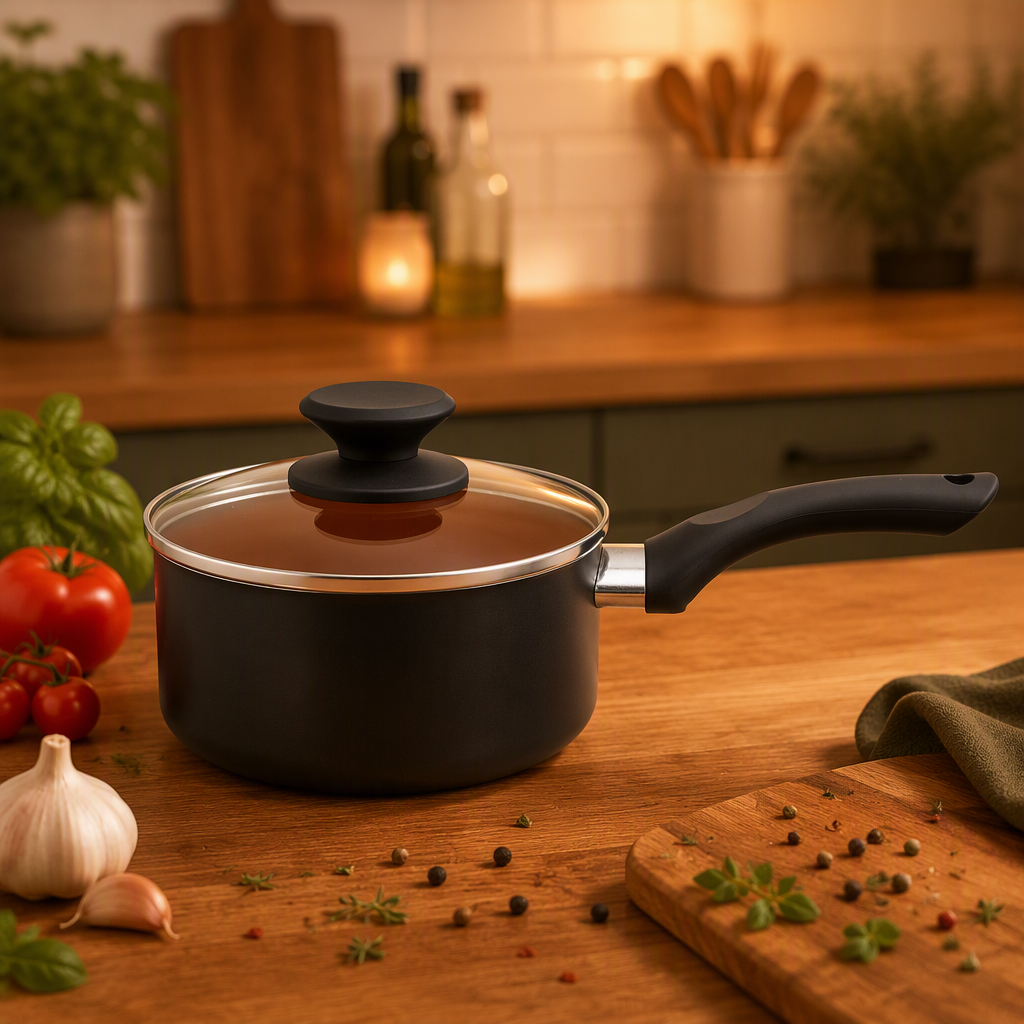
24 cm Non Stick Aluminum Saucepan with Glass Lid Multi Layer Coating Lightweight Cooking Pot for Gas and Induction
View Details & Specs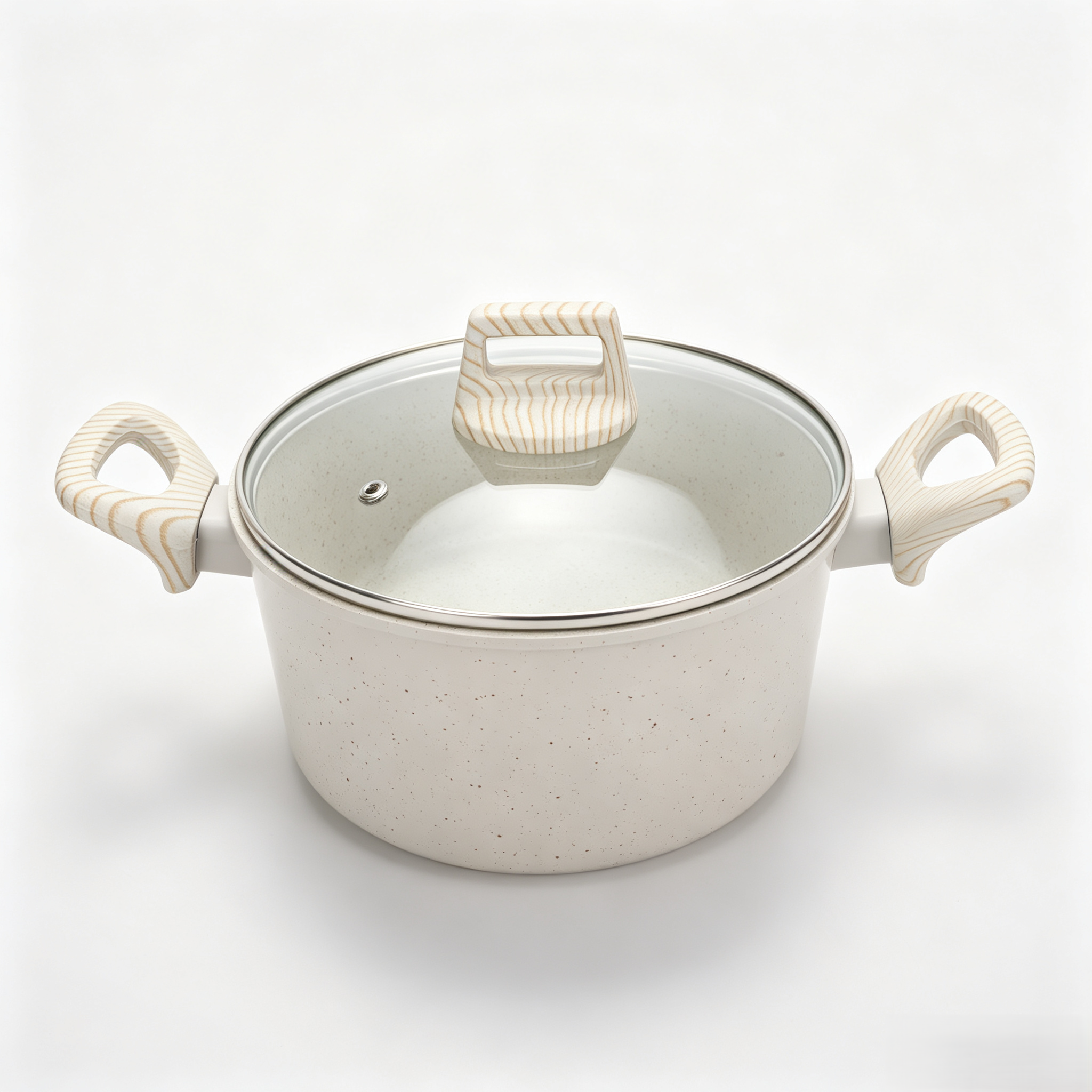
Large Capacity Durable Nonstick Aluminum Cookware Pot Casserole Induction Bottom Bakelite Handle Glass Cover Oven Safe
View Details & Specs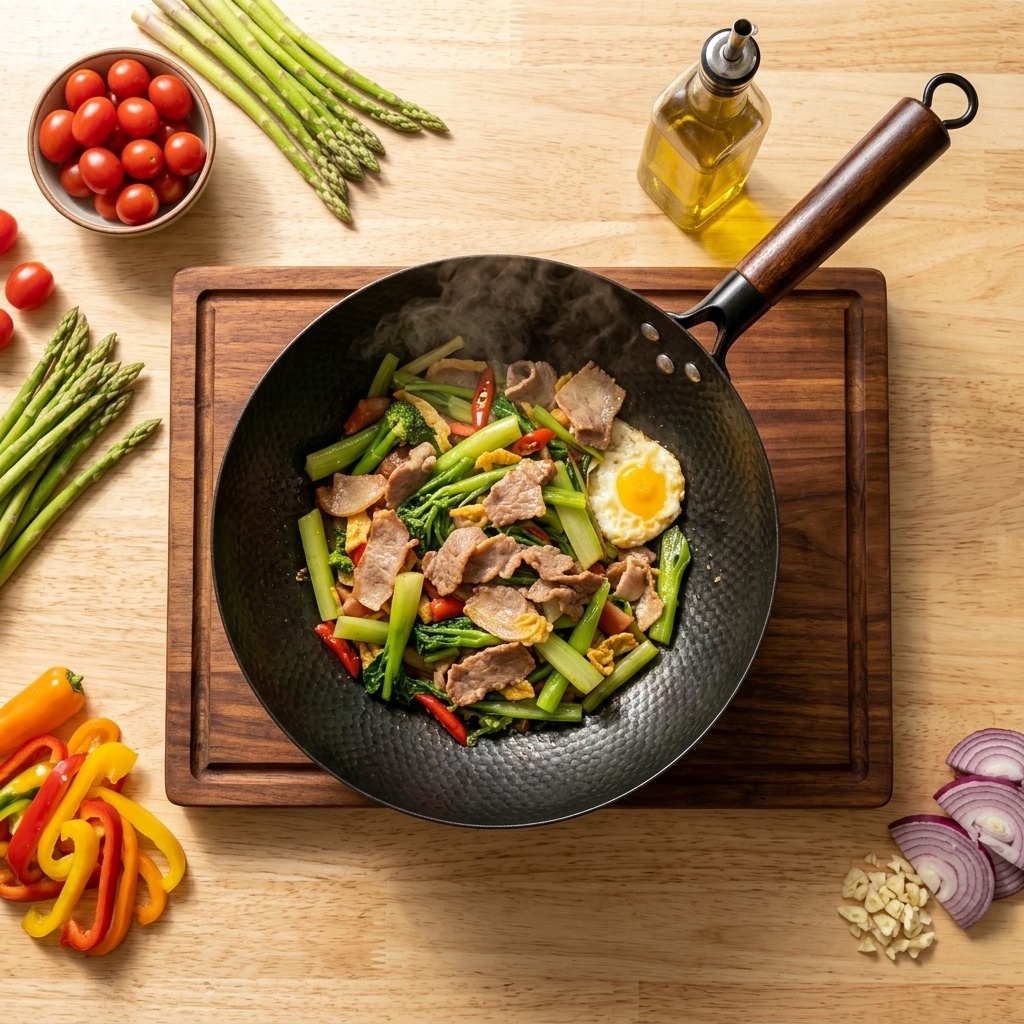
12 Inch 30cm Heavy Gauge Carbon Steel Chinese Wok Wooden Handle Nitrogen Coating Flat Base Gas Induction Ready No Coating
View Details & Specs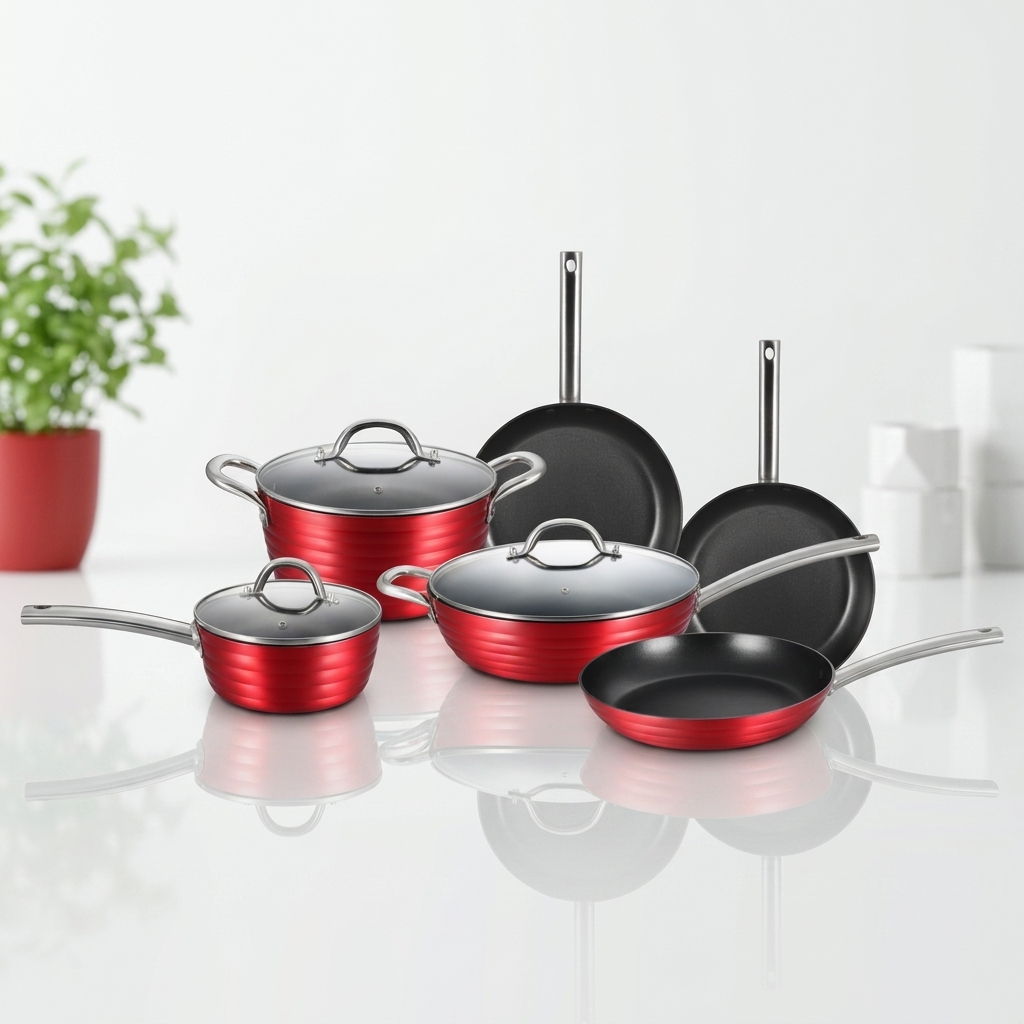
Kitchenware Set 9 Piece Non Stick Cookware Pot Set Metallic Red Outside S/S Handle Induction Bottom
View Details & Specs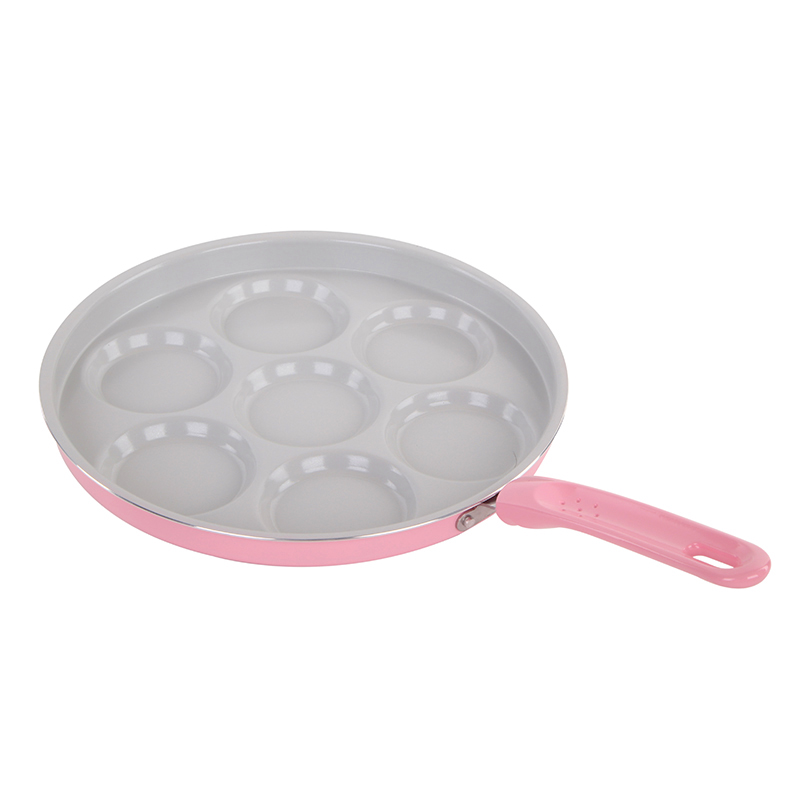
Home Kitchen Eco-Friendly Modern Aluminum Alloy Metal Non-Stick Gas Cooker Egg Fry Pan Cookware Set
View Details & Specs1. Executive Sourcing Insight: The Science of Hard Anodized Cookware
In global culinary equipment sourcing, hard anodized aluminum cookware represents the intersection of commercial durability and high-efficiency thermal conductivity. As retail buyers, brand owners, and OEM sourcing directors navigate evolving consumer demands, understanding the metallurgical transformation involved in hard anodized production becomes crucial for product positioning.
Hard anodization is an electrochemical process that transforms the raw surface of aluminum alloy into aluminum oxide (Al₂O₃). The cookware body—typically pressed or forged from premium 3003 or 4004 grade aluminum alloy—is immersed in an acid electrolyte bath (predominantly sulfuric acid) maintained at sub-zero or low temperatures (0°C to 5°C). When high-voltage direct current (DC) is applied, oxygen ions are released from the electrolyte and bond intimately with the surface aluminum atoms.
For international procurement directors sourcing from China's premier manufacturing hubs—such as Zhejiang MEIS Kitchenware Co., Ltd. located in Jinhua, Zhejiang—hard anodized cookware yields several critical engineering metrics:
- Thermal Diffusivity: Aluminum exhibits a thermal conductivity rating of ~225 W/m·K, which is roughly 14 times faster and more uniform than 304 stainless steel (~16 W/m·K). Hard anodization retains this rapid response while eliminating raw aluminum warping risks under high heat.
- Corrosion Resistance: The non-porous anodic skin withstands aggressive acidic foods (tomato sauces, citrus glazes, vinegar reductions) without pitting or degradation.
- Coating Adhesion Matrix: Microscopic pores formed naturally during controlled anodization serve as an ideal mechanical key for high-performance PTFE-free, ceramic, or granite nonstick topcoats, drastically reducing surface peeling or blistering over extended usage cycles.
2. Material Comparison Matrix for Professional B2B Sourcing
Evaluating raw material options is vital when planning SKU rollouts for retail channels, department stores, or direct-to-consumer private labels. Below is a structural engineering comparison curated by MEIS Kitchenware's technical metallurgical team:
| Performance Characteristic | Hard Anodized Forged Aluminum | Pressed Nonstick Aluminum | Nitrided Carbon Steel | 304 Tri-Ply Stainless Steel |
|---|---|---|---|---|
| Surface Hardness (Mohs Scale) | Mohs 9 (Ultra-Hard) | Mohs 2–3 (Standard) | Mohs 7–8 (High Heat Treated) | Mohs 5–6 (Medium) |
| Thermal Conductivity (W/m·K) | ~210 - 225 | ~220 | ~50 - 65 | ~15 - 20 |
| Warp Resistance Rating | Exceptional (High Density) | Moderate (Depends on Gauge) | High (Rigid Structure) | Very High |
| Induction Compatibility | Requires Impact Base Plate | Requires Spray/Impact Base | Naturally Magnetic | Requires Magnetic Layer |
| Food Reactivity | 100% Non-Reactive | Requires Nonstick Layer | Requires Seasoning/Nitriding | Non-Reactive |
| Target Retail Segment | Mid-to-High Premium Lines | Value / Volume Promotions | Professional Asian/Modern Bistros | Luxury Commercial Equipment |
3. Enterprise Operational Advantage: Zhejiang MEIS Kitchenware Co., Ltd.
Selecting an OEM exporter in China requires rigorous evaluation of factory depth, quality control procedures, and technical versatility. Operating in the Dongnan Industrial Zone, Shuxi Street, Jinhua, Zhejiang, Zhejiang MEIS Kitchenware Co., Ltd. stands out as a verified manufacturing leader backed by 20 years of continuous operational growth.
TÜV Rheinland Audited Integrity
Our facility has undergone complete on-site operational assessment by TÜV Rheinland. We ensure clear transparency across production capacity, environmental compliance, staff welfare, and material traceability.
Full In-House Manufacturing Loop
From heavy hydraulic pressing and precision CNC lathe edge-turning to automatic ultrasonic degreasing, multi-stage spray coating lines, and automated curing ovens—every step occurs under one roof.
Tooling & Mold Development
Equipped with dedicated mold workshops and CNC milling machines, MEIS rapidly develops proprietary custom geometries, distinctive handle shapes, and unique lid lip designs to give clients exclusive market edge.
• Salt Spray Corrosion Testing to verify exterior finish longevity.
• Cross-Hatch Adhesion & Abrasion Testing ensuring zero coating delamination.
• Handle Fatigue, Torsion & Thrust Load Testing ensuring cookware hardware safety under heavy commercial abuse.
4. Strategic Procurement Trends: 2025–2030 Industry Shifts
Global retail regulatory frameworks and end-user lifestyle patterns are accelerating dynamic transformations within the cookware manufacturing supply chain. B2B buyers must align their product development roadmaps with the following strategic vectors:
1. Global PFAS/PFOA Regulatory Compliance
With the European Union tightening REACH directives and US state-level legislation enforcing strict bans on fluorinated substances (PFAS/PTFE), the demand for sol-gel ceramic coatings, granite speckle inorganic layers, and chemical-free nitrided carbon steel has expanded exponentially.
2. Universal Induction Bottom Integration
As electric induction hobs overtake traditional open-flame gas stoves in urban residential markets, modern aluminum cookware must feature high-integrity steel impact bases or sprayed induction discs that prevent thermal warping and ensure 100% magnetic efficiency.
3. Modular & Space-Saving Detachable Handles
E-commerce logistics costs (dimensional weight freight) and urban kitchen space constraints have driven high demand for cookware sets featuring removable, heavy-duty soft-touch handles. This configuration reduces packaging shipping volume by up to 45%.
5. Product Development & Technical OEM/ODM Workflow
Converting a design concept into a market-ready cookware SKU requires structured engineering execution. MEIS Kitchenware manages a transparent 6-stage development framework tailored for international brand owners and bulk importers:
Design & Blueprinting
Evaluation of target unit weight, base thickness (2.0mm to 5.0mm), side-wall draft angles, and ergonomic handle specifications.
Mold & Tooling Fabrication
In-house CNC machining of steel forming dies, punch press tooling, and casting molds for custom silicone-rimmed glass lids.
Forming & Surface Treatment
Cold-forging or heavy hydraulic stamping, followed by precision edge trimming and chemical degreasing/surface etching.
Coating Application
Robotic multi-pass spray application of ceramic, granite marble, or hard anodization, cured at precise thermal parameters.
Assembly & QA Inspection
Rivet or spot-weld handle fixation, induction disc stamping, and 100% visual and mechanical torque testing.
Custom Packaging & Freight
Drop-test compliant ISTA-certified retail packaging, barcode integration, and export container loading optimization.
Looking to co-develop a proprietary hard anodized or forged cookware SKU?
Send an Inquiry6. Frequently Asked Questions: B2B Sourcing & Factory Procurement
Direct responses to critical commercial and technical questions asked by global sourcing managers and retail buyers:
Is Zhejiang MEIS Kitchenware Co., Ltd. a direct factory or a trading firm?
Zhejiang MEIS Kitchenware Co., Ltd. is an established, TÜV Rheinland on-site verified manufacturer operating comprehensive metal forming, pressing, CNC machining, spray coating, and assembly lines in Jinhua, Zhejiang, China. We combine direct manufacturing control with an experienced internal export management team.
What are the standard Minimum Order Quantities (MOQ) for custom OEM production?
MOQs vary depending on material specification and custom tooling requirements. Standard OEM production for customized cookware sets ranges between 1,000 to 3,000 sets per item. Single fry pans or selected existing tooling models can be accommodated with flexible trial MOQs starting from 500 to 1,000 pieces.
What are the key food contact compliance standards supported by MEIS?
All nonstick coatings, ceramic formulations, and anodized aluminum substrates deployed by MEIS strictly comply with international food contact mandates, including US FDA 21 CFR, European LFGB, EU Framework Regulation (EC) No 1935/2004, and REACH chemical safety directives. 100% PFOA-free and PFAS-free certification documentation is available upon inquiry.
How does hard anodization differ from standard painted aluminum cookware?
Painted aluminum relies on a surface layer of organic or high-temperature paint that can chip, scratch, or peel over time under harsh dishwashing or high thermal stress. Hard anodization alters the actual aluminum surface into a microscopic sapphire-hard oxide shell that will never peel, rust, or chip off, providing decades of durable structural integrity.
What is the typical sampling turnaround time for ODM private-label projects?
For items using existing factory body dies with customized exterior color coating or logo laser etching, standard pre-production samples are dispatched within 7 to 10 working days. For full ODM custom mold projects, die design, prototyping, and initial sample casting are completed within 25 to 35 days.
Partner with a Verified Hard Anodized Cookware Manufacturer
Connect directly with our engineering and international trade department to request factory audits, quotation sheets, or custom sample prototyping.