Core Product Catalog & Recommended B2B OEM Models
Directly engineered in our Jinhua production hub, the following 8 baseline models represent our highest-performing global export configurations. Fully customizable across material gauge, handle metallurgy, nonstick interior matrices, and base induction dynamics.
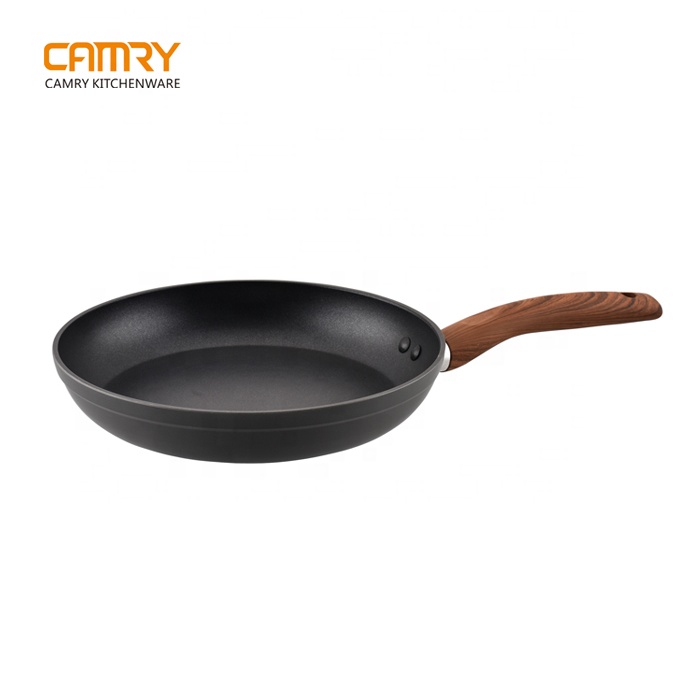
7PCS Dark Grey Forged Aluminum Megaware Cookware With Wooden Soft-touched Handle
Coating: Dark Grey PTFE/Granite Matrix
Handle: Ergonomic Soft-Touch Wood Grain
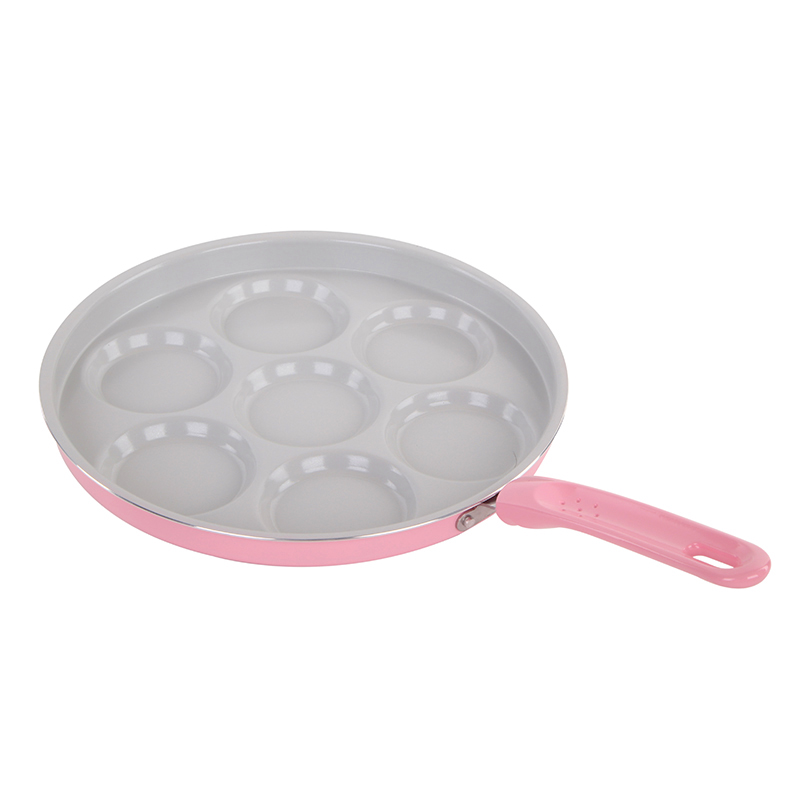
Home Kitchen Eco-Friendly Modern Aluminum Alloy Non-Stick Cookware Set
Coating: PFOA-Free Ceramic Layer
Target Use: High-Volume Retail & Promotions
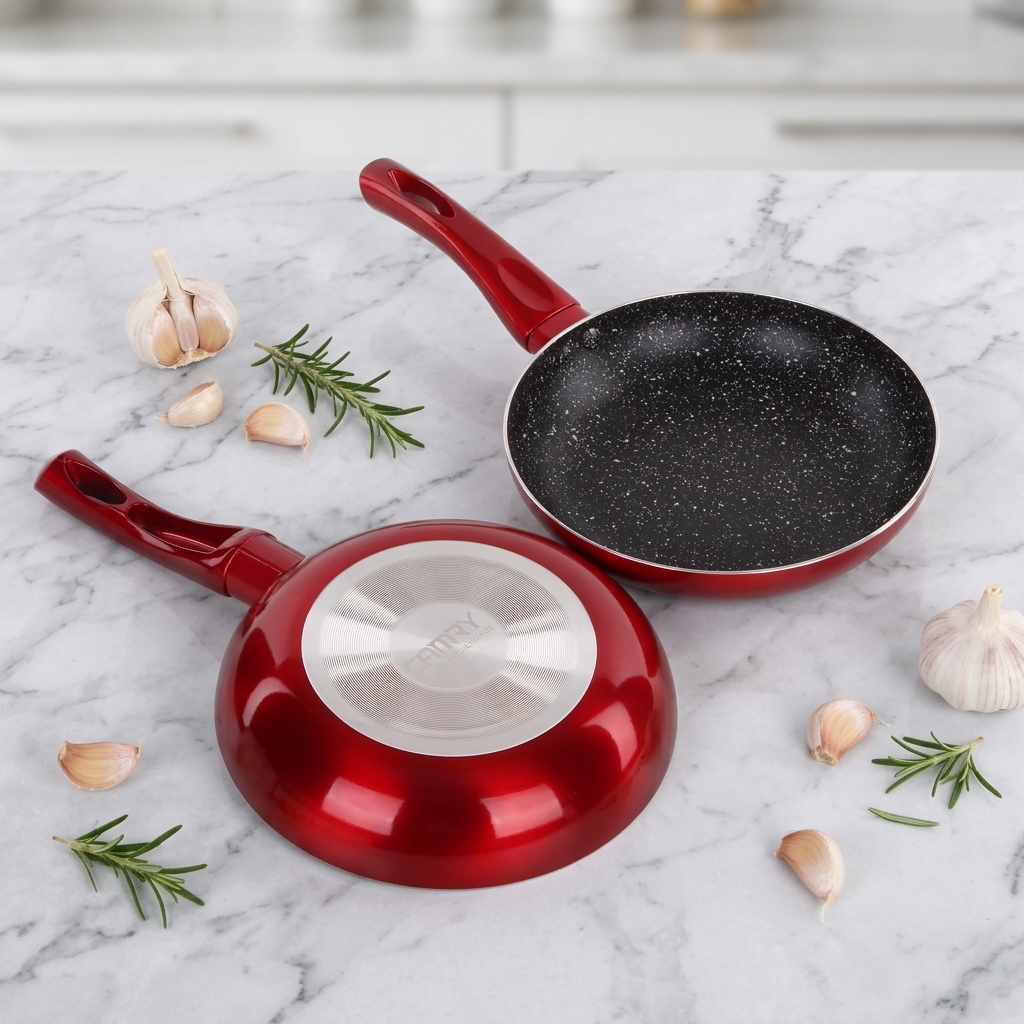
Durable 30 cm PFOA-Free Non-Stick Pressed Frying Pan with Glass Cover
Lid Spec: Tempered Glass with Steam Vent
Compatibility: Gas, Electric, Ceramic Hobs
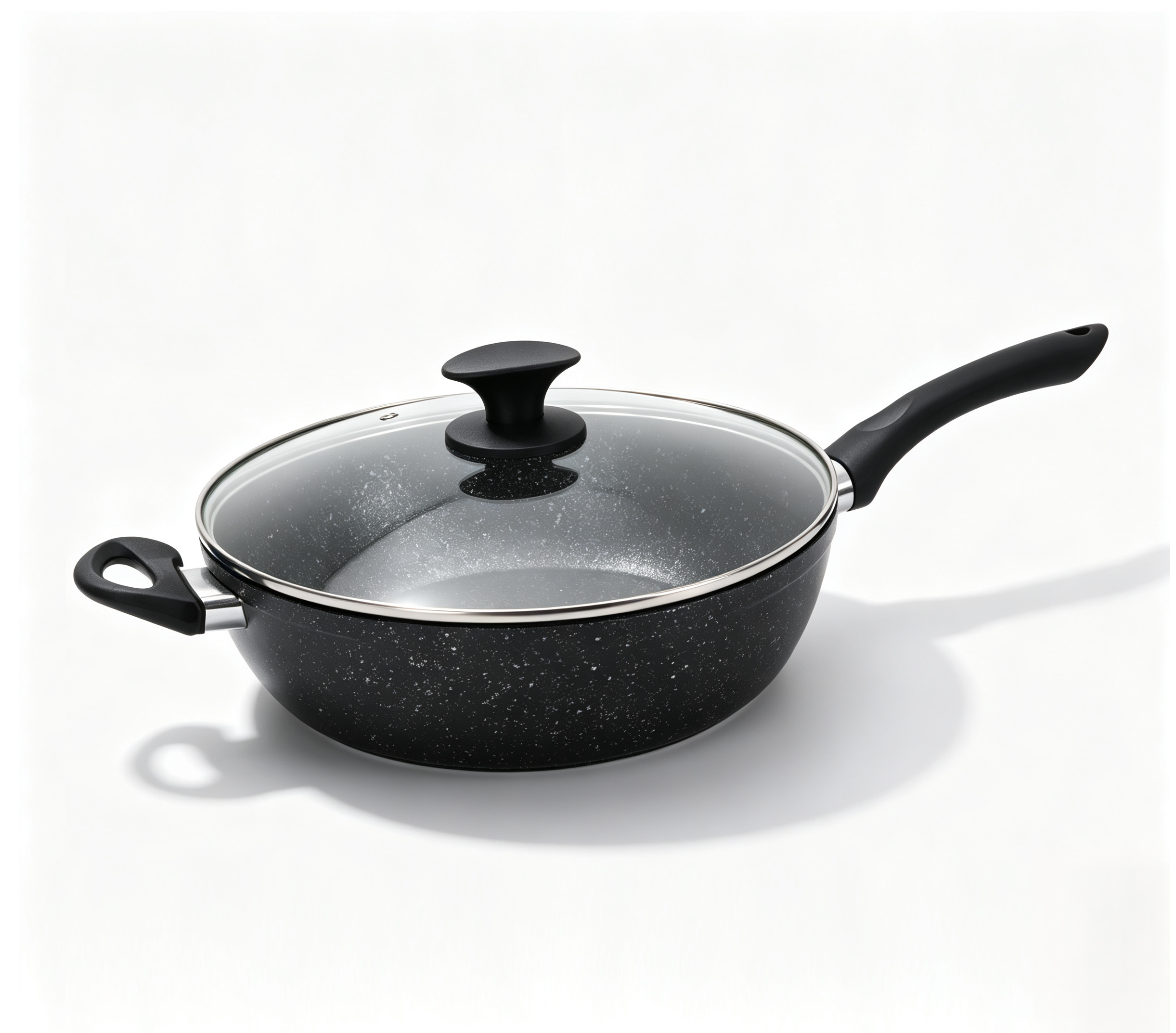
Modern Granite Nonstick Aluminum Deep Fry Pan with Glass Lid & Induction Base
Coating: Multi-Layer Granite Speckle
Handle: Thermal-Isolated Bakelite
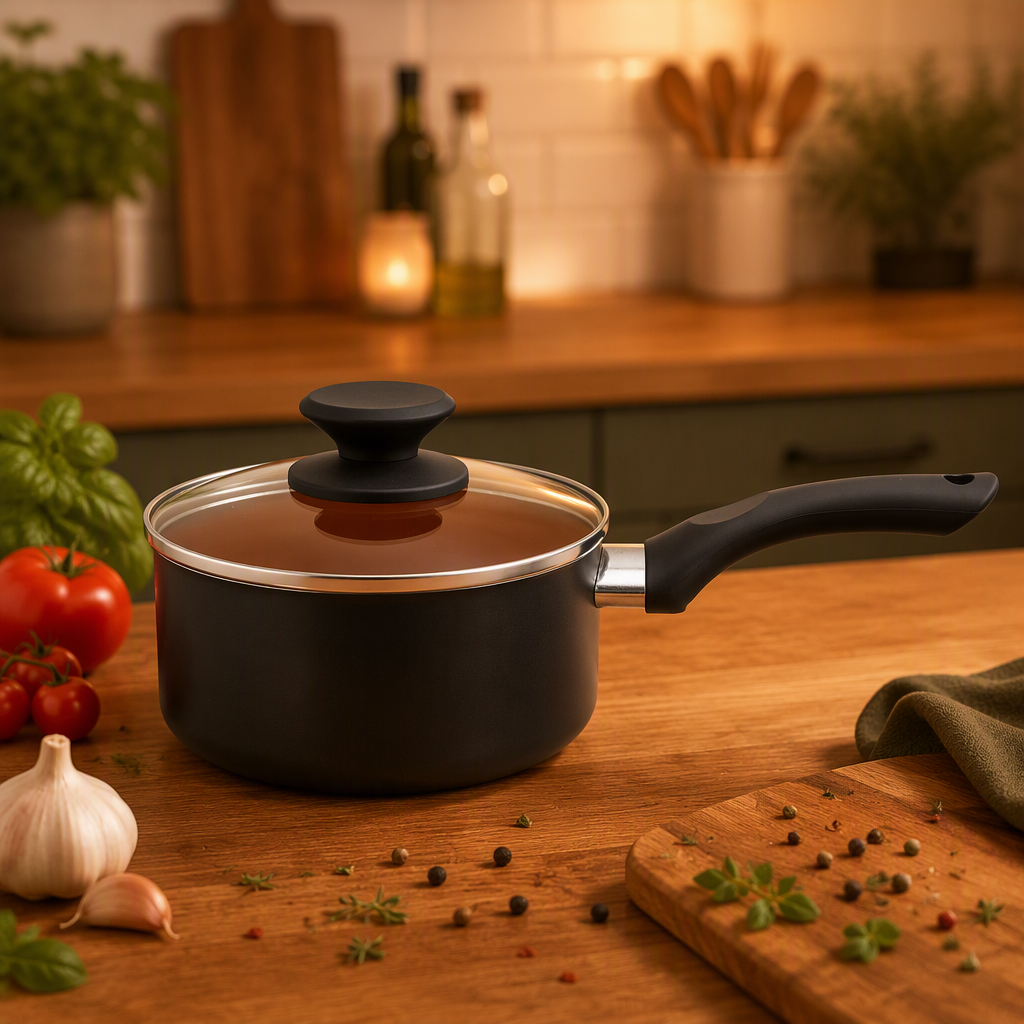
24 cm Non-Stick Aluminum Saucepan with Glass Lid (Gas & Induction Ready)
Feature: Rapid Heat Distribution
Usage: Commercial & Household Culinary
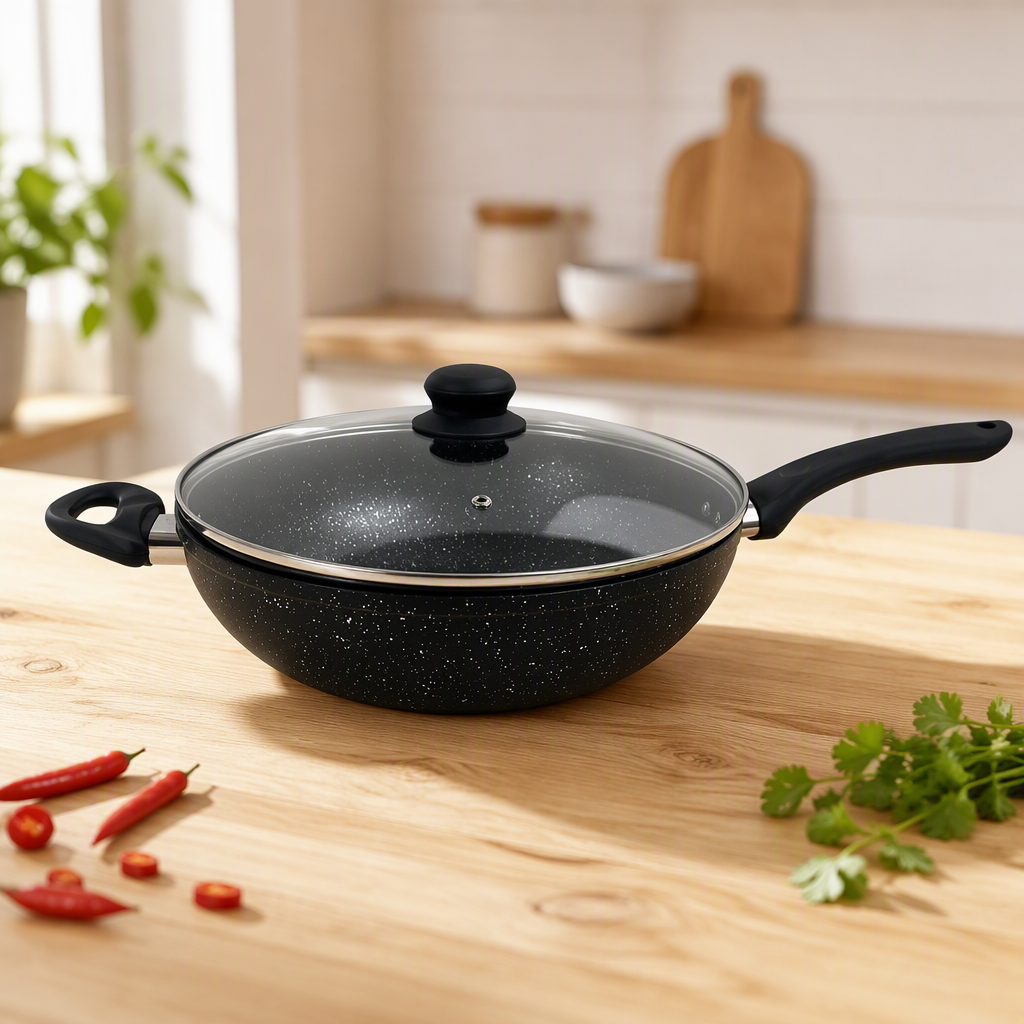
32 cm Granite Coating Non-Stick Forged Aluminum Wok Pan (5.5L Capacity)
Forming: High-Pressure Heavy Die-Forging
Heat Resistance: Up to 260°C External
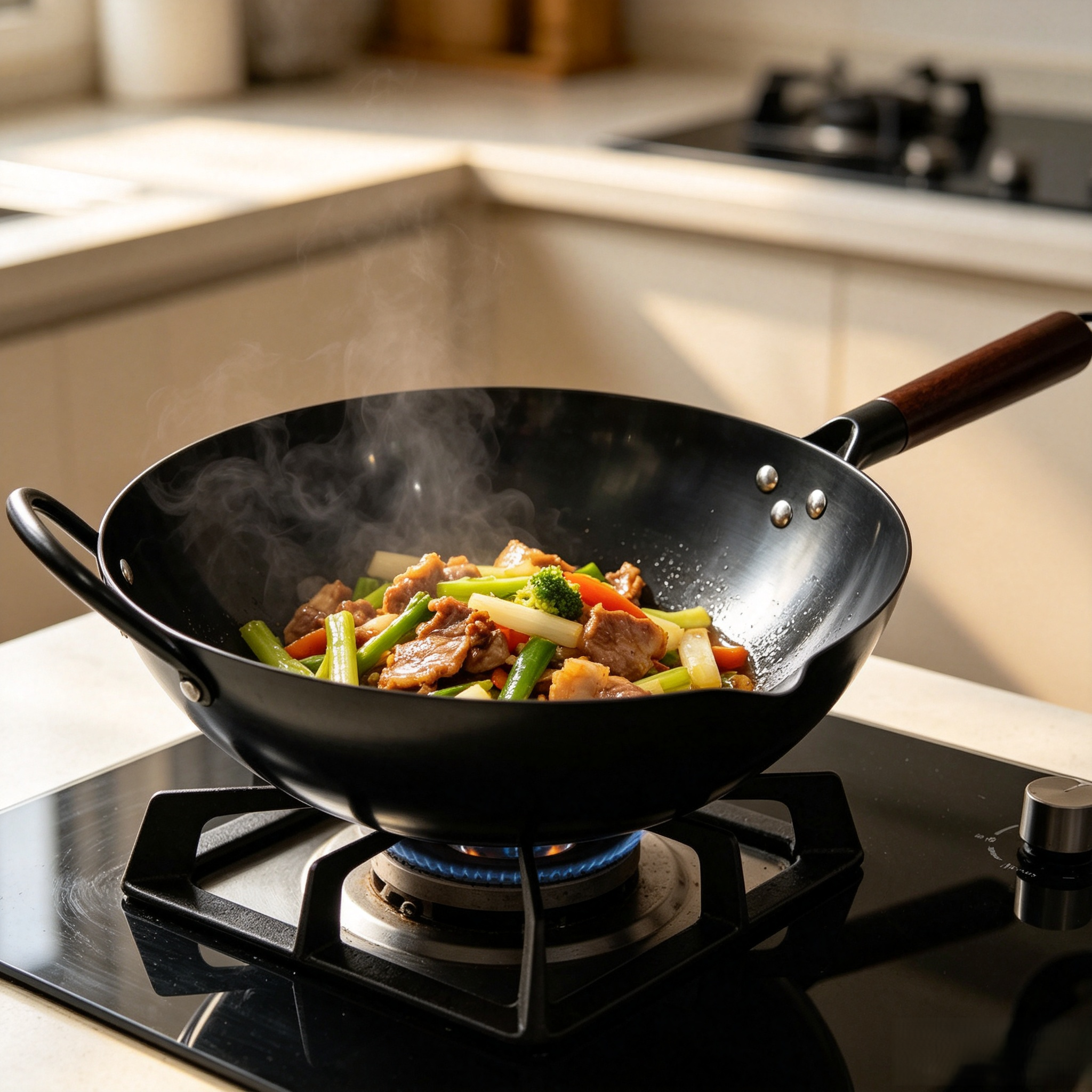
OEM/ODM Healthy Nitrided Chemical-Free Carbon Steel Wok (28–34cm)
Surface: Physical Non-Stick (No Chemical Film)
Attributes: Scratch-Proof & Metal Utensil Safe
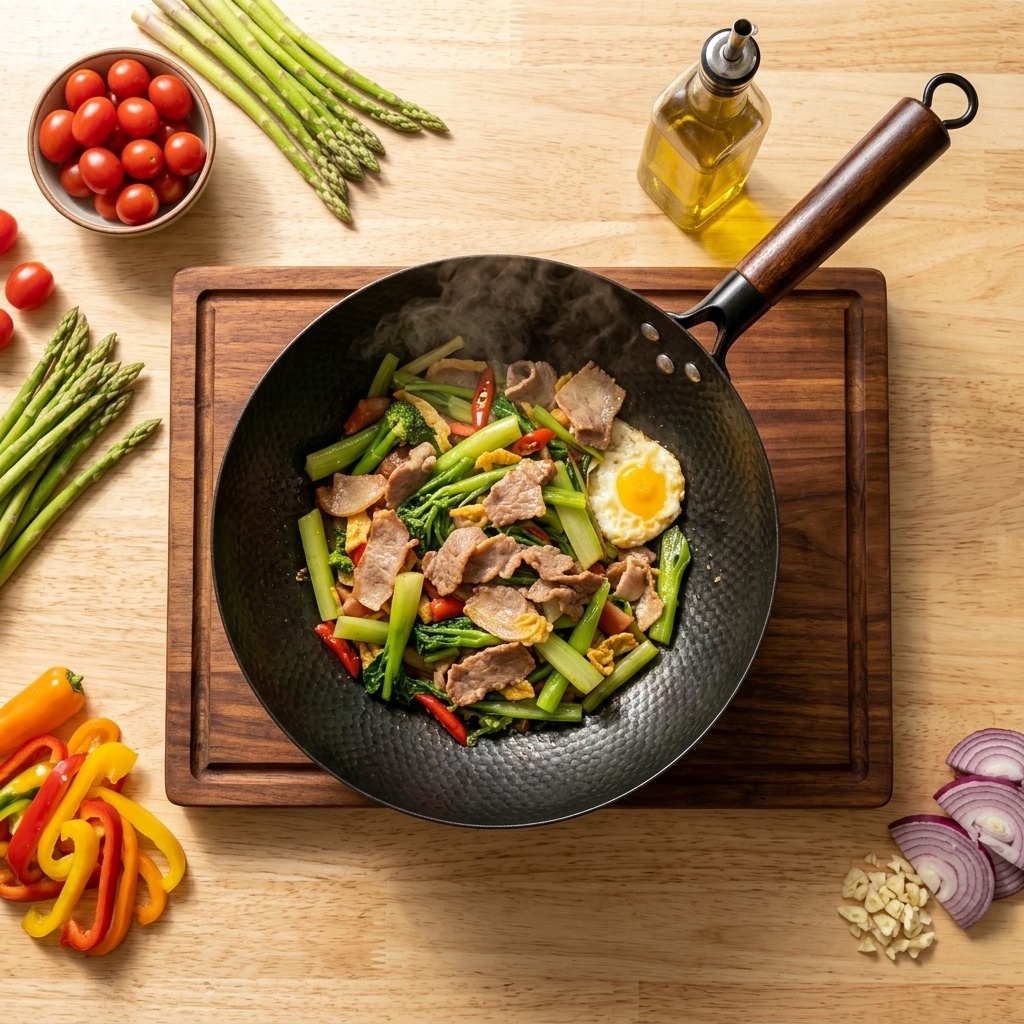
12 Inch (30cm) Heavy-Gauge Carbon Steel Chinese Wok with Flat Base
Treatment: Gas Nitriding Oxidation Layer
Handle: Solid Hardwood Riveted Handle
1. OEM/ODM Factory Infrastructure: Zhejiang MEIS Kitchenware Co., Ltd.
In the highly technical landscape of commercial and domestic cookware manufacturing, Zhejiang MEIS Kitchenware Co., Ltd. stands as a benchmark of precision manufacturing, metallurgical integrity, and scalable OEM/ODM capacity. Operating from our fully owned industrial facility situated in the Dongnan Industrial Zone, Shuxi Street, Jinhua, Zhejiang, China, our enterprise represents two decades of specialized research, development, and mass manufacturing of nonstick cookware systems.
Unlike trading intermediaries or third-party sourcing agencies, MEIS Kitchenware operates an vertically integrated production infrastructure verified on-site by TÜV Rheinland. Our factory floor houses specialized manufacturing divisions, including heavy-duty hydraulic metal pressing lines, advanced die-forging machinery, high-precision CNC rim-machining units, automated surface pretreatment degreasing tunnels, multi-station electrostatic spray coating booths, and automated curing ovens capable of sustaining stringent thermal ramp profiles.
Complete Metallurgical Tooling
Our in-house mold tooling and lathe workshop reduces initial ODM prototype development from industry averages of 45 days down to under 14 days, granting our global retail partners an unmatched speed-to-market advantage.
Rigorous QA Metrology
Our internal quality control lab executes cross-hatch adhesion testing (ASTM D3359), salt-spray corrosion chamber testing (ASTM B117), handle fatigue and impact testing (EN 12983-1), and thermal shock resistance evaluations on every lot.
Global Compliance Engineering
All finished cooking pots, fry pans, sauté pans, and stock pots conform strictly to international food contact regulatory mandates, including FDA 21 CFR, German LFGB, European REACH, and DGCCRF standards.
2. Substrate Metallurgy & Engineering Science: Pressed vs. Forged vs. Carbon Steel
In custom OEM pot manufacturing, selecting the optimal base material substrate dictates thermal transfer efficiency, mechanical rigidity, warp resistance under high thermal stress, and final landed unit cost. Our engineering team assists procurement managers in balancing structural performance against target consumer price points across three primary core materials:
A. Pressed Aluminum (Series 1000 / 3000 Alloys)
Pressed aluminum cookware is produced by cold-stamping high-purity aluminum discs (typically 1050 or 3003 aluminum alloy) under high-tonnage mechanical presses. With thermal conductivity exceeding 200 W/m·K, pressed aluminum cookware distributes thermal energy rapidly across the vessel base and sidewalls. This substrate is optimal for lightweight cookware lines, promotional retail stock-keeping units (SKUs), and price-sensitive high-volume consumer programs. Standard gauge thickness ranges from 1.5mm to 3.0mm.
B. Forged Aluminum (Die-Forged Heavy Gauge 3003 Alloy)
Forged aluminum represents the gold standard for mid-to-premium commercial and retail cookware lines. Utilizing specialized heavy-duty hydraulic forging machinery, an aluminum blank is subjected to immense pressure that reshapes the crystalline structure of the metal. This allows for differential wall engineering: a thick base (ranging from 3.5mm to 5.0mm) paired with thinner sidewalls and a reinforced, deformation-resistant top rim. The structural advantage includes supreme heat retention, elimination of hot spots that cause food scorching, and exceptional resistance to thermal warping when plunged into wash water.
C. Heavy-Gauge Nitrided Carbon Steel
Carbon steel provides a high-tensile, highly durable alternative to traditional cast iron at a fraction of the weight. With natural ferromagnetic properties, carbon steel pots and woks interact seamlessly with induction cooktops without requiring secondary stainless steel impact plates. Through our proprietary gas nitriding process—exposing raw steel vessels to an ammonia-rich environment at elevated temperatures (570°C)—nitrogen atoms diffuse into the surface matrix. This creates a hard, corrosion-resistant iron-nitride barrier layer that provides physical non-stick performance without requiring fluoropolymer coatings.
Engineering Comparison Matrix for OEM Procurement
| Engineering Criteria | Pressed Aluminum | Forged Aluminum | Nitrided Carbon Steel |
|---|---|---|---|
| Thermal Conductivity | Very High (~210 W/m·K) | High (~190 W/m·K) | Moderate (~50 W/m·K) |
| Base Thickness Range | 1.8mm – 3.0mm | 3.5mm – 5.5mm (Heavy Base) | 1.2mm – 2.5mm |
| Deformation Resistance | Moderate | Exceptional (Warp-Proof) | High Tensile Rigidity |
| Native Induction Compatibility | No (Requires Steel Plate) | No (Requires Steel Plate) | Yes (100% Native Ferromagnetic) |
| Coating Systems Supported | PTFE, Ceramic, Marble | Granite, Sol-Gel, PTFE, Hard Anodized | Chemical-Free Nitride, Ceramic, PTFE |
| Optimal Retail Positioning | Mass Supermarkets / Promos | Specialty Retail / Premium Brands | Culinary Professional / Eco-Focus |
3. Advanced Nonstick Coating Science & Global Regulatory Compliance
The primary point of failure in consumer cooking pots is premature coating degradation. As an expert OEM custom manufacturer, Zhejiang MEIS Kitchenware utilizes multi-layer ceramic and fluoropolymer matrices supplied by world-class coating formulators (such as Whitford, ILAG, PPG, and Greblon) to ensure maximum taber abrasion cycles and dry-film durability.
Sol-Gel Ceramic Nonstick Technology
Sol-Gel ceramic coatings are inorganic inorganic silicon dioxide (SiO2) networks formulated via sol-gel processing. Cured at high temperatures, ceramic coatings produce a glassy, dense surface layer capable of resisting extreme thermal spikes up to 450°C without degassing or off-gassing. Ceramic surfaces are inherently 100% free of PFOA, PFAS, PTFE, Lead, and Cadmium, making them the leading choice for eco-conscious consumer brands.
Granite & Marble Speckle Multi-Layer Matrices
Reinforced multi-layer systems utilize a three-coat primer, mid-coat, and top-coat architecture infused with mineral-hardened micro-particles. The speckle aesthetic not only provides high visual texture appeal on store shelves but mechanically deflects utensil contact, dramatically improving scratch resistance and extending release longevity during daily cooking cycles.
Regulatory Risk Management: PFAS & PFOA Landscape
Global chemical regulations are evolving rapidly. European Union REACH Annex XVII restrictions and stringent state-level legislations in the United States (e.g., California AB 1200, Minnesota AmARA) mandate strict disclosure or complete bans on intentionally added PFAS chemicals. At MEIS Kitchenware, our testing protocols ensure that all custom OEM orders designated as "PFOA-Free" or "PFAS-Free" undergo third-party GC-MS and LC-MS laboratory screening before bulk export clearance.
4. Future B2B Procurement & Sourcing Trends (2025–2030)
Strategic cookware buyers must structure their supply chain contracts around emerging macro-environmental trends, material pricing fluctuations, and shifting end-user preferences. Over the next five to ten years, several critical vectors will redefine OEM/ODM cookware manufacturing:
A. Modular Cookware & Removable Handle Mechanics
Urbanization, shrinking kitchen footprints, and escalating global shipping container freight rates have fueled massive demand for modular cookware featuring quick-release, detachable handle systems. By engineering pots and pans with stackable body geometries and detachable click-lock handles, logistics efficiency increases exponentially—reducing CBM volume per unit by up to 60%. This yields dramatic savings in ocean freight and optimizes retail shelf density.
B. Full-Impact Bonding Induction Bottoms vs. Hole-Punch Discs
As induction stovetops dominate European and Asian markets and gain rapid adoption across North America, the base technology of aluminum cookware has become a key competitive differentiator. Standard economy cookware utilizes perforated, hole-punched stainless steel plates pressed onto the aluminum bottom. Future procurement trends favor full-edge impact bonding, where a solid stainless steel disc is encapsulated under multi-ton hydraulic pressure. This prevents dirt accumulation, eliminates thermal warping, and increases induction heat conversion efficiency by up to 22%.
C. Circular Economy & Recycled Alloy Feedstocks
Enterprise retail clients are increasingly requiring carbon-footprint audits across their supply chains. The adoption of 100% post-consumer recycled aluminum alloy ingots for press-forming and forging reduces foundry energy consumption by 95% compared to primary aluminum smelting. MEIS Kitchenware is actively integrating certified recycled aluminum alloys into high-volume custom OEM production lines.
5. Next-Generation Cooking Pot Product Development
Product innovation in the cooking pot segment has moved beyond simple aesthetic variations into functional material hybridization. The table below outlines how traditional pot features are evolving into modern high-value consumer solutions:
| Legacy Design Feature | Next-Gen Engineered OEM Solution | Value Proposition to Brand Owners |
|---|---|---|
| Fixed Bakelite Riveted Handles | Detachable Dual-Lock Ergonomic Handles | Oven-safe up to 260°C, 60% freight volume reduction. |
| Standard Smooth PTFE Interior | Laser-Etched Micro-Honeycomb Texture | Protects nonstick coating from metal spatulas & abrasion. |
| Single-Rivet Handle Fixation | Heavy-Duty Dual-Rivet Stainless Core | Passes 15,000+ cycle fatigue testing (EN 12983-1). |
| Standard Flat Glass Lids | Silicone-Rimmed Strainer Glass Lids | Eliminates need for separate colanders; prevents glass chipping. |
6. B2B Quality Control Matrix & Sourcing Risk Mitigation
To safeguard brand reputation and prevent costly recall events, institutional buyers must enforce strict inline quality assurance protocols. Zhejiang MEIS Kitchenware enforces a six-stage Quality Control Framework across every OEM project:
1. Raw Material IQC
Spectrographic testing of incoming aluminum ingots and steel sheets to verify elemental purity and tensile grades prior to pressing.
2. Surface Substrate Prep
Continuous chemical degreasing and shot-blasting inspection to achieve exact surface roughness (Ra values) required for coating anchoring.
3. DFT Monitoring
Dry Film Thickness (DFT) micro-gauge checks across primer, mid-coat, and top-coat layers to guarantee uniform thermal protection.
4. Mechanical Abuse Testing
In-lab handle torque testing (torsion resistance), riveted joint shear testing, and drop-impact resistance on finished samples.
7. B2B Custom Cookware Purchasing FAQ
Clear, definitive answers to essential commercial and technical questions asked by global procurement directors, brand owners, and supply chain managers.
Is Zhejiang MEIS Kitchenware a verified direct manufacturer or a trading company?
Zhejiang MEIS Kitchenware Co., Ltd. is a fully verified custom manufacturer and direct exporter with complete ownership of its manufacturing plant in Jinhua, Zhejiang, China. Our facilities have been inspected on-site by TÜV Rheinland. We operate independent pressing, CNC lathe machining, automatic surface cleaning, spray coating, handle assembly, and export packaging workshops.
What are your standard Minimum Order Quantities (MOQ) for custom OEM orders?
For full custom OEM/ODM production runs (custom color matching, personalized logo stamping, custom inner box packaging, and specific coating formulations), our standard baseline MOQ is typically 1,000 to 3,000 pieces per item or set, depending on vessel diameter and material thickness. However, for trial orders or standard baseline catalog models, lower MOQs starting at 50 to 500 units can be accommodated upon consultation.
What nonstick coating choices are available for custom pot production?
We offer a complete suite of certified coating systems: 100% PFOA-free Sol-Gel ceramic nonstick, multi-layer granite and marble speckle finishes, hard-anodized surface finishes, titanium-reinforced long-life coatings, and chemical-free high-temperature gas nitridation for carbon steel cookware.
How do you handle custom mold tooling for proprietary ODM designs?
Our factory features a specialized tooling workshop equipped with precision CNC die-sinking machines and lathes. Buyers can provide 3D CAD files (STEP/IGES) or physical samples. We produce 3D prototype samples within 5-7 working days and complete final steel pressing molds within 15 to 20 days. Mold investment costs can be fully refunded upon reaching agreed cumulative order volume thresholds.
What food contact safety certifications can your cooking pots provide?
All our production output can be certified against target market regulations. We routinely provide test reports from international laboratories (SGS, TÜV, Intertek, Bureau Veritas) demonstrating full compliance with US FDA 21 CFR 175.300, European Union Regulation (EC) No 1935/2004, German LFGB 30 & 31, French DGCCRF, and California Proposition 65.
What is the structural difference between pressed and forged aluminum pots?
Pressed aluminum pots are stamped from uniform-thickness sheets, yielding lightweight, highly economical cookware ideal for mass promotions. Forged aluminum pots are die-forged under heavy hydraulic pressure, creating a thick base (3.5-5.0mm) with thinner sidewalls and a heavy rim. This engineering prevents thermal warping, improves heat retention, and justifies mid-to-high retail price points.
Can your aluminum cooking pots be used on induction stovetops?
Yes. Aluminum is naturally non-magnetic, but we equip custom OEM aluminum cookware with bonded ferromagnetic stainless steel induction bottoms. We offer both punch-hole induction discs and premium full-impact bonded steel bases that provide 100% hob coverage across gas, electric, ceramic, and induction ranges.
What is the typical production lead time from order deposit to shipment?
Standard mass production lead time for repeat OEM orders is 30 to 35 days following deposit receipt and art/packaging sign-off. Initial custom ODM orders requiring custom mold fabrication take approximately 45 days total. Rush order scheduling is available for seasonal retail promotions.
Partner directly with a Verified Custom Cookware Factory
Eliminate middleman markups, reduce sampling lead times, and scale your private-label cookware brand with Zhejiang MEIS Kitchenware Co., Ltd. Our engineering team is standing by to analyze your technical drawings and provide detailed landed cost estimates.
Get a Quote