Recommended OEM/ODM Product Catalog
Explore our TÜV Rheinland-verified cookware engineered for global brands, retail chains, and high-volume importers. Manufactured using precision forging, heavy-gauge pressing, and premium ceramic matrix coatings.
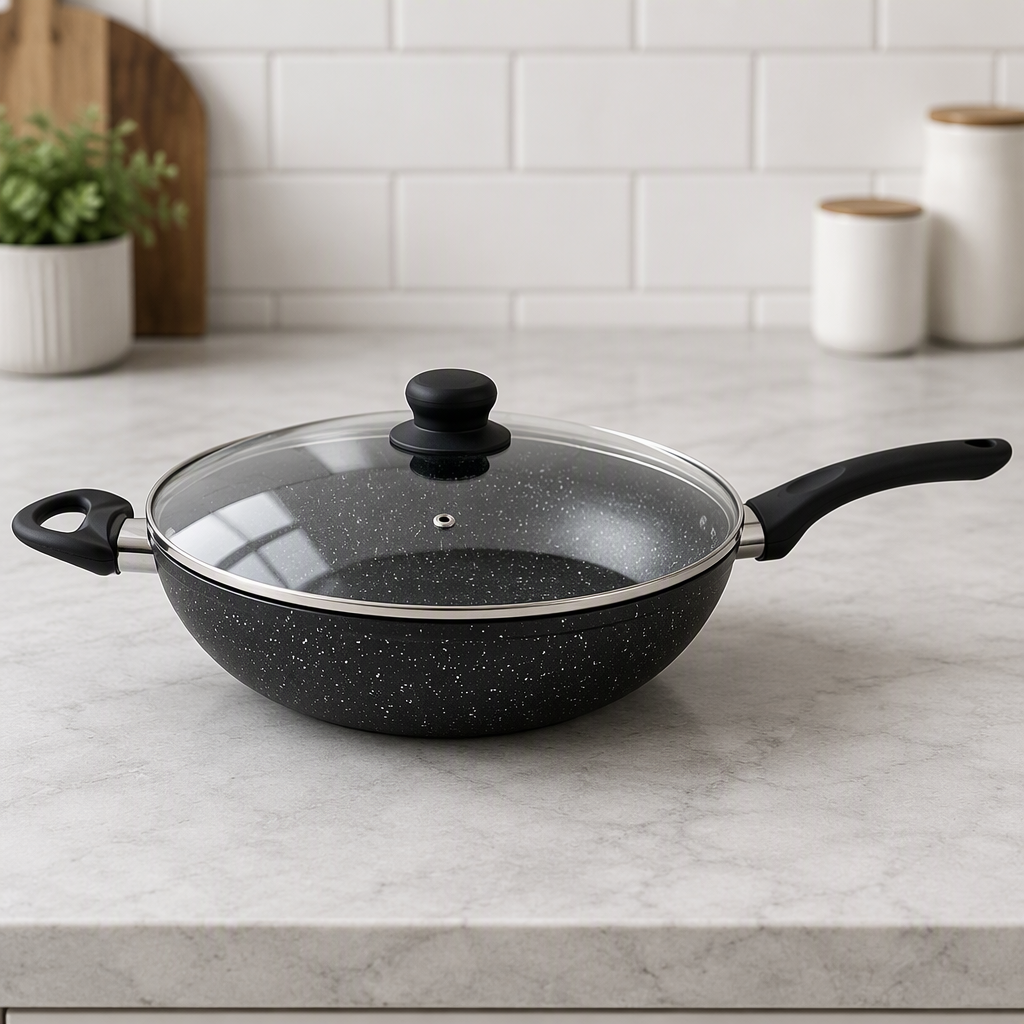
24 cm Forged Aluminum Wok Marble Coating Deep Fry Pan
Heavy-gauge forged aluminum body with multi-layer marble-reinforced ceramic nonstick coating. Includes tempered glass lid, gas & induction ready.
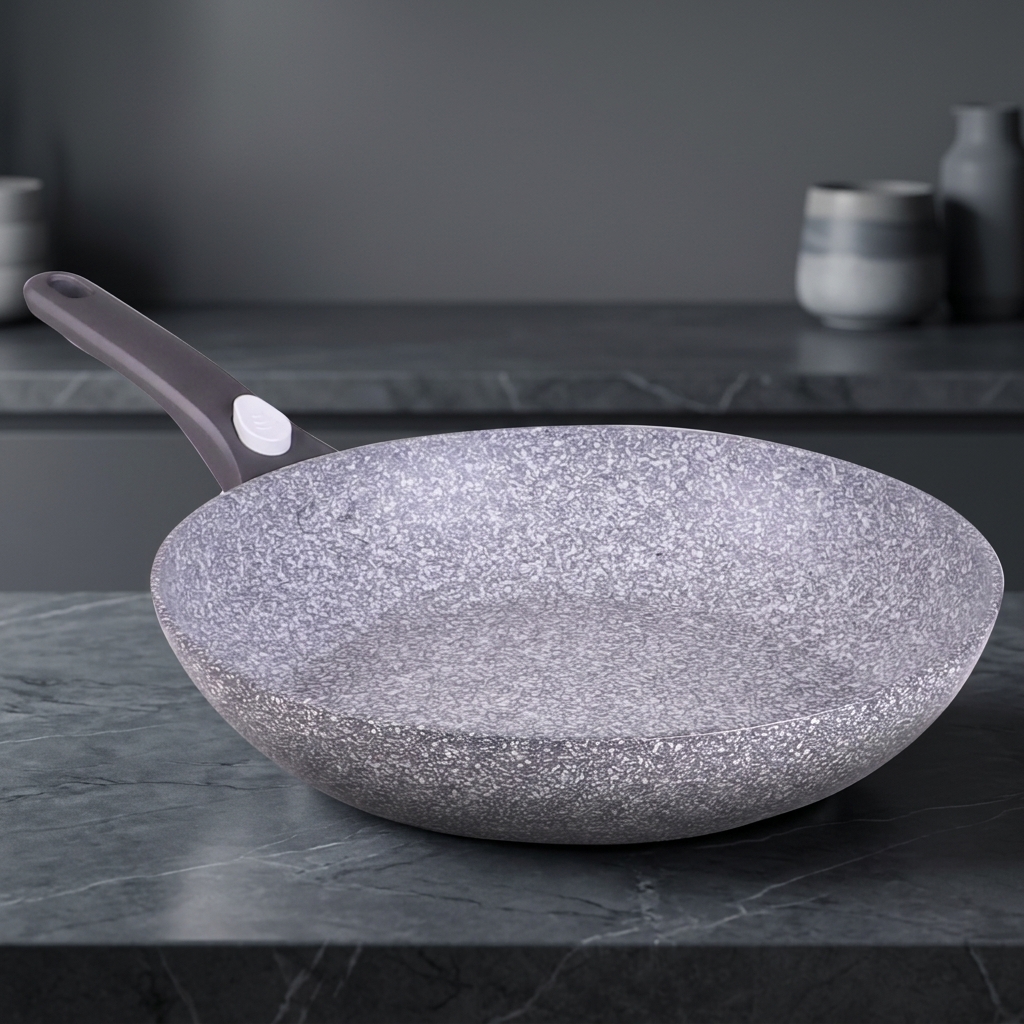
24cm Granite Non-Stick Fry Pan with Detachable Handle
Space-saving ergonomic design featuring a quick-release detachable soft-touch handle and high-density granite-speckled ceramic nonstick interior.
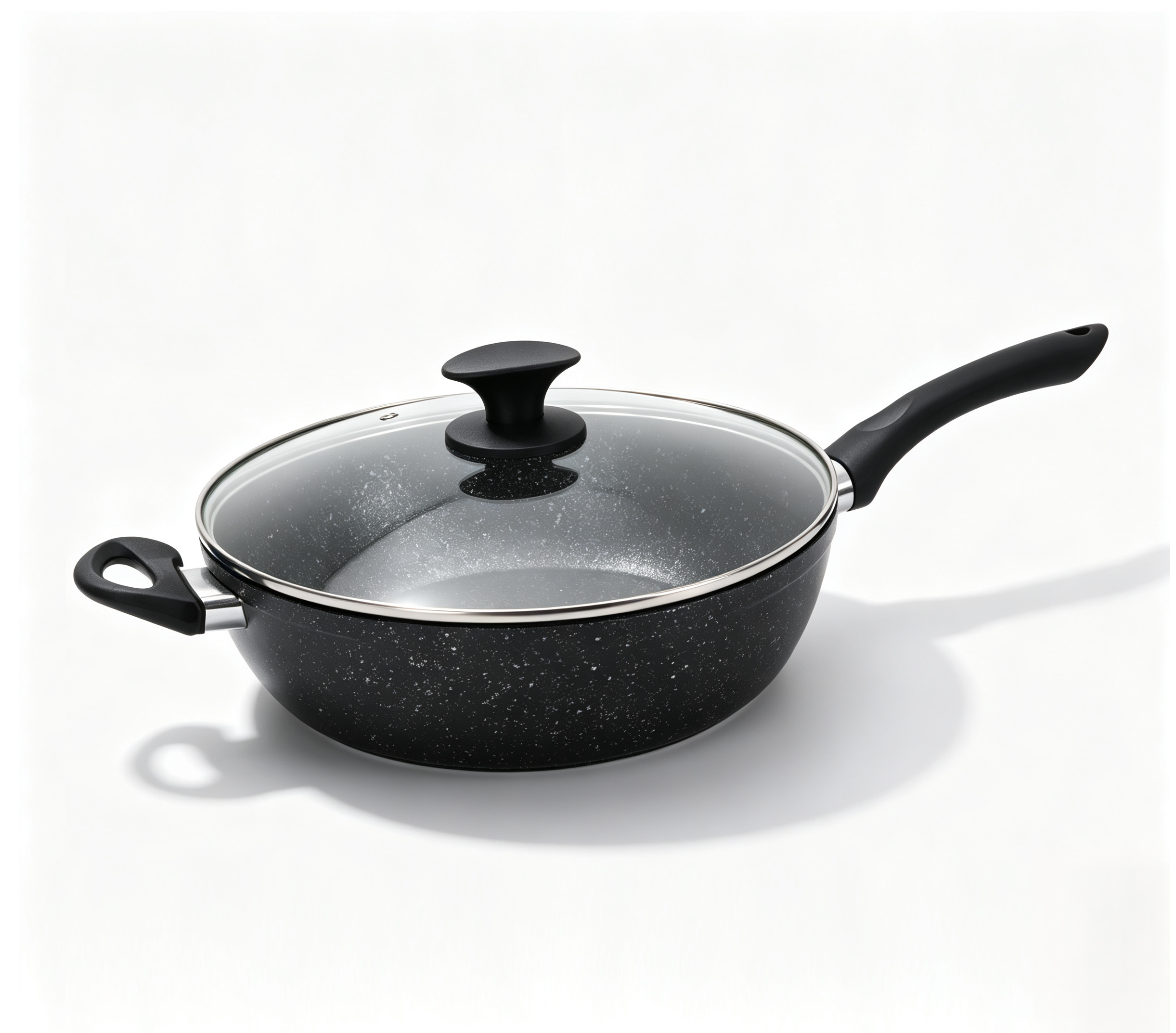
Modern Granite Nonstick Deep Fry Pan & Cookware Pot
Multi-functional deep skillet equipped with stay-cool bakelite handles and a high-thermal-efficiency induction bottom plate.
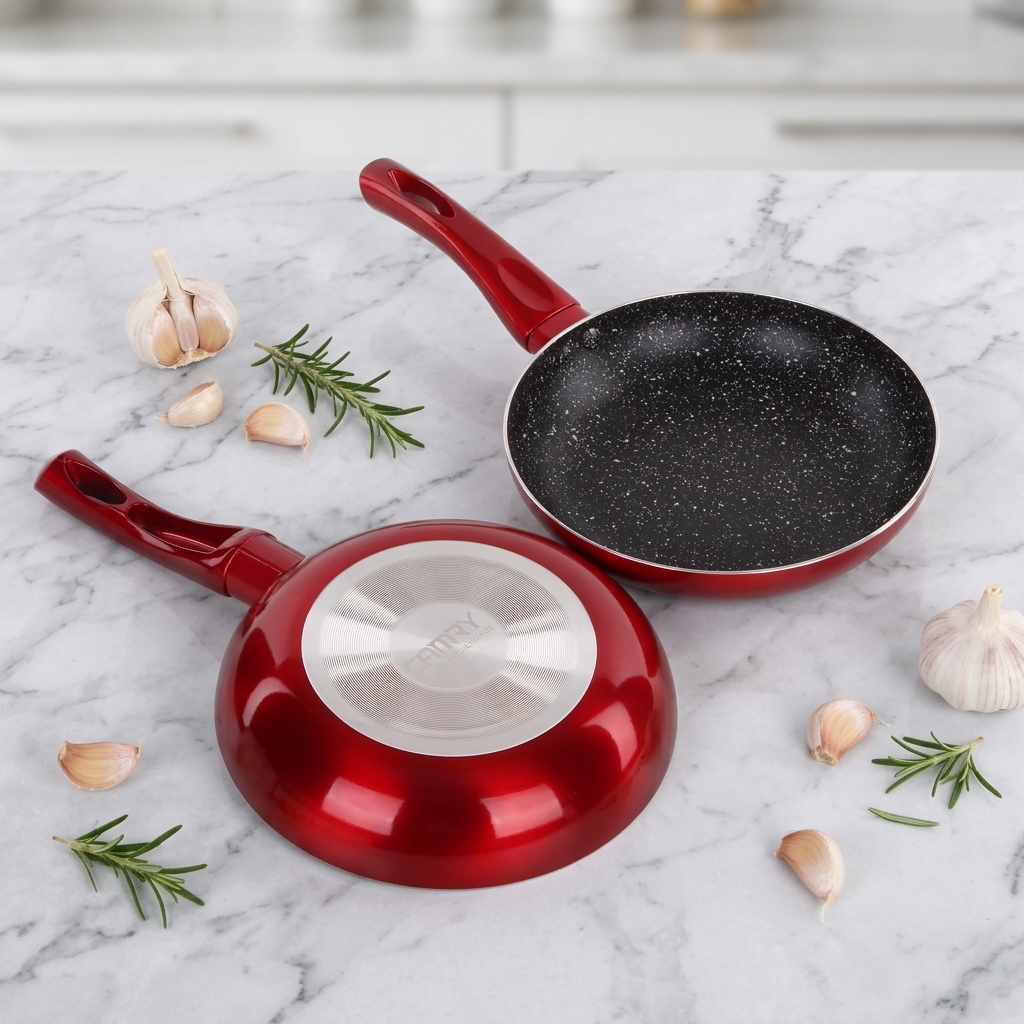
Durable 30cm PFOA-Free Non-Stick Pressed Frying Pan
Commercial-grade 30cm skillet engineered for restaurants and high-volume retail. Heat-resistant riveted handle with PFOA-free coating matrix.
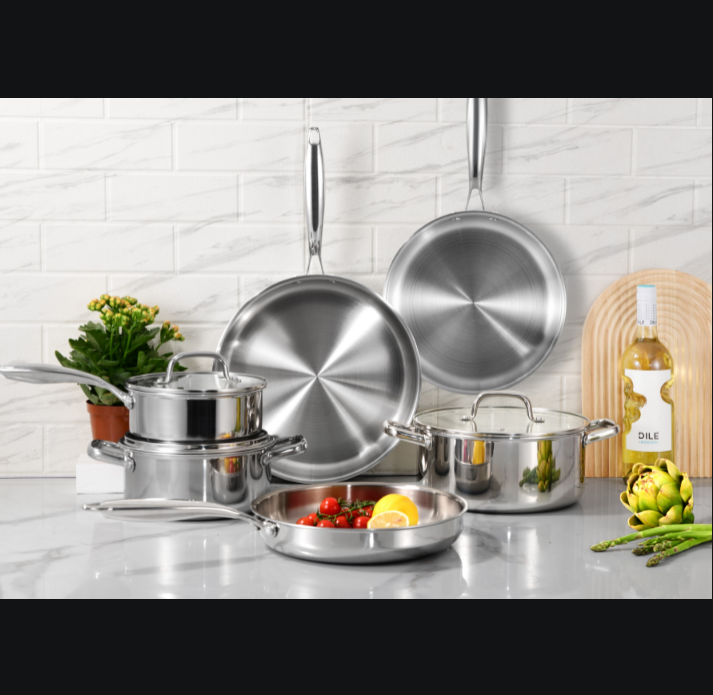
Tri-Ply Stainless Steel Non-Stick Cookware Set
Premium 3-ply cladding (Stainless Steel / Aluminum Core / Stainless Steel) with non-stick interior coating and oven-safe ergonomic stainless handles.
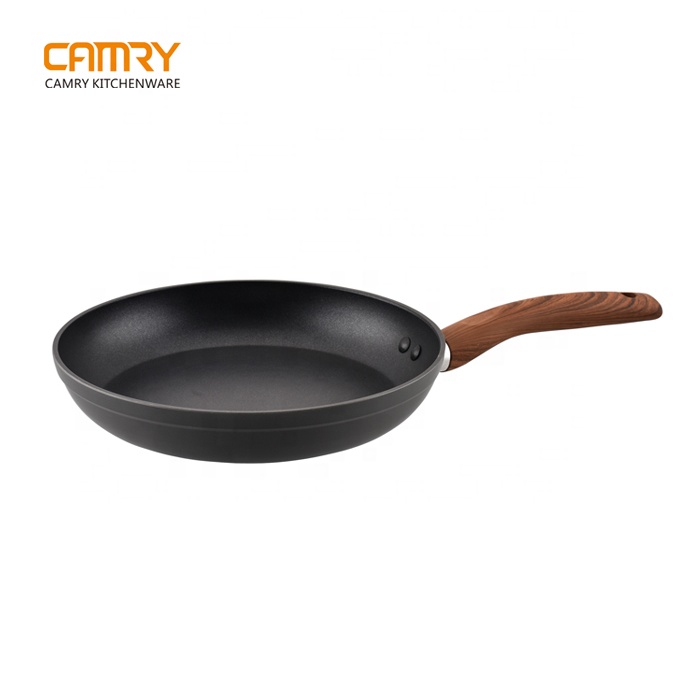
7PCS Dark Grey Forged Aluminum Cookware Set
Modern Scandinavian design with wooden soft-touch handles, scratch-resistant mineral ceramic coating, and flat impact-bonded induction bases.
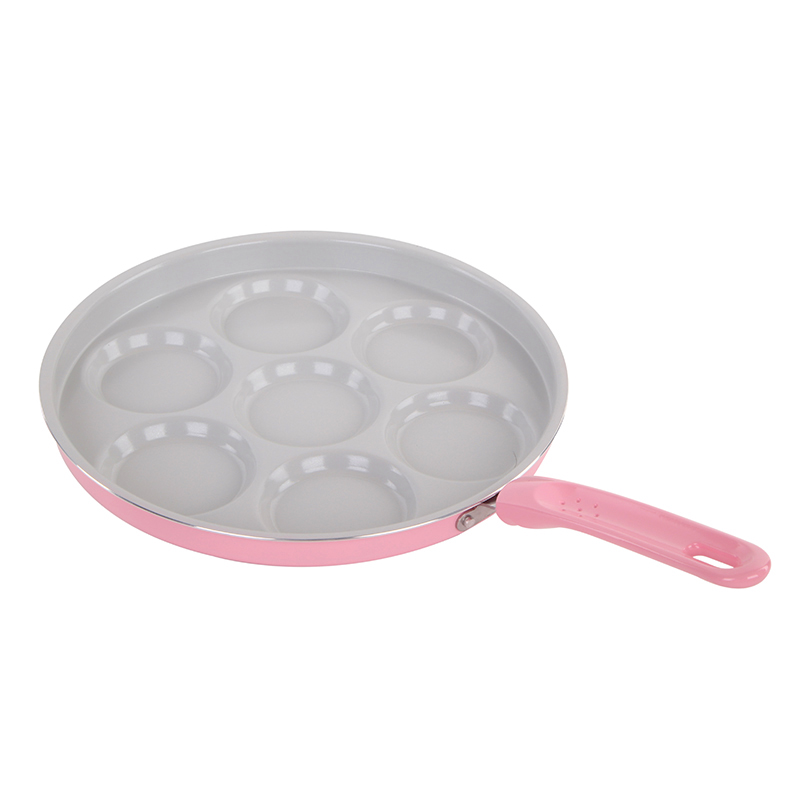
Eco-Friendly Aluminum Alloy Non-Stick Cookware Set
Zero-VOC organic ceramic formulation applied on lightweight high-conduction aluminum alloy. Perfect balance of cost efficiency and eco-performance.
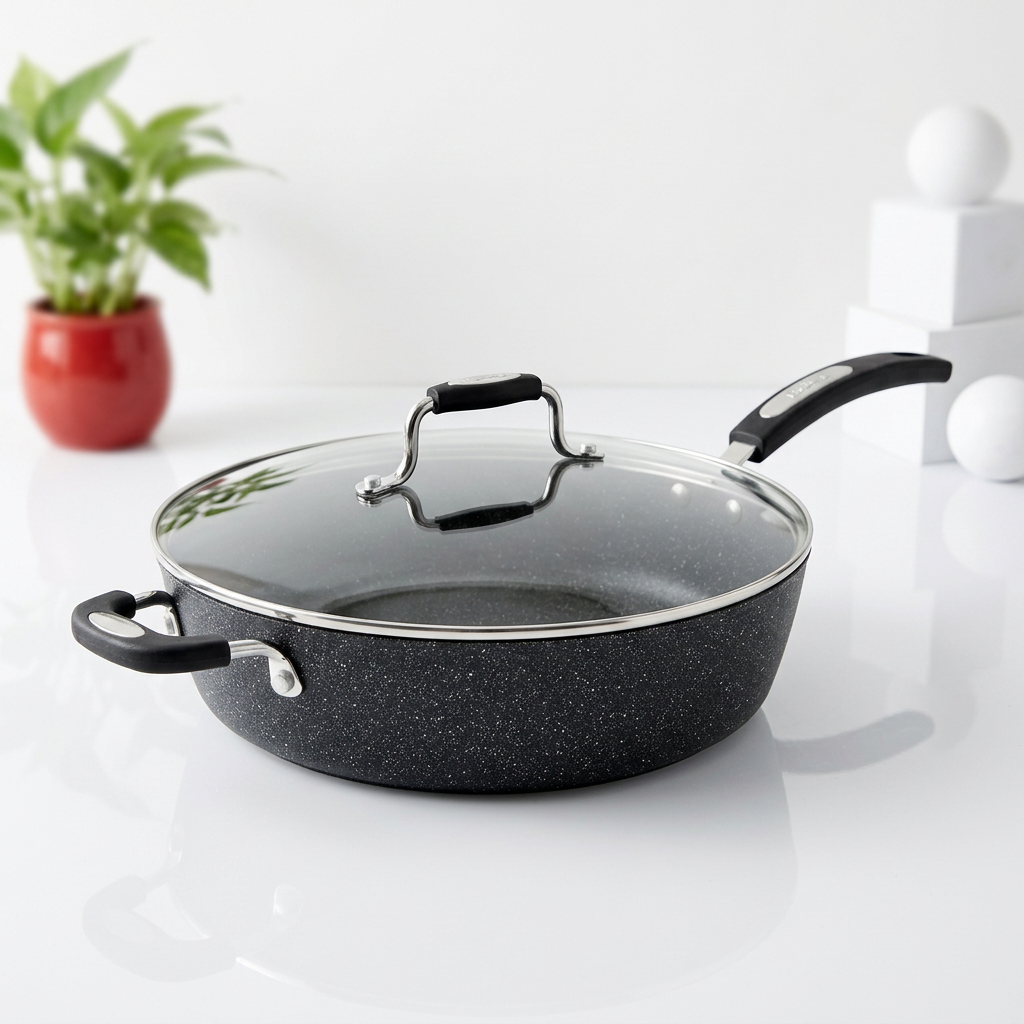
Classic 11-Inch (28cm) Deep Fry Pan with Helper Handle
4-Quart capacity deep sauté pan featuring a sturdy helper handle, heavy-gauge forged body, and thermal-shock resistant tempered glass cover.
Enterprise Manufacturing Strength & Verification
As a world-class OEM/ODM Ceramic Cookware Supplier & Exporters based in Jinhua, Zhejiang, Zhejiang MEIS Kitchenware Co., Ltd. represents two decades of industrial engineering excellence. Operating from our state-of-the-art facility in the Dongnan Industrial Zone (Shuxi Street), our factory spans advanced heavy hydraulic pressing, cold die-forging, precise CNC trimming, semi-automated Sol-Gel ceramic spray lines, and multi-stage curing ovens.
Assessed and certified on-site by TÜV Rheinland, MEIS combines integrated manufacturing capacity with rigorous quality control protocols. Unlike trading intermediaries, we control every single variable that governs nonstick longevity, thermal-shock resistance, substrate density, and ergonomic handle safety under one roof.
TÜV Rheinland Verified Facility
Our entire supply chain, production lines, environmental compliance systems, and operational safety standards undergo rigorous annual on-site audits by TÜV Rheinland.
In-House Tooling & Mold Workshop
Equipped with high-precision lathes, CNC tooling centers, and EDM machinery, enabling custom ODM pan prototyping in as little as 10–14 days.
Global Quality Compliance
100% compliant with EU Regulation (EC) No 1935/2004, German LFGB, US FDA, DGCCRF, and Proposition 65 regulations. Fully PFAS, PTFE, PFOA, Lead, and Cadmium free.
Technical Whitepaper: Sol-Gel Ceramic Coating Synthesis & Substrate Engineering
The global cookware market is undergoing a seismic structural pivot away from synthetic fluoropolymer coatings (PTFE/PFOA/PFAS) toward inorganic ceramic coatings synthesized via Sol-Gel technology. Understanding the microstructural physics of ceramic nonstick surfaces is vital for brand owners, B2B sourcing executives, and commercial procurement directors seeking to avoid consumer recalls, maximize nonstick abrasion cycles, and offer genuine eco-friendly cookware.
1. Sol-Gel Inorganic Matrix Chemistry
Unlike traditional PTFE suspensions that rely on organic polymer chains held together at temperatures up to 260°C, inorganic ceramic nonstick coatings are formed through the liquid-phase hydrolysis and condensation of alkoxide precursors (typically liquid silica $Si(OR)_4$ and organoalkoxysilanes). The resulting Solution-Gelation ("Sol-Gel") network cures at approximately 280°C–320°C into a dense, glass-like ceramic matrix ($SiO_2$).
Because this glassy matrix is completely inorganic, it exhibits exceptional chemical inertness and extreme thermal stability. While PTFE coatings begin to degrade and emit toxic fluorinated fumes (pyrolysis) above 260°C (500°F), sol-gel ceramic coatings comfortably withstand thermal spikes up to 450°C (842°F) without structural degradation, blistering, or toxic off-gassing.
2. Substrate Metallurgy: AA3003 vs. AA1050 & Mechanical Anchorage
A nonstick coating is only as durable as its mechanical bond to the underlying metal substrate. At Zhejiang MEIS Kitchenware Co., Ltd., we utilize premium-grade aluminum alloys, primary AA3003 (containing manganese for heightened mechanical tensile strength and structural rigidity) and pure AA1050 discs for deep-drawing cold pressings.
Prior to Sol-Gel spray application, raw pan bodies pass through automated grit-blasting (using high-density aluminum oxide media at controlled pressures) or chemical acid-etching. This generates a precise micro-roughness profile ($Ra = 3.5 - 5.0 \, \mu m$) that maximizes the mechanical interlocking between the inorganic ceramic primer and the metallic substrate, eliminating interfacial delamination under severe thermal cycling.
Cookware Substrate & Coating Comparison Matrix
Comparative engineering analysis of nonstick cookware systems for commercial B2B purchasing decisions:
| Performance Criteria | Forged Sol-Gel Ceramic | Pressed Aluminum Ceramic | Tri-Ply Stainless Steel Ceramic | Traditional PTFE Nonstick |
|---|---|---|---|---|
| Thermal Tolerance | Up to 450°C (842°F) | Up to 400°C (752°F) | Up to 500°C (932°F) | Max 260°C (500°F) |
| Environmental & Toxicological Profile | 100% PFAS, PFOA, PTFE, Heavy Metal Free | 100% PFAS, PFOA, PTFE, Heavy Metal Free | 100% PFAS, PFOA, PTFE, Heavy Metal Free | Contains Fluoropolymers (PFAS risk) |
| Base Warp Resistance | Superior (Thick 4.0–5.0mm base) | Moderate (2.0–3.0mm base) | Maximum (Solid Encapsulated Core) | Varies by gauge |
| Induction Compatibility | Impact-Bonded SS Base Plate | Flame-Sprayed or Stamped Plate | Inherent Magnetic SS430 Layer | Optional Base Plate |
| Abrasion Longevity (BS 7069 / MTP) | 15,000 – 30,000 Cycles | 8,000 – 15,000 Cycles | 25,000 – 40,000 Cycles | 5,000 – 20,000 Cycles |
| Target Market Positioning | Mid-to-High Retail, E-Commerce | Volume Supermarkets, Mass Retail | Premium Kitchenware & Professional | Legacy Mass Market |
Future Procurement Trends in Ceramic Cookware Sourcing
Navigating the global cookware market over the next 5 to 10 years requires strategic foresight regarding international regulatory pressures, consumer health awareness, and logistical carbon efficiency. Sourcing directors must align their supply chains with three dominant macro trends:
1. Total PFAS Legislation Phase-Out
The European Chemicals Agency (ECHA) and United States state-level legislatures (e.g., Maine, Minnesota, California AB 1200) are enforcing stringent bans on all Per- and Polyfluoroalkyl Substances (PFAS). Importers shifting their product lines to inorganic ceramic Sol-Gel formulations eliminate regulatory risk, customs holds, and legal liability.
2. Detachable Handles & Compact Logistics
Soaring international freight and warehousing costs have made stackable cookware sets with detachable handle mechanisms (such as MEIS’s quick-release patent-lok handles) a major trend. Nestable pan sets reduce CBM volume by up to 60%, drastically cutting sea freight expenditure per unit.
3. High-Efficiency Universal Induction Bases
With induction cooktop adoption accelerating in North America and Europe, cookware must support seamless cross-hob performance. Modern full-bound induction bottom plates ensure rapid magnetic reactivity, zero thermal warping, and compatibility across induction, gas, electric, and ceramic glass ranges.
Next-Generation R&D Trends in Ceramic Cookware
At Zhejiang MEIS Kitchenware Co., Ltd., our engineering team continuously pushes the limits of surface science to address historic ceramic nonstick limitations. Key product development innovations currently entering mass production include:
Nanocrystalline Diamond & Titanium Reinforcement
By infusing micro-milled synthetic diamond particles and inert titanium dioxide nanoparticles ($TiO_2$) directly into the Sol-Gel ceramic matrix, our engineering team has increased scratch resistance and metal-utensil endurance by over 300% compared to first-generation ceramic coatings.
Bio-Mineral Speckle Aesthetics & Tactile Finishes
Consumer aesthetic preferences have shifted toward natural, earth-toned cookware. Our specialized multi-tone spraying technology produces high-density granite, marble, and volcanic rock visual effects without altering coating nonstick hydrophobic contact angles ($>105^\circ$).
Frequently Asked Questions (Procurement FAQ)
Essential answers for B2B buyers, private-label brand managers, and global procurement teams considering OEM/ODM collaboration with Zhejiang MEIS Kitchenware Co., Ltd.
Is Zhejiang MEIS Kitchenware a direct factory manufacturer or a trading company?
What are the typical Minimum Order Quantities (MOQ) for custom OEM/ODM ceramic cookware?
Which international food safety and chemical compliance standards do your ceramic products meet?
What customization options are available under your OEM and ODM services?
- Substrates: Pressed aluminum, forged aluminum, carbon steel, and tri-ply stainless steel.
- Coatings: Custom Pantone color matching, granite/marble speckles, diamond-reinforced ceramic, and interior graphic laser etching.
- Handles: Stainless steel, stay-cool bakelite, soft-touch silicone, natural wood effects, and detachable mechanisms.
- Branding & Packaging: Bottom stamp logo engraving, handle logo badges, color sleeve boxes, full 5-ply mail-order packaging, and display packaging.
What is the standard production lead time for pre-shipment sampling and mass production?
How does MEIS guarantee coating adhesion and handle safety during manufacturing?
Streamlined 6-Step OEM/ODM Sourcing Process
Our structured engineering and project execution framework ensures transparent communication, zero design drift, and on-time delivery:
Engineering Brief
Submit target specifications, price bands, market destination, dimensions, and desired coating characteristics.
DFM Analysis
Our engineers evaluate Design for Manufacturing (DFM) variables, recommending optimal gauge, base plate bonding, and alloy selection.
Prototyping
Rapid physical prototyping in our toolroom. Functional samples dispatched via courier for physical inspection and lab testing.
Mass Production
High-speed automated pressing, Sol-Gel spray application, and inline quality inspection across automated production lines.
QA & Lab Audits
Comprehensive batch testing for thermal shock, coating adhesion, thickness (DFT), cross-hatch tape tests, and food safety compliance.
Logistics & Delivery
Custom packaging assembly, palletization, container loading, and ocean freight logistics under FOB, CIF, or DDP terms.
Partner with China's Premier Ceramic Cookware Manufacturer
Elevate your cookware portfolio with market-ready, PFAS-free ceramic nonstick cookware engineered to European quality benchmarks. Contact our engineering and export team today for factory-direct pricing, custom catalog access, and immediate sample dispatch.