Engineering Excellence: Featured Cookware Series
Commercial-grade nonstick cookware designed for global brand owners, importers, and major retail chains.
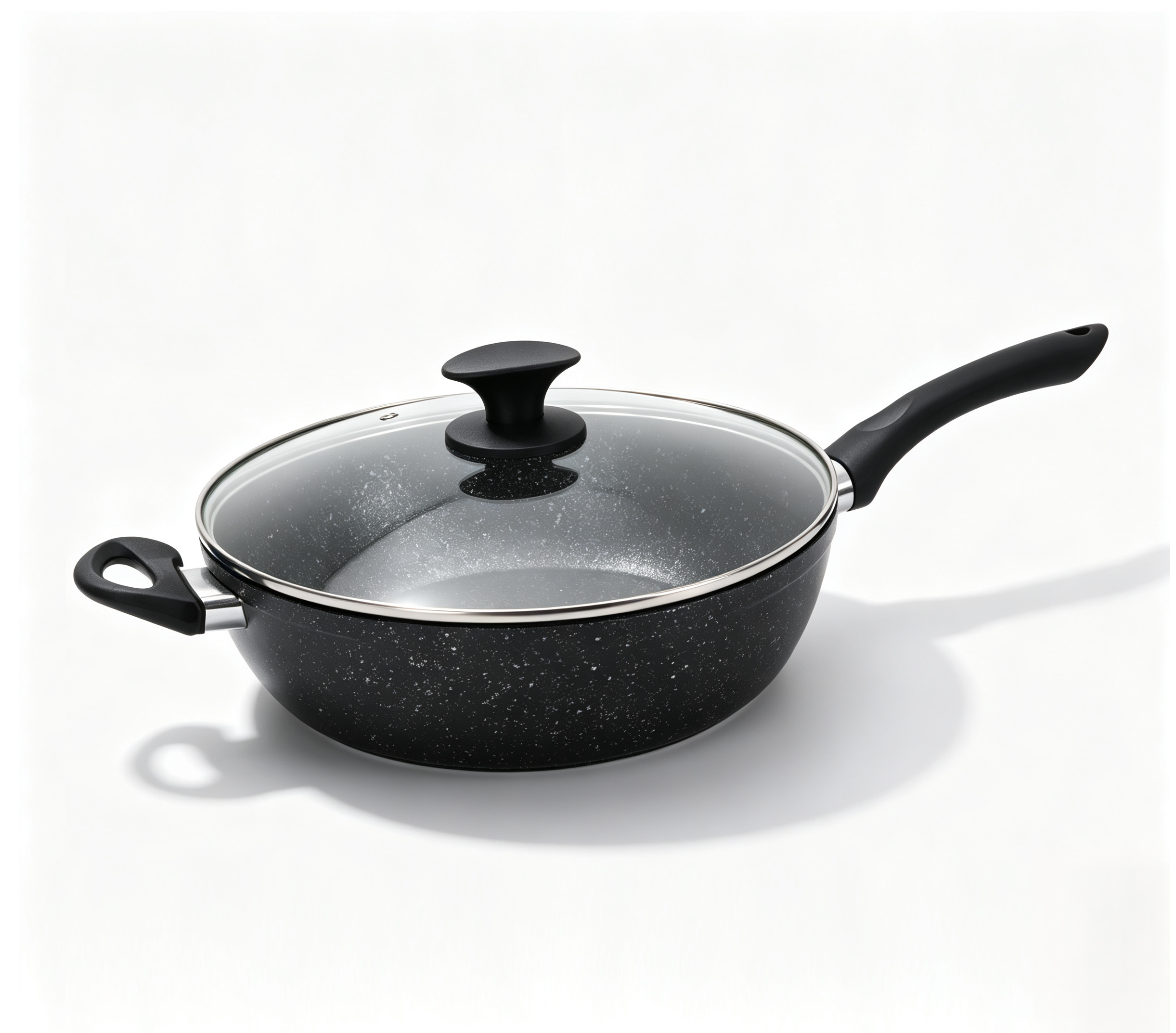
Easy Cleaning Modern Granit Nonstick Aluminum Cookware Pot Multi-function Deep Fry Pan Glass Lid Induction Ready Bakelite Handle
View Product Details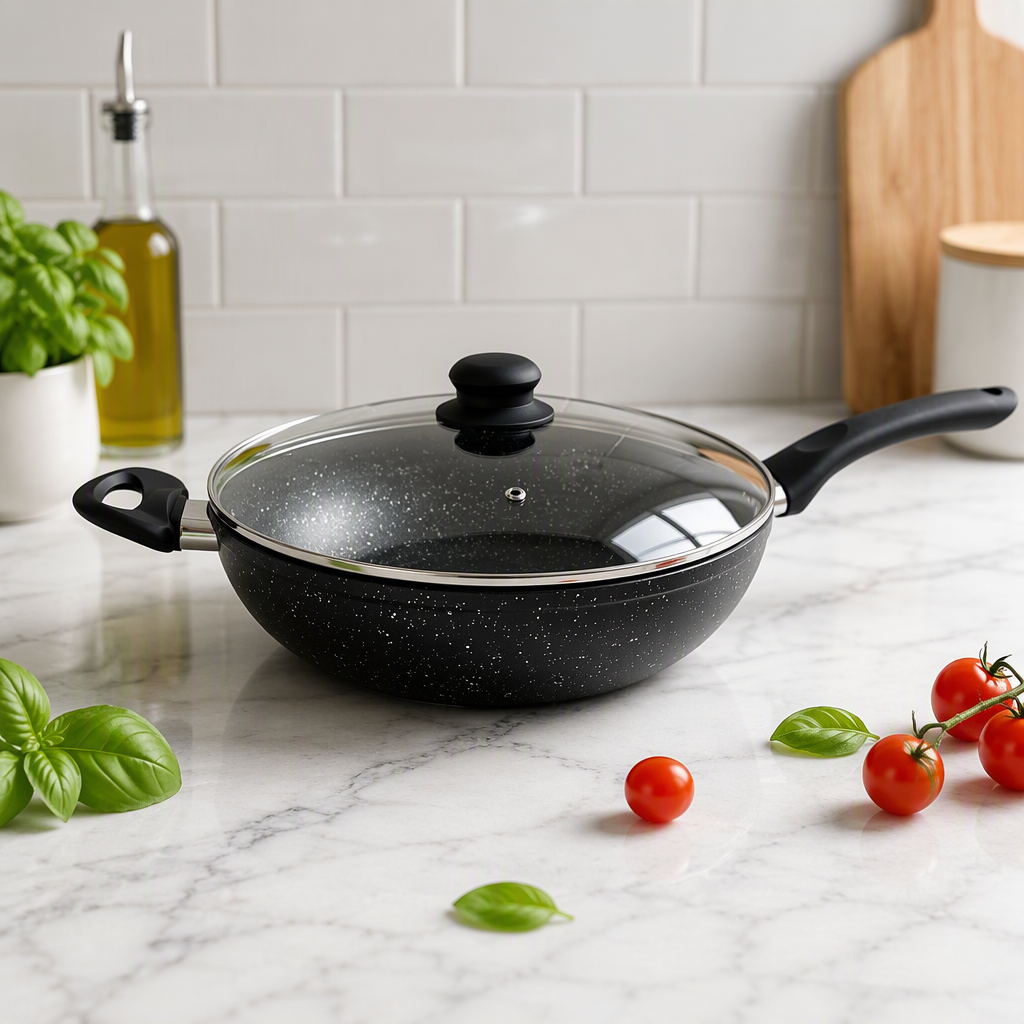
26 cm Non Stick Forged Aluminum Wok Marble Coating Glass Lid Cool Handle 3.5 L for Gas and Induction Cookers
View Product Details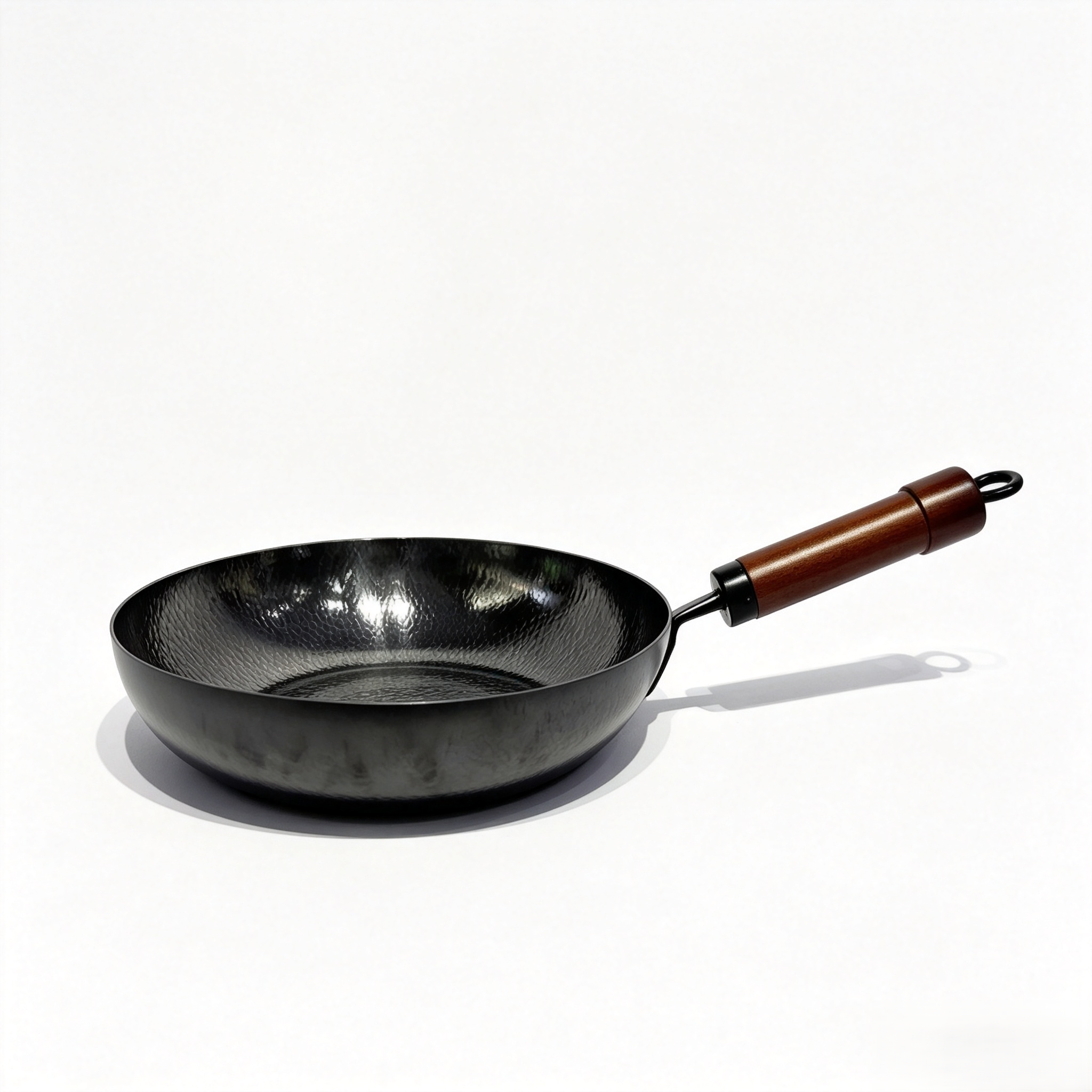
Modern CAMRY Eco-friendly No Coating Nitrided Hammered Carbon Steel Wok Cookware Wooden Handle 2-3L Capacity Gas Induction
View Product Details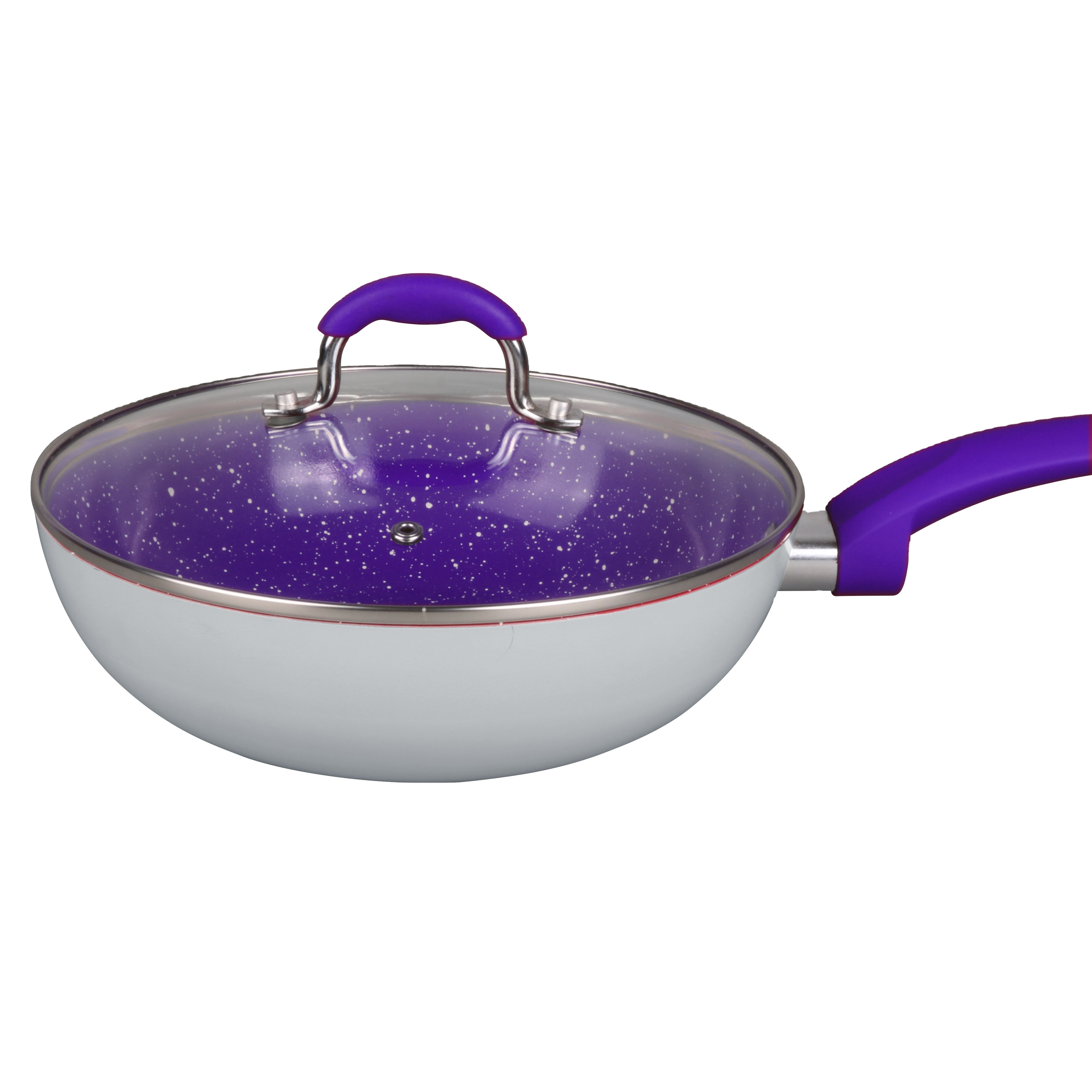
Low Price MOQ 30 cm Marble Coating Non Stick Pressed Wok Deep Fry Pan with Bakelite Cool-touch Handle for All Stoves
View Product Details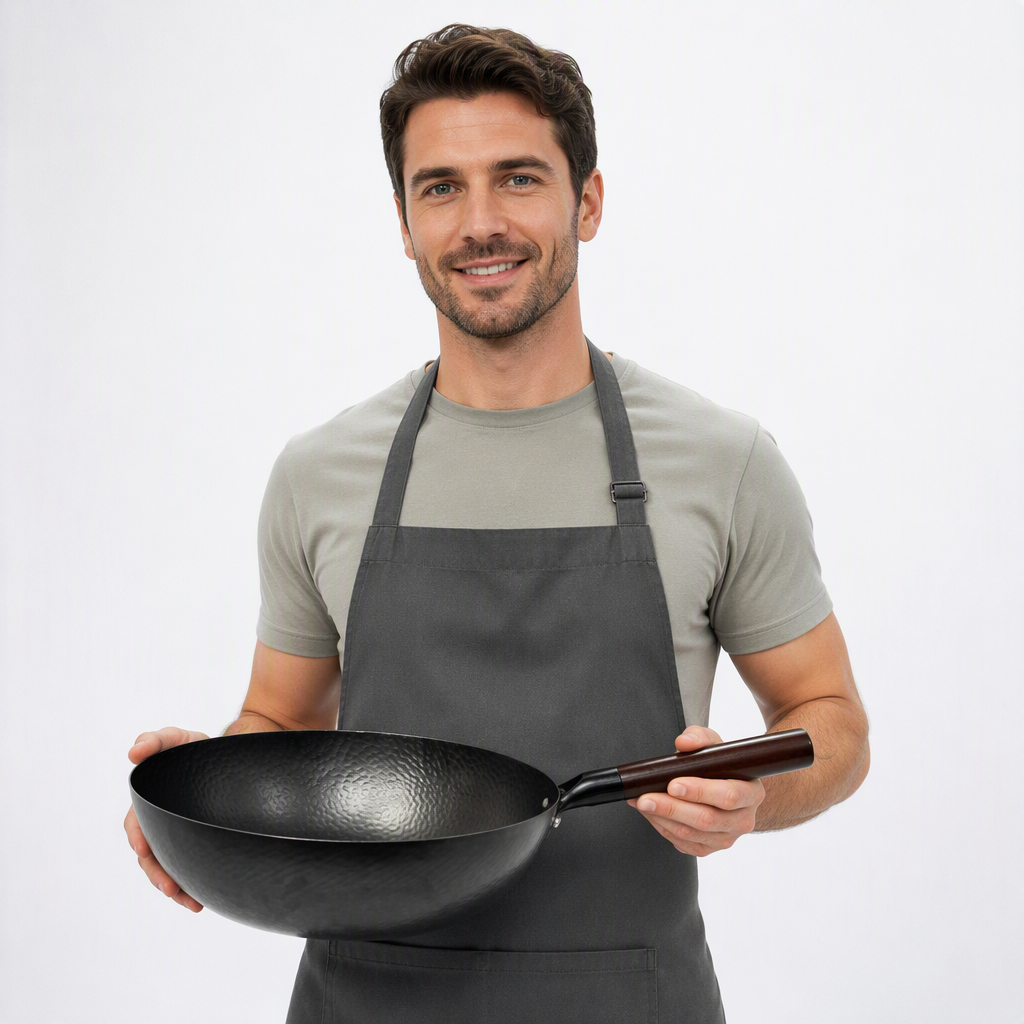
30cm Carbon Steel Round Wok Nitrided Surface Wood Handle Non Stick Stir Fry Pan for Gas and Induction Cookers
View Product Details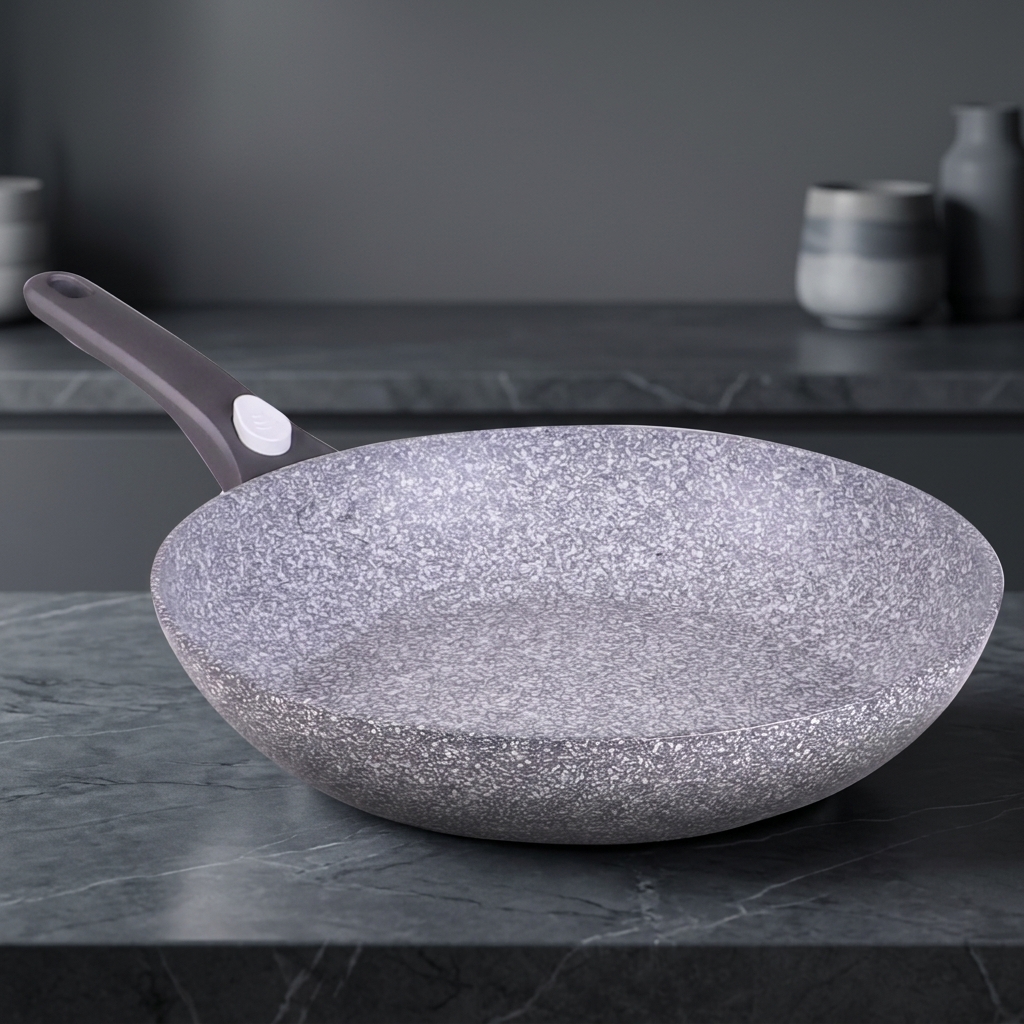
Granite Coating Non-Stick 9 Inch 24cm Forged Aluminum Fry Pan with Detachable Handle Soft Touch Coating Induction Ready
View Product Details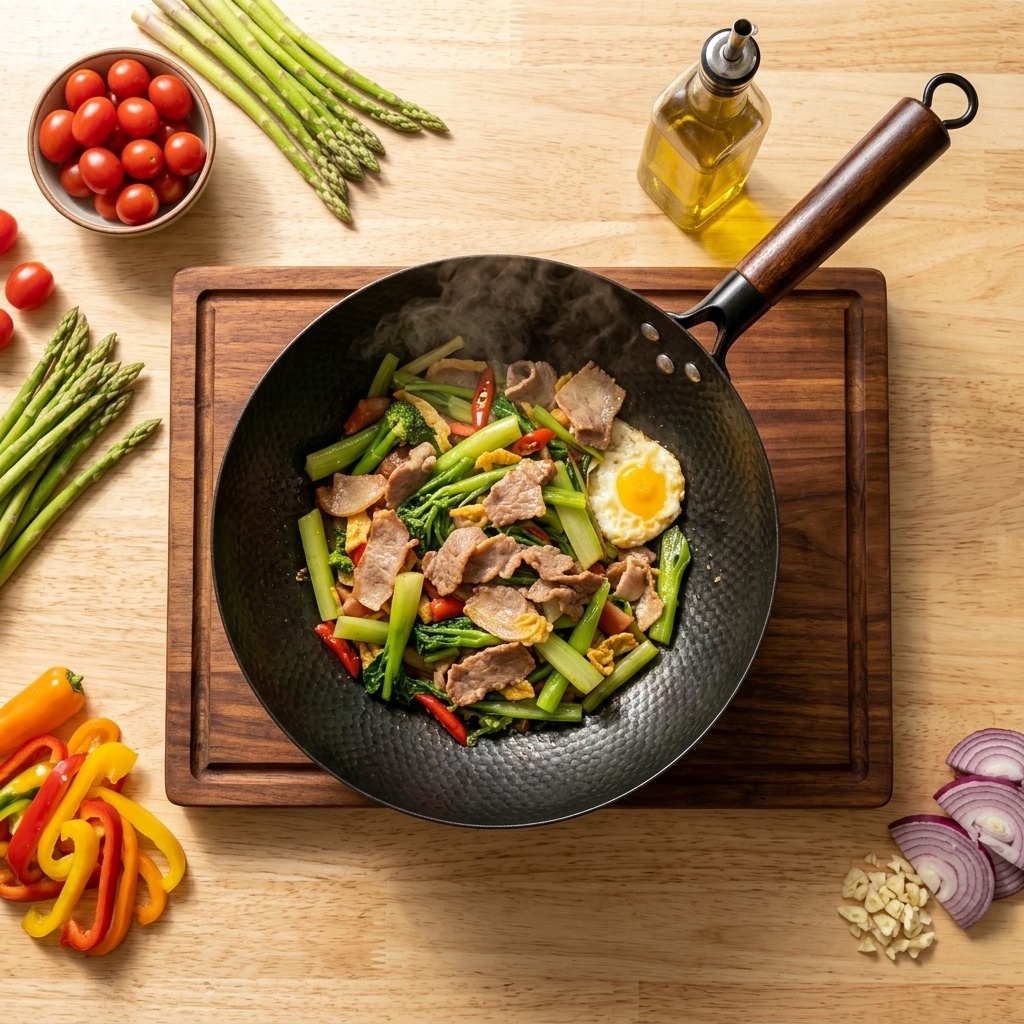
12 Inch 30cm Heavy Gauge Carbon Steel Chinese Wok Wooden Handle Nitrogen Coating Flat Base Gas Induction Ready No Coating
View Product Details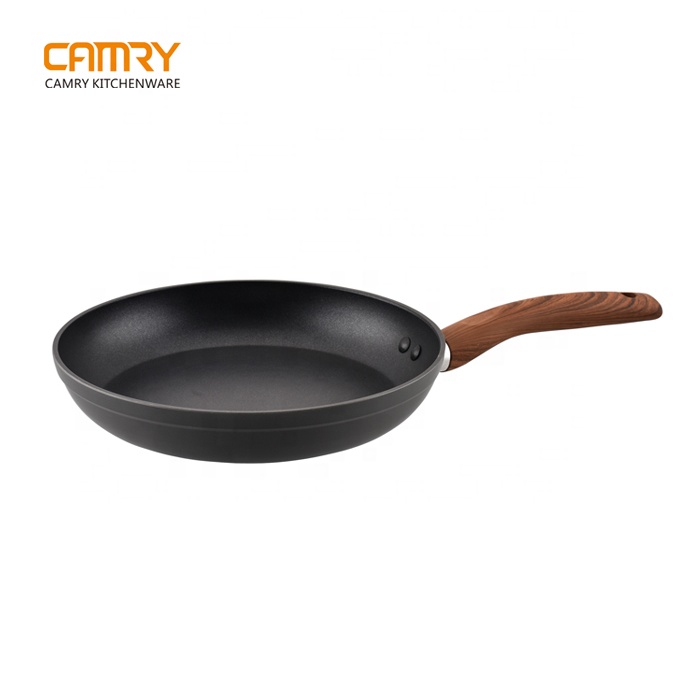
7PCS Dark Grey Forged Aluminum Megaware Cookware With Wooden Soft-touched Handle
View Product Details
1. Architectural Metallurgy: The Engineering Advantage of Forged Aluminum
In the global commercial cookware manufacturing landscape, Forged Aluminum Cookware represents the optimal technical convergence between mechanical structural integrity, rapid thermal responsiveness, and cost-efficient mass production. Unlike traditional pressed cookware—which relies on stamped sheet metal—or heavy cast aluminum, die-forging manipulates solid aluminum alloy billets under extreme pressure (typically 3,000 to 4,500 metric tons of force).
This cold/warm forging process realigns the molecular grain boundary structure of the aluminum alloy (primarily 3003-grade high-purity alloy). As a result, the finished pan body achieves structural density near that of cast metals while retaining an exceptionally lightweight profile. Crucially, the process allows variable wall thickness: engineers specify a heavy-gauge rim (typically 4.0mm to 5.5mm) to resist impact warping, a reinforced thermal base (4.5mm to 6.0mm) to eliminate hot spots, and tapered sidewalls (2.5mm to 3.2mm) to optimize thermal conductivity and reduce total vessel mass.
Forged vs. Pressed vs. Cast Aluminum Cookware: Comparative Technical Matrix
| Performance Attribute | Pressed Aluminum | Forged Aluminum (MEIS Standard) | Cast Aluminum |
|---|---|---|---|
| Base Gauge Thickness | 1.8 mm – 2.8 mm (Uniform) | 4.0 mm – 6.0 mm (Engineered Step) | 5.0 mm – 8.0 mm (Heavy) |
| Warp Resistance (at 300°C) | Moderate (Prone to bowing) | Superior (Zero Thermal Deformation) | Maximum |
| Grain Density & Strength | Standard Rolled Sheet | High-Density Forged Alignment | Porous Cast Structure |
| Heat Distribution Speed | Instantaneous but Uneven | Rapid & Highly Uniform | Slower Thermal Absorption |
| Unit Landed Cost (B2B) | Budget / Economy | Optimal Mid-to-Premium Value | High Manufacturing Cost |
2. Zhejiang MEIS Kitchenware: Enterprise Manufacturing & Quality Control
Located in the Dongnan Industrial Zone of Jinhua, Zhejiang—China’s premier industrial cluster for advanced hardware manufacturing—Zhejiang MEIS Kitchenware Co., Ltd. operates over 20,000 square meters of specialized production facilities. As a TÜV Rheinland on-site verified manufacturer, MEIS maintains vertical integration across all key metallurgical, chemical surface treatment, and mechanical assembly phases.
Raw Material Verification
Spectrographic verification of incoming aluminum ingots and coil plates ensures strict adherence to non-recycled 3003 food-grade metallurgical standards.
Automated Spray Lines
Enclosed, climate-controlled robotic spray booths apply multi-layer ceramic, PTFE, or granite coatings with uniform dry film thickness control (±2 microns).
In-House Testing Laboratory
Integrated testing rigs execute continuous cross-hatch adhesion tests, salt spray corrosion evaluations (500+ hours), handle torque tests, and thermal shock cycles.
3. Surface Engineering & Next-Gen Nonstick Coating Matrices
The commercial lifespan of aluminum cookware is directly governed by coating system architecture and substrate bonding integrity. MEIS offers global buyers multiple nonstick matrices customized for market-specific compliance (EU REACH, US FDA, LFGB, DGCCRF).
Coating System Technology Matrix
1. Multi-Layer PTFE Systems: Formulated with diamond powder or titanium particle reinforcement. Primer layers penetrate grit-blasted aluminum pores, while intermediate and topcoats deliver hydrophobicity and scratch resistance exceeding 20,000 dual-cycles under BS 7087 testing.
2. Sol-Gel Ceramic Coatings: Inorganic silicon-dioxide ($SiO_2$) coatings derived from natural mineral sources. Completely free of PFAS, PFOA, Lead, and Cadmium. Capable of withstanding extreme temperature spikes up to 450°C without thermal degradation or toxic vapor emissions.
3. Granite & Marble Speckle Finishes: Multi-tone decorative dispersion coats offering high aesthetic appeal for retail shelf differentiation, combined with micro-textured surfaces that retain cooking oils for natural release enhancement.
4. Induction Base Integration: High-speed automated cold-impact pressing fuses a magnetic 430-grade stainless steel induction disk to the forged aluminum vessel bottom. This ensures seamless operation on gas, electric, ceramic, and high-frequency commercial induction hobs.
4. Global Sourcing & Procurement Trends (2025–2030)
As global cookware retailers and importers restructure supply chains for the decade ahead, B2B procurement strategies are shifting toward three core operational vectors:
Vector 1: Modular Detachable Handle Systems
With cross-border e-commerce and ocean freight costs emphasizing container volumetric efficiency, cookware sets featuring single-click detachable handles (such as MEIS’s ergonomic quick-release systems) reduce packaging volume by up to 55%. This drastically cuts landed shipping costs per unit and enables compact stackable cabinet storage for modern urban consumers.
Vector 2: Full PFAS Elimination & Eco-Compliance
Regulatory tightening across Western markets—including the EU’s proposed universal PFAS restriction and various US state laws—has accelerated the transition toward certified PFAS-free ceramic nonstick solutions. Sourcing managers must partner with audited manufacturers capable of providing lot-level chemical safety certifications.
Vector 3: High-Gauge Carbon Steel Co-Procurement
To balance portfolio price points, global buyers are increasingly bundling forged aluminum sets with heavy-gauge nitrided carbon steel woks. Carbon steel provides natural magnetic induction responsiveness and extreme heat endurance without synthetic chemical coatings, serving high-heat Asian stir-fry and commercial sear applications.
5. Seamless OEM/ODM Production Workflow
From custom 3D CAD modeling to final container loading, our streamlined process ensures zero defect slippage and guaranteed lead times.
Spec Brief
Custom dimensions, weight targets, handle ergonomics, and color matching (Pantone).
Mold Tooling
In-house CNC toolmaking for rapid prototype casting within 7–14 days.
Sample Approval
Physical sample dispatch including laboratory coating adhesion and thermal reports.
Forging & Spray
Automated high-pressure forging, grit blasting, and multi-coat application.
QA Inspection
100% visual checks, cross-hatch tape testing, and drop tests per ISTA standards.
Global Export
Palletized export packaging, customs compliance, and container dispatch.
6. Commercial Procurement FAQ (Frequently Asked Questions)
Is Zhejiang MEIS Kitchenware a direct factory or a trading firm?
Zhejiang MEIS Kitchenware Co., Ltd. is an on-site verified combined Manufacturer and Trading Company operating dedicated pressing, forging, CNC, coating, and assembly workshops in Jinhua, Zhejiang. Third-party audits by TÜV Rheinland confirm factory ownership and manufacturing capabilities.
What are your standard Minimum Order Quantities (MOQs)?
For standard OEM production runs of forged aluminum cookware sets, our standard MOQ is 1,000 to 1,500 sets per model. Individual fry pans start at 1,500 to 2,000 units. Trial orders for select running items can be accommodated from 500 units upon evaluation.
What nonstick coating compliance documentation can you provide?
All MEIS nonstick coating systems—including ceramic, marble speckle, and PTFE finishes—can be supplied with full food-contact safety compliance test reports, including FDA 21 CFR 175.300, European Regulation (EC) No 1935/2004, German LFGB, and REACH chemical safety declarations.
How do you prevent handle failure and loose rivets over time?
Our engineering standards require high-torque pneumatic riveting or heavy-duty bracket welding for all handle attachments. Assembled handles undergo rigorous static load, fatigue bending (10,000+ lift cycles), and torsion stress testing in our quality lab prior to batch release.
Can MEIS support fully customized private label artwork and packaging?
Yes. We offer complete ODM/OEM private-label customization, including custom bottom logo stamping, laser etching, specialized color-matching (exterior silicone enamel or heat-resistant lacquer), custom retail display boxes, color sleeves, and drop-test certified mail-order cartons.
Request Product Catalogs & Factory Direct Wholesale Quotes
Connect with our senior export sales team to receive comprehensive technical specs, custom sample kits, and competitive FOB/CIF quotation schedules.
Get Catalog