High-Performance Nonstick Cookware & Fry Pan Lines
Direct from TÜV Rheinland verified manufacturing facilities in Jinhua, Zhejiang. Engineered for commercial durability, induction compatibility, and international food contact compliance.
1. The Landscape of China’s Nonstick Frying Pan & Cookware Export Industry
China remains the undisputed global center for nonstick cookware production, accounting for over 70% of worldwide supply across retail, commercial, and private-label sectors. Sourcing executives and B2B buyers seeking top China nonstick frying pan manufacturers & exporters must navigate a dynamic ecosystem concentrated in specialized industrial clusters in Zhejiang (Jinhua, Yongkang, Ningbo) and Guangdong (Jiangmen, Foshan).
Among these manufacturing centers, the Jinhua-Yongkang corridor in Zhejiang Province stands out as the core hub for advanced aluminum metallurgy and nonstick surface application. Manufacturers operating in this cluster, such as Zhejiang MEIS Kitchenware Co., Ltd., offer integrated supply chain advantages: from raw metal disc stamping and die-forging to multi-layer spray coating, automated curing, handle assembly, and strict laboratory compliance testing.
The global shift toward non-toxic, sustainable cookware has fundamentally reshaped the export market. Importers into North America, the European Union, and the Middle East are no longer just comparing basic unit prices (FOB); they demand comprehensive technical transparency regarding coating longevity, chemical safety (PFAS, PFOA, GenX, lead, and cadmium compliance), induction thermal efficiency, and warp resistance under severe thermal shock.
Industrial Cluster Efficiency
Local access to 1050/3003 aluminum alloys, tempered glass lid manufacturers, and silicone/bakelite handle tooling lowers lead times by up to 35% compared to non-specialized regions.
Strict Regulatory Alignment
Full adherence to EU REACH, FDA 21 CFR, German LFGB, and California Proposition 65 regulations using third-party lab-verified nonstick formulations.
Flexible OEM / ODM Tooling
In-house CNC machining and lathe equipment enable fast custom tooling development (15–20 days) for unique pan geometry, handle ergonomics, and base embossing.
2. Substrate Metallurgy: Comparing Pressed Aluminum, Forged Aluminum, Nitrided Steel & Tri-Ply Stainless
A crucial decision when formulating an OEM cookware catalog is selecting the proper substrate metal. The base alloy determines thermal conductivity, mechanical strength, structural deformation resistance, and retail positioning.
2.1 Pressed Aluminum Cookware (Mechanical Stamping)
Pressed aluminum frying pans are manufactured by cold-stamping high-purity aluminum sheet discs (typically Grade 1050 or 3003) into shape under high-tonnage mechanical presses. With wall thicknesses ranging from 1.5mm to 2.5mm, pressed aluminum delivers outstanding rapid heat conduction at a cost-efficient price point. It serves as the backbone for high-volume supermarket promotions, budget cookware sets, and fast-moving retail SKUs.
2.2 Forged & Die-Cast Aluminum Cookware (Heavy Gauge Engineering)
Forged aluminum cookware undergoes heavy hydraulic pressure forging, altering the grain structure of the metal disc to concentrate thickness precisely where needed: creating a heavy, warp-resistant base (typically 4.0mm to 5.5mm) coupled with lightweight, tapered side walls (2.0mm to 3.0mm). This structural distribution offers several benefits:
- Thermal Mass & Energy Retention: Holds temperature when cold ingredients are added, preventing heat drop during searing.
- Anti-Warping Performance: Heavy base plates eliminate bottom doming and bowing caused by high thermal stress on induction hobs.
- Tactile Premium Feel: Delivers the weight, feel, and perceived value of traditional cast iron without the heavy maintenance.
2.3 Nitrided Carbon Steel Cookware (Chemical-Free Hardening)
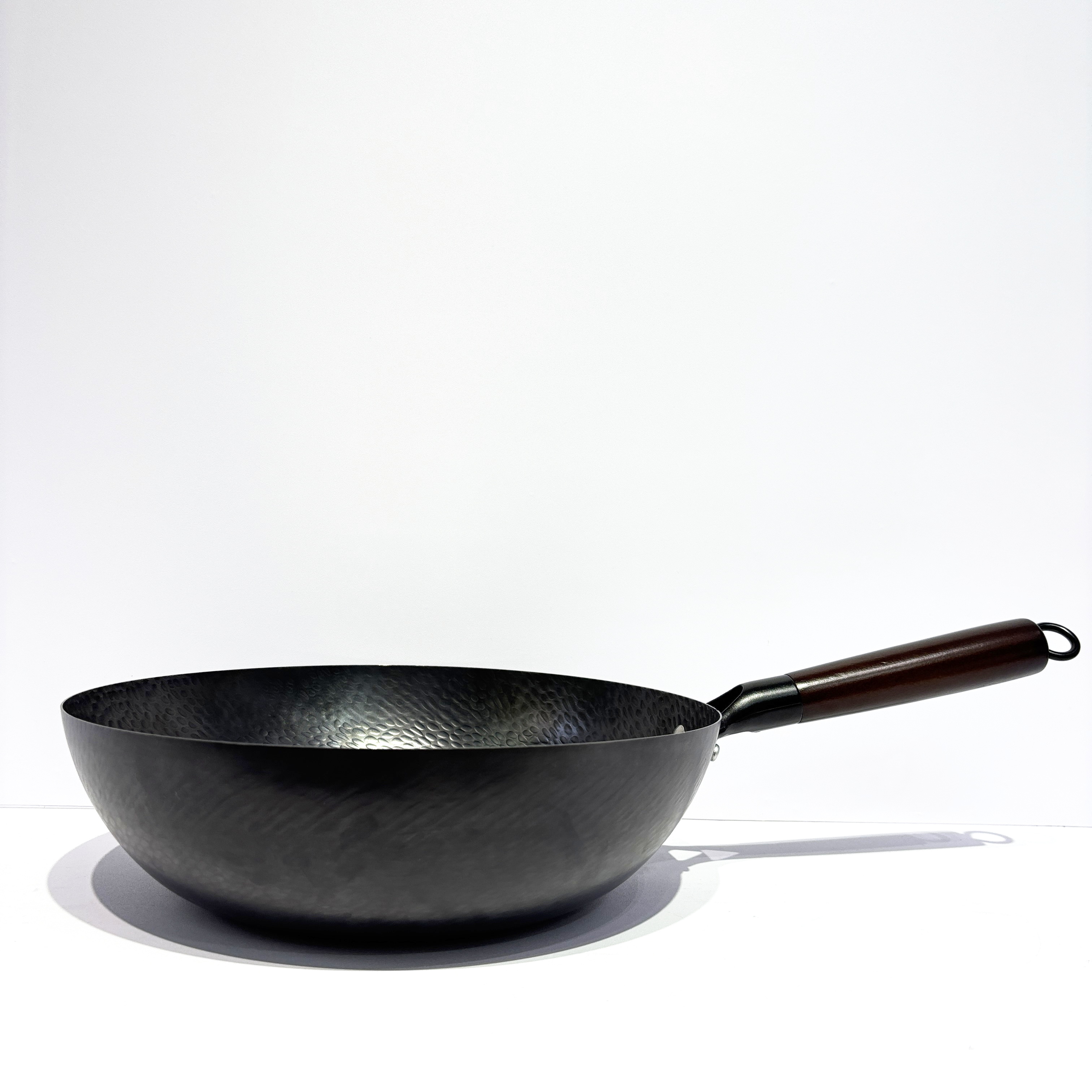
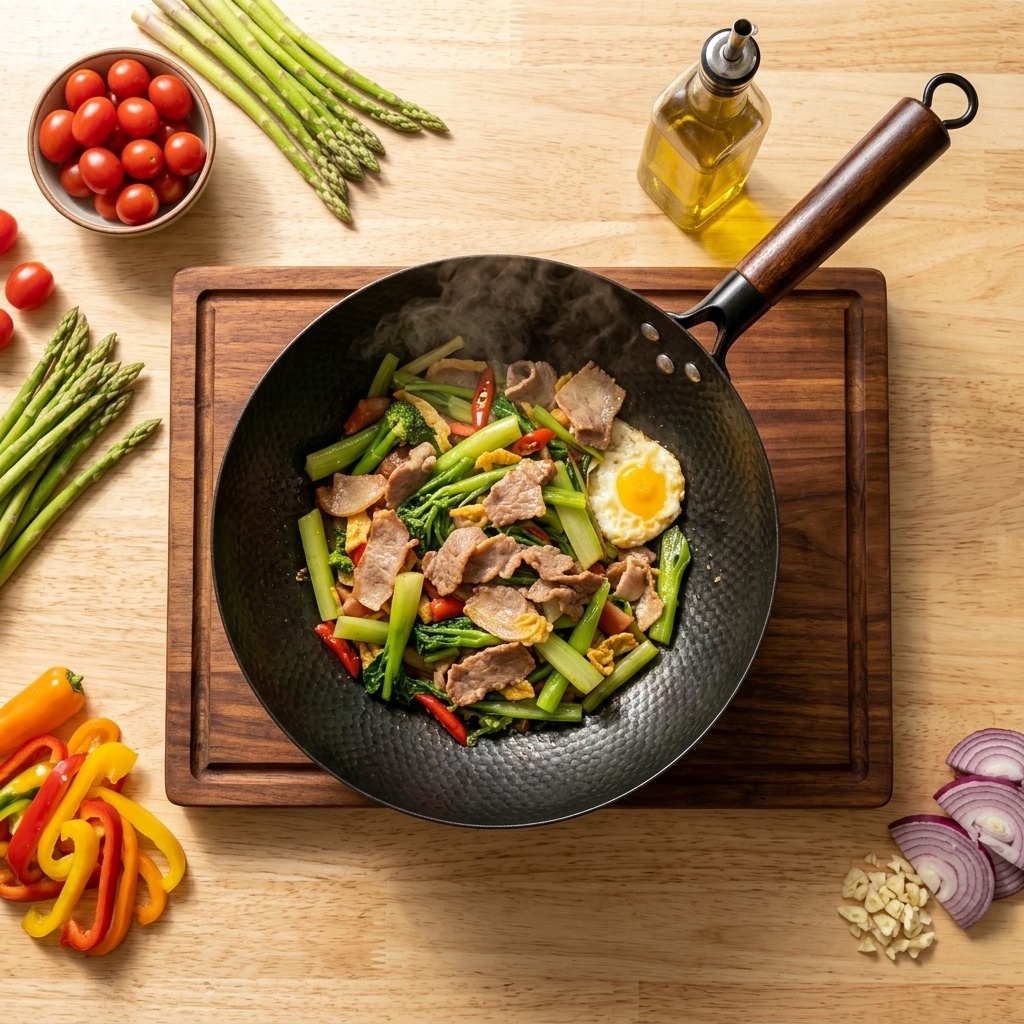
Nitrided carbon steel represents a massive technological leap for wok and fry pan exporters. Through a high-temperature thermochemical process (gas nitriding at ~570°C), nitrogen atoms diffuse into the surface layer of the carbon steel, creating an ultra-hard iron nitride (Fe₄N / Fe₃N) surface layer. This treatment provides:
- Natural Rust & Corrosion Resistance: Eliminates the need for synthetic chemical coatings while guarding against oxidation.
- High Thermal Tolerance: Safely withstands extreme stir-fry temperatures exceeding 400°C without risk of coating degradation.
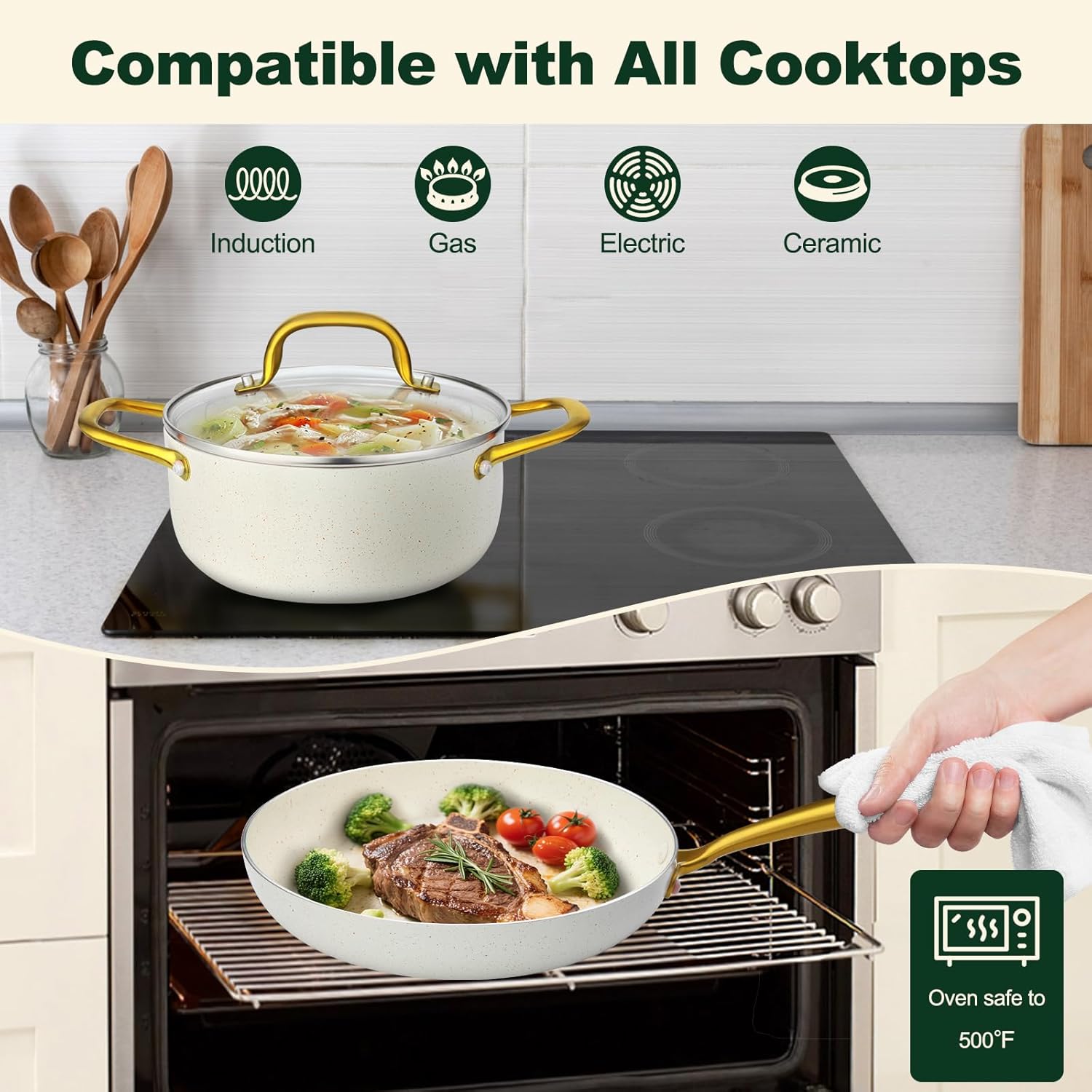
- Induction Magnetism: Carbon steel is natively ferromagnetic, ensuring optimal energy transfer across smooth induction cooktops without requiring secondary impact-bonded plates.
2.4 Tri-Ply Stainless Steel (Clad Multi-Layer Construction)
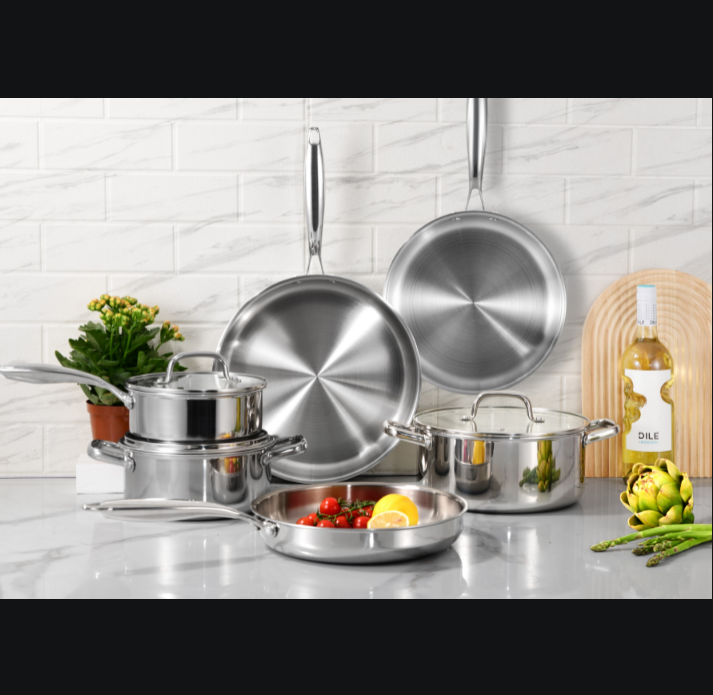
Tri-ply cookware combines an inner food-grade 304 (18/10) stainless steel cooking surface, a heavy 3003 aluminum thermal core for rapid heat distribution, and an outer magnetic 430 stainless steel layer for universal induction compatibility. When upgraded with an interior nonstick etched pattern or ceramic coating, tri-ply represents the top tier of professional kitchen performance.
| Substrate Type | Base Thickness | Thermal Distribution | Warp Resistance | Induction Mechanism | Target Retail Segment |
|---|---|---|---|---|---|
| Pressed Aluminum | 1.5 mm – 2.5 mm | Very Fast / High | Moderate | Impact-Bonded / Hole Plate | Mass Retail / Promotions |
| Forged Aluminum | 4.0 mm – 5.5 mm | Even / High Retention | Exceptional | Full-Friction / Spray Disc | Mid-to-High Retail / Specialty |
| Nitrided Carbon Steel | 1.2 mm – 2.0 mm | Fast / High Heat Searing | High (Heat-Treated) | Natively Ferromagnetic | Culinary Woks / Healthy Cooking |
| Tri-Ply Clad Stainless | 2.2 mm – 3.0 mm | Uniform Multi-Wall Heat | Maximum | Natively Magnetic Outer Layer | Professional / Premium OEM |
3. Coating Innovations: PTFE, Sol-Gel Ceramic, Granite Speckle & Plasma Matrixes
The interior nonstick coating system is the primary factor driving consumer satisfaction, nonstick longevity, and repeated sales. Leading Chinese manufacturers like Zhejiang MEIS Kitchenware utilize automated multi-stage spray tunnels and temperature-controlled curing ovens to apply advanced fluoropolymer and inorganic ceramic nonstick coatings.
3.1 Next-Generation Fluoropolymer Systems (PTFE / PFOA-Free)
Modern professional PTFE nonstick coatings use multi-layer application architectures (Primer Layer + Mid-coat with Hard Minerals + Topcoat Release Layer). While traditional coatings relied on PFOA surfactants during synthesis, modern high-end export factories strictly mandate 100% PFOA-free, PFOS-free fluoropolymer dispersions reinforced with titanium particles, silicon carbide (SiC), or synthetic diamond dust. These reinforcements increase abrasion resistance, enabling pans to endure over 20,000 to 50,000 cycles under standard dry-rub testing (BS EN 12983-1).
3.2 Inorganic Sol-Gel Ceramic Coatings (Eco-Friendly & High-Heat)
Sol-Gel ceramic coatings are created through the hydrolysis and condensation of alkoxide precursors, forming an inorganic silicon dioxide (SiO₂) ceramic network. Ceramic coatings offer key commercial advantages:
- Eco-Safety Messaging: Completely free of PTFE, PFAS, PFOA, lead, and cadmium; ideal for environmentally conscious eco-brands.
- Thermal Tolerance: Heat resistant up to 450°C (842°F) without blistering, smoking, or releasing toxic fumes.
- Vibrant Aesthetic Flexibility: Can be formulated in pastel tones, high-gloss white, cream, marble speckle, and rich metallic outer colors.
3.3 Granite & Marble Multi-Sprayed Speckle Coatings
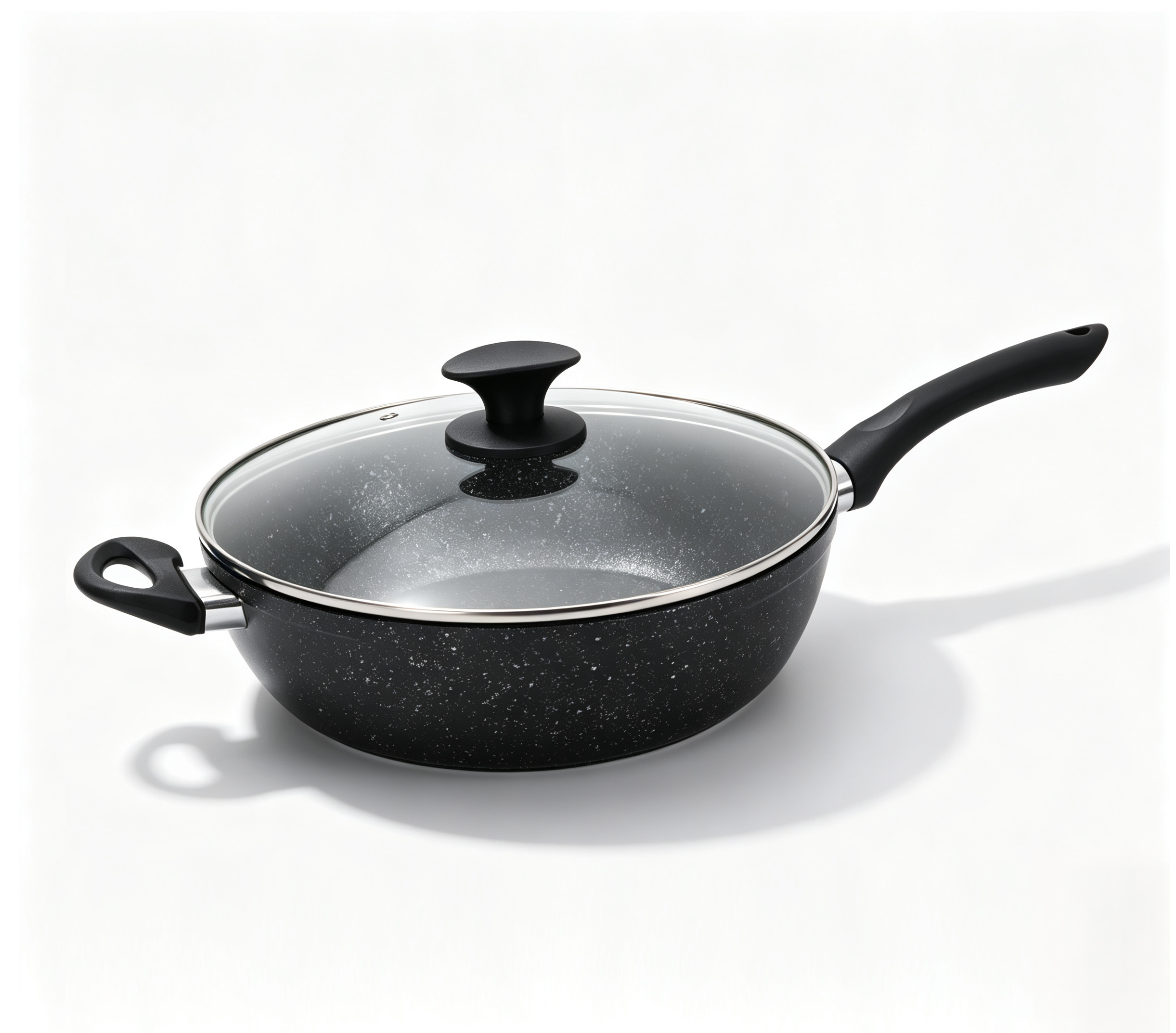
Granite and marble coatings utilize wet-on-wet multi-drop spraying techniques, layering contrasting decorative speckles over a reinforced base coat. Beyond their attractive stone-like aesthetic, the raised texture of the mineral speckles reduces direct surface contact with cooking utensils, boosting real-world scratch resistance and oil-release capabilities.
4. Future Sourcing & Engineering Trends (2025–2030 Procurement Guide)
For international buyers, brand owners, and supply chain managers, keeping ahead of global market shifts requires adopting emerging product design and packaging trends:
1. Removable Handle Systems
Detachable dual-latch handle mechanisms allow frying pans and saucepans to nest tightly. This reduces packaging volume by up to 50%, dramatically lowering ocean container freight costs per unit while doubling retail shelf space efficiency.
2. Universal Induction Base Engineering
The transition toward full-covered friction induction bottoms ensures rapid magnetic coupling across all induction hob brands, eliminating cold spots and preventing base disc detachment over time.
3. Thermo-Chromic Heat Indicators
Integrating silicone rings or handle inserts that change color when the pan reaches the optimal cooking temperature (180°C) adds functional value for modern consumer cookware lines.
5. Enterprise Profile & Manufacturing Rigor: Zhejiang MEIS Kitchenware Co., Ltd.
Located in the Dongnan Industrial Zone, Shuxi Street, Jinhua, Zhejiang, Zhejiang MEIS Kitchenware Co., Ltd. is a premier verified manufacturer and trading enterprise specializing in high-performance nonstick aluminum and carbon steel cookware. With over 20 years of deep industry expertise and an 18-year verified supplier presence on global B2B platforms, MEIS delivers turnkey OEM and ODM production for major importers, department store chains, e-commerce brands, and wholesale distributors worldwide.
Spanning an expansive factory footprint staffed by 105 skilled professionals, MEIS maintains complete quality control by operating all critical production stages in-house:
- Automated Mechanical Pressing: High-tonnage hydraulic stamping lines converting raw aluminum alloys and carbon steel coil into precise pan geometries.
- Advanced CNC Base Finishing: Precision lathing and CNC bottom grooving to ensure sub-millimeter flat tolerances across gas, electric, and induction bottoms.
- Surface Cleaning Tunnels: Multi-stage chemical degreasing, acid etching, and automated washing to guarantee optimal coating adhesion.
- Enclosed Spray Coating & Curing: Environmental spray booths applying ceramic, granite, marble, and PTFE multi-layer systems, cured in precise temperature-controlled tunnel ovens.
- Rivet & Weld Handle Assembly: Automated riveting and spot-welding stations for ergonomic bakelite, cast stainless steel, and soft-touch silicone handles.
To ensure strict quality standards, MEIS operates a fully equipped on-site QA testing laboratory. Every production batch undergoes comprehensive quality control testing before export release:
Salt Spray Corrosion Test
Continuous 5% salt fog exposure for 48–72 hours to verify that exterior paints, rim treatments, and handle rivets resist rust in humid coastal environments.
Handle Fatigue & Torsion Test
Cyclic vertical load lifting (over 15,000 cycles) and rotational torque application to ensure handle joints will not loosen or crack under heavy kitchen use.
Cross-Cut Adhesion Test
ISO 2409 lattice grid incision and pressure tape pull-off testing to confirm that internal nonstick layers are permanently bonded to the substrate.
6. Comprehensive B2B Sourcing FAQ: Expert Sourcing Guidance
Partner with a Top China Nonstick Cookware Manufacturer
Elevate your retail product line or private label brand with TÜV Rheinland verified manufacturing quality, certified non-toxic coatings, and competitive factory-direct pricing.