Verified Supply Catalog
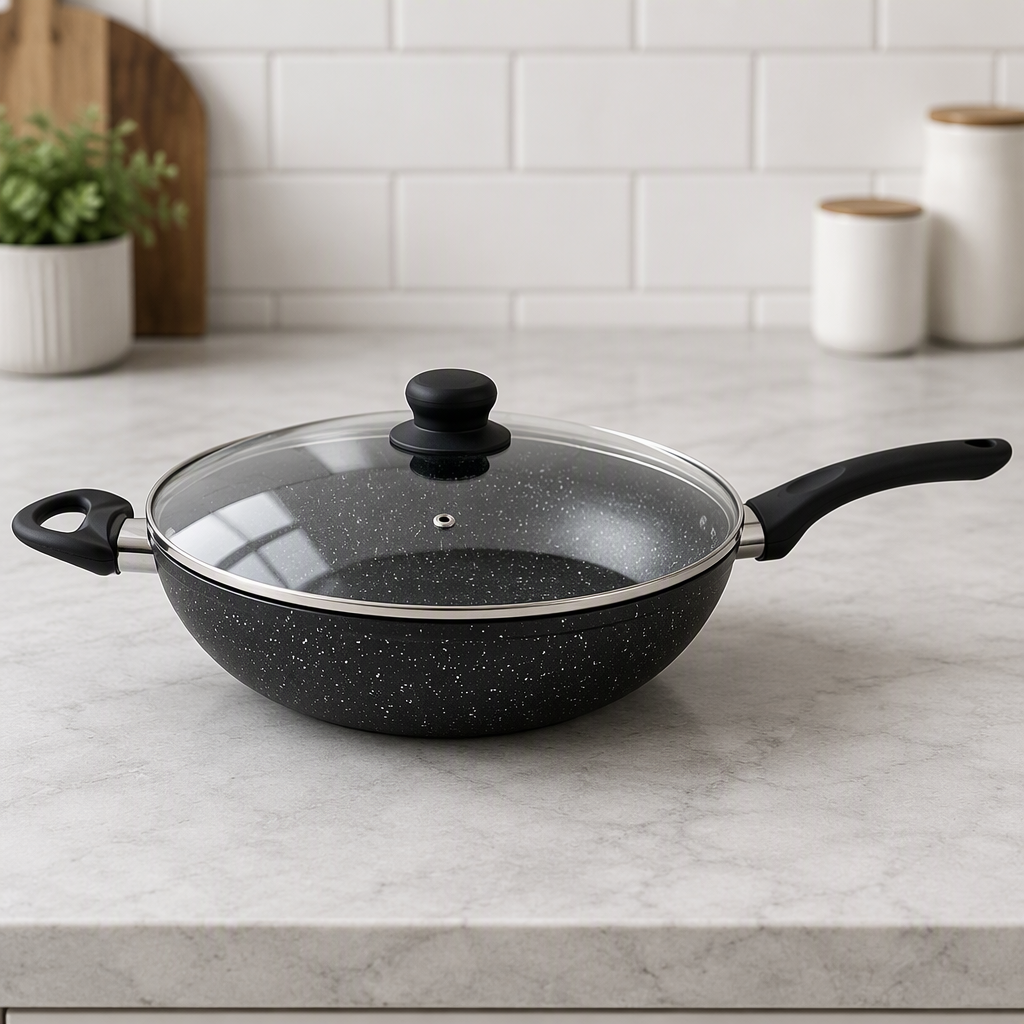
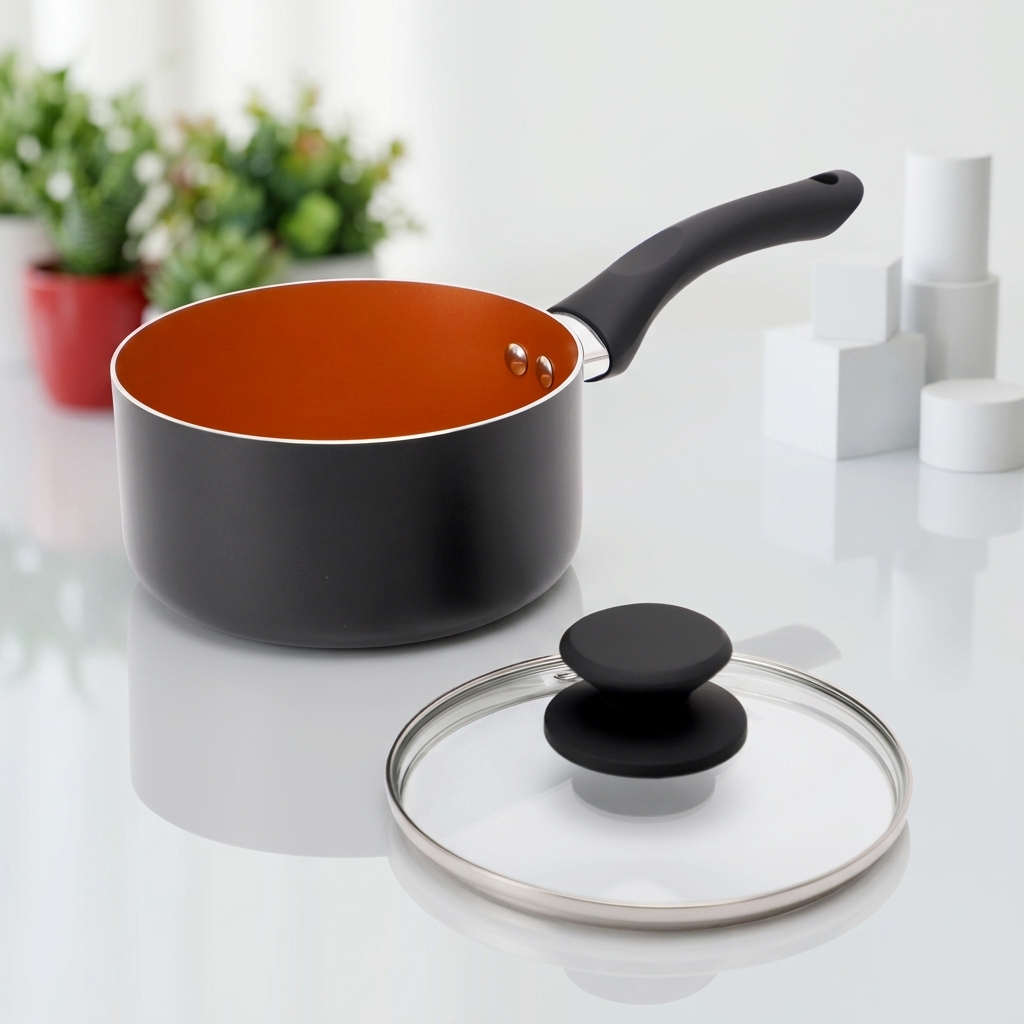
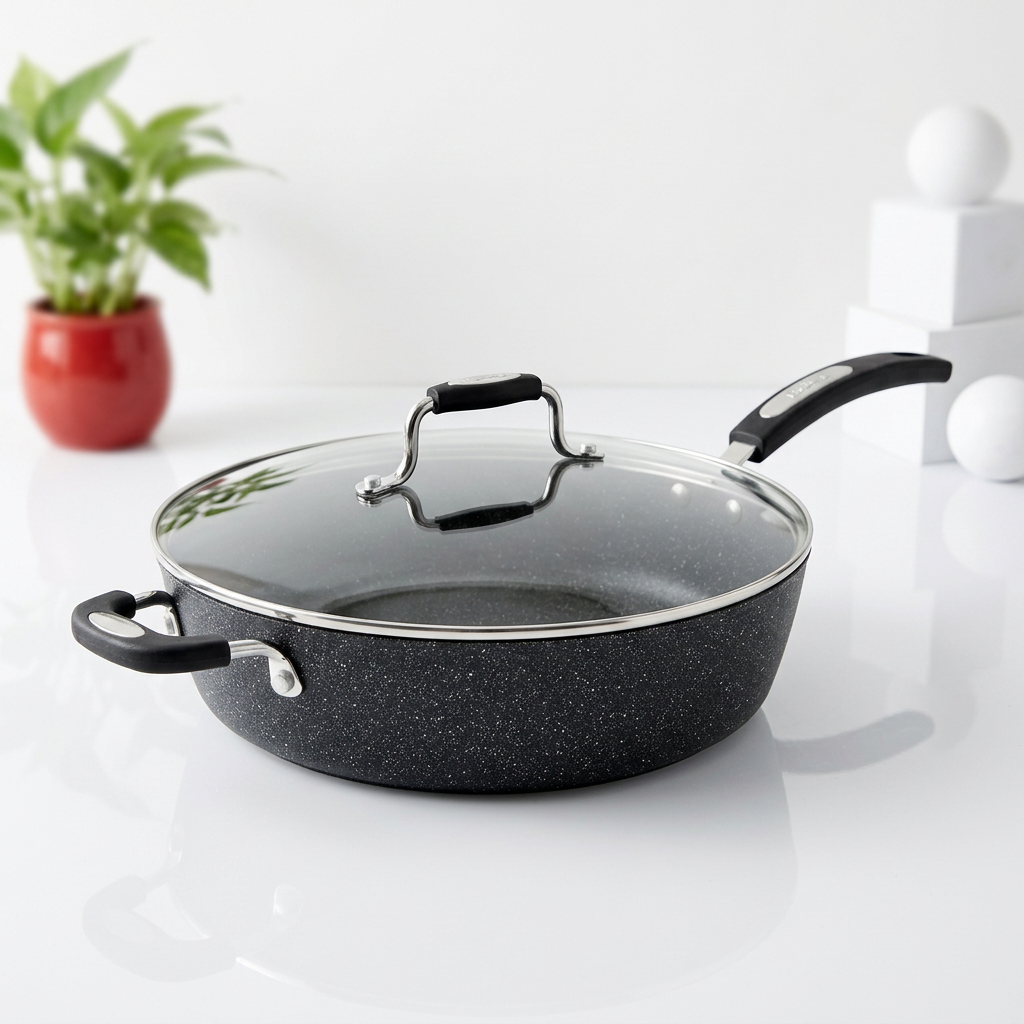
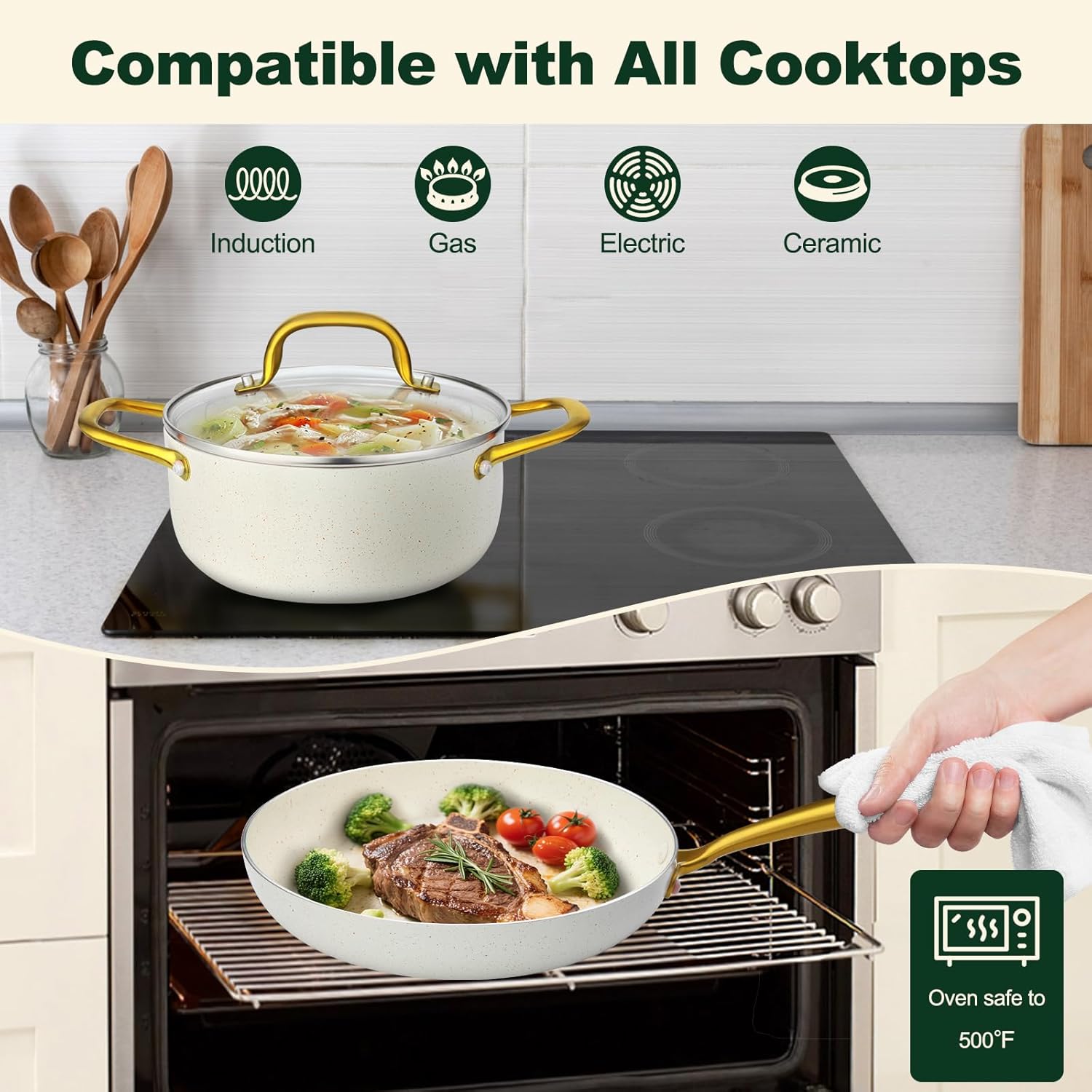
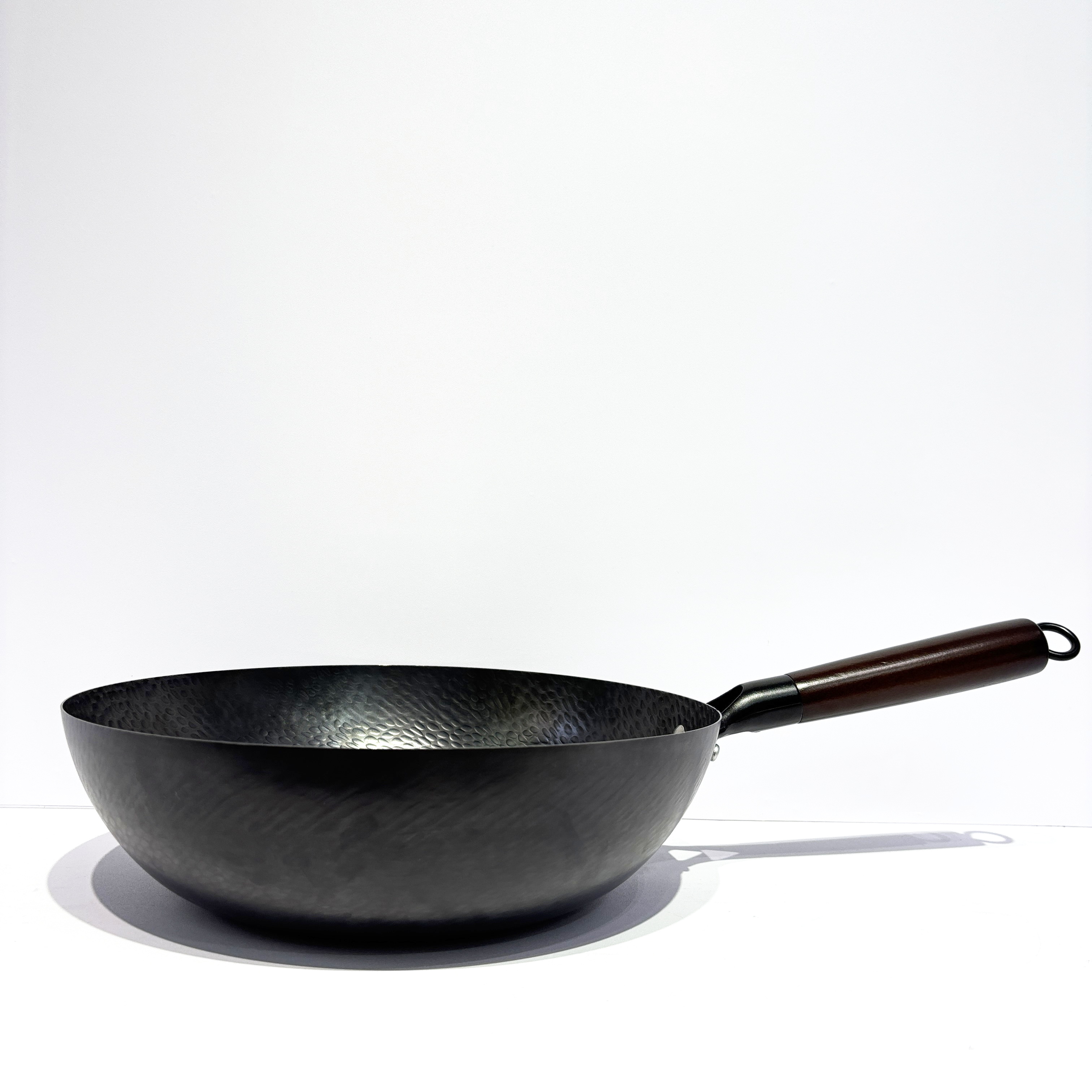
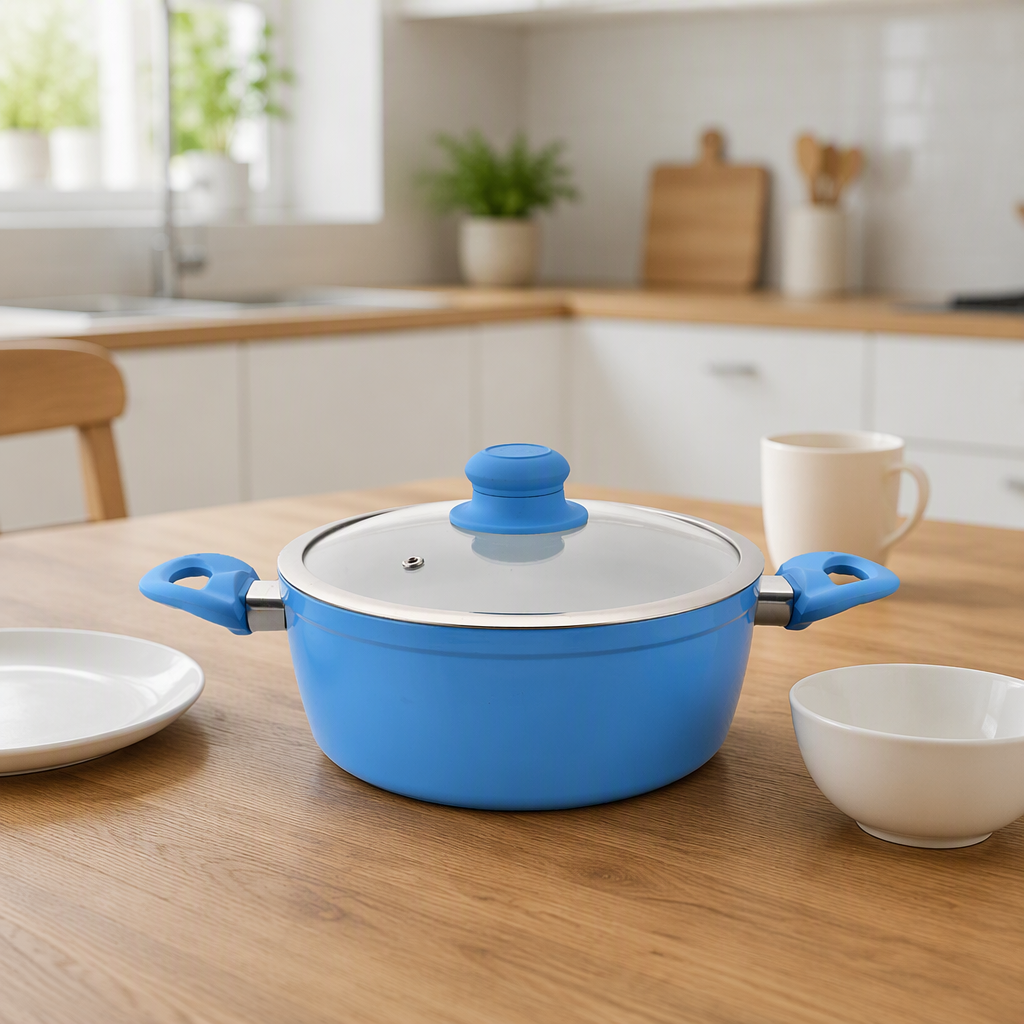
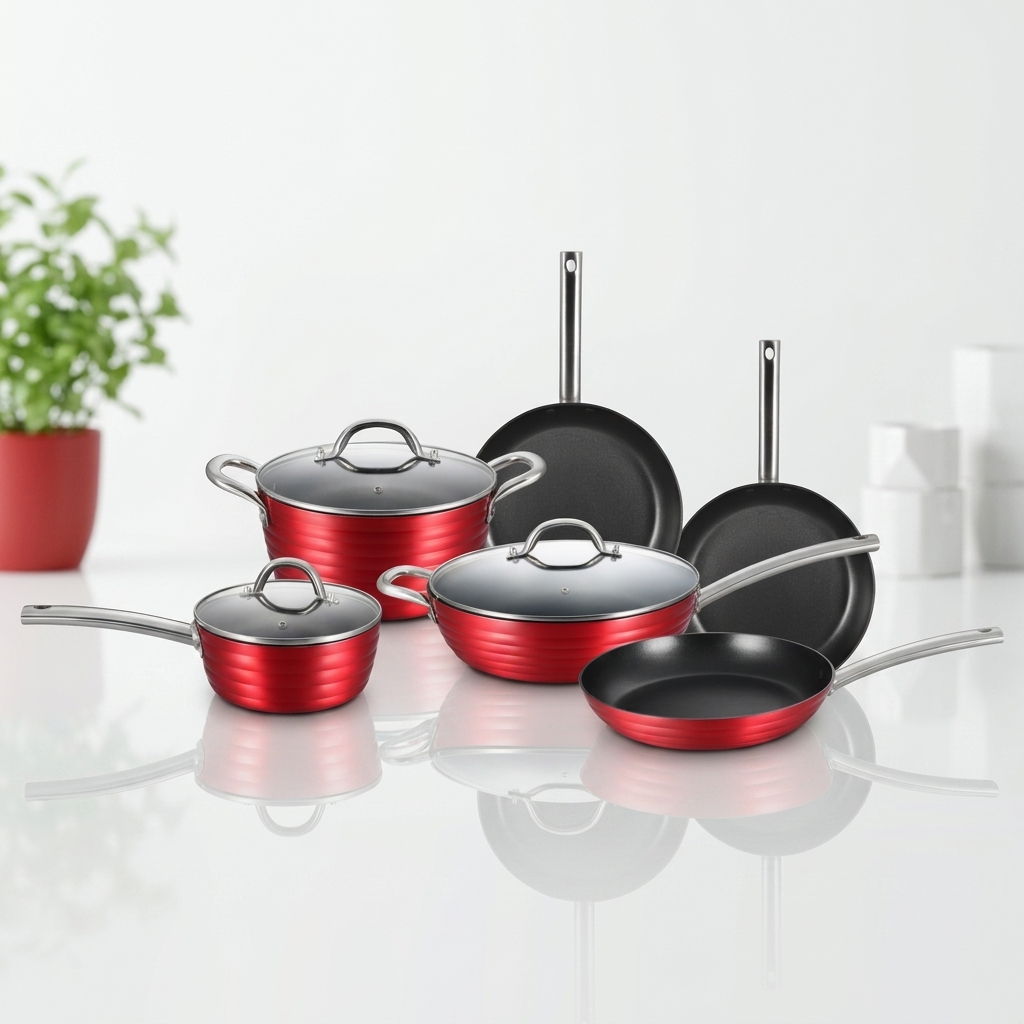
Featured Pressed & Forged Aluminum Cookware Systems
Directly manufactured on automated stamping and spray-coating lines. Optimized for high thermal transfer, mechanical durability, and international food contact compliance.
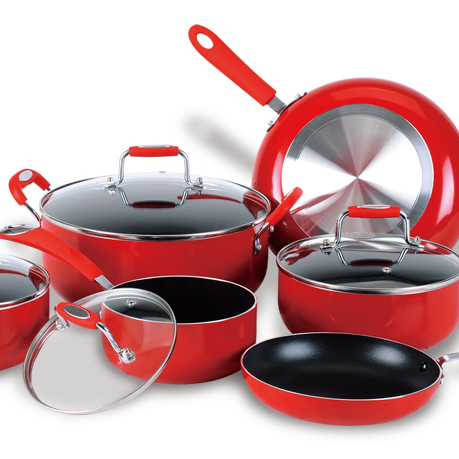
Manufacturer Qualifications & On-Site Audit
Why Zhejiang MEIS Kitchenware Leads China's Cookware Export Sector
Operating directly out of the Dongnan Industrial Zone, Shuxi Street, Jinhua, Zhejiang, China, Zhejiang MEIS Kitchenware Co., Ltd. represents two decades of industrial expertise in high-volume nonstick cookware manufacturing. Verified on-site by TÜV Rheinland, MEIS combines advanced cold-stamping presses with proprietary multi-layer nonstick spray coating systems.
20+
Years Manufacturing Experience
105
Verified Technical Personnel
TÜV
Rheinland On-Site Assessed
100%
In-House Production & Quality Checks
Certified Quality Assurance
Full compliance with ISO9001 quality management protocols. In-house testing facilities execute salt spray tests (ASTM B117), thermal shock resistance, cross-hatch coating adhesion (ISO 2409), and handle fatigue cycles (EN 12983-1).
Turnkey OEM & ODM Engineering
Supported by dedicated mold-making workshops, precision CNC lathes, and heavy hydraulic stamping presses. We transition 2D/3D technical drawings into custom mass-production prototypes within 14 business days.
Global Trade & Regulatory Compliance
Extensive export history serving major retail chains and private label importers across North America, the EU, the Middle East, and Asia. Fully aligned with EU REACH, US FDA 21 CFR 175.300, and LFGB standards.
Information Gain Note for Procurement Directors: Unlike trading intermediaries, MEIS executes raw material testing on every incoming batch of 3003-series aluminum discs. This guarantees grain structure uniformities that prevent pan warping under extreme induction heating thermal shocks.
Technical Engineering Whitepaper
Physics & Metallurgy of Pressed Aluminum Frying Pan Manufacturing
Understanding the mechanical difference between pressed, forged, and cast aluminum is critical for B2B buyers seeking to balance landed cost, weight performance, and retail positioning.
1. Cold-Stamping (Pressing) Metallurgy
Pressed aluminum cookware is produced by stamping high-purity aluminum discs (predominantly 1050 or 3003 aluminum alloy) through high-tonnage hydraulic presses ranging from 600 to 1200 tons. The cold-drawing process forces the flat sheet disc into a 3D pan matrix.
Because aluminum exhibits exceptional thermal conductivity (~220 W/m·K), pressed aluminum pans transfer heat up to 14 times faster than stainless steel (16 W/m·K). This rapid kinetic energy distribution minimizes localized hot spots, making pressed pans the ideal candidate for fast-response frying and delicate egg preparation.
2. Gauge Thickness Standardization
In commercial procurement, disc thickness determines structural integrity. MEIS manufactures pressed pans across three primary commercial thickness bands:
- 2.0mm Gauge: Ultra-lightweight, targeted at promotional supermarket sets and budget retail programs. Fast thermal ramp-up.
- 2.5mm Gauge: The optimal balance of cost and warp resistance for mid-market retail. Excellent structural memory during temperature spikes.
- 3.0mm+ Heavy Gauge: Commercial-grade pressed pans engineered to resist bottom thermal bowing under heavy culinary use.
3. Surface Pre-Treatment & Sandblasting
Coating adhesion failure (peeling/flaking) is the single largest cause of customer returns in nonstick cookware. Top-tier factories solve this at the molecular level using multi-stage surface preparation:
Stage A: Alkaline Degreasing & Acid Etching
Removes drawing lubricants and oxides from the stamped aluminum shell, exposing pristine metal atoms.
Stage B: Mechanical Sandblasting (Grit Blasting)
High-velocity corundum abrasive blasting creates micro-roughness (Ra 3.5 - 5.0 µm) on the interior substrate, providing mechanical keying for the primer coat.
Stage C: Sintering Thermal Profiles
Coating layers (Primer, Mid-coat, Top-coat) are cured in continuous tunnel ovens at strict temperature curves (380°C - 420°C for fluoropolymers, 280°C for inorganic Sol-Gel ceramics).
Comparative Procurement Matrix
Pressed vs. Forged vs. Cast Aluminum Cookware
Compare key engineering parameters to select the correct product line for your brand's target demographic and price point.
| Evaluation Metric | Pressed Aluminum | Forged Aluminum | Die-Cast Aluminum |
|---|---|---|---|
| Forming Process | Cold hydraulic stamping from sheet disc | Heavy forging press shaping variable rim/base | Molten aluminum injected under high pressure |
| Wall / Base Structure | Uniform wall and base thickness throughout | Thick base (4.0-5.0mm) with thinner side walls | Variable wall thickness with integrated handles/lugs |
| Thermal Distribution | Ultra-fast thermal response rate | High thermal mass; exceptional heat retention | Maximum thermal mass; eliminates all hot spots |
| Warp Resistance | Moderate (High in 3.0mm+ gauges) | High (Thick base structural stability) | Maximum structural rigidity |
| Weight Profile | Lightweight & Ergonomic | Medium to Heavy | Heavy / Premium solid feel |
| Tooling & Mold Cost | Low tooling cost / High speed tooling setup | Moderate mold tooling cost | High steel injection mold investment |
| Target Retail Segment | Supermarkets, Volume Promos, Starter Sets | Mid-to-High Retail, Specialty Chains, E-commerce | Luxury Commercial & Premium Retail Brands |
Market Intelligence & Industry Trends
Future Procurement Trends in China's Nonstick Cookware Sector
Global regulatory changes and consumer preferences are driving a paradigm shift in how frying pans are manufactured and specified by professional procurement teams.
1. The PFAS / PFOA Phase-Out & Next-Gen Sol-Gel Ceramics
With the European Chemicals Agency (ECHA) advancing universal PFAS restrictions and the US EPA lowering health advisories, global buyers are pivoting toward 100% PFAS-free ceramic nonstick coatings. Modern Sol-Gel ceramic coatings (derived from silica sand) offer heat resistance up to 450°C without risk of toxic fume release or environmental persistence.
2. Energy-Efficient Impact-Bonded Induction Bases
As induction cooktops dominate European and Asian households, standard flame-only cookware is rapidly losing market share. Factories are adopting high-pressure friction-welded or impact-bonded stainless steel induction discs (430-grade magnetic steel). These bases ensure flat heat conduction, fast energy transfer, and universal stove compatibility.
3. Recycled Aluminum & Sustainable Supply Chains
Corporate ESG mandates require transparency in raw material origin. Leading Chinese suppliers are incorporating up to 100% post-consumer recycled aluminum alloy in pressed pan production. Recycling aluminum consumes 95% less energy than primary smelting, dramatically lowering the overall carbon footprint per unit.
Standard Operating Procedures
End-to-End Quality Control & OEM Sourcing Workflow
How Zhejiang MEIS Kitchenware manages risk, maintains dimensional consistency, and ensures zero-defect shipments for international private-label clients.
In-House Laboratory Testing Metrics
- Cross-Hatch Adhesion Test: ISO 2409 Class 0 Rating Pass
- Salt Spray Corrosion Test: 5% NaCl Solution, 72+ Hours Pass
- Handle Fatigue Resistance: EN 12983-1 (15,000 Up-Down Cycles) Pass
- Thermal Shock Endurance: 200°C to 20°C Cold Water Dip (10 Cycles) Pass
- Coating Thickness Measurement: Magnetic XRF Gage (25 - 40 µm) Pass
6-Step Private Label Procurement Journey
- Technical Brief & CAD Review: Client submits specifications, target price points, pan dimensions, and handle ergonomics.
- Tooling & Mold Prototyping: MEIS engineers cut press molds using CNC lathes and perform rapid physical sampling.
- Sample Golden Sign-off: Physical pan samples undergo lab testing and client aesthetic approval before mass execution.
- Mass Stamping & Automatic Coating: Aluminum discs are pressed, sandblasted, sprayed in automated booths, and sintered.
- Assembly & Inline Inspection: Handles, helper grips, glass lids, and induction plates are attached under strict QA oversight.
- Final Export Packaging: Customized color boxes, barcode labeling, drop-test verified cartons, and container loading.
Frequently Asked Questions
B2B Buyer Knowledge Base & FAQ
Addressing critical technical, logistical, and commercial inquiries for professional kitchenware buyers.
Is Zhejiang MEIS Kitchenware a direct manufacturer or a trading company?
Zhejiang MEIS Kitchenware Co., Ltd. is a verified custom manufacturer operating its own pressing, CNC, spray-coating, and assembly lines in Dongnan Industrial Zone, Shuxi Street, Jinhua, Zhejiang, China. The factory facility has been assessed on-site by TÜV Rheinland, providing complete transparency and middleman-free direct factory pricing.
What is the Minimum Order Quantity (MOQ) for OEM/ODM orders?
Minimum Order Quantities depend on the level of customization and pan size. Standard pressed aluminum frying pans typically start from 1,000 to 3,000 pieces per size/colorway. For custom cookware sets, MOQs generally begin at 1,000 sets. Selected stock-in-shell items may be made available in smaller trial quantities (from 50 to 500 pieces) upon inquiry.
What nonstick coating brands and options can be specified?
We offer a comprehensive portfolio of nonstick systems including PTFE-based multi-layer coatings, 100% PFOA/PFAS-free Sol-Gel ceramic coatings, granite/marble speckled decorative coatings, and titanium-reinforced commercial nonstick systems. We partner with tier-1 global coating suppliers (such as Whitford, ILAG, Greblon, and domestic high-performance brands) based on client specification.
How do you ensure nonstick pans do not warp on high-heat induction cooktops?
Warping is caused by uneven thermal expansion between the aluminum body and the stainless steel induction plate. MEIS mitigates this by using high-density 3003 aluminum alloy, optimizing base thickness ratios (3.0mm+ recommended for induction), and utilizing high-tonnage impact-bonding presses that fuse the magnetic disc seamlessly into the aluminum substrate.
What compliance documentation and food safety testing reports do you provide?
All MEIS cookware products can be certified for compliance with major international food contact standards, including US FDA 21 CFR 175.300, European Union (EU) No 10/2011, German LFGB, and French DGCCRF regulations. Official test reports from third-party laboratories such as SGS, TÜV Rheinland, or Intertek can be issued per production lot.
What is the lead time for tooling, sampling, and mass production?
Standard sample preparation takes 7 to 10 days. Custom mold creation for new pan shapes requires 15 to 25 days. Once pre-production samples are approved and deposit confirmed, standard mass production lead time is 35 to 45 days, depending on order volume and packaging complexity.
Partner with a Verified China Pressed Aluminum Pan Manufacturer
Elevate your cookware brand with precision engineering, competitive landed pricing, and TÜV Rheinland-verified manufacturing quality. Contact our engineering team today for instant quotes and custom sample kits.