High-Efficiency Commercial Pots & Specialized Cookware
Direct-from-manufacturer aluminum, nitrided carbon steel, and composite stock pots designed for high-turnover culinary institutions and demanding galley spaces across La Condamine.
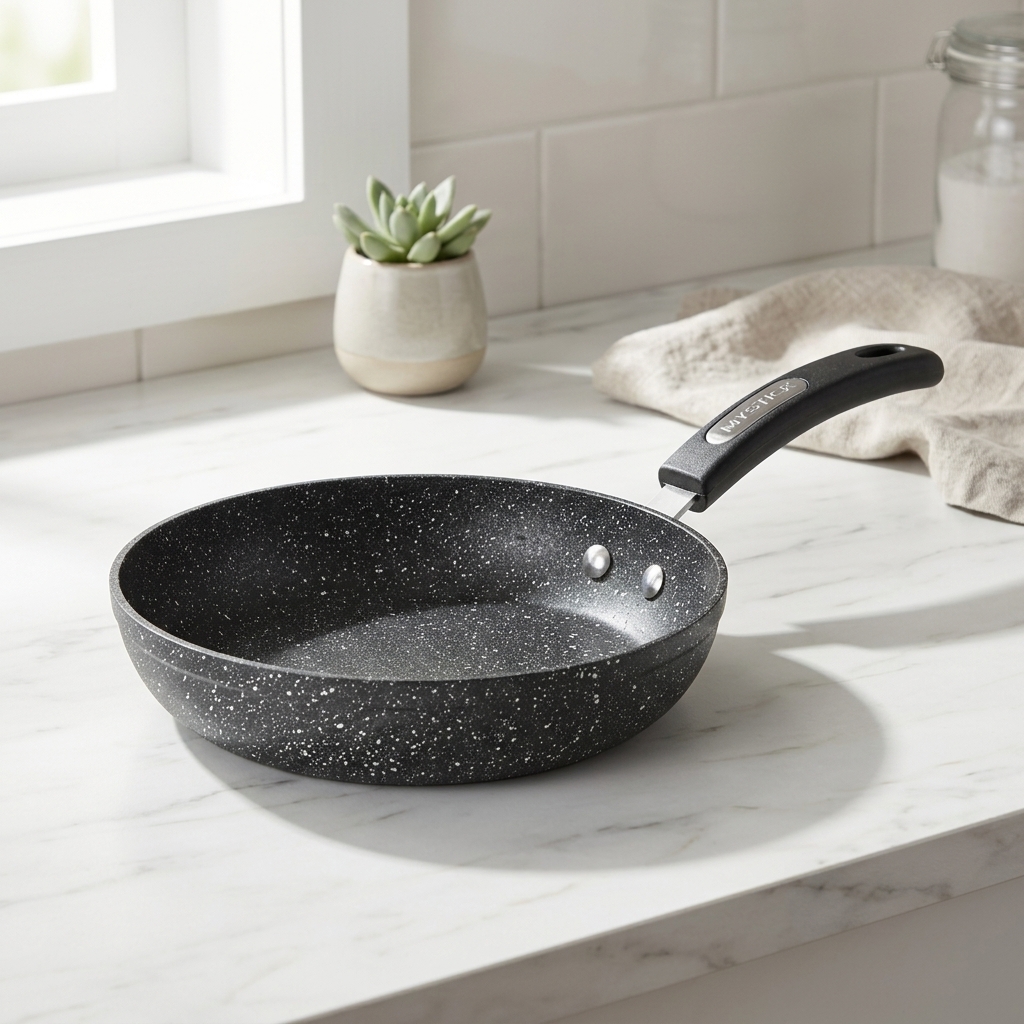

The Crucial Role of Commercial Aluminum Stock Pots in La Condamine
Analyzing thermal dissipation dynamics, maritime galley spatial constraints, and high-volume broth production along Monaco’s historic commercial hub.
Nestled directly behind Port Hercule, La Condamine represents the vibrant commercial, gastronomic, and logistical beating heart of the Principality of Monaco. Unlike the residential tranquillity of Monte-Carlo or Fontvieille, La Condamine is defined by rapid commercial circulation, high-density culinary service, and critical provisioning for both superyacht charter fleets and elite Mediterranean restaurants. In this intense culinary ecosystem, kitchen hardware cannot merely be functional; it must be thermally superior, structurally unyielding, and impeccably compliant with international health and maritime safety protocols.
Commercial aluminum stock pots remain the undisputed workhorses of French and Monegasque professional kitchens. From extracting collagen from langoustine carcasses for a coastal *bouillabaisse* to running 36-hour veal reductions (*fond de veau*), professional chefs rely on aluminum's thermodynamic superiority. Aluminum boasts a thermal conductivity coefficient of approximately 205 W/(m·K)—nearly fourteen times that of austenitic stainless steel (~15 W/(m·K)). This thermal efficiency eliminates localized scorch rings ("hot spots"), expedites rolling boils under low gas or induction consumption, and drastically compresses turnaround times during peak Riviera dining hours.
However, supplying stock pots to the La Condamine market poses unique engineering challenges. Sourcing agents, ship chandlers, and executive head chefs demand cookware that navigates severe saline atmospheric exposure, stringent Monaco zero-waste environmental regulations, high-amperage induction cooktops, and the rigorous mechanical impacts of compact nautical galleys. As a premier original equipment manufacturer (OEM), Zhejiang MEIS Kitchenware bridges heavy-gauge metallurgy with bespoke production lines to deliver export-grade solutions tailored explicitly to this luxury micro-market.
Localized Application Scenarios in the Monegasque Sector
Engineered to perform seamlessly from narrow superyacht bridge galleys to Michelin-starred preparation basements along Rue Princesse Caroline.
Superyacht & Mega-Yacht Offshore Galleys
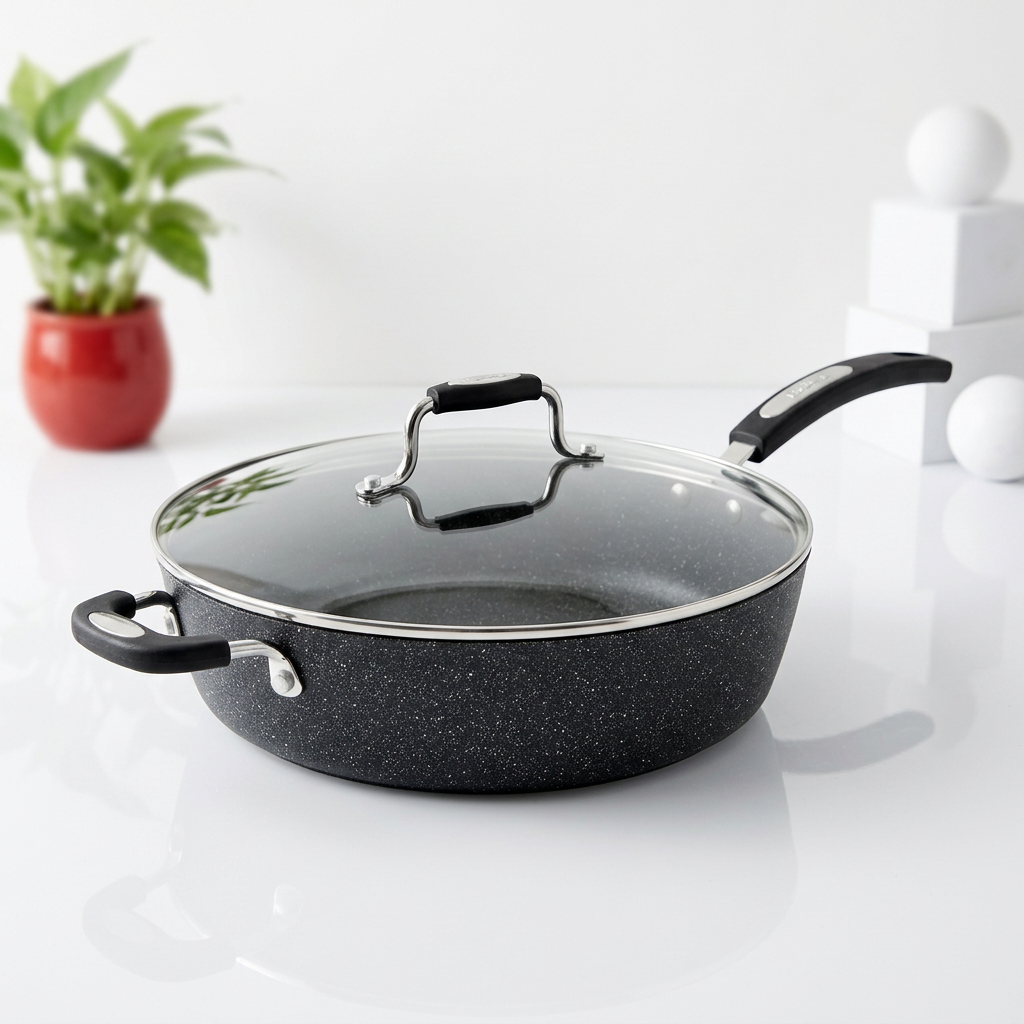
Vessels berthed at Port Hercule face confined galley spaces where energy conservation and safety against rolling waters are mandatory. Our deep-profile aluminum stock pots feature heavy-gauge cold-forged walls (up to 5.0mm) and reinforced helper handles anchored by aeronautical solid rivets. Fitted with anti-splash tapered rims and magnetic base plates, they stabilize stocks during maritime transits while responding instantaneously to induction temperature dials.
Port-Side Brasseries & High-Volume Bistros
Establishments flanking the Marché de la Condamine operate relentless lunchtime rotations serving Mediterranean seafood stews, pasta reductions, and risottos. The rapid thermal responsiveness of MEIS-engineered pressed aluminum allows rapid re-boiling during rush periods without scorching viscous milk- or tomato-based stocks. Their balanced weight-to-volume ratio protects kitchen staff from repetitive strain injury (RSI).
Boutique Catering & Grand Prix Private Suites
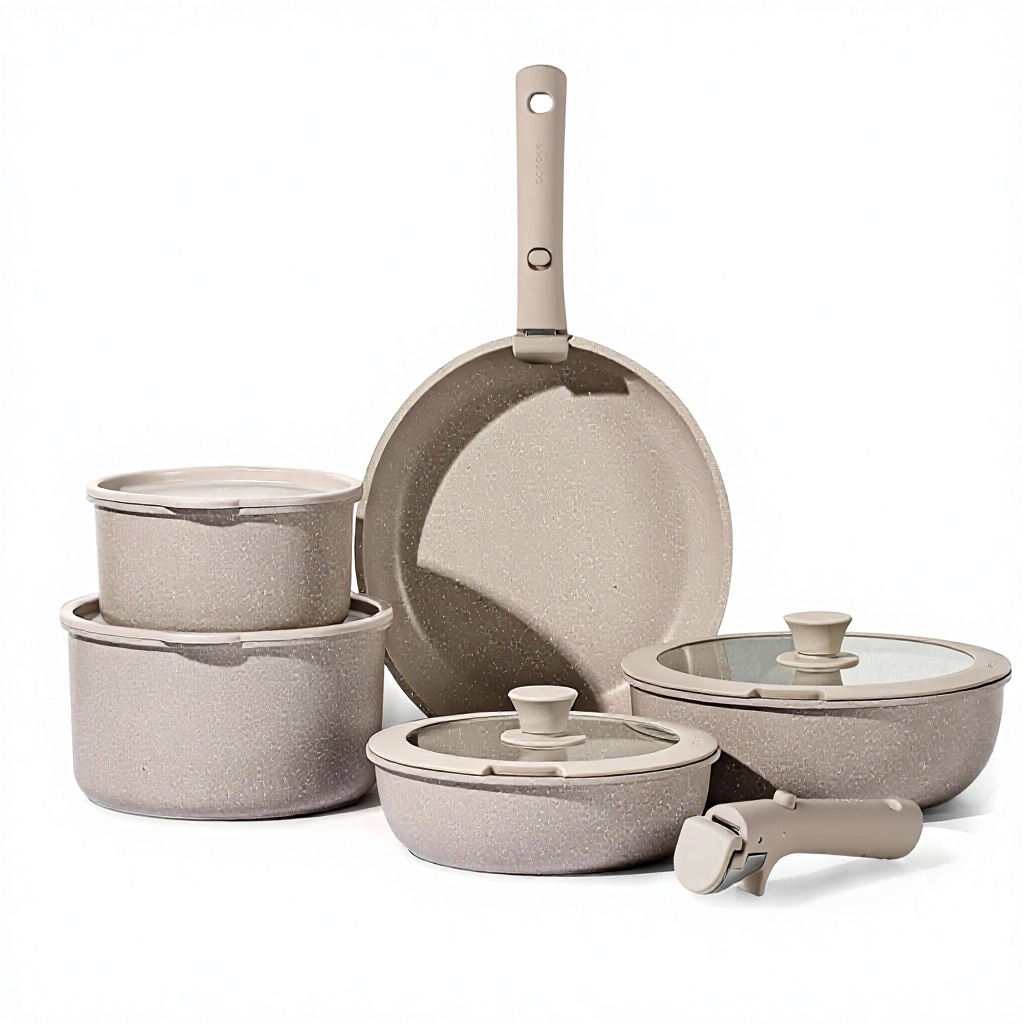
During flagship gatherings such as the Monaco Yacht Show and the Formula 1 Grand Prix de Monaco, private catering teams mobilize pop-up preparation facilities across La Condamine penthouses and hospitality tents. Our stackable cookware footprints, detachable handle architectures, and hard-wearing multi-layer ceramic/marble exterior coatings deliver aesthetic luxury presentation combined with commercial-kitchen thermal endurance.
Comparative Engineering: Aluminum Alloys vs Alternative Metals
A rigorous technical breakdown evaluating alloy temper, thermal diffusion coefficients, and lifecycle durability under commercial Mediterranean workloads.
| Metallurgical Parameter | MEIS Forged Aluminum (3003-H24) | Pressed Pure Aluminum (1050/3003) | 304 Commercial Stainless Steel | Tri-Ply Clad (SS/Alu/SS) |
|---|---|---|---|---|
| Thermal Conductivity | 190–210 W/(m·K) (Ultra-Fast) | 210–225 W/(m·K) (Fastest) | 14–16 W/(m·K) (Poor / Prone to Hot Spots) | 45–65 W/(m·K) (Moderate) |
| Vessel Structural Rigidity | Exceptional (Thick Base, Slender Rim) | Moderate (Prone to drop-dent under heavy load) | Superior Yield Strength | High Structural Stability |
| Weight-to-Capacity Ratio | Optimized (Ideal for Marine Mobility) | Ultra-Lightweight | Heavy (Fatigue-inducing in 20L+ sizes) | Very Heavy (Costly freight) |
| Saline Atmospheric Resistance | Hard-Anodized Sealed Porosity | Requires Coated Passivation | Susceptible to pitting if not 316-grade | Surface Resistant / Exposed Edges Vuln. |
| Induction Efficiency | Magnetic Impact-Bonded Plate (430 SS) | Induction Spray-Clad Disk | Inherent (if magnetic ferritic grade) | High Induction Coupling |
| Total Lifecycle Cost | Lowest (Energy efficient + Durable) | Low (Budget promotional programs) | Moderate to High Initial Investment | Highest Capital Expenditure |
The Metallurgical Science of Heat Transfer in Large-Volume Stock Pots
In a 20- to 50-liter stock pot, the thermal boundary layer between the internal metal surface and viscous cooking liquids represents the primary barrier to energetic efficiency. When simmering dense gelatinous consommés or high-starch Mediterranean bisques, stainless steel's sluggish lateral heat conduction creates localized heat spikes immediately above burner jets or induction coils. This triggers Maillard burning, spoiling hundreds of euros worth of ingredients.
Our factory utilizes cold-drawn 3003-series manganese-aluminum alloy. Manganese addition increases tensile strength by 20% compared to pure series 1100 aluminum without degrading thermal transfer. By utilizing CNC profiling to engineer a 4.5mm base tapering to a 2.8mm structural sidewall, MEIS stock pots direct caloric energy upward through natural convective circulation. The result is a 32% acceleration in reduction times and an estimated 28% drop in kitchen utility gas consumption across commercial setups in La Condamine.
Emerging Trends Reshaping Cookware Procurement in Monaco
Strategic procurement directors and culinary executives in La Condamine are adjusting purchasing metrics around four structural shifts.
1. Accelerated Transition to Pure All-Induction Facilities
Due to strict fire-prevention codes governing Monaco historic basements and modern luxury yachts, open-flame gas installations are systematically being retired in favor of high-kilowatt commercial induction surfaces. Cookware must possess laser-flat, thermally bonded magnetic ferritic bases that do not deform, delaminate, or buzz at frequencies exceeding 24 kHz.
2. Zero-PFAS & REACH Regulatory Mandates
With the European Chemicals Agency (ECHA) and Monegasque sanitization decrees phasing out persistent per- and polyfluoroalkyl substances, La Condamine culinary operations demand completely certified PFAS-free, PTFE-free, and PFOA-free interior finishes. Natural ceramic sol-gel matrices and nitrided mineral-infused plasma coatings represent the new benchmark for high-release commercial simmering.
3. Marine-Grade Saline Corrosion Passivation
Vessels docked in Port Hercule experience ambient marine humidity saturated with sodium chloride crystals. Standard aluminum cookware quickly exhibits microscopic pitting corrosion. The local market now favors specialized hard-anodized coatings (exceeding 35 microns) and titanium-reinforced ceramic exteriors that seal the porous aluminum substrate against oxidation and aggressive cleaning detergents.
4. Modular Compact Storage Architecture
In coastal galleys and historical architecture where every cubic centimeter is at a premium, monolithic stock pots with oversized protruding handles are obsolete. The trend has pivoted toward nested sets with ergonomic helper loops, detachable handles, and flat tempered-glass or stackable aluminum lids with silicone rim dampening to prevent rattling under engine vibration.
Why Sourcing from Zhejiang MEIS Kitchenware Delivers Strategic Value
Over two decades of precision manufacturing, certified engineering, and specialized export capabilities built for Europe’s premier hospitality markets.
TÜV Rheinland On-Site Verified Facility
Located in the Dongnan Industrial Zone of Jinhua, Zhejiang, our enterprise operates across fully assessed manufacturing facilities audited directly by TÜV Rheinland. We do not act as middlemen or trading brokers. Every pot, pan, and handle mechanism is pressed, machined, coated, assembled, and packed in-house under strict ISO9001 quality frameworks.
20+ Years OEM/ODM Technical Expertise
Backed by two decades of cookware production and an 18-year verified track record on global platforms, our 105-member industrial workforce transforms client concepts into finished products. With internal CNC tooling, lathe machinery, and rapid prototyping molds, we decrease the lead time from preliminary blueprint to gold-standard sampling by up to 40%.
Rigorous In-House Physical & Chemical Testing
Every production lot undergoes rigorous laboratory verification before palletization: continuous 5% neutral salt spray chamber exposure (checking marine atmospheric resilience), handle torsion and fatigue cycle testing, pneumatic thrust resistance tests, and cross-hatch adhesion evaluations according to ISO 2409 standards.
Frequently Asked Questions by Sourcing Agents in La Condamine
Direct answers concerning compliance, logistics, minimum order commitments, and metallurgical engineering.
Yes. We integrate an automated high-tonnage thermal stamping line that impact-bonds a 430-series ferritic stainless steel perforated disc into the aluminum pot base. This design prevents thermal separation or delamination during high-frequency heating, guaranteeing broad compatibility across 400V 3-phase commercial induction ranges used on superyachts and high-end restaurant kitchens in Monaco.
Commercial sea-freight shipments depart from Ningbo or Shanghai Port directly to the Port of Fos-sur-Mer (Marseille) or Genoa, with a standard ocean transit of 24–28 days. From there, inland bonded transit moves smoothly across the border via Nice directly into La Condamine or Fontvieille. For fast-turnaround culinary events or emergency superyacht charters, air cargo directly to Nice Côte d’Azur Airport (NCE) is readily coordinated.
Pure aluminum is susceptible to reactivity when cooking highly acidic tomato broths, red wine marinades, or citrus reductions. For commercial applications in La Condamine, our factory engineers either deep electrolytic hard-anodizing (which seals the raw aluminum behind an inert aluminum oxide sapphire layer) or multi-layer inorganic ceramic matrices that are 100% inert, non-leaching, and fully compliant with EU Regulation (EC) No 1935/2004 and DGCCRF standards.
Standard OEM production runs (custom pantone exterior colors, laser-engraved luxury vessel emblems, laser-marked interior liquid measurement lines in liters/quarts) start at 1,000 to 1,500 units per size specification. For custom mold tooling designs or proprietary helper handle configurations, tooling amortization models are calibrated over 3,000 units, with trial sample quantities provided for technical validation.
Initiate Your Direct Factory Procurement Strategy
Whether configuring tailored cookware inventories for superyacht provisioning, equipping high-turnover luxury bistros, or establishing a private label collection for European retail distribution, our senior engineering staff provides immediate technical and quotation support.