High-Performance Nonstick Cookware & Bakeware Selection
Precision-engineered, TÜV Rheinland verified aluminum and carbon steel cookware solutions optimized for high thermal efficiency and tropical market resilience.
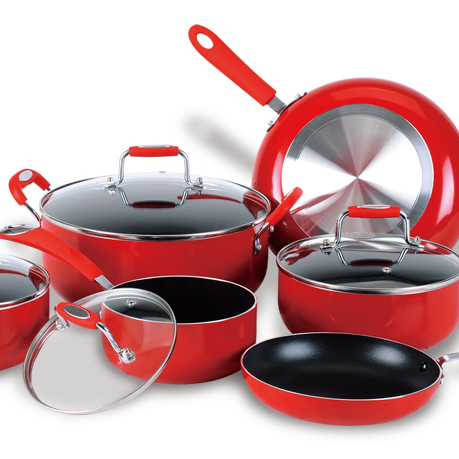
Fashion Kitchen Set of Nonstick Cookware
View Product Details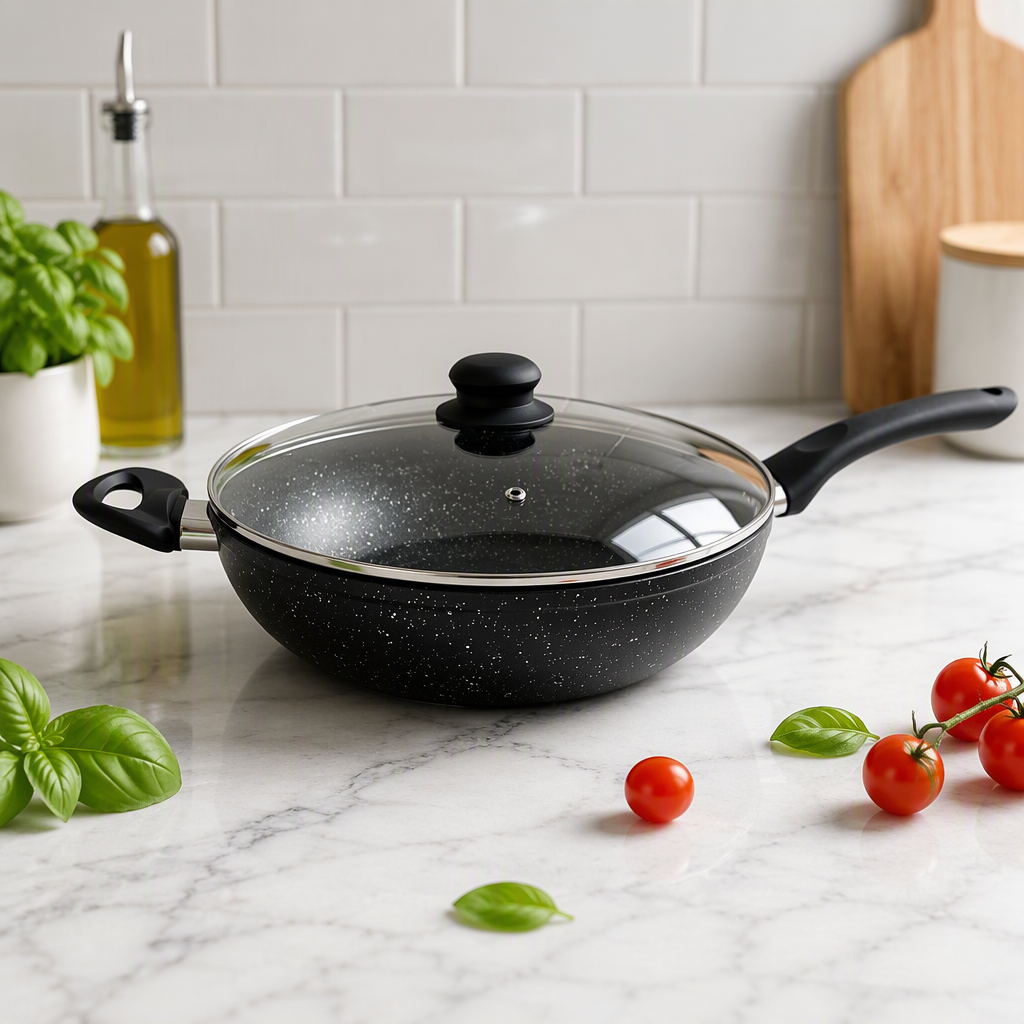
26 cm Non Stick Forged Aluminum Wok Marble Coating Glass Lid
View Product Details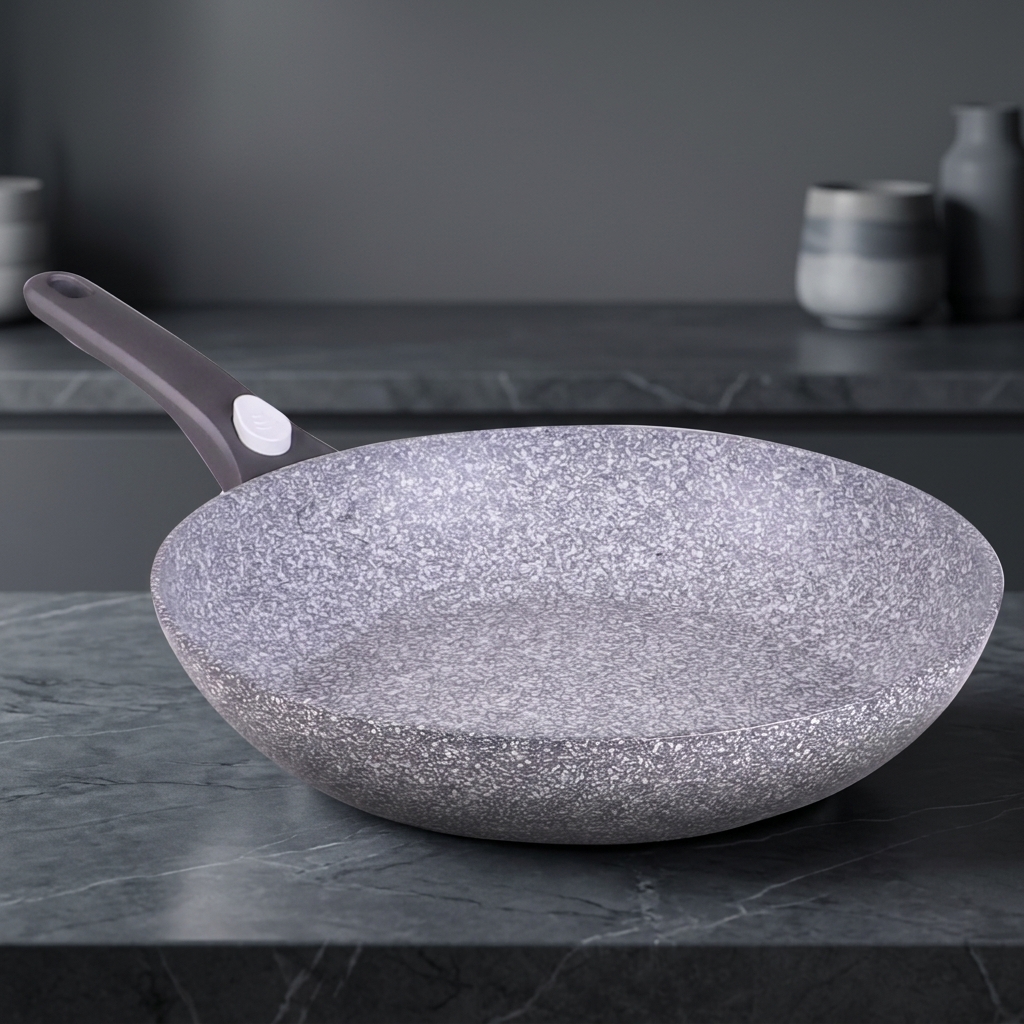
Granite Coating Non-Stick 9 Inch 24cm Forged Aluminum Fry Pan
View Product Details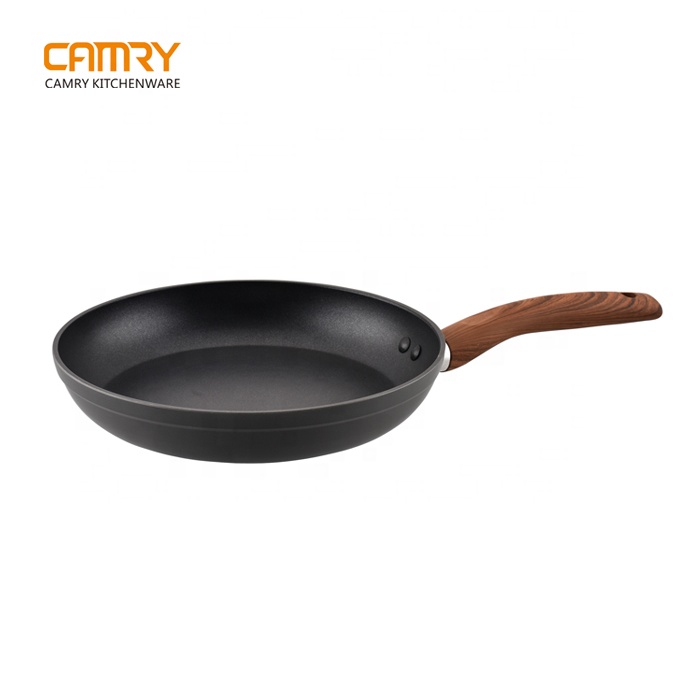
7PCS Dark Grey Forged Aluminum Megaware Cookware With Soft Handle
View Product Details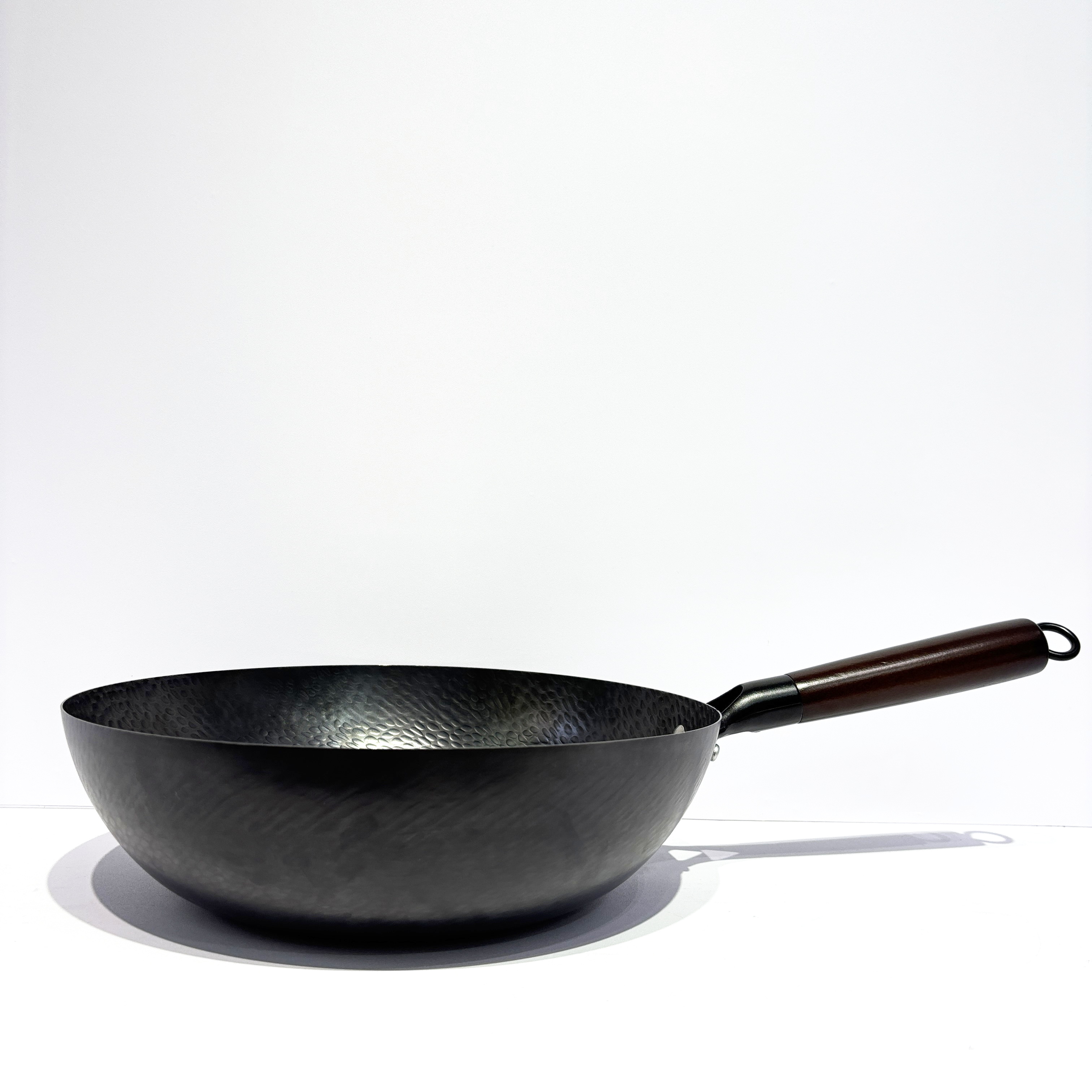
CAMRY Customized Logo Nitrided Nonstick Carbon Steel Wok
View Product Details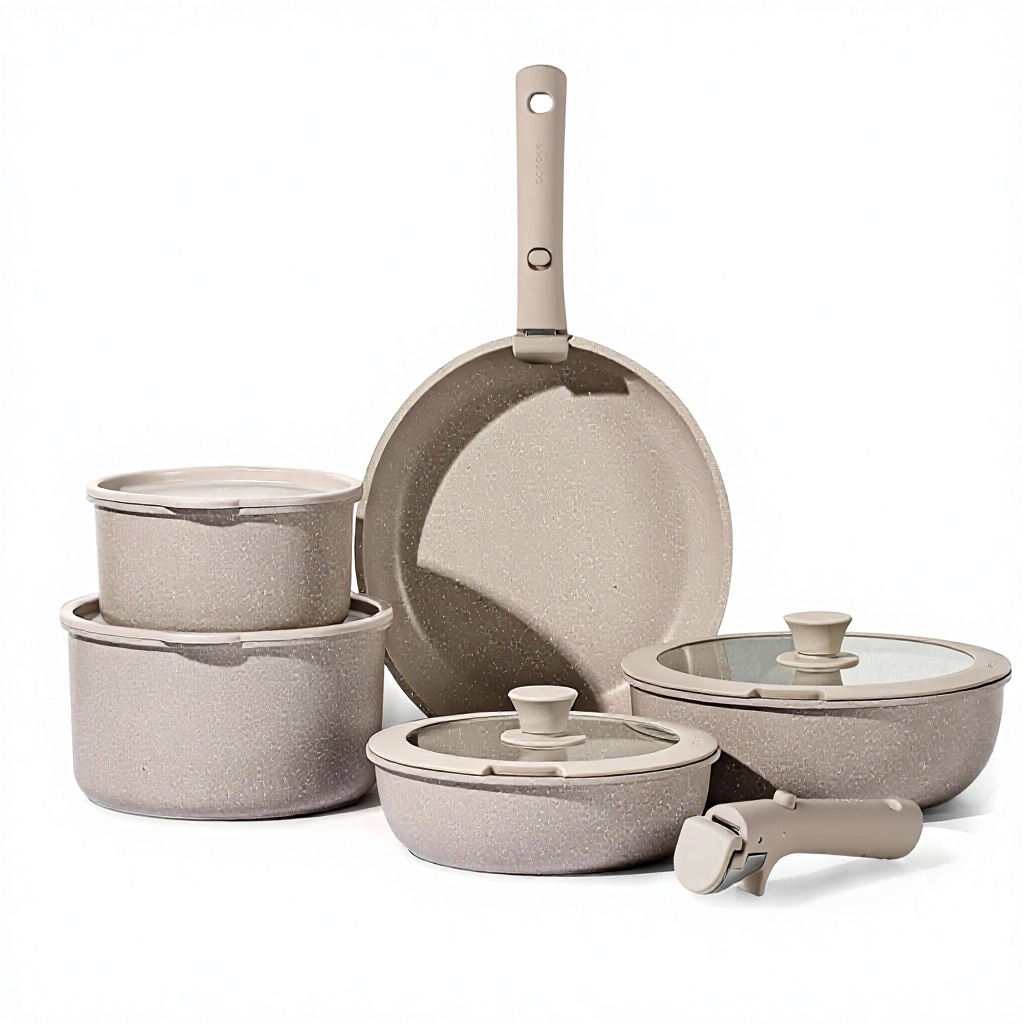
CAROTE 19-Piece Non-Stick Cookware Set Detachable Handles
View Product Details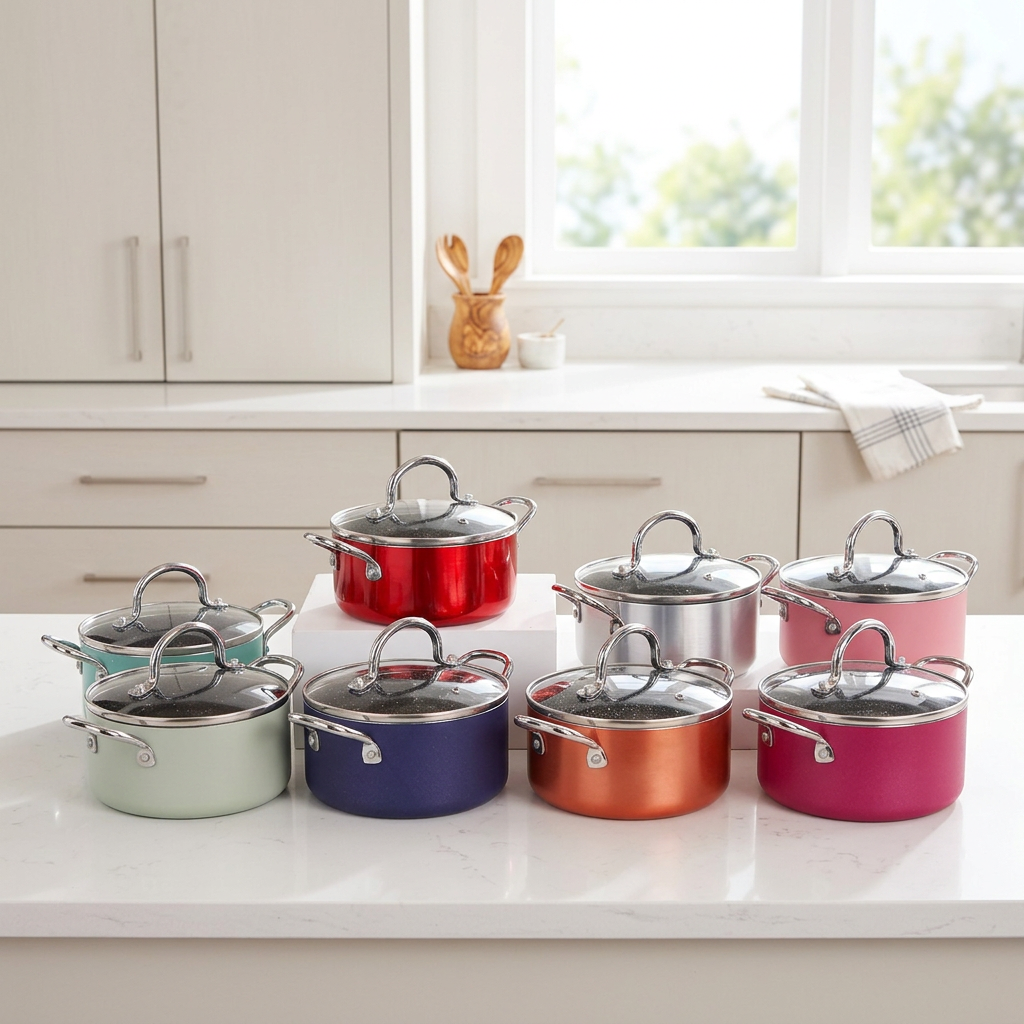
14cm Mini Sauce Pan with Glass Lid Colorful Non Stick Cookware
View Product Details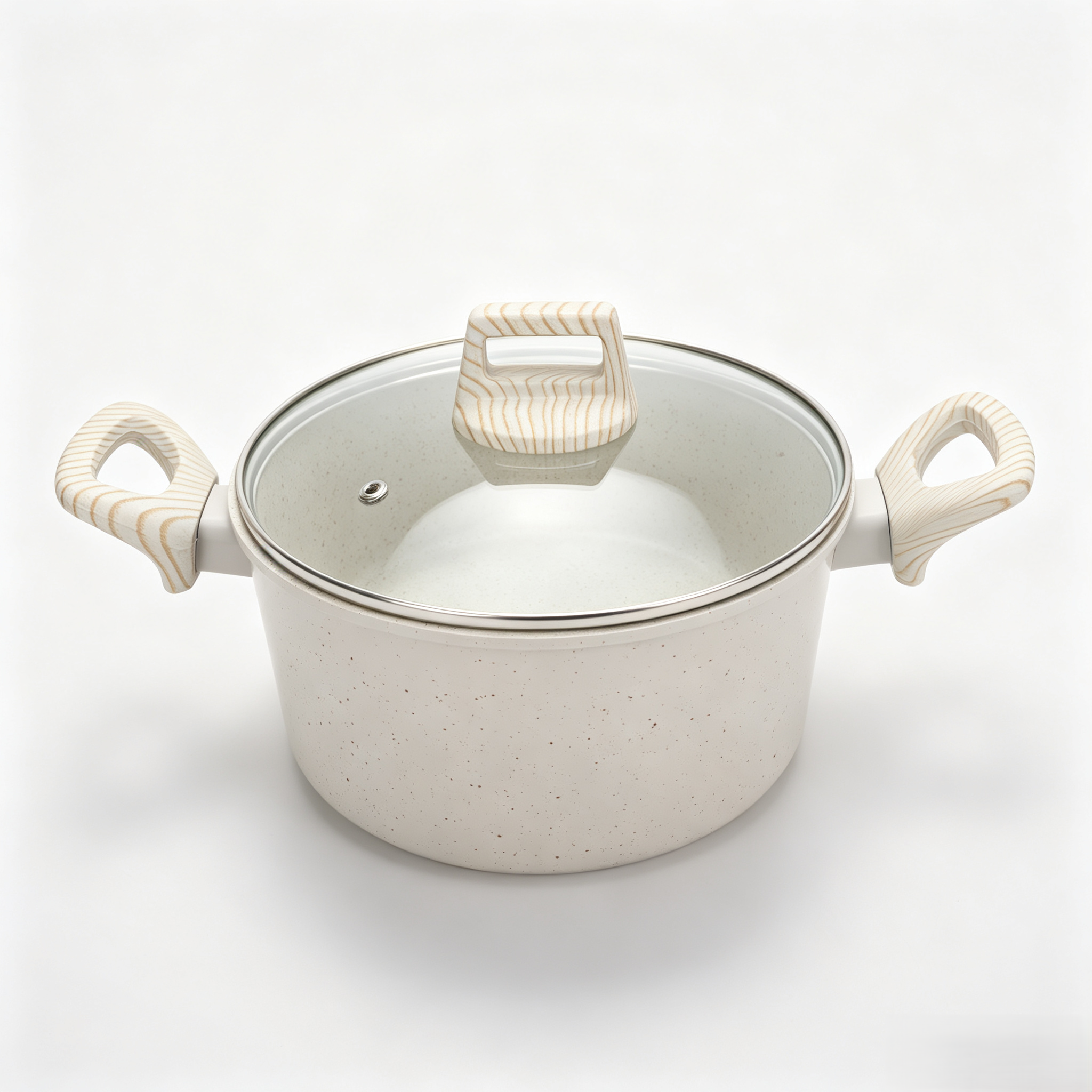
Large Capacity Durable Nonstick Aluminum Cookware Pot Casserole
View Product DetailsEngineering Carbon Steel Bakeware for High-Throughput Markets
An in-depth metallurgical analysis of commercial carbon steel bakeware performance, structural heat diffusivity, and rust-resistant surface passivization.
For commercial bakeries, resort kitchens, and mass retail distribution networks across the Georgetown market, selecting professional-grade bakeware requires balancing structural longevity, thermal transfer rates, and corrosion control. Carbon steel has emerged as the definitive material of choice for industrial and high-volume culinary applications, outperforming traditional cast iron in weight efficiency and exceeding aluminum in mechanical tensile resistance.
1. Metallurgical Composition and Thermal Dynamics
Carbon steel bakeware manufactured by Zhejiang MEIS Kitchenware utilizes high-tensile cold-rolled steel sheet with an optimized carbon content between 0.12% and 0.20%. This specific metallurgical threshold grants the steel ideal ductility for high-precision deep-drawing operations while retaining structural rigidity under continuous thermal cycling up to 260°C (500°F).
Thermal conductivity ($\lambda$) in carbon steel approximates $45-50 \text{ W/(m}\cdot\text{K)}$, delivering rapid heat absorption that promotes superior crust formation (Maillard reaction) without local hot-spot scorching. Compared to heavy cast iron—which exhibits a much higher heat capacity ($c_p$) and slow thermal response—carbon steel allows precise oven temperature modulation. This is essential for delicate pastries, artisanal loaves, and sheet cakes favored in Georgetown’s expanding commercial baking sector.
0.8mm - 2.0mm Gauge Versatility
Precision stamped gauges customized for retail consumer lines (0.8mm - 1.0mm) up to heavy-duty commercial roasting pans (1.2mm - 2.0mm).
Advanced Gas Nitriding
Thermochemical surface treatment converts the outer iron layer into a hardened nitrogen-enriched passivation shield resistant to micro-abrasion.
PFAS / PFOA-Free Nonstick
Multi-layer ceramic, organosilicon, and reinforced fluoropolymer systems designed for zero toxic emissions and effortless food release.
2. Coating Interfacial Adhesion and Salt Spray Passivation
In humid coastal shipping environments like Georgetown, atmospheric salinity poses a perpetual threat of red rust ($\text{Fe}_2\text{O}_3\cdot\text{H}_2\text{O}$) on untreated iron surfaces. At Zhejiang MEIS Kitchenware, our automated multi-stage washing and chemical etching lines prepare the metal substrate to achieve a surface roughness ($R_a$) optimized for mechanical coating interlock.
Following sandblasting or chemical degreasing, carbon steel bakeware undergoes automated spray application of non-stick systems—including ceramic, silicone-polyester, and titanium-reinforced fluoropolymer coats. Every production batch undergoes strict ASTM B117 salt spray testing exceeding 48 to 72 hours, ensuring that imported products withstand humid ocean freight transit and tropical storage conditions in Georgetown warehouses without delamination or oxidation.
Localized Application Scenarios across Georgetown
Analyzing how climate, culinary traditions, commercial food service growth, and maritime supply routes shape demand for carbon steel bakeware in Georgetown.
Commercial Wholesale Bakeries & Institutional Catering
Georgetown’s food sector experiences rapid urbanization and increased demand for packaged baked goods, loaves, and savories. Commercial kitchens require carbon steel loaf pans, sheet trays, and roasting pans that resist mechanical deformation under continuous, multi-shift oven operations.
Our heavy-gauge carbon steel bakeware features rolled rims reinforced with internal carbon steel wire. This engineering detail prevents thermal bowing and twisting under intense bake-and-cool cycles, providing regional commercial bakeries with an extended equipment lifespan and low total cost of ownership (TCO).
Luxury Hospitality, Resorts & Coastal Dining
With expanding eco-tourism and high-end hospitality investments along coastal Guyana and the wider Caribbean corridor, hotel culinary teams require premium roasting pans and turkey roasters with wire racks. Carbon steel provides the crisping capabilities required for roasted meats and whole poultry while maintaining aesthetic appeal for open-kitchen display carving stations.
Non-stick marble and granite speckle coatings applied over carbon steel offer an elegant aesthetic suited for upscale hotel kitchens, while facilitating quick cleaning in high-turnover dishwashing facilities.
Tropical Coastal Climate Resilience & Retail Merchandising
A critical consideration for Georgetown importers and retail chain buyers (such as department stores, home goods centers, and e-commerce vendors) is product shelf life prior to sale. The high ambient relative humidity ($>80\%$) in equatorial regions rapidly degrades poorly passivated metal cookware.
MEIS Kitchenware integrates protective exterior silicone coats and full rim-coating technology on all exported carbon steel lines. By sealing exposed metal cut edges, our bakeware eliminates edge-rust during sea transit through tropical shipping lanes, ensuring products arrive in retail-ready condition for Georgetown consumers.
Key Market Drivers Shaping Georgetown's Kitchenware Sector
Strategic analysis of consumer preferences, environmental regulations, and private-label growth drivers across South America and the Caribbean.
1. Shift Toward Non-Toxic, PFAS-Free Formulations
Global food safety awareness has reached South American retail hubs. Georgetown distributors are increasingly requesting PFOA-free, PTFE-free, and heavy-metal-free ceramic coatings to meet growing consumer demand for non-toxic home baking.
2. Multifunctional & Space-Saving Bakeware Sets
Urban residential developments in Georgetown favor multi-piece stackable bakeware sets with removable handle features. Nesting carbon steel pans reduce packaging volume by up to 40%, cutting ocean freight costs per unit.
3. Growth of Private-Label Supermarket Brands
Regional retail conglomerates in Georgetown are moving away from unbranded commodity cookware toward private-label brands. Customized bottom logos, custom color boxes, and branded handles build long-term brand equity.
Engineering Comparison: Cookware Material Systems
A side-by-side technical evaluation helping Georgetown buyers select the appropriate material gauge, thermal profile, and cost baseline for their target market.
| Performance Parameter | Heavy-Gauge Carbon Steel | Forged Aluminum | Pressed Aluminum |
|---|---|---|---|
| Base Tensile Strength | High (Resists Warping up to 280°C) | Medium-High (Stiffened Base) | Moderate (Ideal for Standard Cooking) |
| Thermal Conductivity ($\lambda$) | Rapid Heat Absorption (~50 W/mK) | Excellent (~200 W/mK) | Fastest Heat Up Rate |
| Induction Compatibility | Naturally Magnetic (No Base Plate Needed) | Requires Stainless Induction Plate | Requires Stainless Induction Plate |
| Corrosion Resistance in Tropics | High (With Multi-Layer Coating/Nitriding) | Superior (Oxide Film Passivated) | Superior (Anodized/Coated Options) |
| Ocean Freight Cost / Unit Volume | Optimized (Thin Walls, High Density) | Medium (Thicker Rim Profile) | Compact (Lightweight Nesting) |
| Optimal Commercial Application | Baking Sheets, Loaf Pans, Woks, Roasters | Heavy-Duty Sauté Pans, Woks, Casseroles | Retail Sets, Promotional Cookware |
Enterprise Advantage: Zhejiang MEIS Kitchenware Co., Ltd.
Why leading global brands and Georgetown importers partner with our TÜV Rheinland verified manufacturing facility in Jinhua, Zhejiang.
Located in the Dongnan Industrial Zone, Shuxi Street, Jinhua, Zhejiang, Zhejiang MEIS Kitchenware Co., Ltd. is a specialized manufacturer and exporter of nonstick aluminum cookware, carbon steel bakeware, roasting pans, and griddle pans. With over 20 years of operational experience and 18 years as a verified supplier on Alibaba.com, MEIS provides complete OEM and ODM supply chain integration for international buyers.
In-House Tooling & Advanced CNC Precision
Our 105-person facility houses complete raw material stamping, hydraulic pressing, edge trimming, CNC bottom lathe processing, and automated non-stick coating spray lines. By maintaining in-house mold design and tooling capability, MEIS reduces prototype sampling cycles from weeks to days, enabling fast product iterations for Georgetown private-label brands.
Rigorous Quality Assurance Laboratory
Quality control is embedded at every manufacturing milestone. Our on-site testing lab performs cross-hatch coating adhesion testing (ASTM D3359), thermal shock resistance, handle torsion and fatigue testing, and salt spray corrosion evaluation before releasing finished goods to export packaging.
TÜV Rheinland Verified
On-site assessed manufacturing plant confirming genuine production capacity and quality system compliance.
Full Customization (OEM/ODM)
Custom color matching (Pantone), logo laser etching, bottom stamping, silicone rim covers, and retail color packaging.
Streamlined Export Logistics
Experienced in FCL and LCL container loads, port handling, and custom export documentation for Caribbean destinations.
Frequently Asked Questions for Georgetown Importers
Technical and commercial details regarding minimum order quantities, custom tooling, food contact compliance, and freight logistics to Georgetown.
What is the typical Minimum Order Quantity (MOQ) for carbon steel bakeware shipments to Georgetown?
Our standard MOQ for customized carbon steel bakeware lines (such as loaf pans, roasting trays, or multi-piece bakeware sets) ranges from 1,000 to 3,000 pieces or sets per item, depending on color, coating complexity, and packaging requirements. For trial orders or established stock items, lower quantities starting from 500 units may be accommodated to facilitate initial market testing in Georgetown.
How does Zhejiang MEIS ensure bakeware does not rust during ocean transport to Guyana/Georgetown?
All exported carbon steel bakeware undergoes a rigorous anti-corrosion production process: including chemical washing, gas nitriding or protective base passivation, and complete non-stick coating encapsulation. Export cartons are lined with moisture-resistant PE bags and packed with industrial desiccant gel packs to neutralize ambient humidity during ocean transit through tropical shipping corridors.
Are the nonstick coatings food-grade and compliant with international safety standards?
Yes. All nonstick coatings utilized by Zhejiang MEIS Kitchenware—including ceramic, marble/granite speckle, and silicone-polyester coatings—are 100% free from PFOA, lead, cadmium, and dangerous heavy metals. Our products comply with US FDA food contact guidelines, European LFGB standards, and EU REACH regulations, guaranteeing complete safety for residential and commercial food contact.
Can we request custom branding, logo laser engraving, and custom box artwork for the Georgetown retail market?
Absolutely. We specialize in private-label OEM manufacturing. We offer bottom logo laser marking, custom steel mold logo stamping, Pantone-matched exterior color sprays, branded handle inserts, and custom 4-color offset gift boxes or mail-order packaging tailored to your brand guidelines.
What is the lead time for mold development and mass production orders?
For standard catalogue items, mass production lead times are typically 30 to 45 days following deposit receipt and artwork approval. If your project requires custom shapes or proprietary dimensions, our in-house mold and tooling workshop can produce 3D samples and test molds within 15 to 20 days prior to full mass production runs.
What shipping terms and payment options are supported for Georgetown B2B buyers?
We support standard international trade terms including FOB (Ningbo or Shanghai), CFR, and CIF Georgetown Port. Flexible payment methods include Telegraphic Transfer (T/T) with standard deposit structure, as well as Irrevocable Letters of Credit (L/C at sight) for high-volume commercial container contracts.
Accelerate Your Kitchenware Supply Chain in Georgetown
Partner directly with Zhejiang MEIS Kitchenware Co., Ltd.—a verified, direct-factory manufacturer of premium carbon steel and nonstick aluminum cookware. Request technical specifications, custom catalog pricing, and factory direct samples today.
Contact Us