High-Performance Fry Pans & Cookware Sets Engineered for NY Operations
Built for the high BTU ranges of Manhattan hospitality lines and induction-mandated metropolitan developments. Each unit features structural warp resistance, food-contact safety compliance, and custom private-label branding options.
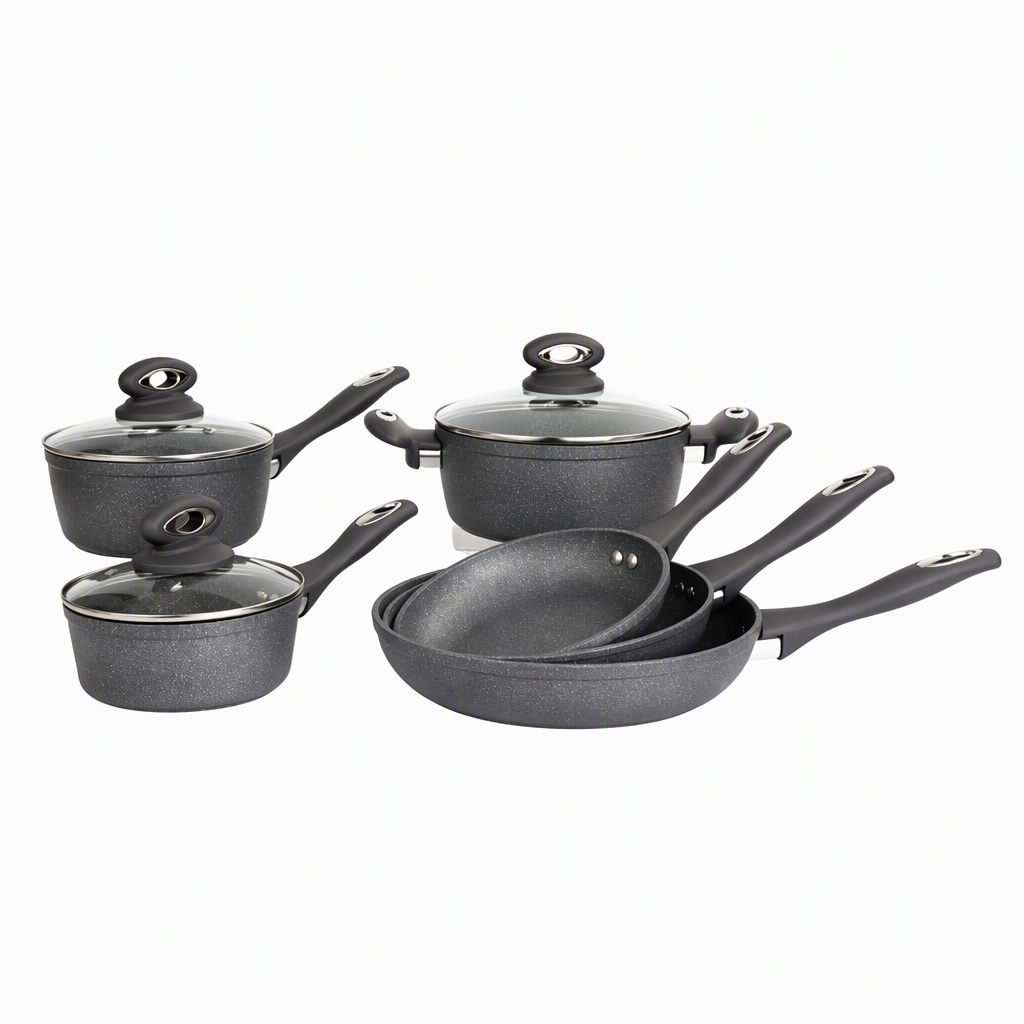
9 Piece Forged Aluminum Cookware Set Marble Coating Induction Base Glass Lids Oven and Dishwasher Safe
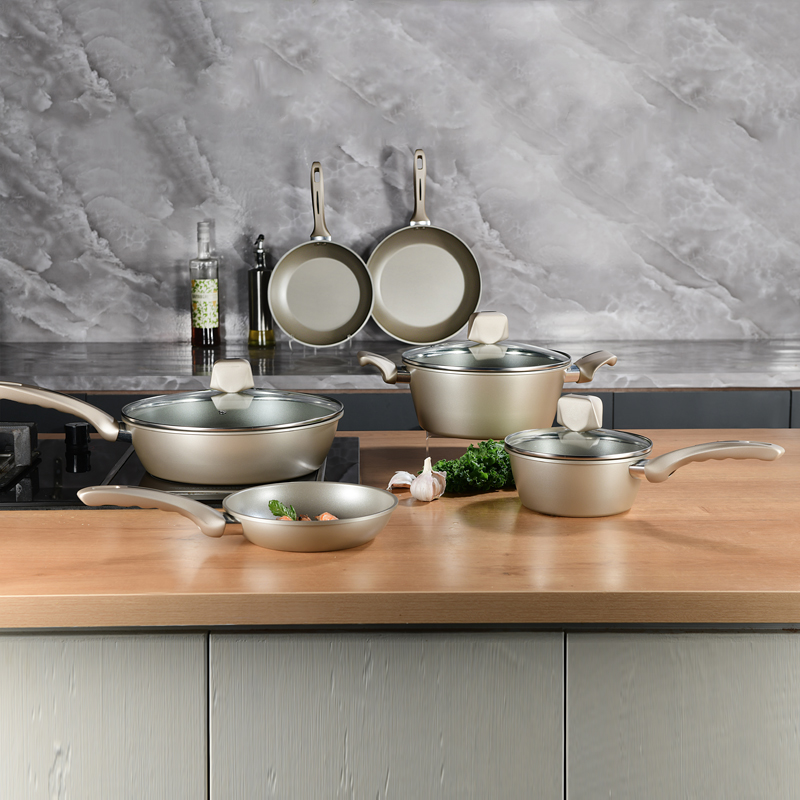
9 Piece Modern Design Titanium Non-Stick Coating Cookware Set Heavy Gauge Carbon Steel Pots Pans Soft Touch Handle Customizable
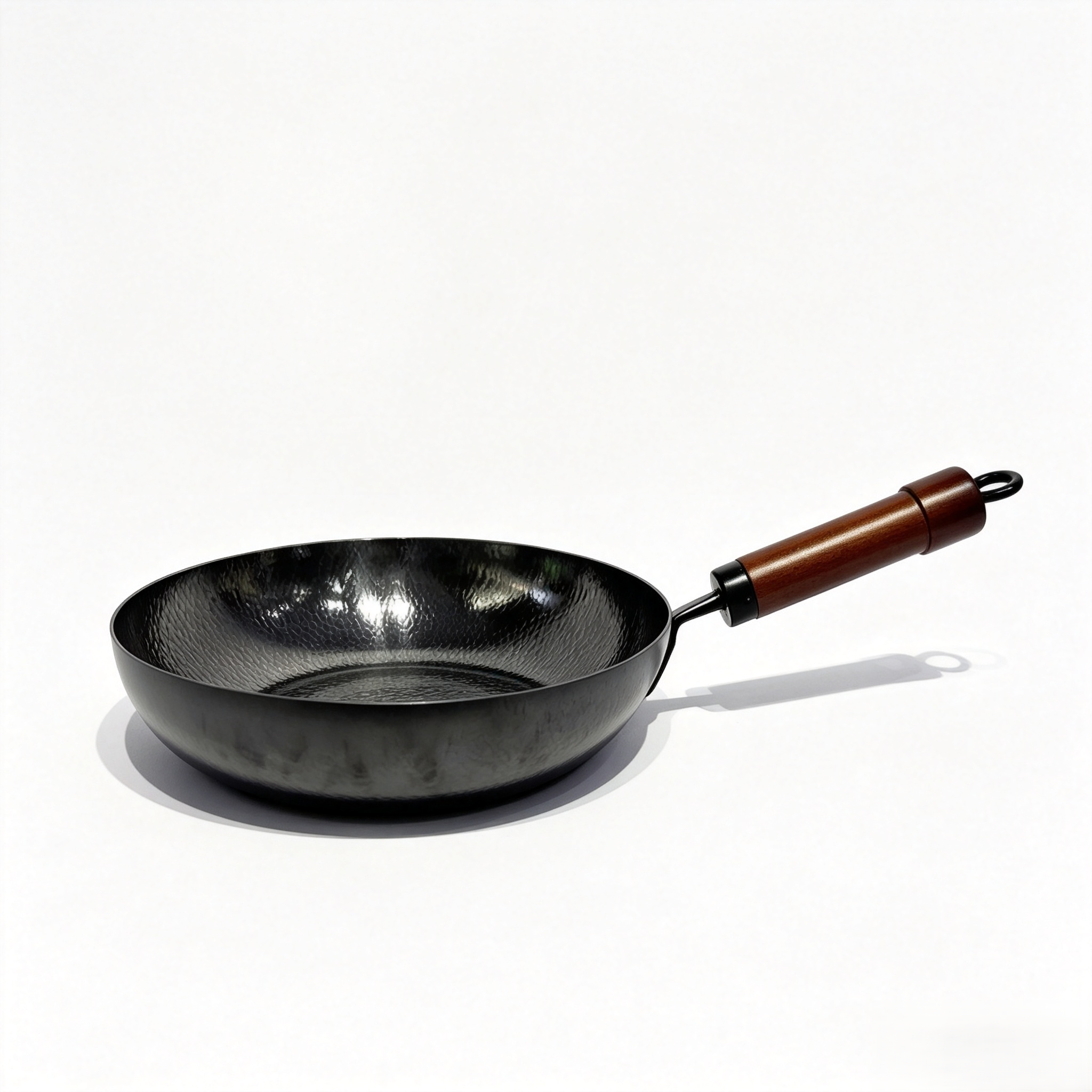
Modern CAMRY Eco-friendly No Coating Nitrided Hammered Carbon Steel Wok Cookware Wooden Handle 2-3L Capacity Gas Induction
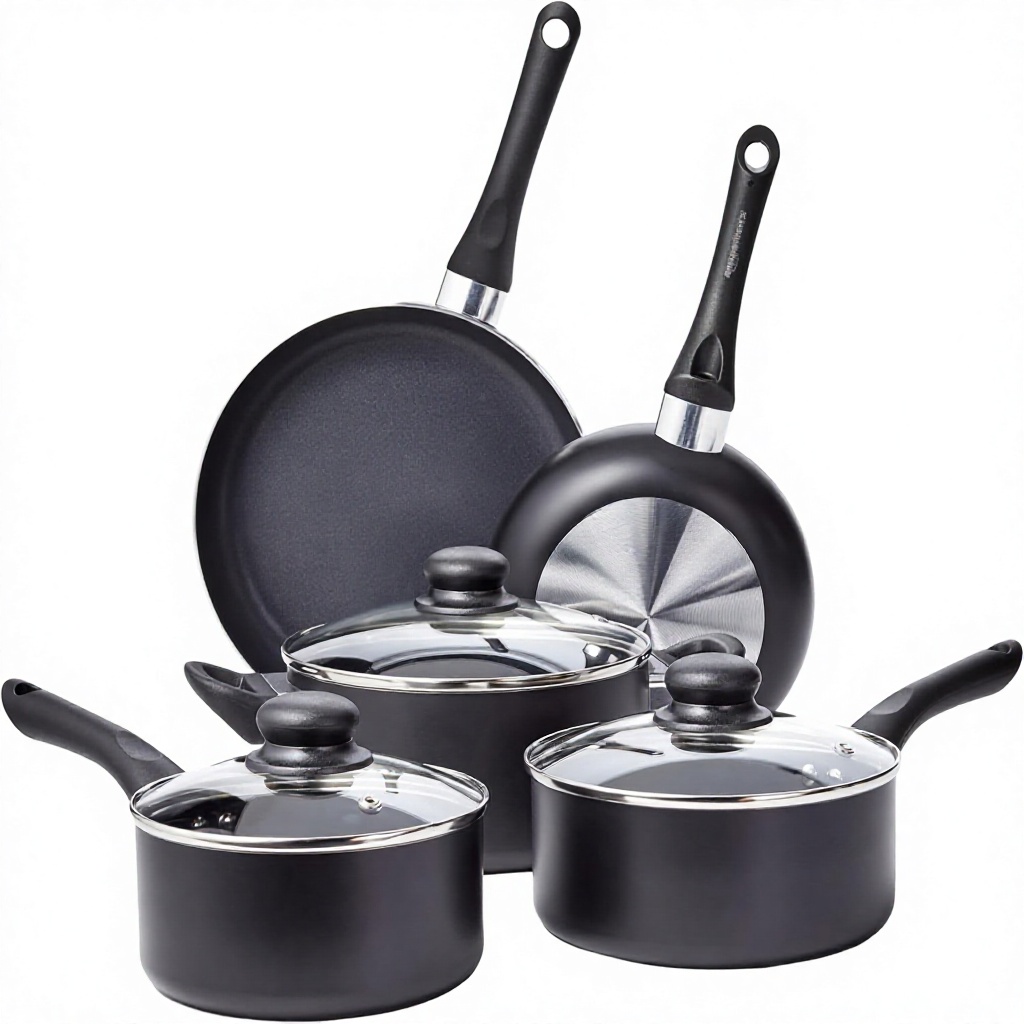
Basics Aluminum Ceramic Non-Stick 8-Piece Cookware Set with Gas & Induction Ready Pots Pans Plastic Hand Grip Pot Cover Black
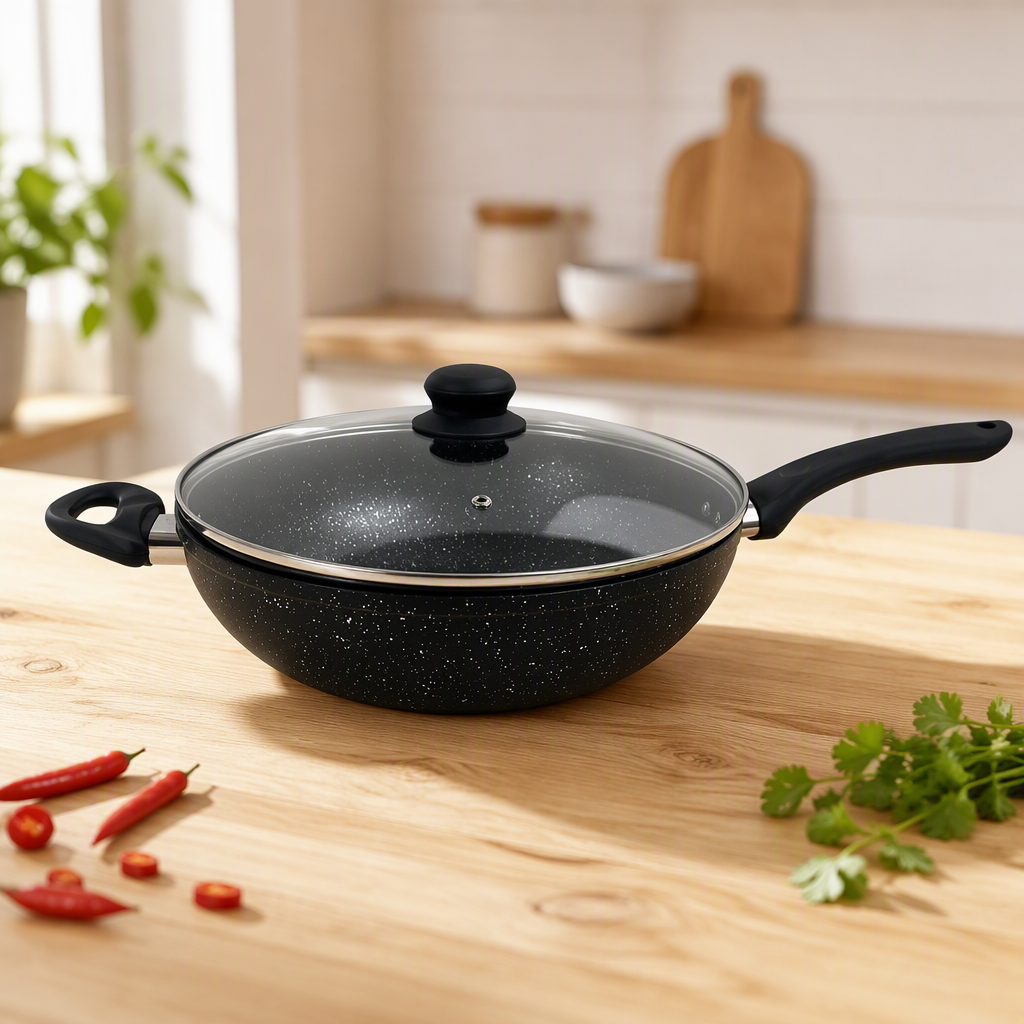
32 cm Granite Coating Non Stick Forged Wok 5.5L Aluminum Fry Pan Glass Lid Heat Resistant Handle Gas Induction
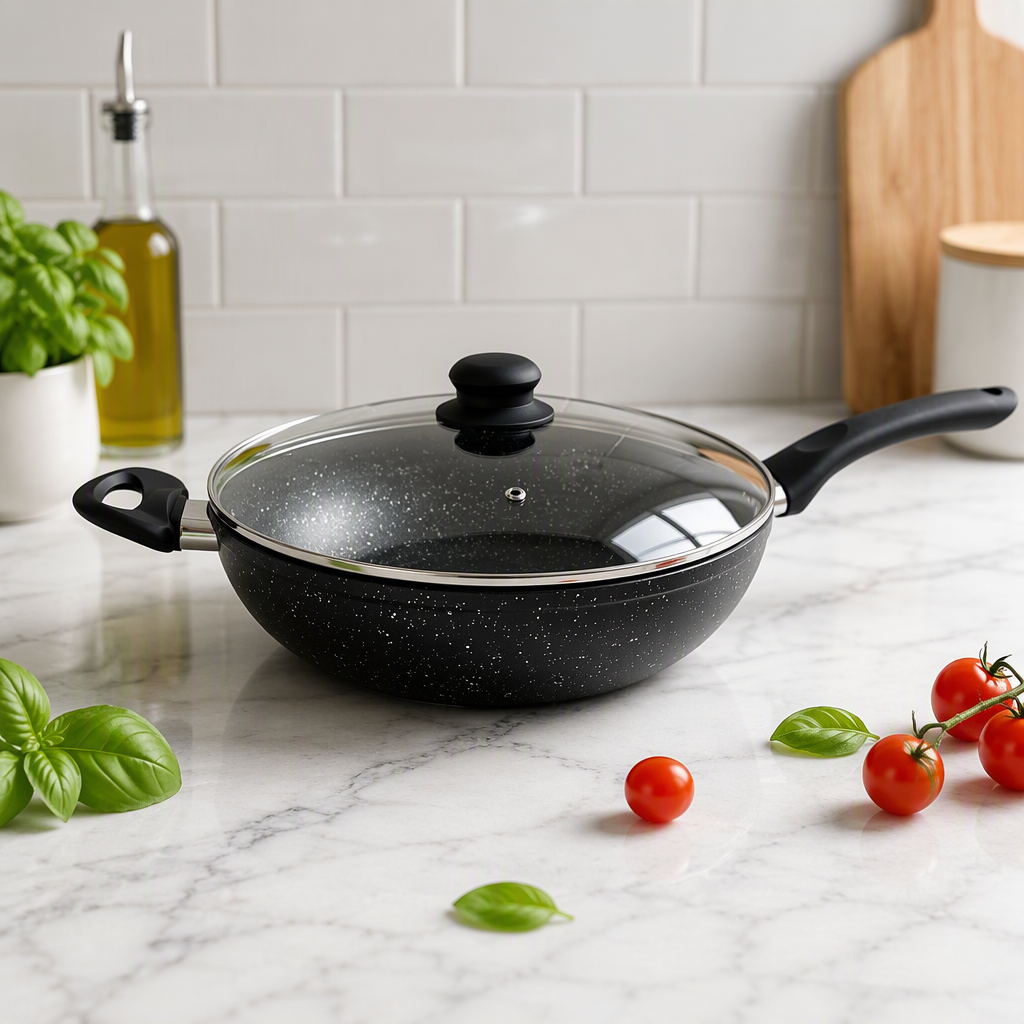
26 cm Non Stick Forged Aluminum Wok Marble Coating Glass Lid Cool Handle 3.5 L for Gas and Induction Cookers
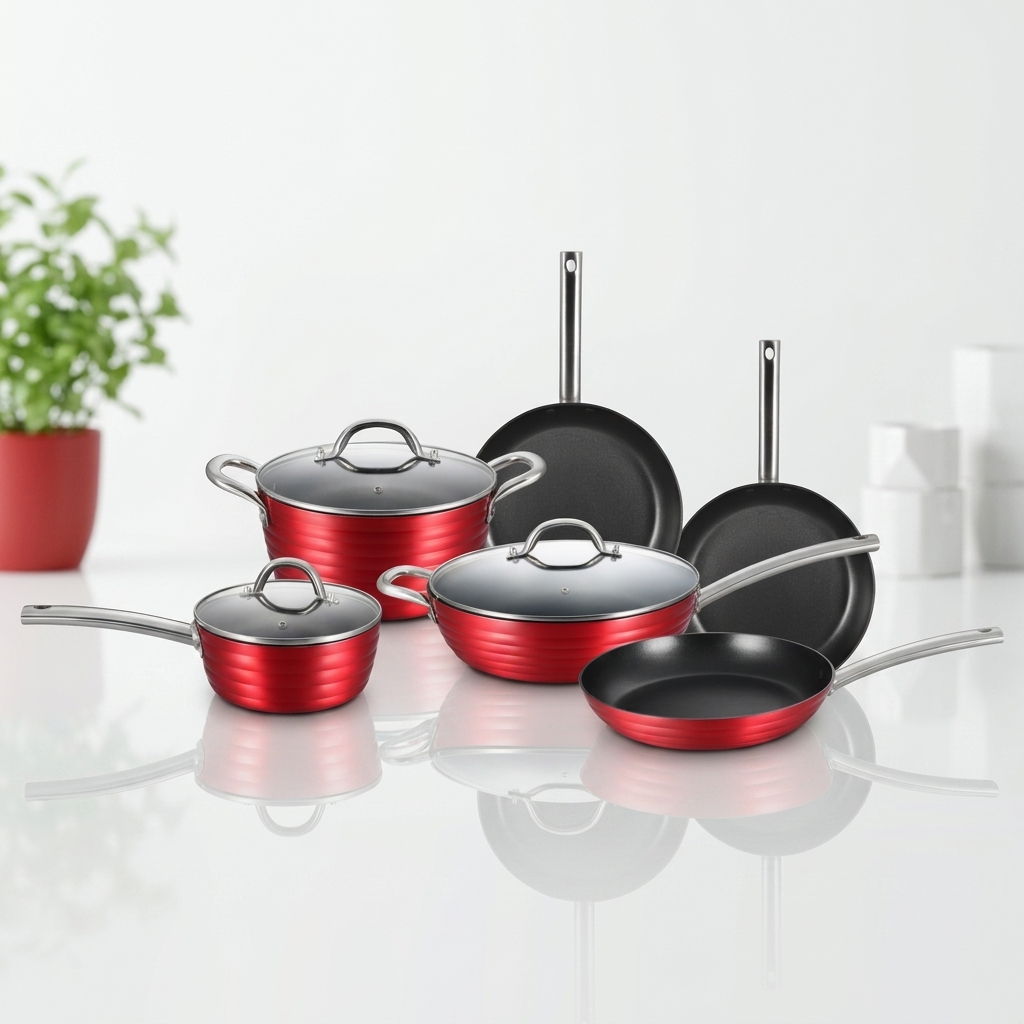
Kitchenware Set 9 Piece Non Stick Cookware Pot Set Metallic Red Outside S/S Handle Induction Bottom
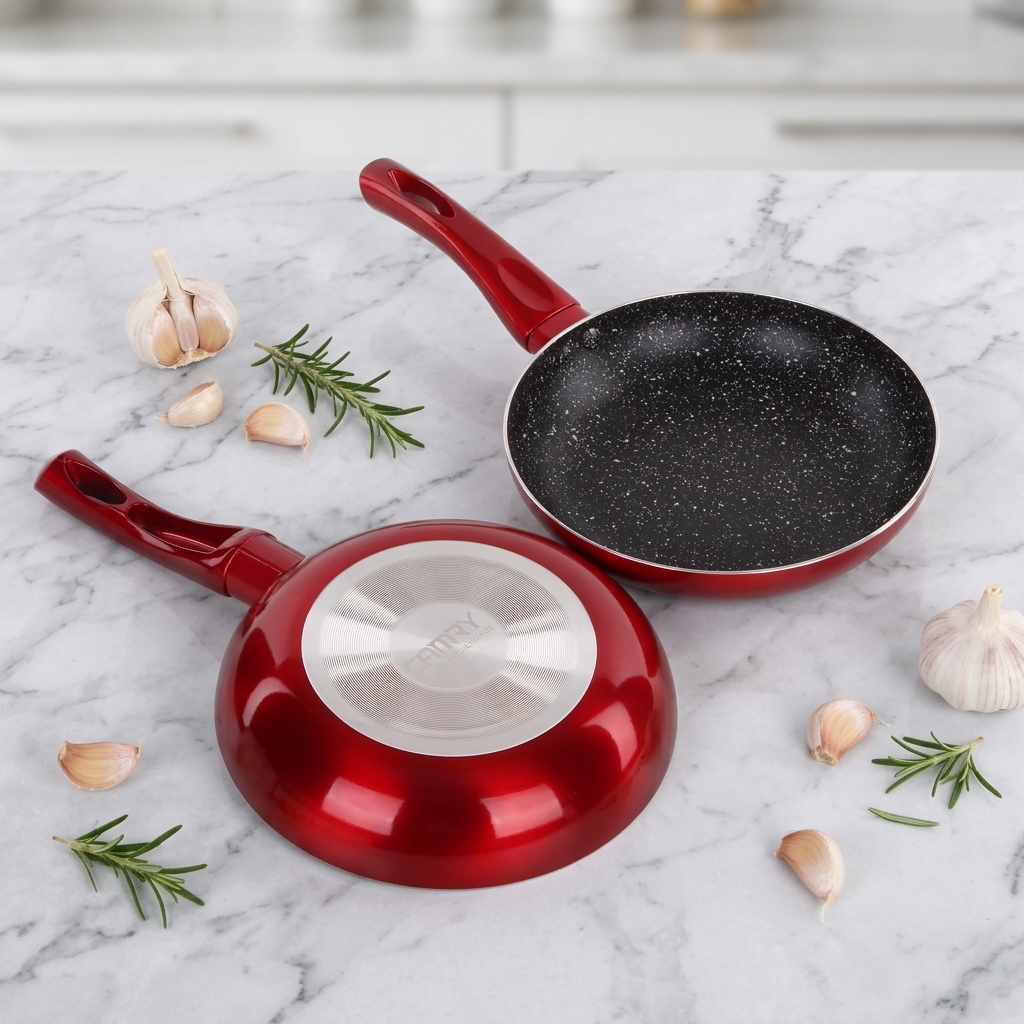
Hot Sale Durable 30 cm PFOA-free Non-Stick Pressed Frying Pan Glass Cover Heat-Resistant Handle for Household Restaurant Cooking
Carbon Steel Cookware Dynamics Across the New York Metropolitan Corridor
From Michelin-starred kitchens in Midtown Manhattan to tight, fast-paced brunch services in Williamsburg, New York's culinary ecosystem imposes rigorous physical demands on commercial cookware.
The New York commercial food service sector represents one of the densest, most demanding procurement environments on earth. Operating within historic tenement architecture, tight commercial basements, and rigorous health inspection standards enforced by the NYC Department of Health and Mental Hygiene (DOHMH), commercial culinary operators are aggressively shifting away from traditional bare cast iron. While cast iron provides superior heat retention, its extreme weight (averaging 5.5 to 7.2 lbs for a 12-inch skillet) induces severe wrist and forearm fatigue for line cooks executing 400+ sauté and sear tickets per service.
Heavy-gauge carbon steel (specifically 2.0 mm to 3.0 mm cold-rolled steel alloy) bridges this critical mechanical gap. Offering comparable thermal volumetric mass to cast iron at up to 45% lower total tare weight, carbon steel enables instantaneous flame response on high-output commercial gas ranges (30,000+ BTU) while maintaining structural flat-bottom integrity on flat-top magnetic induction hobs.
Manhattan & Brooklyn Fine Dining Bistros
High-turnover dining rooms require cookware capable of intense Maillard reaction searing for dry-aged steaks, duck breasts, and scallops, followed by rapid pan-sauce deglazing. Our factory-treated nitrided and seasoned carbon steel pans withstand thermal shocks from 500°F searing straight to cold stock deglazing without base warping or thermal shock fractures.
High-Density Ghost Kitchens & Fast-Casual Lines
In multi-brand cloud kitchens in Long Island City and Queens, prep stations operate 16 hours continuously. Pans are subjected to rapid mechanical scrub cycles, industrial dishwasher detergents, and high-impact rack storage. Our reinforced riveted handles undergo stringent 100 kg thrust and torsion testing to ensure zero handle detachment risk.
Upstate & Tri-State Commercial Hospitality Chains
Spanning corporate catering across Westchester, corporate cafeterias in Jersey City, and banquet facilities on Long Island, buyers demand uniform dimensional nesting, stackability, and automated line compliance. We provide customized stamped logos, NSF-compliant weld/rivet configurations, and standardized export master cartons.
Macro Trends Transforming New York Cookware Supply Chains
Navigating stringent state-level environmental mandates, municipal all-electric construction ordinances, and the evolution of consumer wellness awareness.
NYC Local Law 97 & Electrification
Mandates severe carbon caps on NYC commercial buildings over 25,000 sq ft. This is accelerating the replacement of gas cooking suites with all-electric magnetic induction tops, making naturally magnetic carbon steel cookware a non-negotiable kitchen standard.
NY State PFAS Prohibition Laws
New York has enacted aggressive measures restricting per- and polyfluoroalkyl substances (PFAS) in food contact materials. We offer zero-PTFE nitrided carbon steel and sol-gel ceramic formulations certified to comply with NY ECL Article 37 standards.
Line Cook Ergonomics & Safety
Severe post-pandemic kitchen labor shortages have elevated kitchen ergonomics into an executive procurement issue. At 45% less weight than cast iron, our heavy-gauge carbon steel reduces repetitive strain injuries and boosts plating agility during peak turnover.
Direct-to-Consumer Private Label Surge
Brooklyn, Soho, and Union Square kitchen boutique brands are capturing premium margins by curating direct-from-factory cookware sets. We support private labels with laser-etched branding, bespoke color packaging, and custom-turned wood and cast steel handles.
Engineering Matrix: Carbon Steel vs. Cast Iron vs. Tri-Ply Stainless Steel
| Engineering Attribute | MEIS Heavy-Gauge Carbon Steel | Traditional Cast Iron | Commercial Tri-Ply Clad Stainless |
|---|---|---|---|
| Average Base Thickness | 2.0 mm to 3.0 mm (Customizable) | 4.5 mm to 6.5 mm | 2.5 mm to 3.0 mm |
| Weight (12" Skillet Average) | 3.2 – 3.8 lbs (Optimal Ergonomic Range) | 6.5 – 7.8 lbs (High Fatigue Index) | 3.0 – 3.5 lbs |
| Magnetic Induction Coupling | Native Ferrous Core · 90%+ Efficiency | Native Ferrous Core · High Efficiency | Requires 430 Stainless Magnetic Outer Cap |
| Thermal Responsiveness | Fast · Rapid flame / field adaptation | Very Slow · High thermal inertia | Moderate to Fast depending on aluminum core |
| Surface Treatment Options | Gas-Nitrided, Pre-Seasoned, Titanium/Ceramic | Vegetable Oil Bake or Enamel only | Bare Stainless or PTFE/PFOA-Free Ceramic |
| Thermal Shock Resilience | Ductile steel resists cracking during quenching | Brittle; risk of thermal shock fracture | High resilience; possible delamination over time |
| NYC Restaurant Fit | Optimal for high-turnover lines & induction hobs | Limited to slow-braise and rustic hearth uses | High performance, but significantly higher unit cost |
Why New York Importers & Brands Partner with Zhejiang MEIS
Combining 20 years of dedicated cookware production with direct German TÜV Rheinland on-site verification, in-house tooling, and rigorous testing protocols.
Located in the heart of Zhejiang's hardware and cookware industrial zone (Dongnan Industrial Zone, Shuxi Street, Jinhua), Zhejiang MEIS Kitchenware Co., Ltd. operates an integrated, vertically managed 105-person manufacturing complex. Unlike trading middlemen who outsource individual production stages, MEIS houses every critical stage of cookware fabrication under one roof: from precision hydraulic blanking and deep-drawing pressing lines to automated multi-layer non-stick spray tunnels, high-temperature sintering curing ovens, handle assembly stations, and dimensional verification jigs.
TÜV Rheinland Verified
Our Jinhua factory undergoes full on-site evaluation by TÜV Rheinland. We maintain certified quality management workflows spanning incoming raw sheet metal spectral analysis to finished carton compression testing.
In-House Tooling & Mold Workshop
Equipped with advanced CNC machining centers and high-precision lathes, our dedicated mold department rapidly turns 3D CAD/CAM designs into production-ready dies, reducing prototype lead times to under 18 business days.
Advanced Laboratory Verification
Every production run is validated inside our internal testing center: ASTM B117 salt-spray corrosion resistance, cyclic handle fatigue stressing, handle torsion tests, coating abrasion cross-hatch, and scratch endurance checks.
Streamlined US East Coast Logistics
Leveraging direct intermodal freight from Ningbo and Shanghai ports to Port of New York and New Jersey (Port Newark / Elizabeth Marine Terminal), we coordinate FOB, CIF, or full DDP logistics directly into your warehouse network.
Frequently Asked Questions: Sourcing Carbon Steel for the NY Market
Direct answers addressing import tariffs, shipping corridors, food contact regulations, and customization specifications.
Q1 How are ocean freight shipments handled into the New York & Tri-State Area?
Most commercial container loads depart directly from Ningbo or Shanghai port, routed via the Panama Canal to the Port of New York and New Jersey (PNCT / Maher Terminals / APM Terminals Elizabeth). Standard water transit averages 28 to 34 days. We provide complete documentation sets (Commercial Invoice, Packing List, Bill of Lading, Certificate of Origin) formatted for immediate US Customs entry via your regional customs broker.
Q2 How do your carbon steel pans comply with FDA and NY State food-safety laws?
All MEIS kitchenware is manufactured using prime steel and tested to meet U.S. FDA 21 CFR 175.300 standards for food-contact surfaces. For non-coated, nitrided woks and pans, the surface is inert iron oxide/iron nitride without fluorochemicals, completely surpassing both federal FDA and New York State Environmental Conservation Law (ECL) Article 37 PFAS restrictions.
Q3 What is the advantage of nitrided carbon steel over traditional raw carbon steel?
Traditional raw carbon steel arrives coated with shipping grease/mineral oil that restaurant chefs must rigorously strip using harsh boiling water before applying initial oil seasoning. Our modern CAMRY nitrided series undergoes a high-temperature thermo-chemical gas nitriding process that diffuses nitrogen into the iron lattice, making the pan naturally corrosion-resistant, hard, and ready for immediate seasoning with minimal maintenance.
Q4 What are the Minimum Order Quantities (MOQs) for custom private label orders?
Standard production runs for custom private-label carbon steel fry pans start at 1,000 to 2,000 pieces per size/specification, which allows cost-effective setup of our automated stamping and spray lines. For multi-piece cookware sets, MOQs generally begin at 1,500 sets. Selected in-stock core models may be sampled in smaller quantities for regional testing and market trials.
Q5 Can we order pans with customized handles for heavy commercial ovens?
Yes. We offer heavy-duty solid cast stainless steel handles, riveted carbon steel flat-bar strip handles, and heat-resistant silicone sleeves. Handles can be configured with hanging loop eyelets standardized for American restaurant kitchen pot racks, and can be laser-engraved with your brand logo or volume markings.
Q6 How do you prevent pan base crowning and thermal warping during high-heat usage?
Our engineers utilize precise hydraulic pressing pressures paired with high-precision CNC base finishing. We introduce an engineered micro-concave bottom tolerance during stamping. When exposed to extreme induction or high-BTU gas temperatures, the thermal expansion draws the base perfectly flat against the cooktop rather than convex bowing, preventing oil pooling and rocking.
Total Landed Cost Optimization & Tariff Engineering for US Buyers
A strategic breakdown for supply chain directors, category managers, and private equity portfolio operators sourcing from China.
Managing the procurement of commercial kitchenware for high-volume distributors in Maspeth, Queens, Hunts Point, Bronx, or South Plainfield, NJ requires navigating complex tariff classifications and container freight dynamics. Under the Harmonized Tariff Schedule of the United States (HTSUS), carbon steel cookware generally falls under HTS Subheading 7323.99 (Table, kitchen or other household articles and parts thereof, of iron or steel). Aluminum cookware falls primarily under HTS Subheading 7615.10.
To optimize total landed cost per unit, our factory engineering team collaborates directly with our buyers' supply chain teams to maximize container volumetric cube utilization. By custom-engineering nesting taper angles (ranging from 12° to 17° side-wall slopes) and offering detachable-handle systems, we can increase the piece count per 40-foot High Cube (40HQ) container by up to 38% compared to traditional fixed-handle configurations. This significantly dilutes the trans-Pacific ocean freight surcharge per unit across the shipment.
Furthermore, our rigorous in-house pre-shipment quality inspection protocols—spanning coating thickness dry-film measurement (Elcometer gauges), base flatness dial indicator checks, and drop tests conforming to ISTA-1A standards—ensure that containerized shipments arrive fully prepared for direct palletized distribution into metropolitan Amazon fulfillment centers, restaurant depot hubs, and upscale retail distribution centers without secondary rework costs.
Accelerate Your New York Cookware Line Today
Request technical spec sheets, factory pricing matrices, or custom tooling prototypes from Zhejiang MEIS Kitchenware Co., Ltd. Our engineering team responds within 12 business hours.