Precision Cookware & Bakeware Showcase
Engineered at our 105-person TÜV Rheinland-assessed manufacturing hub, featuring heavy-gauge metal stamping, advanced surface nitriding, and high-integrity non-stick coating systems.
The Bristol Baking Renaissance: Demanding High-Performance Carbon Steel Bakeware
The culinary landscape of Bristol and the broader West of England combined with Somerset and Gloucestershire represents one of the most discerning baking and gastronomic markets in the United Kingdom. From the artisan micro-bakeries populating Stokes Croft, Clifton Village, and Southville to high-throughput commercial bakeries distributed along the Avonmouth industrial logistics hub, the regional demand for professional-grade baking vessels has expanded significantly beyond standard off-the-shelf consumer bakeware.
In this dynamic market, the carbon steel loaf pan has emerged as the premier choice among professional bakers, pastry chefs, and private-label homeware distributors. Unlike consumer-grade lightweight aluminum or flexible silicone moulds, heavy-gauge carbon steel delivers an exceptional thermal diffusivity rate coupled with high mechanical rigidity. For Bristol's artisan bread movement—famed for its high-hydration sourdoughs, seeded farmhouse loaves, enriched brioches, and traditional English tea breads—pan performance directly dictates crust carmelization, oven-spring consistency, and cellular interior crumb structure.
As a verified Chinese direct manufacturer with two decades of metal stamping, progressive die pressing, and advanced non-stick coating expertise, Zhejiang MEIS Kitchenware Co., Ltd. bridges the gap between precision industrial production and the rigorous culinary standards of the Bristol market. By delivering factory-direct OEM and ODM production runs calibrated to British standards (BS EN 13834) and European food safety frameworks (Regulation (EC) No 1935/2004), our production facility empowers West Country brands to scale their commercial bakeware programs reliably and profitably.
Engineering Superiority of Carbon Steel in Professional Baking
Understanding why heavy-gauge cold-rolled carbon steel outperforms aluminized steel, glass, and flexible silicone within high-volume commercial baking environments.
Rapid Thermal Response & Radiant Heat
Carbon steel has a high emissivity coefficient and balanced specific heat capacity (0.49 kJ/kg·K). It rapidly absorbs oven heat and transmits radiant energy through pan sidewalls, triggering swift Maillard reactions without scorching delicate crumb bottoms.
Anti-Warping Wire-Beaded Rims
Commercial ovens in the UK often cycle between 180°C and 250°C dozens of times daily. Our loaf pans feature deep-drawn unitary steel geometries reinforced with encapsulated steel wire rims to prevent torsion, oil-canning, and side-wall buckling under thermal shock.
Advanced Non-Stick & Nitrided Surfaces
We supply diverse industrial surface matrices tailored to buyer briefs: multi-coat silicone-polyester, organosilicate sol-gel ceramics, granite-marble dispersion coatings, and liquid gas nitriding that converts bare steel into an oxidized, rust-resistant, naturally non-stick layer.
| Performance Vector | MEIS Heavy-Gauge Carbon Steel | Standard Aluminized Steel | Cast Iron Loaf Moulds | Food-Grade Silicone Moulds |
|---|---|---|---|---|
| Thermal Conductivity & Crust Formation | Rapid radiant transfer; crisper, uniformly carmelized crusts | Moderate heat transfer; prone to hot spots | Exceptional retention; slow warm-up, sluggish thermal control | Poor conductor; steamed sidewalls, pale crumb exterior |
| Structural Integrity & Warping Resistance | Unitary drawn 1.0–1.2mm SPCC steel with wire-beaded rims | Moderate; potential seam leaks in folded variants | Extremely rigid but brittle; high cracking hazard if dropped | Zero rigidity; bulges outwards, requires secondary metal racks |
| Coating Adhesion & Durability | Automated degreasing & sandblasting prep; 5000+ abrasion cycles | Subject to oxidation if non-stick film is scratched | Requires manual polymerization & seasoning maintenance | Non-stick inherent; degrades upon prolonged high-heat fat contact |
| Stacking, Weight & Handling Logistics | Tapered nestable sidewalls; lightweight handling for high output | Nestable; standard factory ergonomics | Excessively heavy; induces worker fatigue in busy bakeries | Collapsible; cumbersome when filled with heavy batter |
Commercial Application Scenarios Across Greater Bristol
How specialized carbon steel loaf pans serve distinctive segments of the West of England food, hospitality, and retail economy.
Artisan Sourdough & Specialty Loaves
Bristol’s vibrant independent sourdough bakeries utilize deep, straight-sided 1lb and 2lb carbon steel pans to produce high-rise sandwich breads, enriched challah, and seeded spelt with distinct crust definitions and clean slice release.
Industrial Bakeries & Catering Prep
Contract foodservice operations and airline catering kitchens operating near Bristol Airport and Avonmouth leverage heavy-duty non-stick carbon steel pans for standardized banana bread, fruit loaves, and terrine meatloaves requiring robotic depanning.
Private-Label Retail & Cookshops
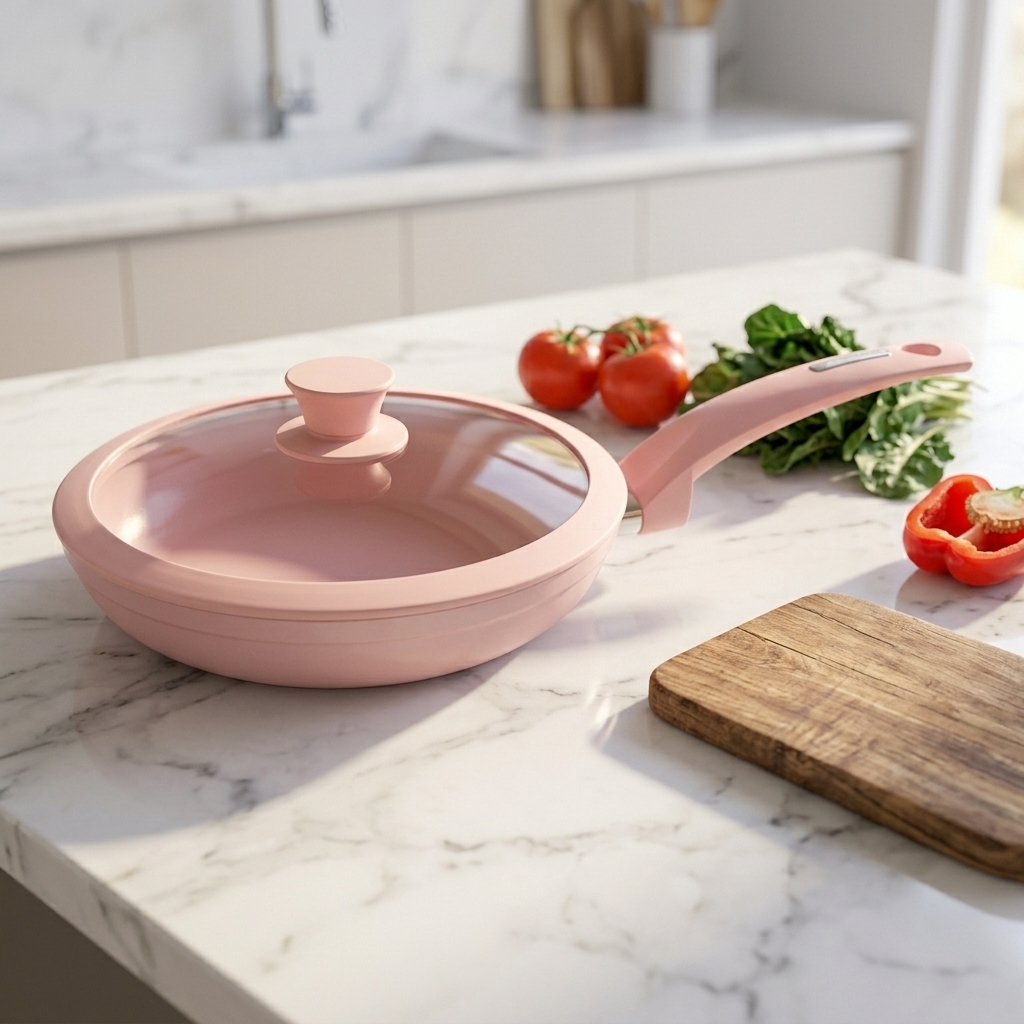
Independent homeware shops across Clifton, Bath, and Cirencester stock custom-branded, beautifully packaged bakeware sets. We support custom pastel external coatings, laser-engraved branding, and plastic-free unbleached craft box packaging.
Hospitality & West Country Gastropubs
Regional pubs and boutique hotels demand versatile vessels capable of handling high-heat baking, roasted savories, and pâté terrines. Nitrided and hard-anodized metal geometries resist acidic butter, sugar, and alcohol glazes.
Bristol & UK Bakeware Procurement Trends (2025–2030)
Strategic insights for procurement directors, commercial brand buyers, and retail category managers navigating regulatory shifts and consumer expectations.
The PFAS-Free & Pure Ceramic Mandate
With UK DEFRA and European chemicals agencies moving toward stringent restrictions on per- and polyfluoroalkyl substances, Bristol buyers are aggressively phasing out older PTFE formulations. MEIS provides fully certified PFOA-, PFOS-, and PFAS-free ceramic sol-gel and organosilicone release matrices tested in accordance with UK statutory food contact instruments.
Circular Economy & Carbon Steel Longevity
Bristol's status as a leading UK environmental and B-Corp hub drives consumer rejection of disposable non-stick bakeware. Heavy-gauge carbon steel has an indefinite structural lifespan and is 100% recyclable. Our nitrided loaf pan line offers an all-natural patina release that requires no chemical recoating over decades of heavy service.
EPR Packaging & Freight Optimization
Compliance with UK Extended Producer Responsibility (EPR) regulations requires minimal, plastic-free primary and transit packaging. MEIS designs nested loaf pan shipping layouts that maximize volumetric container loading, reducing carbon footprint per unit and simplifying recycling for UK distribution centers.
Why Global Cookware Brands Partner with Zhejiang MEIS Kitchenware
Operating our modernized production lines out of Dongnan Industrial Zone, Jinhua, Zhejiang, China—delivering verifiable manufacturing rigor, not middleman trading markups.
TÜV Rheinland Verified Factory
Our complete plant—encompassing heavy hydraulic stamping, deep-drawing presses, CNC rim machining, automated surface cleaning tunnels, electrostatic spray coating lines, and curing ovens—is assessed and certified on-site by TÜV Rheinland.
In-House Mold & Tooling Center
Equipped with precision CNC lathes, wire cutting, and EDM machinery, our mold development workshop accelerates ODM prototype creation. We can take your 3D CAD drawing of a custom loaf pan profile to functional sample within 14 business days.
Rigorously Instrumented Laboratory
Every export production batch undergoes cross-hatch paint adhesion testing, cyclic salt spray corrosion exposure (ASTM B117), thermal shock oven cycling, and handle fatigue tests to guarantee zero defect batches arriving in British ports.
Frequently Asked Questions by Bristol & UK Importers
Clear, direct answers regarding custom tooling, minimum order quantities, compliance certifications, and ocean logistics.
What is the standard minimum order quantity (MOQ) for custom carbon steel loaf pans?
For standard loaf pan configurations (1lb, 1.5lb, and 2lb capacities) utilizing our existing tooling with custom non-stick color coats or silicone-polyester finishes, MOQs start at 1,000 to 2,000 units per production run. For completely custom geometric profiles requiring proprietary pressing dies, tooling MOQs typically begin at 3,000 pieces with amortized mold fees.
Do your non-stick coatings comply with UK Food Contact Regulations and EU 1935/2004?
Yes. All coatings applied at Zhejiang MEIS Kitchenware—including multi-layer non-stick, organosilicate ceramics, and mineral enamels—are certified free of lead, cadmium, PFOA, and PFOS. We routinely support buyer testing through accredited third-party laboratories (SGS, TÜV, Intertek) to ensure seamless customs clearance in UK ports.
What shipping routes and lead times apply for delivery to Bristol and South West England?
Our manufacturing complex in Jinhua is strategically positioned 150 km from Ningbo Port and 280 km from Shanghai Port. Standard sea freight transits from Ningbo to the UK typically route to Port of Bristol (Royal Portbury / Avonmouth Docks) via transshipment, or direct into Southampton/Felixstowe with prompt road haulage along the M4/M5 corridor to your Bristol warehouse within 28–35 days.
Can you provide pullman loaf pans with matching slide lids for commercial sandwich slicing?
Yes. We manufacture commercial pullman loaf pans featuring precision-fit fluted slide-on lids. The corrugation engineered into the sidewalls and sliding lid ensures uniform dough expansion, crisp square-cornered sandwich loaves, and controlled aeration ideal for industrial sandwich production lines.
Partner with a Verified Direct Manufacturer
Consult with our engineering team today to review your CAD specifications, request material samples, or receive a comprehensive FOB/DDP wholesale quote for the Bristol market.