Years Cookware Manufacturing
Verified In-House Specialists
PTFE, PFOA & Heavy-Metal Free
Thermal Tolerance Rating
Engineered Cookware Lines for Regional Distribution
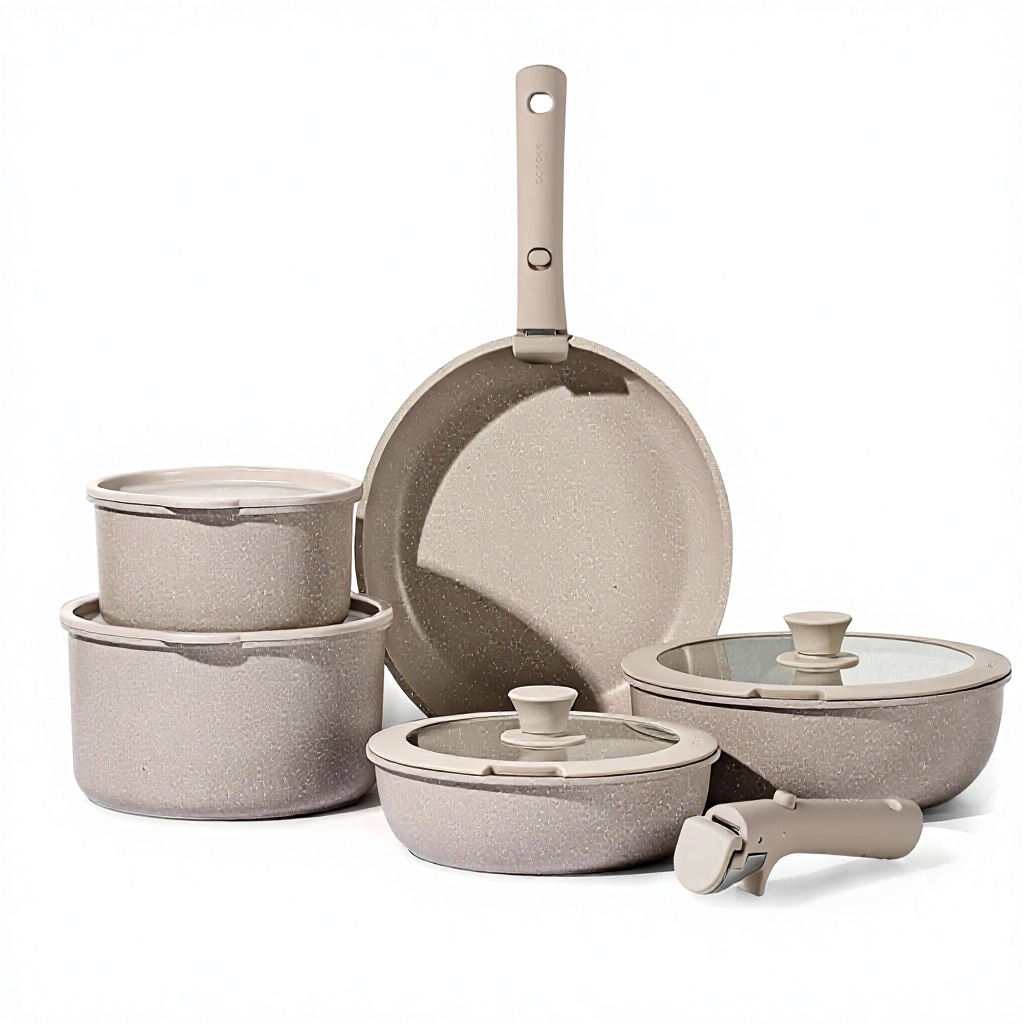
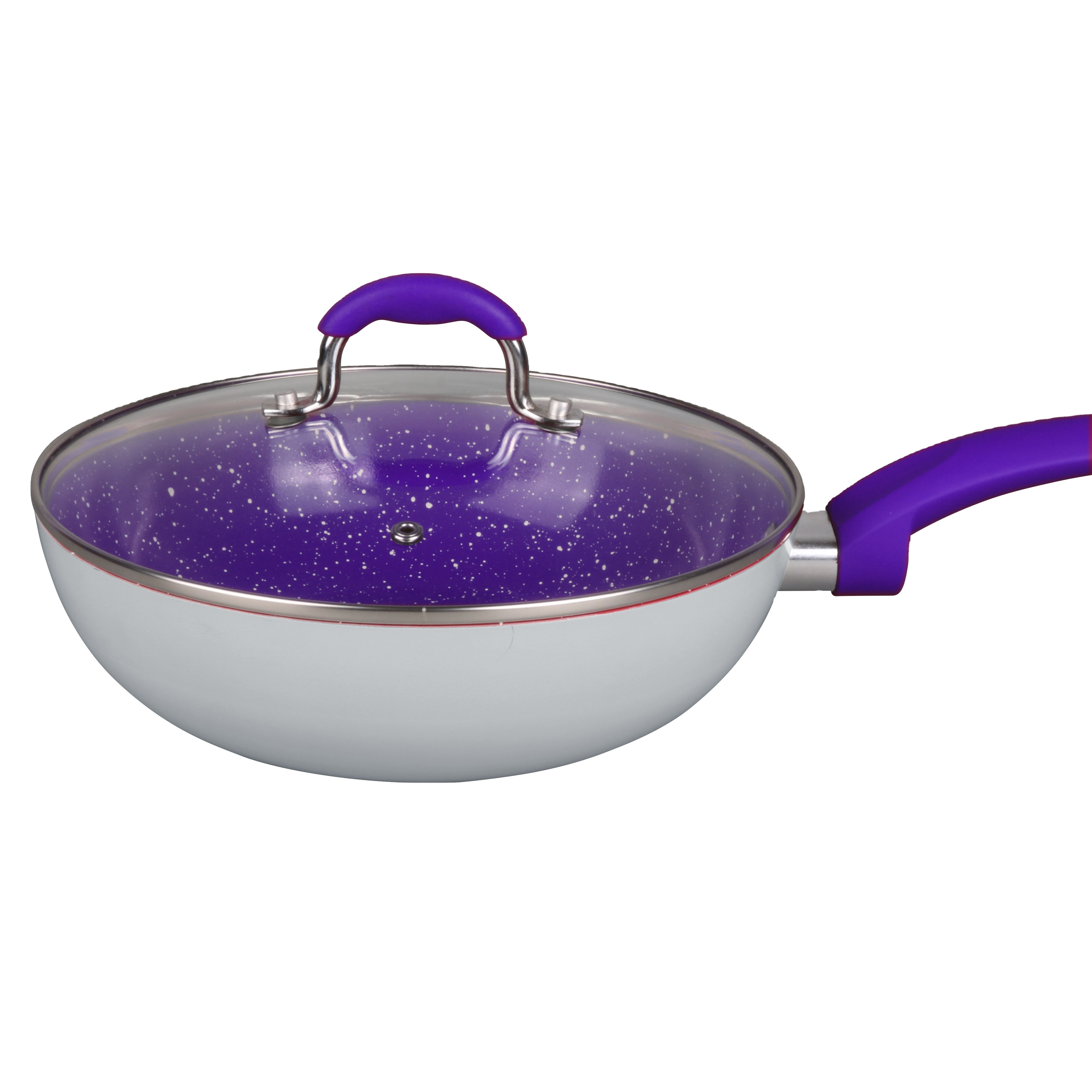
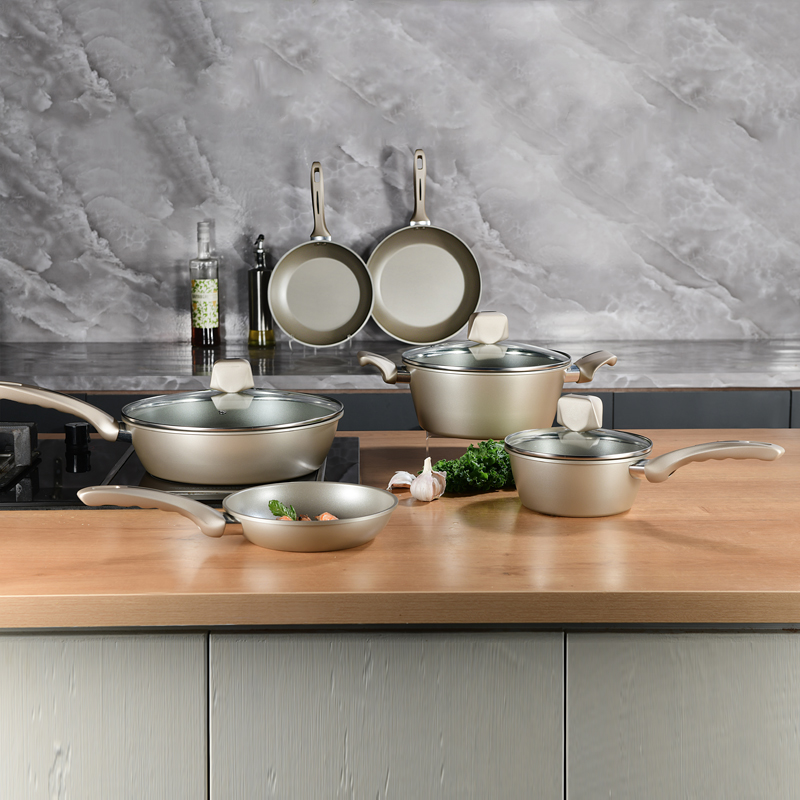
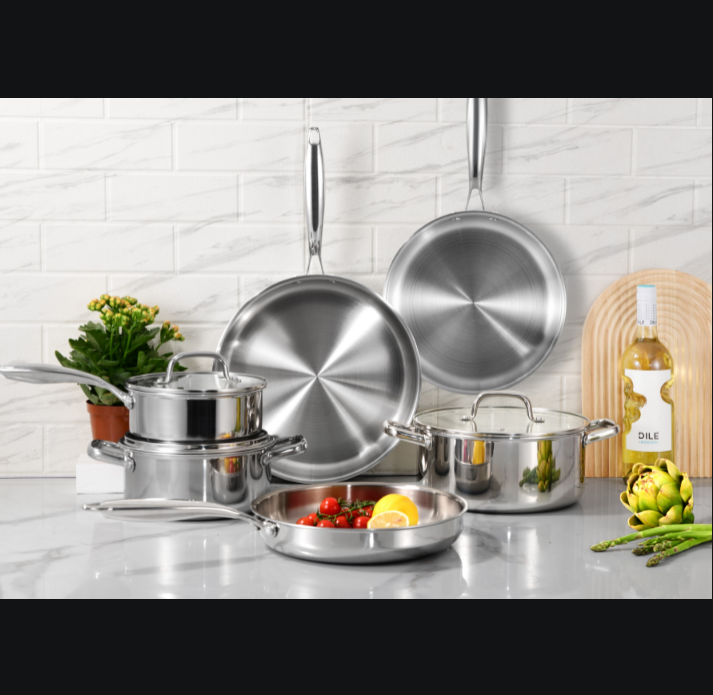
Tested and audited under strict international standards. Below are our premier commercial and domestic cookware models optimized for the San Antonio and broader Greater Bexar County retail and food service markets.
San Antonio Commercial Culinary Sector: Demand Analysis & Technical Fit
As a designated UNESCO Creative City of Gastronomy, the San Antonio metropolitan area represents one of the most culturally vibrant and chemically demanding culinary hubs in North America. Spanning from the dense corridor of fine dining along the River Walk to hyper-authentic Tejano, Mexican, and barbecue kitchens in Southtown, Pearl District, and Stone Oak, the local culinary ecosystem operates under distinctive thermodynamic and chemical stresses that render traditional PTFE-coated cookware obsolete.
1. Acid-Resistant Chemical Inertness in High-Acidity Cookery
San Antonio cooking relies heavily on reduction sauces, salsas, marinades, and braises with high titratable acidity. Flagship dishes utilizing tomatillos, charred chiles, citrus marinades, and tomato reductions maintain an aggressive pH range between 3.2 and 4.8. When cooked in standard fluoropolymer (PTFE) vessels, acidic degradation can trigger premature delamination, bubbling, and leaching at microscopic grain boundaries.
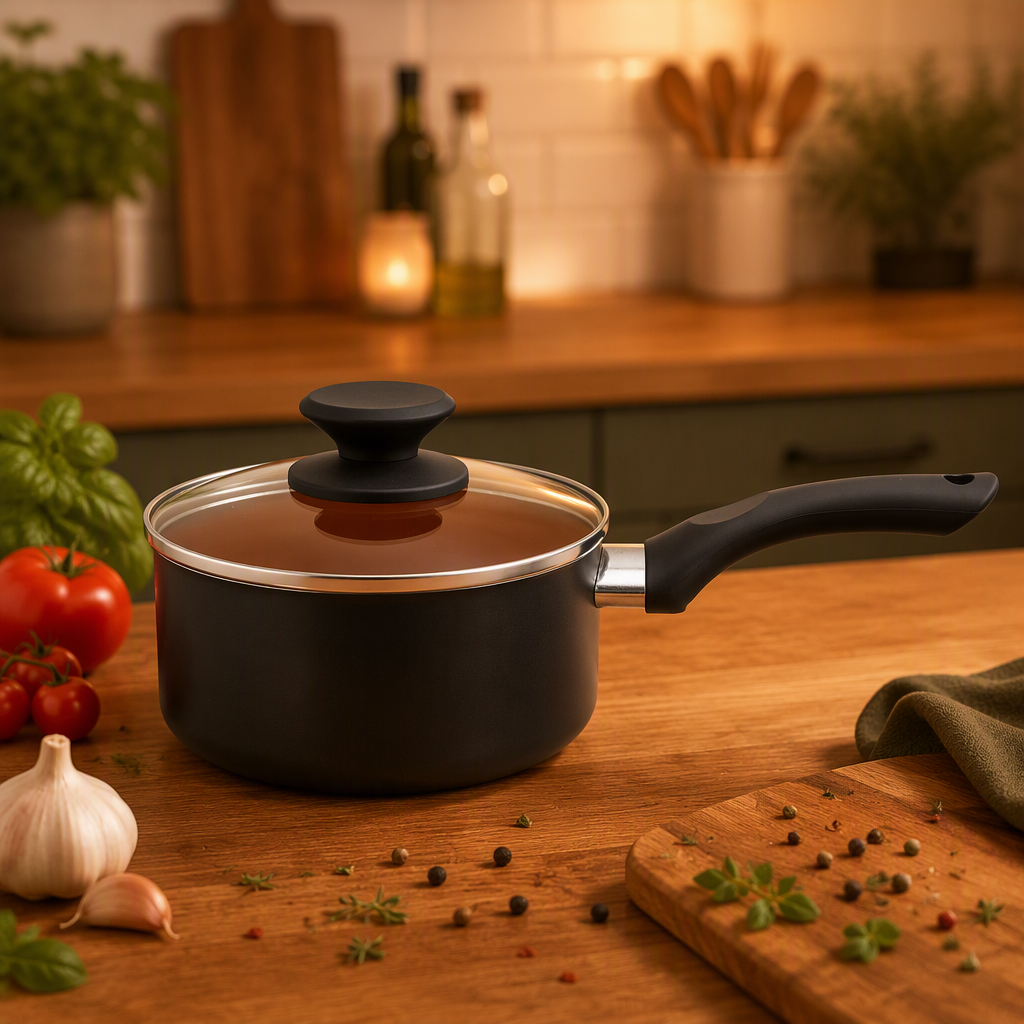
Our ceramic saucepans deploy inorganic Sol-Gel silicon dioxide (SiO₂) matrices. Derived from inorganic mineral quartz, these ceramic non-stick linings are chemically inert. They do not react with acetic, citric, or malic acids, completely avoiding iron or metallic flavor migration while retaining a scratch-resistant surface with an internal contact angle above 105° for frictionless liquid release.
2. High-Altitude and Gas-Heavy Thermal Conduction Profiles
Commercial and institutional kitchens in Bexar County rely predominantly on high-BTU open-flame gas burners, generating concentrated hot spots that induce localized thermal shock. Typical saucepans with stamped low-gauge discs warp under rapid temperature differentials, creating convex bottoms that compromise liquid depth and scorch delicate roux or dairy emulsions.
Our factory mitigates this through heavy-gauge forged aluminum bodies (3.0 mm to 4.5 mm bases) bonded with high-tonnage multi-layered induction caps. Heat disperses evenly across the radiant perimeter, preventing hot spot creation during continuous low-temperature reductions like Mole Poblano, Queso sauces, or Texas chili gravy.
Localized Kitchen Environments & Operational Case Studies
Engineered to bridge the rigorous gap between back-of-house culinary endurance and front-of-house domestic elegance.
High-Volume Hospitality & Banquets
Across downtown convention centers and River Walk luxury hotels, sauce stations run continuously. Ceramic saucepans eliminate chemical smoke points, allowing banqueting staff to hold creamy emulsions, béchamel, and gravies at stable holding temperatures without skin scorch or bitter coating off-gassing.
Heritage Latin-American Reductions
Modern Southwestern and Tex-Mex master kitchens prepare complex reduction broths, chipotle glazes, and dense bean purées. The mineral quartz coating ensures that thick sugars and starches do not caramelize into difficult pan residues, cutting dishwashing turnover time by up to 40%.
Eco-Conscious Suburban Retail Lines
Consumer demographics in northern San Antonio communities (Alamo Heights, Boerne, Fair Oaks Ranch) demand PTFE-free, zero-lead, and non-nanomaterial cookware. Our private-label ceramic lines supply department stores and upscale retailers with certified clean-label cookware lines that align with health trends.
Technical Benchmark: Ceramic Sol-Gel vs. Conventional Systems
Data-driven engineering comparison designed for B2B procurement directors and private label buyers.
| Parameter / Feature | MEIS Inorganic Ceramic (Sol-Gel) | Traditional PTFE Non-Stick | Raw Cast Iron / Enamel |
|---|---|---|---|
| Thermal Degradation Limit | Resistant up to 500°C / 932°F (Zero fumes) | Begins breakdown at 260°C / 500°F | High (Enamel chips at high delta T) |
| Chemical Non-Reactivity | Impervious to pH 2.5–10 acids and alkalis | Prone to micro-pitting from prolonged acid boil | Reactive to acids unless thoroughly seasoned |
| Release Mechanism | Dense Sol-Gel glasslike matrix | Fluoropolymer tension reduction | Hydrophobic polymer seasoning layer |
| Base Metal Options | Forged 3003 Aluminum / Tri-Ply / Carbon Steel | Pressed Aluminum discs | Heavy cast gray iron |
| Food Contact Certification | FDA / LFGB / Prop 65 / PFAS-Free Tested | PFAS reporting required in multiple US states | FDA General recognized as safe (GRAS) |
San Antonio & Central Texas Market Procurement Trends
Supply chain leaders operating in the South Texas triangular logistics corridor (San Antonio–Austin–Laredo) are adjusting to three major regulatory and consumer shifts over the 2024–2028 operational cycle:
Tightening PFAS Restrictions & Prop 65 Compliance
National and state-level scrutiny surrounding per- and polyfluoroalkyl substances (PFAS) has shifted buyer sentiment among major retail merchandisers and food safety compliance boards. Central Texas hospitality groups and retail distributors are aggressively phasing out cookware carrying legacy fluorochemicals. Procuring certified ceramic non-stick coatings with verified independent lab testing provides commercial resilience against regulatory audits and class-action liability.
Near-Port Consolidation & Trans-Texas Freight Efficiency
San Antonio's geographical placement as a distribution junction along the I-10 and I-35 transit corridors allows efficient overland freight consolidation originating from Gulf Port terminals like Houston and Corpus Christi. By partnering directly with an assessed manufacturing source like Zhejiang MEIS Kitchenware, bulk importers leverage high-density ocean container packing coupled with localized inland cross-docking, reducing unit landing costs significantly compared to purchasing from coastal wholesale distributors.
Rapid Growth of Induction in Urban Multi-Unit Residences
Driven by building decarbonization efforts, new urban developments in San Antonio's Central Business District and surrounding high-density master plans are transitioning to clean electric induction cooktops. Cookware assortments must feature heavy-duty 430 magnetic stainless steel stamped induction plates to remain viable across modern multi-family kitchens and culinary colleges.
Why Enterprise Importers Partner with Zhejiang MEIS
Direct manufacturer capabilities verified on-site by TÜV Rheinland in Jinhua, Zhejiang, China.
TÜV Rheinland Audited Facility
Our Jinhua production base operates verified vertical lines spanning hydraulic drawing, precision CNC base turning, automatic surface degreasing, multi-layer Sol-Gel robotic spray lines, and integrated assembly checkpoints.
Rapid In-House Mold & Tooling
Equipped with internal CNC machining, CAD tooling suites, and lathes, we reduce private label sampling cycles from months to just 10–14 days, accommodating custom San Antonio retail brand dimensions, handles, and branding.
Standardized QA Stress Labs
Each production run undergoes on-site salt spray corrosion testing, cyclic handle fatigue checks, torque torsion validation, coating cure thermal verification, and non-stick release durability tests before container sealing.
Frequently Asked Questions by San Antonio Cookware Buyers
Direct technical answers addressing commercial import protocols, compliance, and product customization.
Yes. Every ceramic non-stick formulation we apply is certified PFOA-free, PTFE-free, cadmium-free, and lead-free. Testing reports by SGS and TÜV confirm compliance with FDA food contact requirements, NSF-readiness, and California Proposition 65 total heavy metals limits.
Yes. When engineering for commercial hospitality accounts, we recommend our forged aluminum line with 3.5 mm to 4.5 mm bottom thickness or our tri-ply stainless models. Forged rims prevent warping, and cast stainless steel handles secured by heavy-gauge rivets stay structurally sound under continuous high BTU exposure.
For customized OEM/ODM saucepans (custom Pantone exterior color, customized laser-engraved logo, and custom retail gift boxes), our standard production MOQ is 1,000 to 2,000 units. For selected standard inventory configurations or multi-item container consolidation, trial batches can be arranged.
Mass production lead time is typically 30 to 45 days post-sample approval. Ocean transit from Ningbo/Shanghai port to Port Houston takes approximately 28 to 35 days via Gulf sea freight routes, followed by 3 to 5 days inland cross-docking into San Antonio fulfillment centers.
Unlike conventional non-stick that degrades under extended contact with acidic elements, our Sol-Gel quartz matrix is completely inorganic and non-porous. It does not react with vinegars, chiles, or tomatoes, preventing coating discoloration, bubbling, or flavor alteration.
Yes. We apply hydraulic-pressed perforated or full-coverage 430 stainless steel induction discs to both pressed and forged aluminum saucepans (16 cm, 18 cm, 20 cm, 24 cm). Our carbon steel and tri-ply series are naturally magnetic across their entire base.
Scale Your Product Assortment with a Direct Manufacturer
Whether you are building a private-label retail line for Texas supermarkets or procuring heavy-duty ceramic cookware for commercial hospitality distribution, our engineering team is ready to deliver tailored quotations and physical prototype samples.