Engineered Cookware Solutions for Commercial & Retail Supply
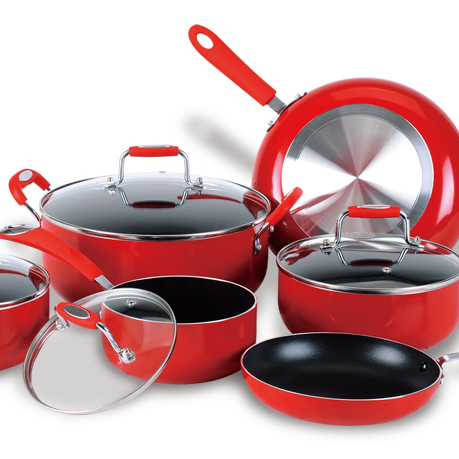
Explore our export-grade nonstick and hard-anodized aluminum and carbon steel cookware lines. Fully customisable for private-label distributors, HoReCa wholesalers, and retail chains serving Varna and broader European markets.
Whitepaper: High-Performance Hard Anodized Cookware Manufacturing for the Varna Market
As the maritime capital of Bulgaria and a premier Black Sea tourism, culinary, and commercial port hub, Varna presents unique micro-climatic and commercial demands for professional kitchenware. The city’s vibrant hospitality sector (HoReCa), combined with growing consumer appetite for premium, durable culinary tools, requires cookware that resists aggressive coastal atmospheric corrosion, heavy thermal cycling, and intense mechanical wear.
This technical report serves procurement executives, regional brand owners, commercial kitchen outfitters, and wholesale importers based in Varna. Manufactured by Zhejiang MEIS Kitchenware Co., Ltd. in Jinhua, China, our hard-anodized aluminum and advanced multi-layer nonstick cookware sets bridge the gap between heavy-duty metallurgical integrity and cost-optimized OEM/ODM supply chains. Below, we dissect the electrochemical manufacturing processes, local Varna application scenarios, EU regulatory compliance standards, and streamlined Black Sea freight strategies.
Electrochemical Hard Anodization: Metallurgy & Coating Engineering
Unlike conventional pressed or cast cookware, Type III Hard-Coat Anodization transforms the molecular structure of the raw aluminum alloy itself. The process involves submerging precision-machined 3003-grade or 5052-grade aluminum vessels into an electrolyte bath (primarily sulfuric acid maintained at low temperatures between 0°C and 5°C) and passing an electrical current up to 36 amperes per square decimeter.
Controlled Anodic Oxide Layer
Our automated anodizing lines build an aluminium oxide (Al₂O₃) layer of 40 to 50 microns deep into the substrate. This layer penetrates the core metal while simultaneously building up on the surface, creating an integrated protective barrier that cannot chip, peel, or flake off.
Micro-Vickers Hardness (HV300-500)
The resulting hard-anodized surface achieves a hardness score exceeding 450 Vickers (HV), making it twice as hard as stainless steel and significantly more scratch-resistant than un-anodized commercial aluminum alloys.
Thermal Distribution & Efficiency
With a thermal conductivity coefficient of approximately 225 W/m·K (compared to 16 W/m·K for 304 stainless steel), hard-anodized aluminum ensures rapid heat absorption and zero thermal hotspots, preventing food scorching during high-speed commercial kitchen service.
Localized Application Scenarios in Varna, Bulgaria
Varna’s geographic and economic profile creates specialized operating environments for cookware. A successful B2B procurement strategy must account for these three distinct localized market drivers:
1. Coastal Resort HoReCa & High Saline Resilience
Varna’s extensive maritime hospitality landscape—stretching across Golden Sands, St. Constantine and Helena, and the city port area—operates under constant exposure to humid, salt-laden sea breezes. Standard cookware raw edges are prone to galvanic oxidation. MEIS hard-anodized cookware undergoes rigorous ISO 9227 Neutral Salt Spray (NSS) testing exceeding 240 hours, ensuring total resistance against surface pitting and sea-air degradation during storage and coastal kitchen use.
2. Black Sea Seafood Gastronomy
Traditional Bulgarian maritime cuisine heavily features pan-fried turbot, mussels, goby fish, and acidic tomato-wine reduction sauces. Acidic cooking media aggressively attack standard low-grade aluminum. Our hard-anodized oxide shell acts as an inert chemical shield, completely neutralizing acidic leaching (pH values as low as 2.8) and guaranteeing compliance with strict food sensory taste standards.
3. Commercial Kitchen Induction Transition
Bulgarian commercial kitchens are rapidly adopting high-efficiency induction cooktops to offset rising grid energy costs in Varna. MEIS supplies hard-anodized cookware integrated with cold-impact bonded AISI 430 stainless steel induction discs (friction-welded under 1,200 tons of hydraulic pressure). This guarantees zero delamination under rapid thermal shock when moving from high-flame searing to cold washing stations.
Substrate Performance Comparison for B2B Importers
To assist Varna-based purchasing managers in selecting the ideal material for their retail or food-service catalog, the table below provides an engineering-level comparison across primary kitchenware metals:
| Performance Vector | MEIS Hard Anodized Aluminum | Standard Pressed Nonstick | 304 Stainless Steel | Enameled Cast Iron |
|---|---|---|---|---|
| Surface Hardness (Vickers) | HV 350 – 500 (Ultra Hard) | HV 40 – 70 (Soft) | HV 180 – 220 (Medium) | HV 400 – 450 (Brittle) |
| Thermal Conductivity | 225 W/m·K (Exceptional) | 210 W/m·K (High) | 16 W/m·K (Poor, requires core) | 52 W/m·K (Slow) |
| Corrosion Resistance (Salt Air) | Superior (Anodic oxide sealed) | Moderate (Depends on coating) | High (Pitting risk in saline) | Moderate (Chip risk) |
| Weight to Strength Ratio | Optimal (Lightweight & rigid) | Lightweight (Warping risk) | Heavy | Extremely Heavy |
| Thermal Shock Resistance | Delta T 260°C (Warp Free) | Delta T 180°C | Delta T 300°C | Delta T 150°C (Cracking risk) |
| EU Compliance (LFGB / REACH) | Fully Certified (PFOA / Lead Free) | Compliant (Requires audit) | Fully Certified | Compliant |
Zhejiang MEIS Kitchenware: Verified OEM/ODM Capability
Partnering directly with a certified manufacturer removes middleman markups and guarantees strict adherence to product specifications. Located in the Dongnan Industrial Zone of Jinhua, Zhejiang, Zhejiang MEIS Kitchenware Co., Ltd. spans a fully integrated manufacturing ecosystem optimized for export production.
TÜV Rheinland Verified On-Site
Our 105-person manufacturing plant has undergone comprehensive on-site audits by TÜV Rheinland. From raw aluminum billet sourcing to final export carton palletizing, every stage operates under ISO 9001 certified quality controls.
In-House Tooling & CNC Milling
Equipped with internal mold-making workshops, precision lathes, and high-speed CNC machinery, we turn customized OEM concepts into physical samples within 7–12 working days, significantly accelerating time-to-market for Varna importers.
EU Regulatory Compliance
All nonstick coatings (including Ceramic, Granite, Marble, and PTFE/Titanium reinforced systems) are certified free of PFOA, PFOS, lead, and cadmium, complying fully with EU Framework Regulation (EC) No 1935/2004 and German LFGB food safety standard.
Supply Chain & Maritime Freight Logistics for Varna
Navigating international shipping routes requires precise coordination. MEIS offers tailored freight solutions to ensure landed cost efficiency when shipping from China to Bulgaria:
Primary Ocean Route: Direct sea-container routes dispatch from Ningbo Port or Shanghai Port, traversing the Suez Canal and Mediterranean to reach the Port of Varna (Varna East / Varna West terminals). Average ocean transit time ranges between 24 and 28 days.
Customs Clearance & Packaging Engineering: All shipments are packaged in export-grade, 5-ply double-wall corrugated cartons with high humidity resistance ratings (protecting goods during ocean transit across humid tropical zones). Goods are labeled with EU TARIC compliance codes, EAN/UPC barcodes, and customized Bulgarian language retail box art upon request.
Request Your Custom OEM/ODM Quotation Today
Direct factory prices, flexible MOQs for trial market entries, and full technical documentation for Varna distributors and retail buyers.
Get a QuoteB2B Procurement FAQ: Importing Cookware to Varna
Partner with China’s Leading Cookware Manufacturer
Connect directly with our export engineering team. Receive technical specifications, product catalogs, and landed cost estimates for Port of Varna delivery.
Get a Quote