Featured Export-Grade Cookware Recommendations
High-demand forged aluminum, carbon steel, and specialized multi-layer non-stick cookware configurations optimized for high thermal efficiency and tropical climate durability.
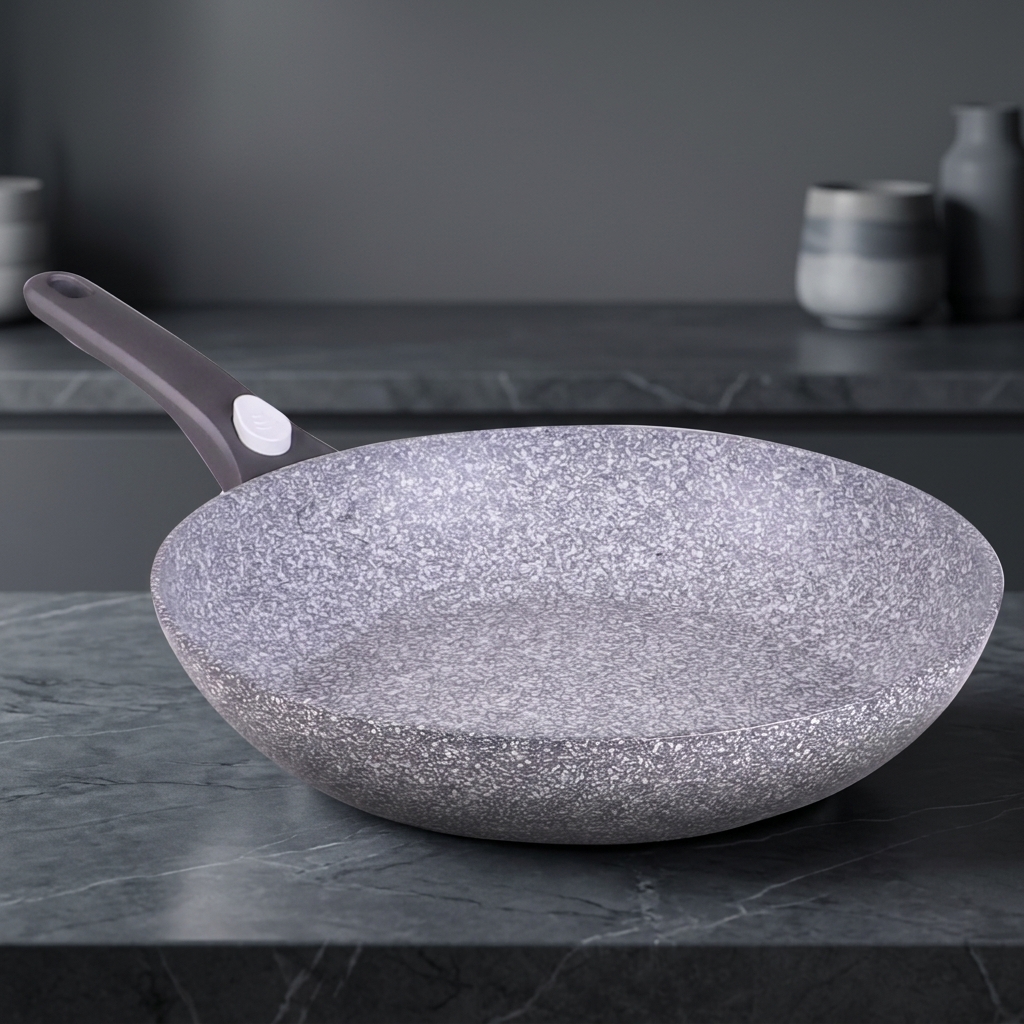
Granite Coating Non-Stick 9 Inch 24cm Forged Aluminum Fry Pan with Detachable Handle Soft Touch Coating Induction Ready
Die-forged 4.0mm heavy rim, 3-layer stone-derived granite non-stick coating, space-saving detachable handle mechanism for easy container packing.
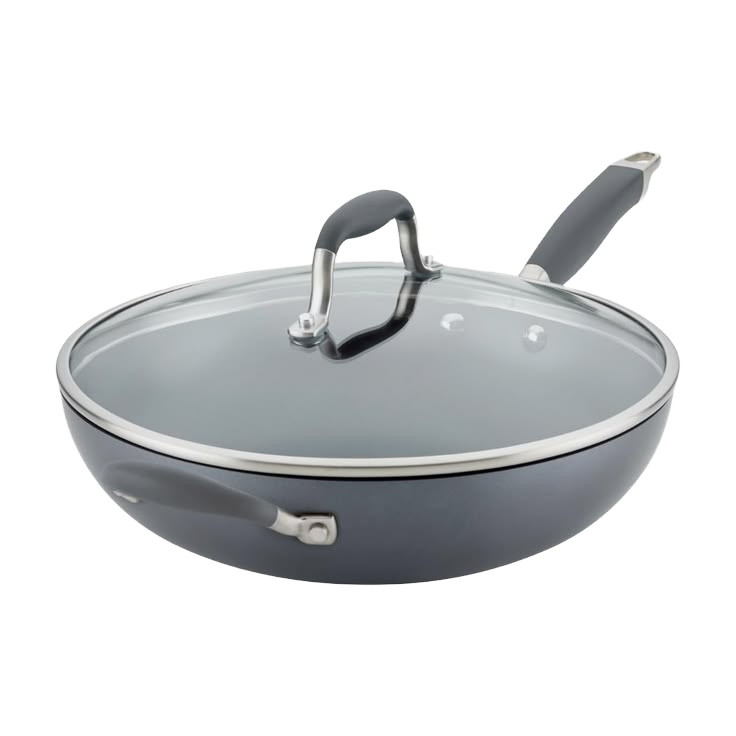
European-Style Frying Pan 26/28/30cm Pressed Aluminum Alloy Non-stick Ceramic Coating Induction Bottom Glass Cover Oven Safe
High-grade pressed aluminum sheet, eco-friendly ceramic interior, tempered glass lid with stainless rim, optimized for gas & induction stoves.
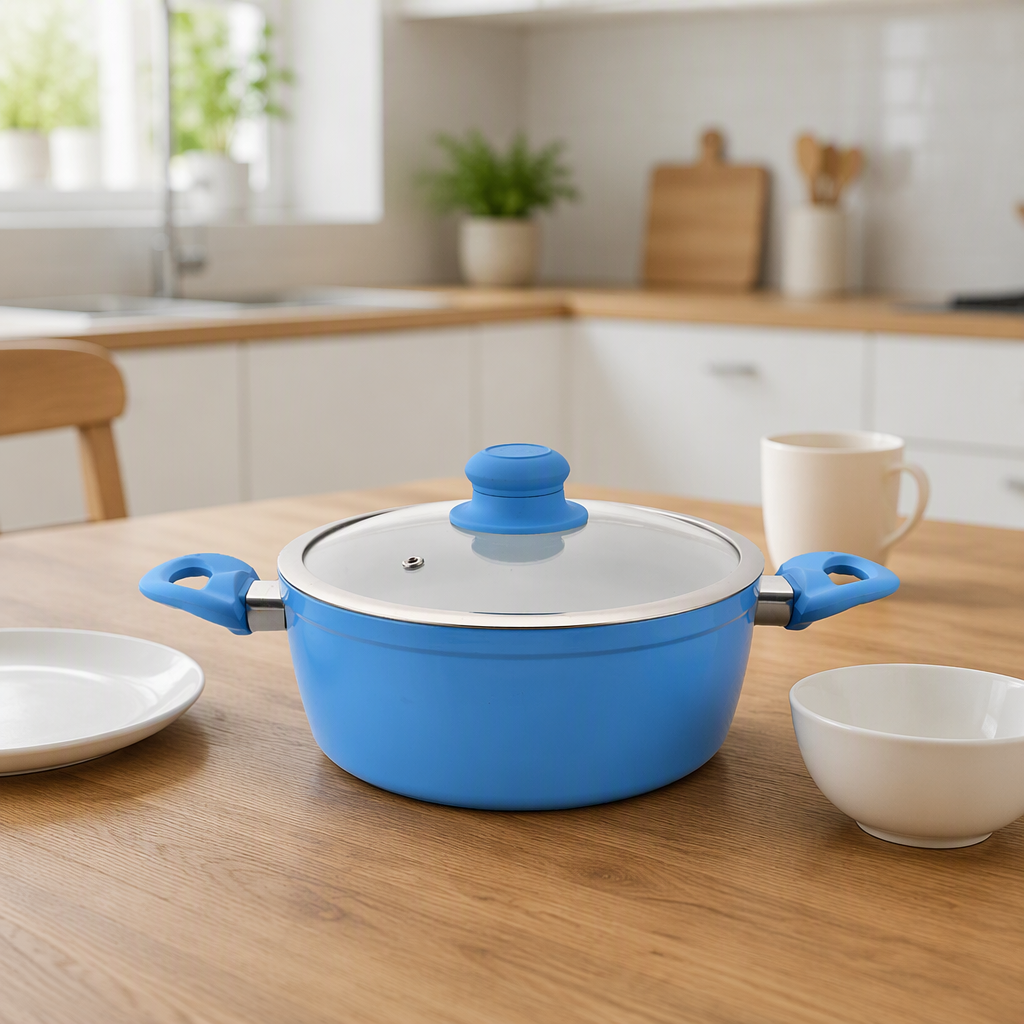
24 cm Durable and Lightweight Forged Non Stick Casserole Soup Pot with Bakelite Handle and Glass Lid for All Heat Sources
Engineered for slow-simmered dishes, light forged structure, heat-resistant ergonomic Bakelite side handles, high thermal conductivity.
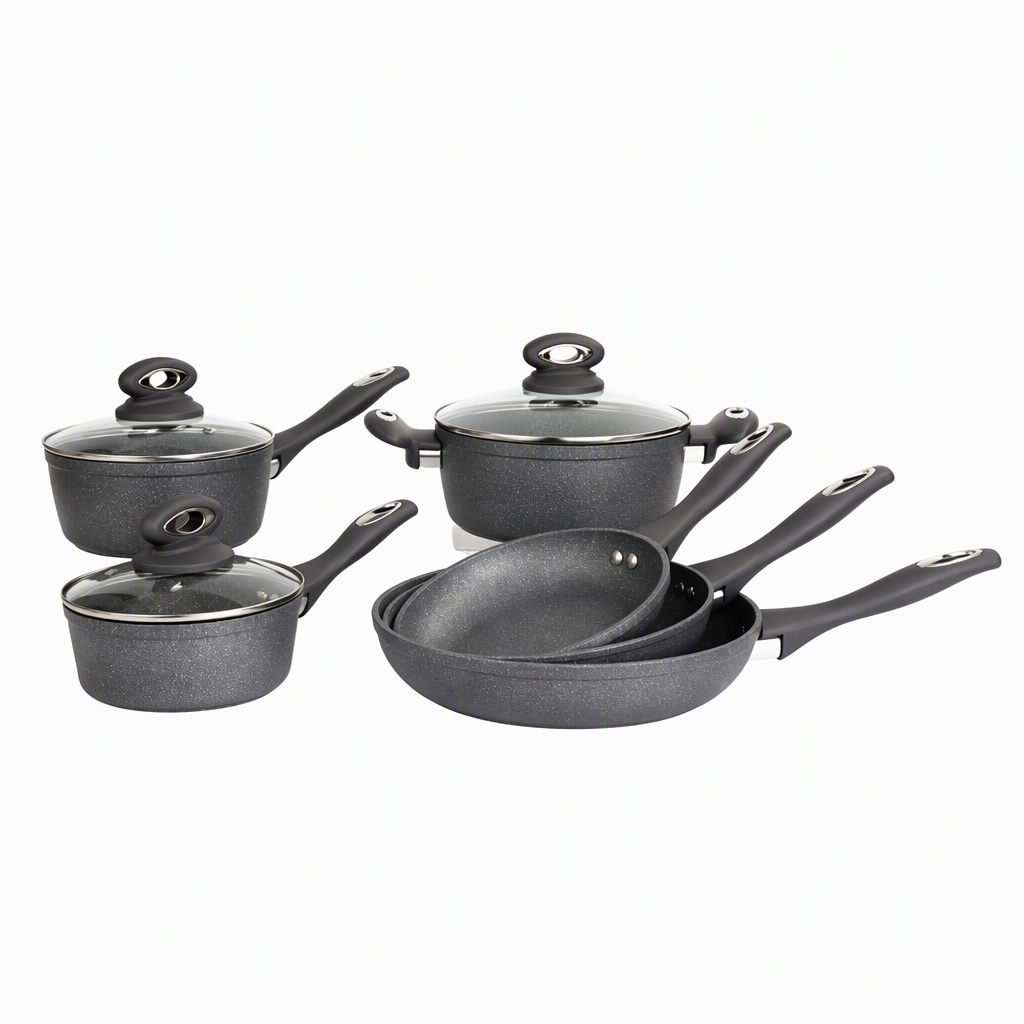
9 Piece Forged Aluminum Cookware Set Marble Coating Induction Base Glass Lids Oven and Dishwasher Safe
Complete commercial & household stock set. Features multi-size pots, fry pans, marble speckle release layer, and warp-proof magnetic induction bases.
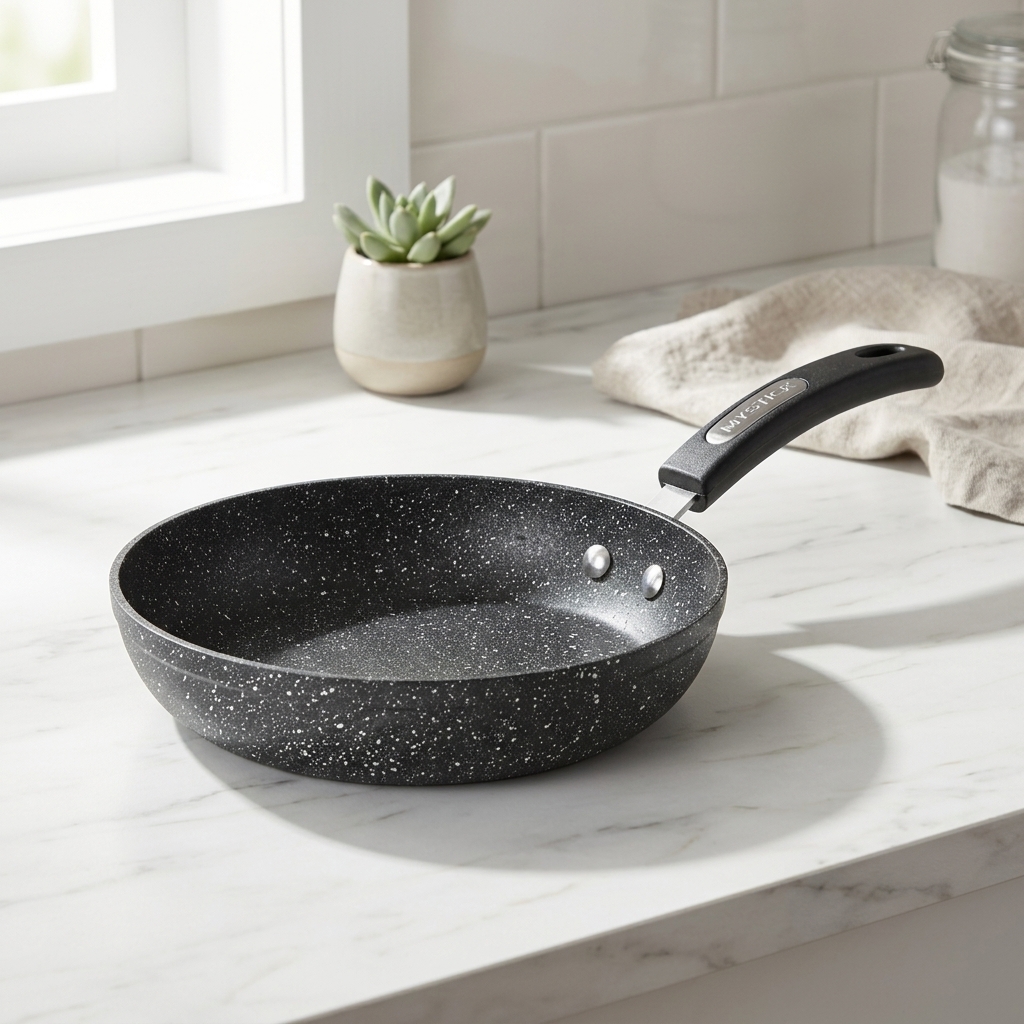
20cm Aluminium Shot Blast Frying Pan & Cooking Pot 1-2L Capacity Non-Stick for Gas/Electric/Induction Hobs Dishwasher Safe
Shot-blasted aluminum substrate for extreme non-stick adhesion, multi-hob adaptability, ideal compact footprint for fast daily meal preparation.
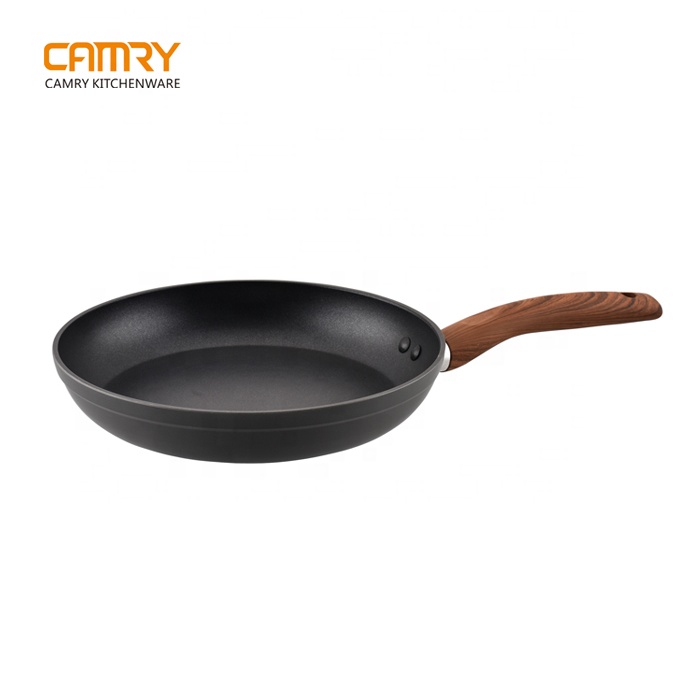
7PCS Dark Grey Forged Aluminum Megaware Cookware With Wooden Soft-touched Handle
Premium aesthetic dark grey forged bodies paired with heat-isolated wood-grain soft-touch handles. Highly popular for mid-to-high end retail channels.
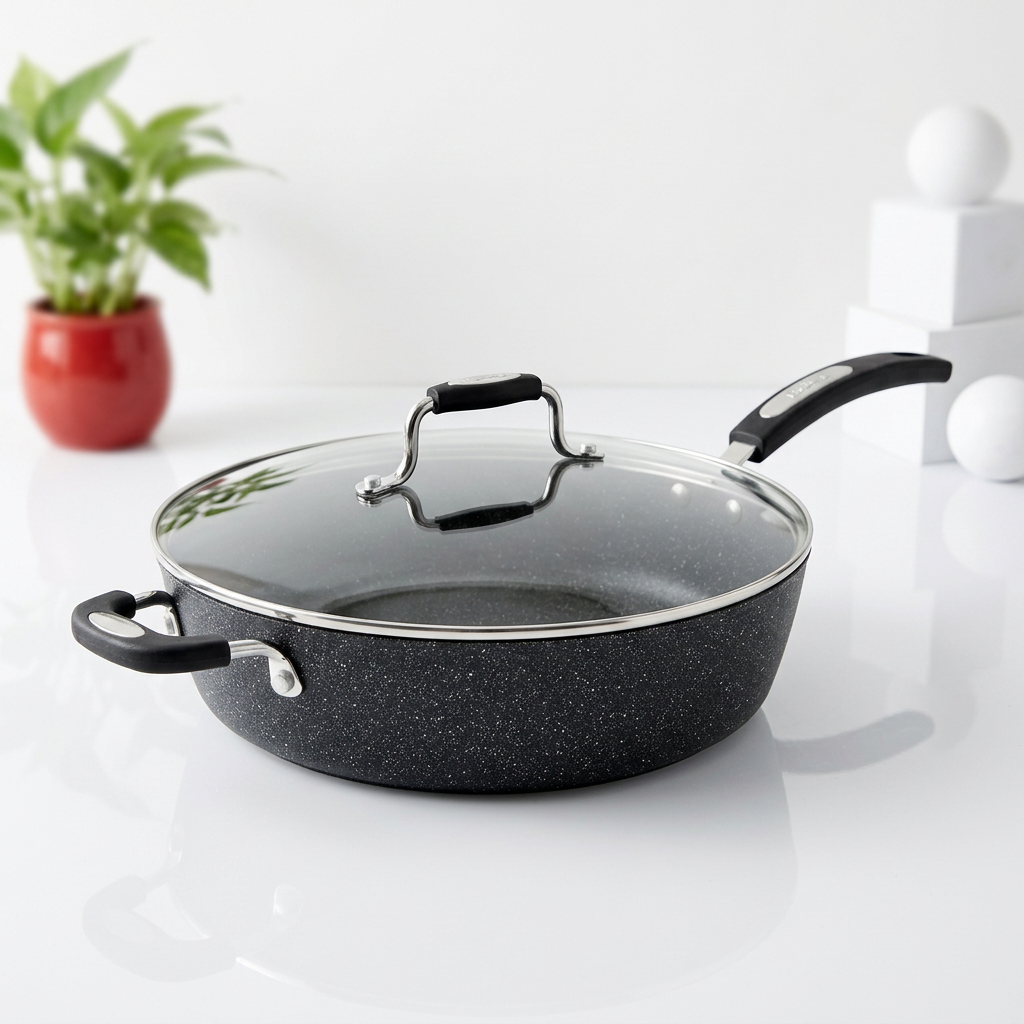
Classic 11 Inch (28cm) Non-Stick Cookware Set Deep Fry Pan Helper Handle Durable Forged Aluminum 4 Quarts Glass Cover Induction
High-capacity 4-quart volume with secondary helper handle. Deep sidewalls prevent oil spatter during heavy frying; includes shatter-resistant glass cover.
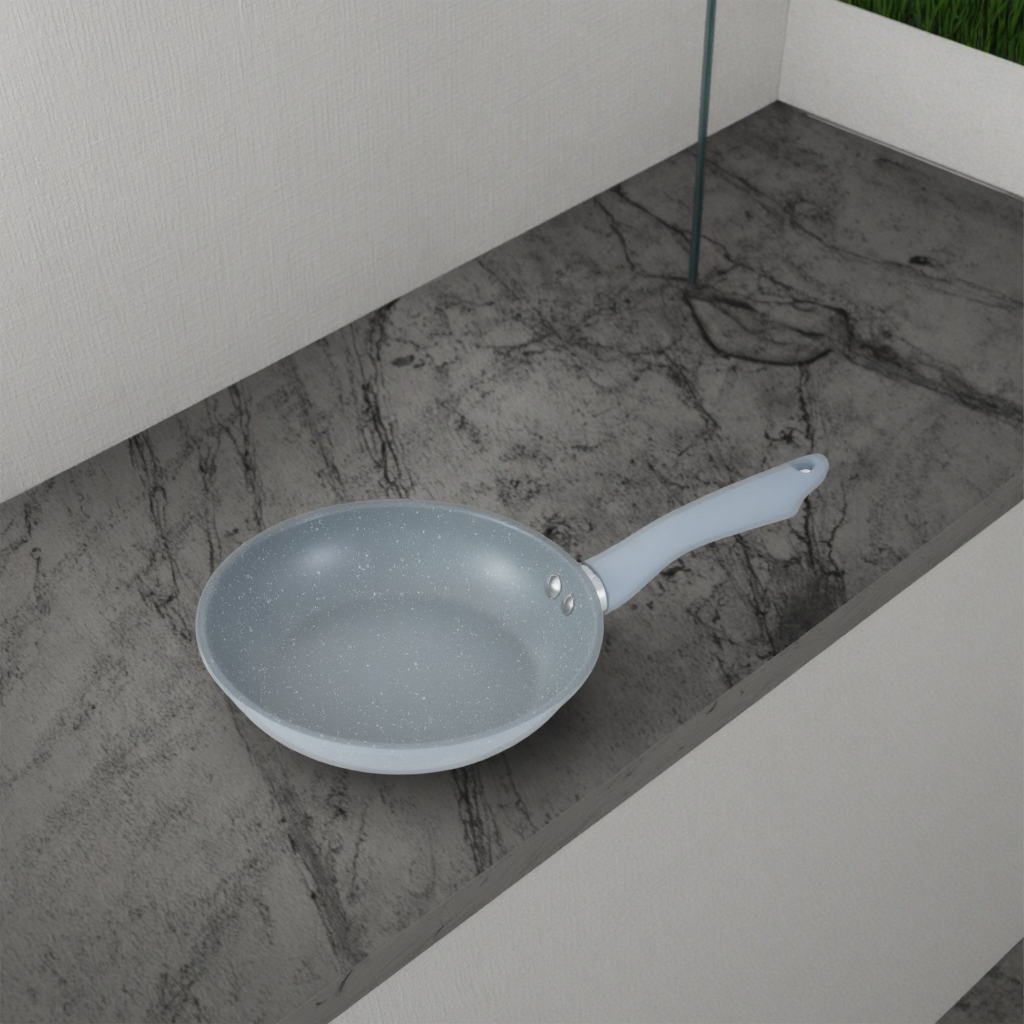
10-Inch Heavy Gauge Carbon Steel Fry Pan with Bakelite Soft Touch Handle Ceramic Non-Stick Eco-Friendly Pans
Heavy gauge carbon steel body providing rapid heat response and high-heat tolerance, non-toxic eco-friendly ceramic interior surface.
Industry White Paper: Optimizing Forged Aluminum Cookware Sourcing for the Camagüey Market
As the commercial hub of central Cuba, Camagüey represents a distinct and evolving market for kitchenware procurement. Importers, wholesale distributors, and commercial hospitality suppliers in Camagüey face unique challenges: high ambient humidity, diverse cooking heat sources (ranging from Liquefied Petroleum Gas burners and electric hot plates to kerosene and emerging induction units), and intensive daily culinary demands. For B2B buyers looking to gain a competitive edge, sourcing direct from verified China forged aluminum cookware factories provides an optimal balance of structural longevity, energy efficiency, and cost competitiveness.
Localized Culinary & Operational Scenarios in Camagüey
Camagüey's vibrant food service industry—encompassing state-run dining facilities, private paladares, and dense domestic households—requires cookware engineered for specific regional cooking methods:
Furthermore, energy conservation is a vital consideration in Cuba. Due to varying power supplies, cookware must maximize every joule of energy. Forged aluminum's superior thermal inertia ensures that heat is rapidly absorbed from low-output gas burners or electric elements and distributed uniformly across the entire cooking surface, reducing liquid fuel consumption and electrical usage.
Engineering Superiority: Die-Forged Aluminum vs. Pressed & Cast Methods
Understanding the metallurgical differences between manufacturing methodologies is essential for professional procurement officers. In modern Chinese cookware manufacturing centers like Jinhua, Zhejiang, three main techniques dominate: Pressed Stamping, Die-Forging, and Gravity Casting.
Die-Forging represents the sweet spot of high structural integrity, lightweight ergonomics, and thermal efficiency. Under extreme hydraulic pressure (typically between 2,500 to 3,500 metric tons), solid aluminum 3003-grade discs are forced into high-precision steel molds. This process compresses the crystalline grain structure of the alloy, eliminating micro-porosity and increasing tensile strength without adding unnecessary bulk.
| Technical Criterion | Stamped Pressed Aluminum | MEIS Forged Aluminum | Cast Aluminum |
|---|---|---|---|
| Hydraulic Pressure Force | 300 - 600 Tons | 2,500 - 3,500 Tons | Gravity / Low Pressure Injection |
| Base-to-Wall Ratio | Uniform thin thickness (1.8 - 2.5mm) | Thick base (4.0 - 5.0mm) + Thin wall (2.2mm) | Heavy thick structure throughout (3.5 - 6mm) |
| Thermal Deformation Temp | Low (Risk of warp on gas flames) | High (Warp-resistant structure) | High (Rigid but prone to brittle fracture) |
| Weight-to-Durability Ratio | Lightweight / Low Durability | Optimal Ergonomic Balance | Heavy / High Fatigue on User |
| Landed Shipping Freight Efficiency | High Container Load Density | High Load Density + High Retail Value | Heavy Weight Reduces Net Unit Quantity |
| Non-Stick Layer Longevity | Standard (2-3 Years Domestic) | Extended (5+ Years Commercial/Domestic) | Extended Surface Life |
Advanced Surface Pre-Treatment: Shot Blasting Technology
A non-stick coating is only as resilient as the mechanical bond between the fluoropolymer/ceramic layer and the aluminum substrate. At Zhejiang MEIS Kitchenware Co., Ltd., we utilize automated Shot-Blasting (Peening) pre-treatment lines. High-velocity stainless steel micro-spheres etch microscopic anchor points into the die-forged pan surface before coating application. This process increases non-stick surface adhesion strength by up to 300% compared to chemical washing alone, rendering our pans resistant to peeling, blistering, and scratching during heavy usage in Camagüey kitchens.
Zhejiang MEIS Kitchenware Co., Ltd. — Your Verified Manufacturing Partner
Located in the heart of China’s hardware manufacturing corridor in Jinhua, Zhejiang, Zhejiang MEIS Kitchenware Co., Ltd. operates a fully integrated 20,000-square-meter production facility. Verified on-site by TÜV Rheinland, our plant manages the complete lifecycle of cookware production: from raw aluminum disc pressing and CNC lathe base finishing to automated spray coating, curing ovens, handle strength assembly, and final container packaging.
Frequently Asked Questions for B2B Importers in Camagüey
Here are expert answers to technical, commercial, and logistical queries commonly raised by purchasing managers and wholesale buyers supplying the Camagüey market.
Why is forged aluminum superior to pressed aluminum for the Camagüey retail market?
Are MEIS non-stick cookware coatings compliant with food safety standard regulations?
What is the typical Minimum Order Quantity (MOQ) and container lead time for custom orders?
Can MEIS cookware be used on all heat sources available in Cuba (Gas, Electric, Induction)?
How does MEIS ensure handle safety and durability under intensive commercial usage?
What OEM/ODM customization options are available for private-label brand importers?
Expand Your Market Share in Camagüey with China's Premier Forged Cookware Factory
Partner with Zhejiang MEIS Kitchenware Co., Ltd. for direct factory pricing, certified TÜV Rheinland quality assurance, robust production speed, and comprehensive OEM/ODM support for your commercial supply chain.