Featured Ceramic & Nonstick Cookware Series
Direct-from-factory export lines engineered with multi-layer ceramic matrices, heavy-gauge aluminum bodies, and magnetic induction bases for the Guayaquil market.
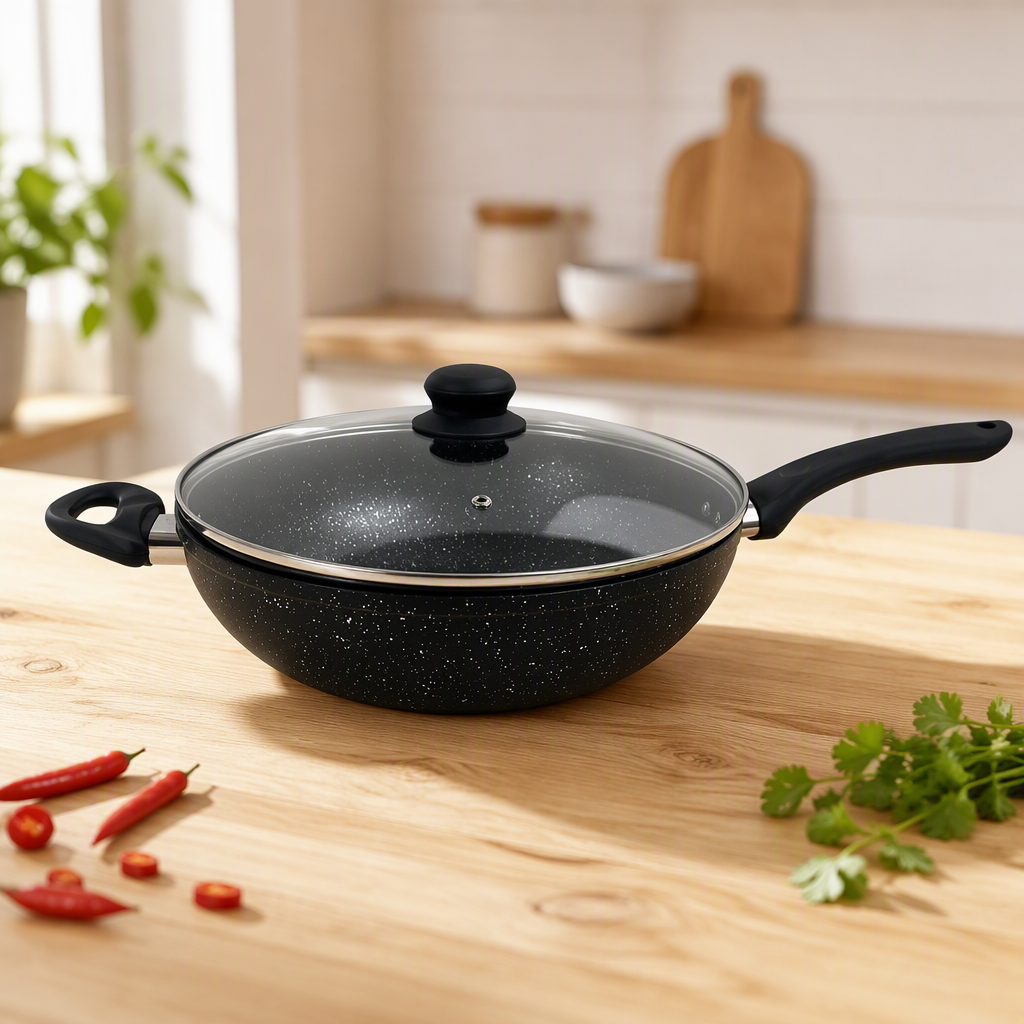
32 cm Granite Coating Non Stick Forged Wok 5.5L Aluminum Fry Pan Glass Lid Heat Resistant Handle Gas Induction
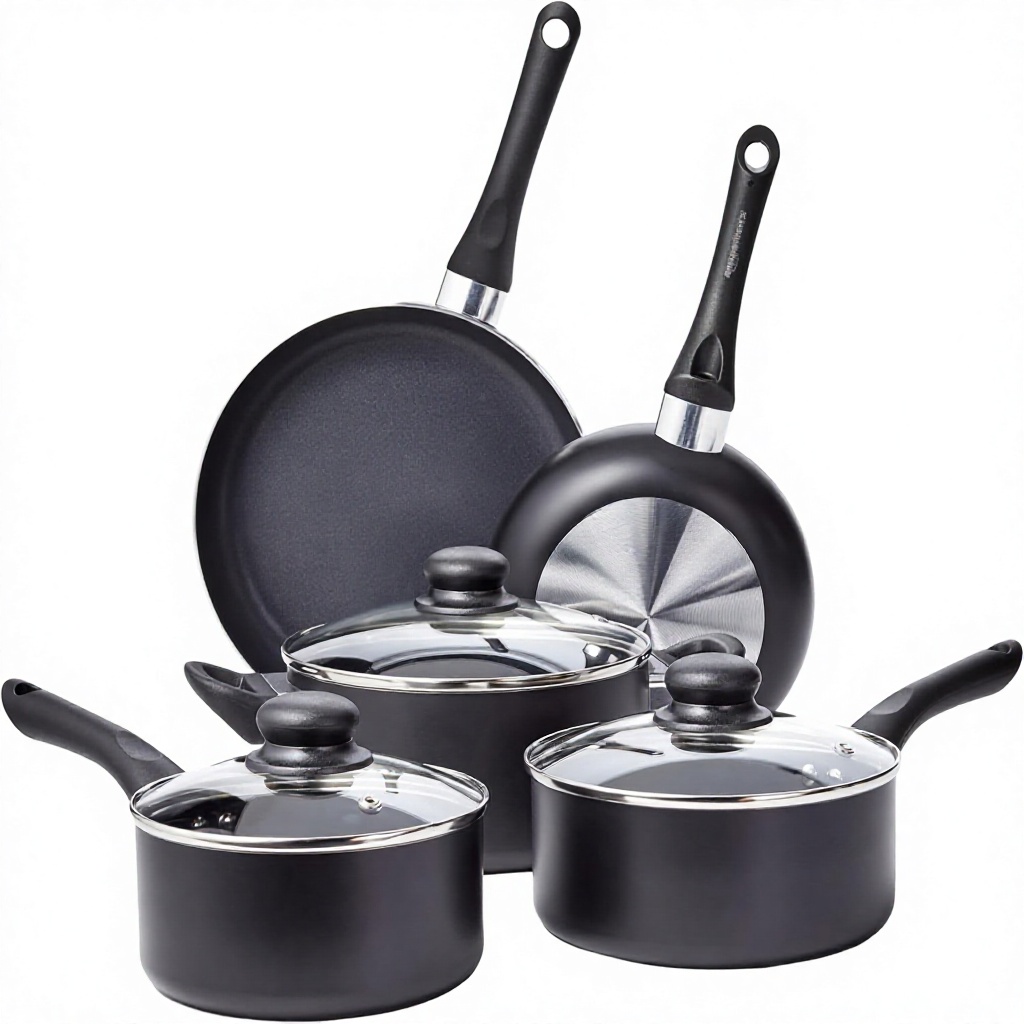
Basics Aluminum Ceramic Non-Stick 8-Piece Cookware Set with Gas & Induction Ready Pots Pans Plastic Hand Grip Pot Cover Black
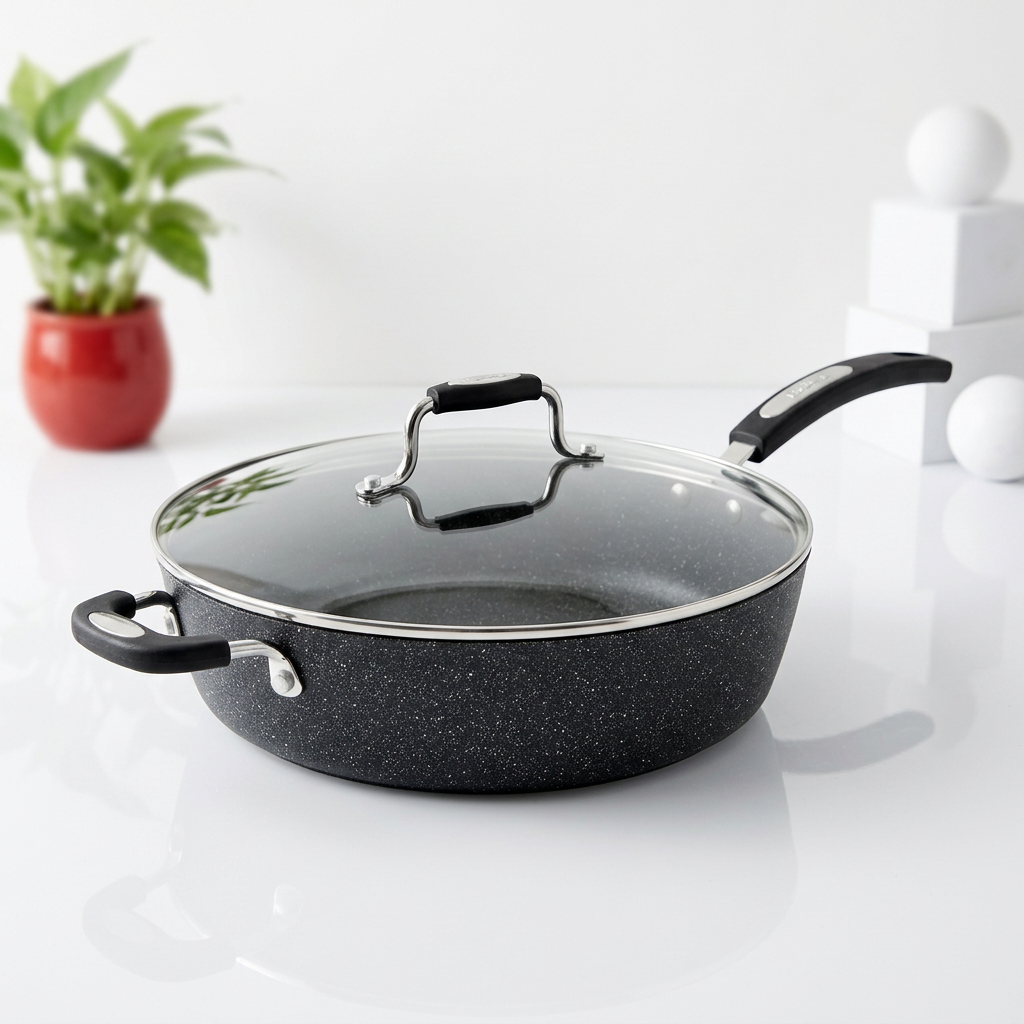
Classic 11 Inch (28cm) Non-Stick Cookware Set Deep Fry Pan Helper Handle Durable Forged Aluminum 4 Quarts Glass Cover Induction
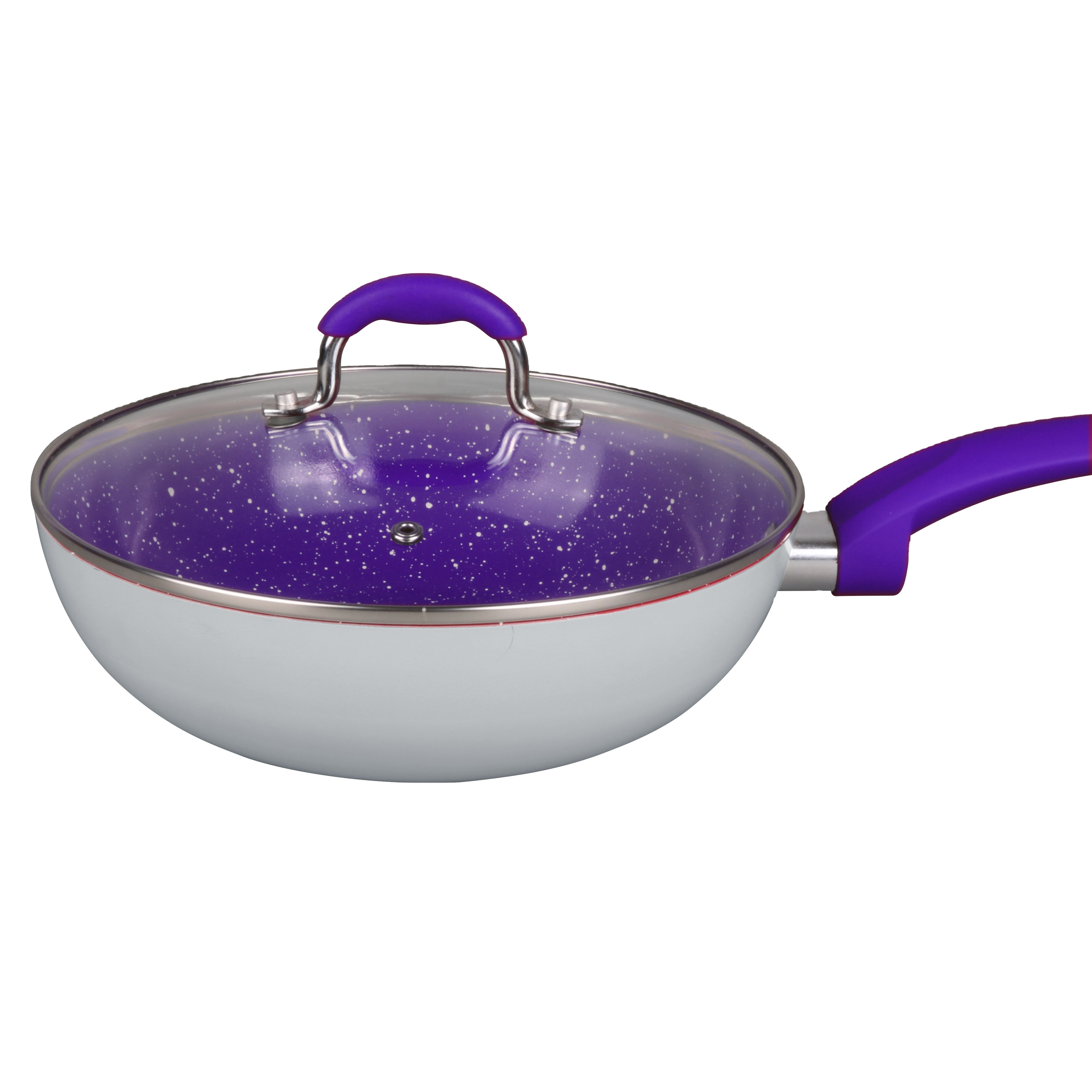
Low Price MOQ 30 cm Marble Coating Non Stick Pressed Wok Deep Fry Pan with Bakelite Cool-touch Handle for All Stoves
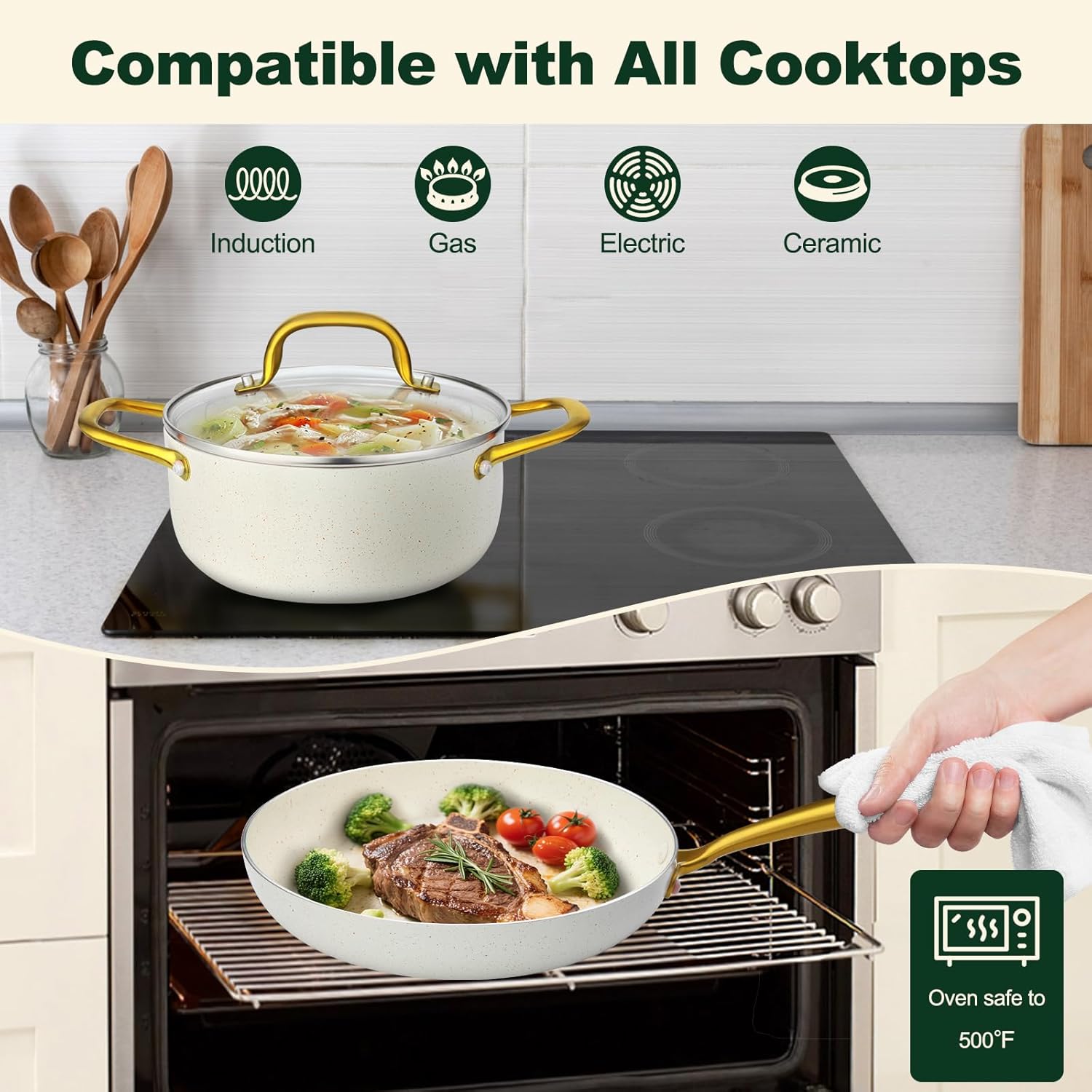
5-PIECE Classic Kitchenware Set Stainless Steel Handle PVD Ceramic Coating Interior Glass Lid Induction Bottom Eco-Friendly
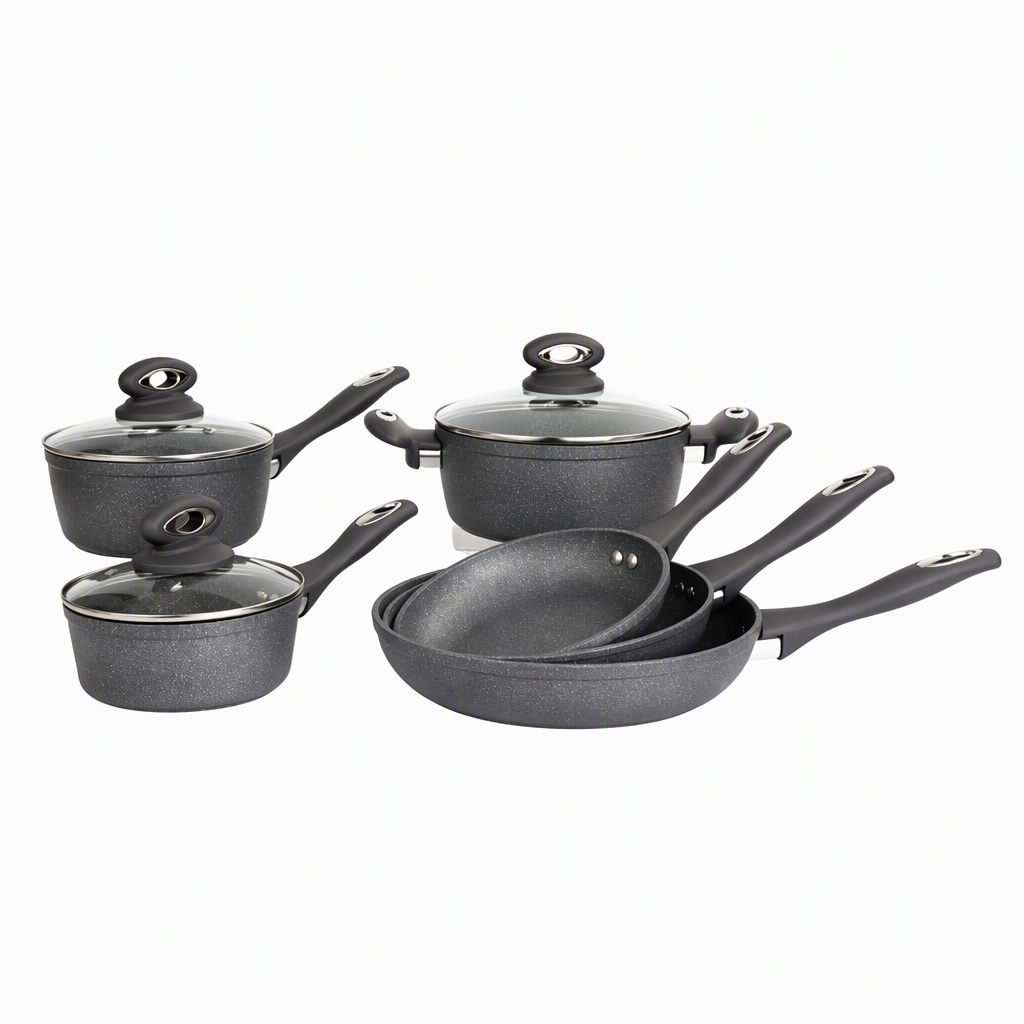
9 Piece Forged Aluminum Cookware Set Marble Coating Induction Base Glass Lids Oven and Dishwasher Safe
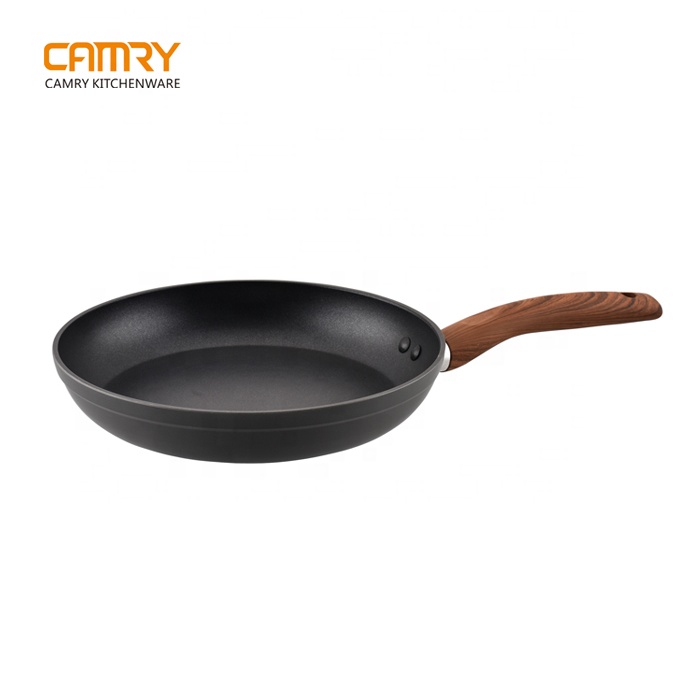
7PCS Dark Grey Forged Aluminum Megaware Cookware With Wooden Soft-touched Handle
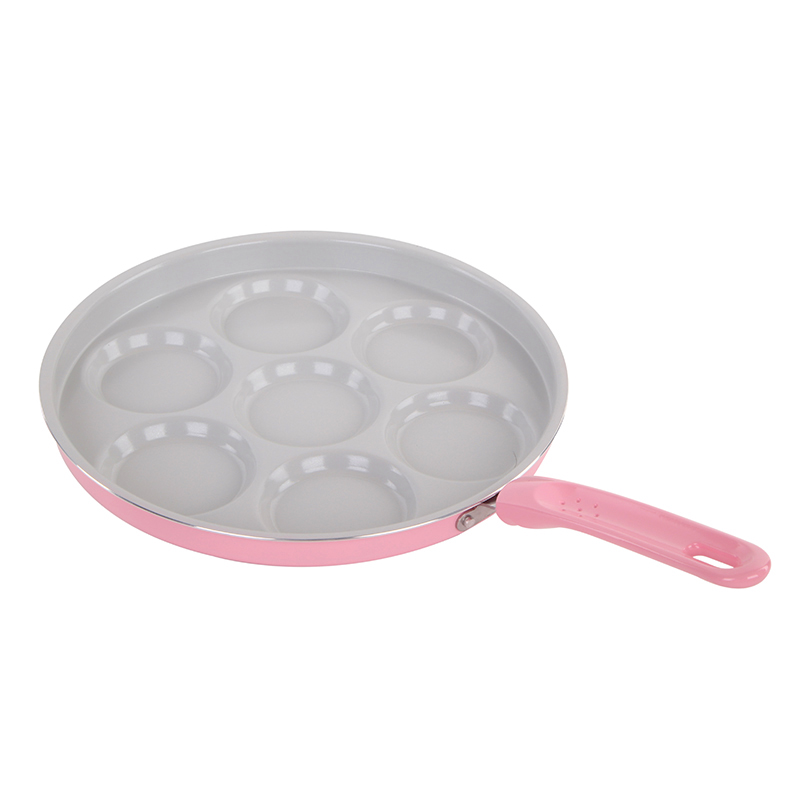
Home Kitchen Eco-Friendly Modern Aluminum Alloy Metal Non-Stick Gas Cooker Egg Fry Pan Cookware Set
Ceramic Coated Cookware Supply Chain Dynamics for Guayaquil & Ecuador Importers
As Guayaquil serves as Ecuador's primary maritime gateway through Puerto Marítimo de Guayaquil (Contecon) and the Trinitaria canal terminals, regional distributors face distinct commercial opportunities and technical challenges. This section analyzes the metallurgical requirements, regulatory frameworks, and environmental factors driving wholesale demand across Guayas Province and greater Ecuador.
Sol-Gel Ceramic Technology vs. Traditional PTFE
Modern Ecuadorian consumers increasingly demand PTFE-free, PFOA-free, and heavy metal-free cooking surfaces. Our advanced Sol-Gel inorganic ceramic coatings utilize a silica-based ceramic matrix cured at lower temperatures, producing a dense, glass-like quartz layer that yields 450°C thermal stability—far exceeding traditional PTFE limits (260°C). This prevents coating degradation during high-heat frying common in coastal cuisine.
Coastal Corrosion Resistance & Salt Air Shielding
Guayaquil's tropical marine atmosphere exhibits ambient relative humidity averaging 78% to 85% year-round alongside atmospheric salt loading. Standard bare-bottom aluminum cookware oxidizes rapidly in transit and storage. Our cookware integrates dual-sealed stainless steel induction discs and exterior hard-anodized or high-heat silicate lacquers engineered to survive 72-hour neutral salt spray (NSS) testing without blistering.
INEN Standard Compliance & Tariff Optimization
Importing cookware into Ecuador under tariff code HS 7615.10 requires strict conformity to INEN standards regarding lead and cadmium leaching. As a certified OEM manufacturer, Zhejiang MEIS Kitchenware provides complete SGS, TÜV Rheinland, and FDA/LFGB laboratory testing reports, expediting customs clearance at Guayaquil ports while maximizing container load density to reduce landed logistics costs.
Engineered for Guayaquil's Gastronomy & Kitchen Environments
Cooking styles in Guayaquil and the Guayas coastal region place unique mechanical and thermal stresses on nonstick cookware. Our ceramic coated products are structurally adapted to meet these localized culinary realities.
Resilience to High-Acid Sauces & Coastal Stews
Popular traditional dishes in Guayaquil—such as Seco de Pollo, Encebollado, Caldo de Bola, and tomato/lime-marinated seafood bases—require long simmering with acidic ingredients (passion fruit, citrus juices, fermented chicha, and heavy tomato pastes). Standard low-tier nonstick coatings degrade rapidly under low-pH acidic exposure. Our non-porous ceramic mineral matrix provides a inert chemical barrier that eliminates coating reaction, peeling, or metallic flavor transfer.
Thermal Shock Resistance for High-Heat Frying
Preparations like Bolón de Verde, Patacones (double-fried green plantains), and fresh Corvina fish frying demand quick heat transfer and repeated thermal cycling. Kitchen staff frequently move pans from intense gas burners directly to wash stations. Our forged aluminum cookware features a heavy 4.0mm to 4.5mm rim and base threshold with zero structural memory, completely eliminating pan warping, base detachment, or thermal shock micro-cracking.
Technical Performance Comparison for Ecuador Wholesale Buyers
| Performance Indicator | Pressed Aluminum (Entry Retail) | Forged Aluminum (Mid-to-High Retail) | Carbon Steel Ceramic (Commercial) |
|---|---|---|---|
| Base Thickness | 2.0 mm - 2.5 mm | 3.5 mm - 4.5 mm (Thick Rim) | 1.5 mm - 2.0 mm Heavy Gauge |
| Coating Curing Matrix | 2-Layer Sol-Gel Ceramic | 3-Layer Titanium Mineral Ceramic | Hybrid Ceramic Enamel |
| Guayaquil Stovetop Compatibility | Gas / LPG Burners | Universal (Gas, Electric, Induction) | Direct Induction & Commercial LPG |
| Abrasion Resistance (Cycles) | > 15,000 cycles (BS 7087) | > 45,000 cycles (BS 7087) | > 60,000 cycles (BS 7087) |
| Target Retail Segment | Mass Supermarkets / Bahía Wholesale | Department Stores / Boutique Brands | HORECA / Commercial Wholesale |
Guayaquil Cookware Market Trends & Import Forecast (2025–2030)
Understanding consumer shifting preferences in Guayas, Pichincha, and Manabí enables wholesale importers to curate stock keeping units (SKUs) with maximum turnover velocity.
1. Accelerating Shift to Energy-Efficient Induction Bases
Ecuador's ongoing residential energy initiatives promoting induction cooking over subsidized Liquefied Petroleum Gas (LPG) have reshaped consumer demands. Over 62% of retail buyers in Guayaquil now require universal induction-compatible cookware. Our full-bound perforated or sprayed magnetic steel bottom plates ensure 98% electromagnetic energy coupling efficiency across all induction hobs.
2. Eco-Aesthetic Pastel & Speckled Granite Aesthetics
Modern consumers in Samborondón, North Guayaquil, and Urban Center regions favor Scandinavian pastel palettes (cream white, sage green, warm beige, and granite speckle finishes). Matte soft-touch Bakelite handles with simulated wood finishes combine natural aesthetics with ergonomic insulation against high kitchen ambient heat.
3. Modular & Space-Saving Cookware Sets
Urban apartment living in Guayaquil has heightened demand for stackable cookware sets featuring click-on detachable handles. These modular configurations reduce ocean container freight volume by up to 40% per unit order, delivering massive shipping cost advantages to importers navigating global logistics fluctuations.
Why Guayaquil Buyers Partner with Zhejiang MEIS Kitchenware Co., Ltd.
Located in Dongnan Industrial Zone, Shuxi Street, Jinhua, Zhejiang, China—our factory is a premier direct manufacturer with over 20 years of nonstick aluminum and carbon steel cookware engineering experience.
End-to-End Vertical Integrated Manufacturing
Unlike trading intermediaries, MEIS executes all critical processes under one roof. Our infrastructure includes automated aluminum disc pressing, CNC precision lathe trim profiling, surface shot-blasting, automated multi-station spray coating lines, curing ovens, handle riveting assembly, and 100% inline visual quality control.
In-house mold tooling allows rapid prototype development for private-label brands seeking exclusive designs in Ecuador within 15–20 days.
Rigorous Laboratory Quality Assurance
Every export batch intended for South American markets undergoes comprehensive testing in our verified laboratory:
- Salt Spray Corrosion Testing: Verifying exterior coating integrity against maritime air.
- Handle Fatigue & Torsion Testing: Ensuring riveted and welded joints withstand 100N pull forces without loosening.
- Coating Adhesion Cross-Hatch Test: Guaranteeing zero peeling under extreme temperature shock.
Frequently Asked Questions for Guayaquil Procurement Managers
Addressing common technical, shipping, and commercial inquiries from importers in Guayaquil, Quito, and Cuenca.
Q1 What is the typical transit time and shipping route from your factory to Puerto Marítimo de Guayaquil?
Shipments depart from Ningbo or Shanghai port directly to Guayaquil (Contecon / Inarpi terminals). Average ocean transit time ranges between 32 to 38 days. Including production lead time (30–45 days), we recommend placing orders 75 days in advance of target commercial sales seasons in Ecuador.
Q2 How does MEIS ensure cookware coatings pass Ecuadorian INEN compliance testing?
All our Sol-Gel ceramic, marble, and granite coatings are formulated without lead, cadmium, PFOA, PFOS, or heavy metals. We supply official SGS and TÜV Rheinland food-contact test certificates corresponding to EU LFGB and US FDA standards, ensuring smooth customs release without import delays.
Q3 What are your minimum order quantities (MOQ) for custom private-label branding in South America?
Standard MOQ for customized color box packaging, custom ceramic coating pantones, and bottom logo laser engraving starts at 1,000 to 1,500 sets for cookware sets, and 2,000 pieces for individual fry pans. Trial orders for selected hot-selling models can be negotiated from 500 units.
Q4 Why choose forged aluminum over pressed aluminum for the Guayaquil market?
Forged aluminum provides a significantly thicker base (4.0mm+) with lightweight side walls. This construction provides superior heat retention required for traditional Ecuadorian slow-simmered dishes while preventing bottom bowing on induction stovetops, drastically reducing store returns for retailers.
Q5 How do you protect cookware from sea-freight humidity damage during transpacific transport?
Every individual piece is sealed in moisture-proof bubble wrap or protective PE foam bags, fitted with corrugated dividers, and packed in 5-ply heavy-duty export master cartons reinforced with humidity-absorbing desiccant packs to prevent fungal spots or handle oxidation during transit across the equator.
Q6 Can you accommodate custom color matching for popular South American retail brands?
Yes, our automated liquid coating mixing shop can match exact Pantone color codes for exterior coatings, soft-touch handles, and ceramic interiors, enabling importers to build cohesive retail collection lines.
Request Direct Wholesale Pricing & Factory Samples for Guayaquil
Partner directly with Zhejiang MEIS Kitchenware Co., Ltd. Eliminate middleman markups, secure factory-direct warranties, and access high-margin ceramic cookware engineered for Ecuador.