Featured OEM Cookware Systems
Direct-factory aluminum and carbon steel cookware formulations certified for international distribution.
1. Executive Synthesis: Strategic OEM Aluminum Cookware Procurement for Dominica
The Commonwealth of Dominica, recognized globally for its pristine eco-tourism, rich Creole culinary heritage, and expanding hospitality infrastructure, presents a unique set of microeconomic and logistical requirements for commercial kitchenware. As regional importers, resort purchasing directors, and wholesale distributors in Roseau and Portsmouth evaluate supply chain partnerships, the imperative for high-durability, thermally efficient, and non-corrosive cookware becomes paramount.
Operating within a tropical maritime climate characterized by elevated coastal salinity, high atmospheric humidity, and heavy reliance on liquefied petroleum gas (LPG) energy infrastructure, standard off-the-shelf cookware frequently fails prematurely. Common structural failure points include nonstick delamination caused by thermal shock, pitted vessel bases due to galvanic reaction with salt air, and structural warping from prolonged slow-simmering on open high-BTU gas burners. Solving these regional challenges requires direct engineering collaboration with a specialized original equipment manufacturer (OEM) capable of tailoring aluminum alloy composition, nonstick coating matrix integrity, and exterior protective layers to match Dominica’s exact operating environment.
Technical Gain Insight: Aluminum possesses a thermal conductivity rating of approximately 237 W/(m·K), which is more than fifteen times greater than that of stainless steel (16 W/(m·K)). When forged with heavy-gauge wall profiles (3.0mm to 4.5mm), custom OEM aluminum pots drastically lower LPG consumption for commercial kitchens across Dominica while eliminating hot spots that char traditional starch-dense dishes.
2. Microeconomic & Culinary Context: Cooking Pot Dynamics in Dominica
To accurately engineer cookware systems for Dominica's local market, OEMs must evaluate user intent across two primary purchasing demographics: local residential households and commercial hospitality/eco-resort operations.
Dominican Gastronomic Demands & Thermal Dynamics
Traditional Dominican cuisine relies heavily on long-duration braising, boiling, and reduction stewing techniques. Staple dishes such as Callaloo soup, braised meats, roasted fish, and pulse-based stews require cookware vessels that sustain steady, uniform heat retention without scorching the interior base. Lightweight, thin-gauge stamped pots suffer from extreme heat concentration directly above open gas flames, leading to hot-spot burning, food waste, and arduous manual scrubbing—which rapidly degrades inferior nonstick coatings.
Direct factory customization allows Dominican importers to specify heavy-bottomed forged aluminum vessels (ranging from 24cm deep casserole pots to 32cm multi-quart stock pots). Die-forged aluminum provides an optimized material mass distribution: thick bases preserve thermal momentum during cold ingredient addition, while tapered sidewalls reduce overall vessel weight for ergonomic handling in high-pace kitchens.
Environmental Factors: Coastal Salinity & High Humidity Resistance
Dominica’s geographic environment imposes severe oxidative stress on metal kitchenware. Coastal storage areas expose cookware to airborne sodium chloride ions, which aggressively attack unpassivated metal surfaces. Standard carbon steel or non-anodized aluminum vessels stored in high-humidity ambient environments develop oxidation micro-pits, resulting in handle rivet structural fatigue and aesthetic deterioration.
To mitigate environmental degradation, our specialized manufacturing facility applies multi-layer exterior protective finishes, including high-temperature silicon-acrylic lacquers, hard-anodized oxidation barriers, and heavy marble/granite mineral coatings. Furthermore, hardware fixations utilize marine-grade 304 stainless steel rivets combined with heat-resistant silicone flame guards to prevent galvanic corrosion at joint interfaces.
3. Technical Material Matrix: Pressed vs. Forged Aluminum vs. Heavy Carbon Steel
Selecting the optimal base substrate dictates landed unit cost, freight weight density, and consumer lifecycle satisfaction. The following engineering evaluation breaks down the operational trade-offs for B2B importers supplying Dominica:
| Performance Attribute | Pressed Aluminum (1.8mm - 2.5mm) | Forged Aluminum (3.0mm - 4.5mm) | Heavy Carbon Steel (1.2mm - 2.0mm) |
|---|---|---|---|
| Thermal Distribution | Rapid heating, moderate hot-spot risk | Exceptionally uniform, zero hot-spots | Fast response, focused central heating |
| Structural Warp Resistance | Moderate under extreme temperature swings | Superior structural rigidity under high heat | High yield strength; highly rigid body |
| LPG Fuel Efficiency Rating | High (quick boiling) | Maximum (thermal retention preserves flame energy) | Moderate to High |
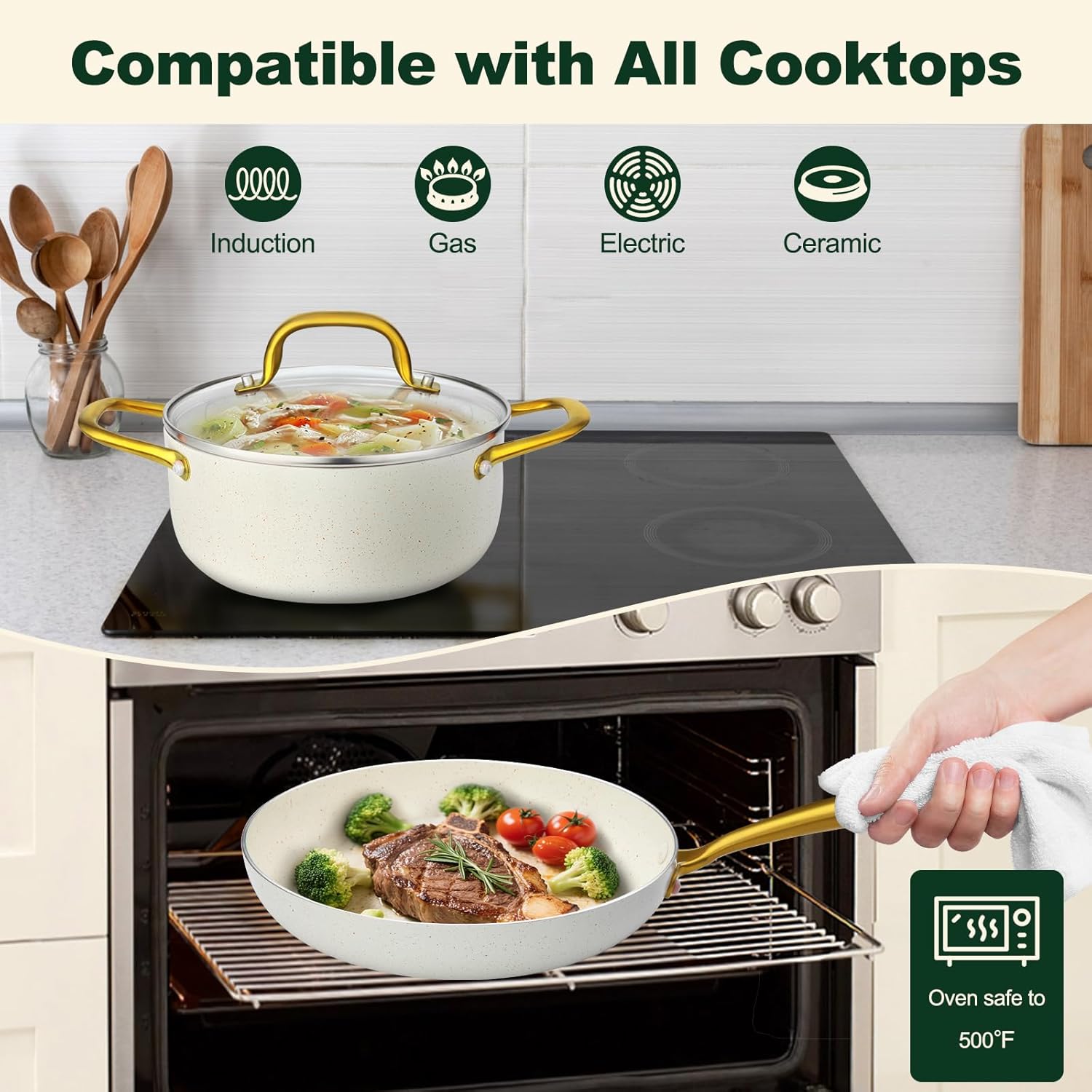
| Induction Base Integration | Stamped stainless steel disk impact-bonded | High-pressure die-bonded induction plate | Natively magnetic (no disk required) |
| Target Dominican Market Segment | Supermarkets, promotional retail, value kits | Boutique eco-resorts, mid-to-high retail, gift sets | Commercial bakeware, specialized searing fryers |
4. Advanced OEM/ODM Engineering & Coating Technologies
Zhejiang MEIS Kitchenware Co., Ltd. integrates state-of-the-art nonstick chemistry and metallurgical processes to manufacture cookware engineered for severe operational loads. Our factory facility maintains strict oversight over every phase of production within our vertically integrated operations in Jinhua, Zhejiang.
Coating Science: Ceramic, Granite, Titanium, and Marble Systems
Modern consumers in Dominica increasingly demand food-contact safety compliance paired with effortless release properties. Our factory manufactures cookware utilizing food-grade nonstick matrices verified to be 100% free of PFOA, lead, and cadmium:
- Sol-Gel Ceramic Coatings: Inorganic silica-based coatings cured at high temperatures. Ceramic coatings exhibit extreme surface hardness (up to 9H Pencil Hardness), high thermal ceiling tolerance (up to 450°C without toxic fumes), and high scratch resistance, ideal for eco-conscious luxury resorts.
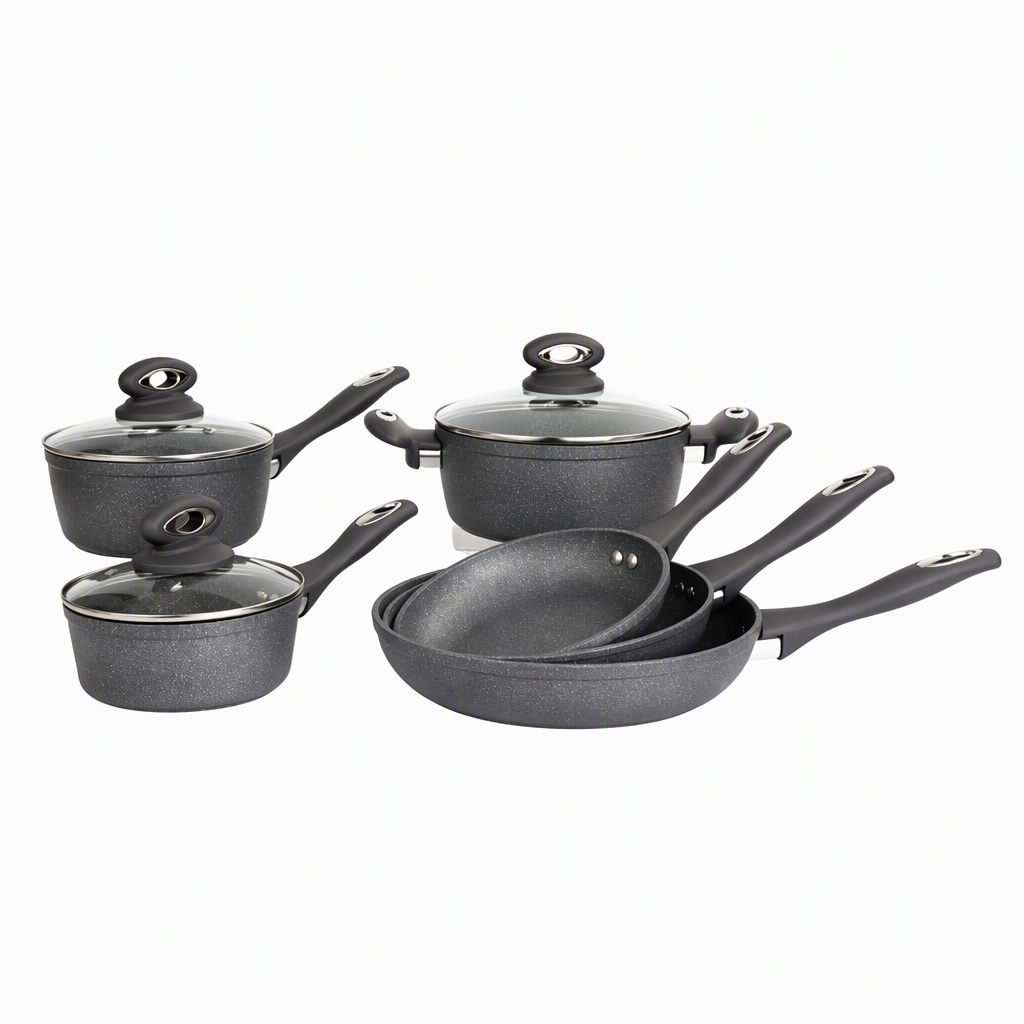
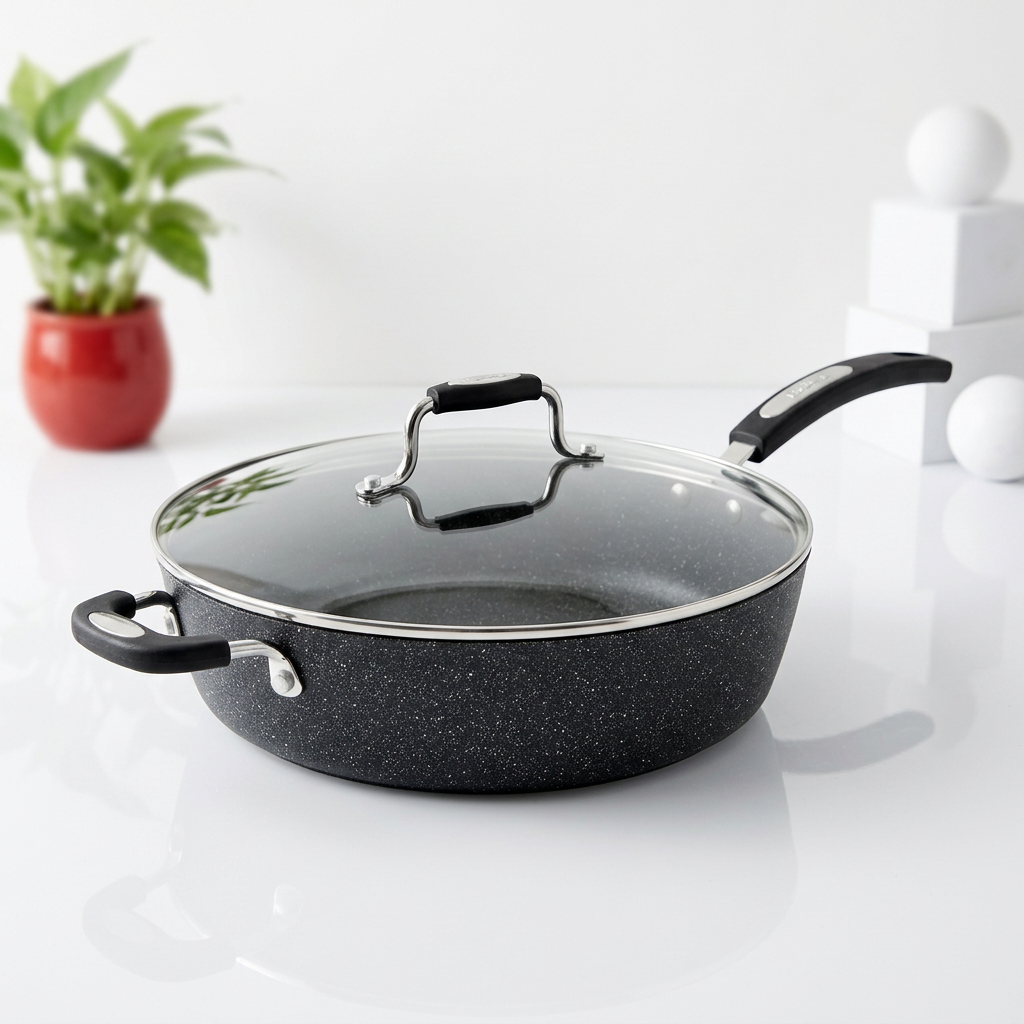
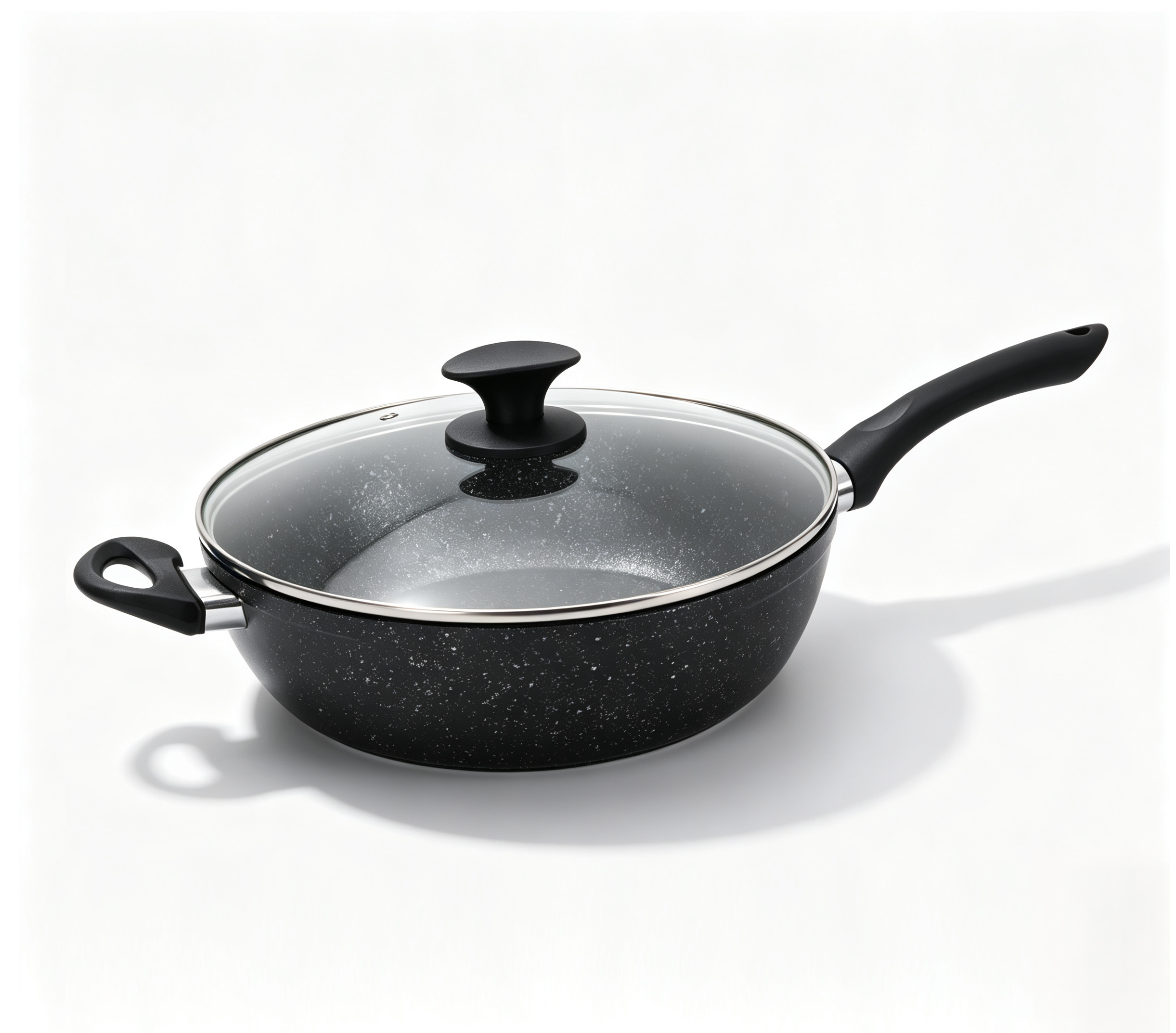
- Granite & Marble Multi-Layer Speckle Systems: Engineered multi-layer PTFE systems reinforced with natural mineral particles. The microscopic texture creates a elevated surface profile that diminishes surface friction, enabling ultra-low oil cooking and resistance to acidic Dominican sauces (marinated fish, citrus braises).
- Titanium Matrix Reinforcement: Designed for commercial high-turnover kitchens, titanium-infused primer layers anchor the topcoat to the aluminum substrate, increasing abrasion cycles under standardized ASTM D3359 cross-hatch testing protocols.
Factory Manufacturing Capabilities & Quality Testing Rigor
Located in the Dongnan Industrial Zone, Shuxi Street, Jinhua, Zhejiang, Zhejiang MEIS Kitchenware Co., Ltd. operates a fully integrated 105-person manufacturing plant inspected and verified on-site by TÜV Rheinland. Our factory floor houses specialized machinery that bridges raw aluminum disc blanking to export-ready boxed sets:
Hydraulic Deep Pressing
Multi-ton automated hydraulic presses stamp and die-forge raw AA3003 aluminum alloy sheets into true-concentric pot bodies with zero structural stress fractures.
Precision CNC Milling
Computerized numerical control (CNC) lathes trim rims and turn flat, true-contact bottom bases to ensure 100% contact stability on flat cooktops and induction hobs.
Surface Degreasing & Blasting
Automated chemical washing and sandblasting create microscopic surface anchor profiles, ensuring maximum nonstick coating mechanical keying and zero peeling risks.
Multi-Coat Spray & Curing
Robotic reciprocal spray guns apply primer, mid-coat, and stone effect layers before passing through controlled-zone infrared thermal curing ovens.
Every production batch destined for international export undergoes mandatory internal laboratory validation using specialized testing apparatus:
- Salt Spray Corrosion Testing: Simulates coastal maritime exposure to confirm that exterior coatings and rivet fixations resist oxidation over 72+ continuous hours of salt fog exposure.
- Handle Fatigue & Torsion Testers: Mechanical arms flex and twist handle joints over 10,000 continuous cycles while loaded with rated capacities, ensuring zero mechanical loosening during daily kitchen handling.
- Handle Thrust Impact Testers: Verifies handle rivet shear strength against abrupt drops or high-impact handling in commercial kitchen environments.
5. Regional Supply Chain Strategy & Customization for Dominica Importers
Importing cookware into Dominica via the Port of Roseau requires careful logistics management, container space optimization, and precise SKU customization. Working directly with an experienced Chinese manufacturer eliminates intermediary trading markups and provides total design flexibility tailored to Caribbean market pricing.
Custom Private Labeling & Packaging Optimization
Whether supplying major retail channels or private labeling for high-end resort groups, our OEM team supports extensive custom cosmetic and packaging options:
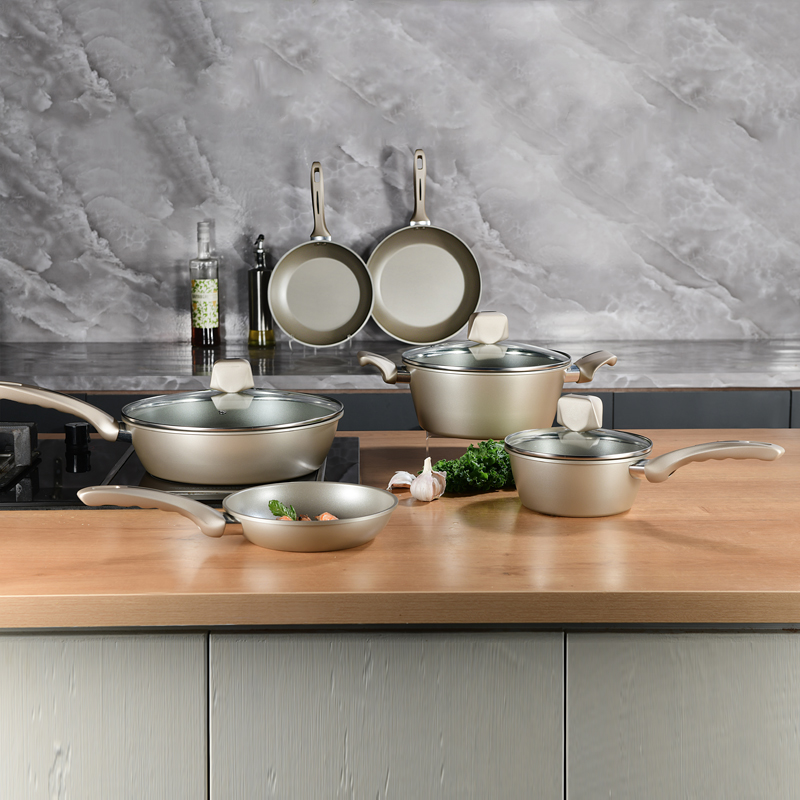
- Color Matching: Custom exterior spray matching via Pantone color codes (including vibrant metallic hues, matte earth tones, and traditional dark slate finishes).
- Handle Variations: Ergonomic heat-resistant Bakelite, soft-touch silicone-coated handles with faux-wood prints, or heavy-duty hollow cast stainless steel handles for oven-safe versatility.
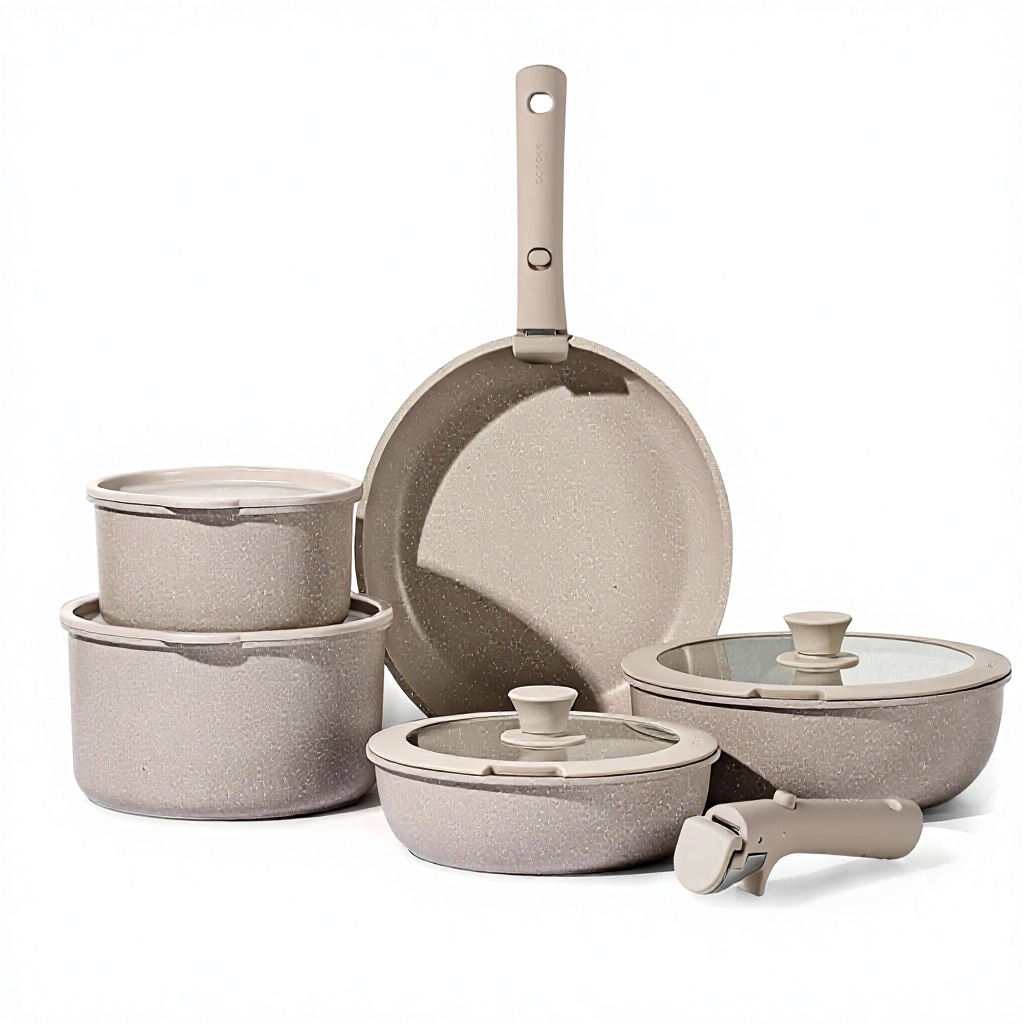
- Space-Saving Detachable Handle Systems: Highly popular for compact marine and eco-lodge storage, detachable handle sets allow multiple pot bodies to nest neatly inside one another, dramatically reducing master carton volume and reducing ocean container freight costs per unit.
- Retail Ready Packaging: Full-color gift boxes, mail-order drop-ship cartons with drop-test internal protective corners, and barcode label integration compliance.
Accelerate Your Dominican Cookware Supply Chain
Partner directly with Zhejiang MEIS Kitchenware Co., Ltd. to engineer high-gain nonstick pot sets optimized for durability, thermal efficiency, and high margin retail performance.
Get Catalog6. Frequently Asked Questions (FAQ) for Dominican Buyers
Is Zhejiang MEIS Kitchenware Co., Ltd. a direct factory or a trading company?
What is the typical Minimum Order Quantity (MOQ) for shipping containers to Dominica?
How do aluminum pots perform on LPG gas stoves common in Dominica?
Are nonstick ceramic and marble coatings resistant to salt-air corrosion in coastal Caribbean areas?
Can we customize pot sets with induction-compatible bases for modern resort kitchens?
What food safety certifications do your nonstick coatings hold for import compliance?
7. Emerging 2025–2030 Trends in Caribbean Commercial Kitchenware
As Dominica advances its sustainability agenda and expands its eco-luxury tourism footprint, procurement trends are shifting rapidly. Hospitality operators are moving away from disposable, low-cost thin pans toward sustainable, long-lifecycle cookware systems. Key market trends driving B2B procurement in the region include:
- Health-Conscious Eco-Coatings: Sol-Gel ceramic coatings and mineral-speckled nonstick finishes that allow cooking with minimal oils align perfectly with wellness resort menus and eco-tourist expectations.
- Multi-Functional Modular Cookware: Detachable handle cookware systems that transition seamlessly from stove burner to baking oven to dining table reduce kitchen equipment footprints while optimizing container freight volume.
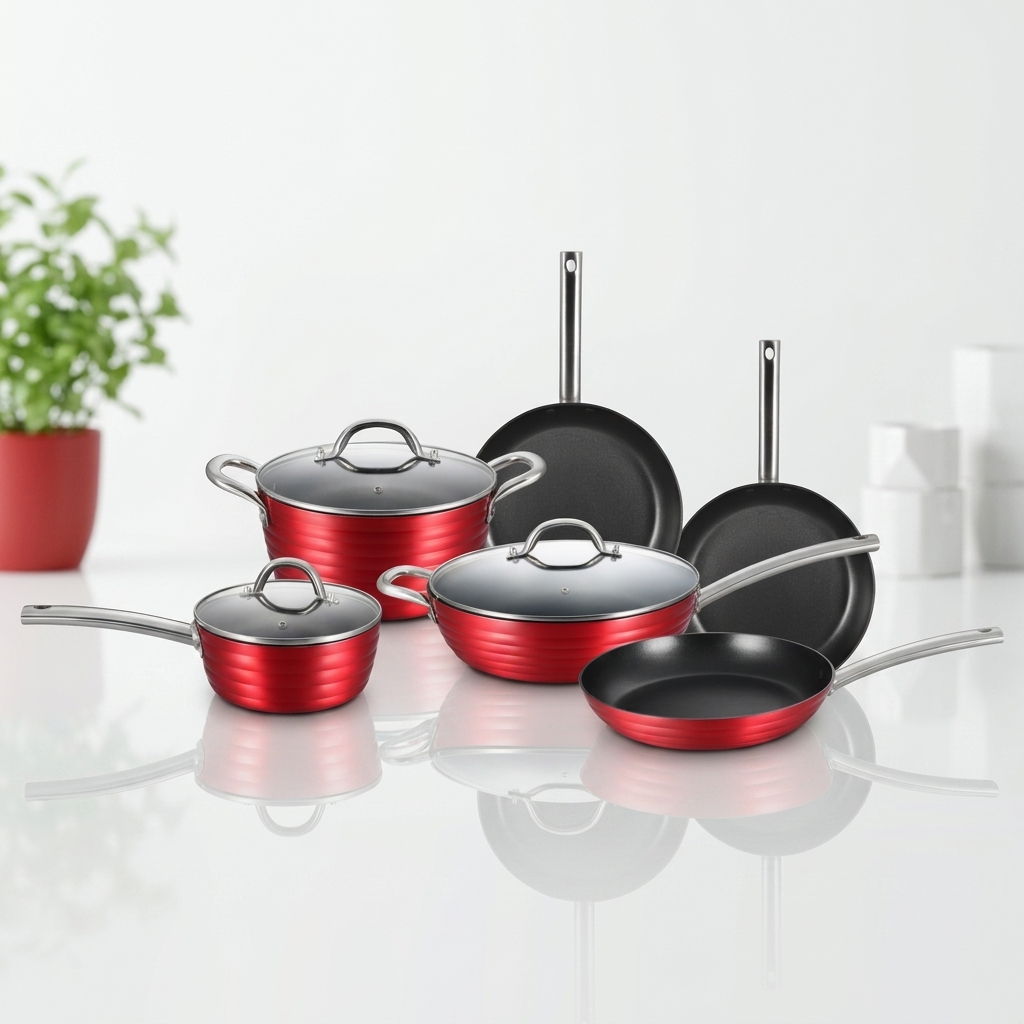
- Aesthetic Kitchen-to-Table Presentation: Vibrant exterior enamel finishes (such as metallic red, deep green, and warm granite tones) allow resorts and boutique restaurants to serve stews directly from vessel to guest tables, keeping food hot while enhancing presentation value.
By establishing a direct factory relationship with Zhejiang MEIS Kitchenware Co., Ltd., importers and commercial purchasing managers in Dominica gain access to institutional-grade engineering, reliable OEM customization, and competitive pricing that yields a decisive market advantage.