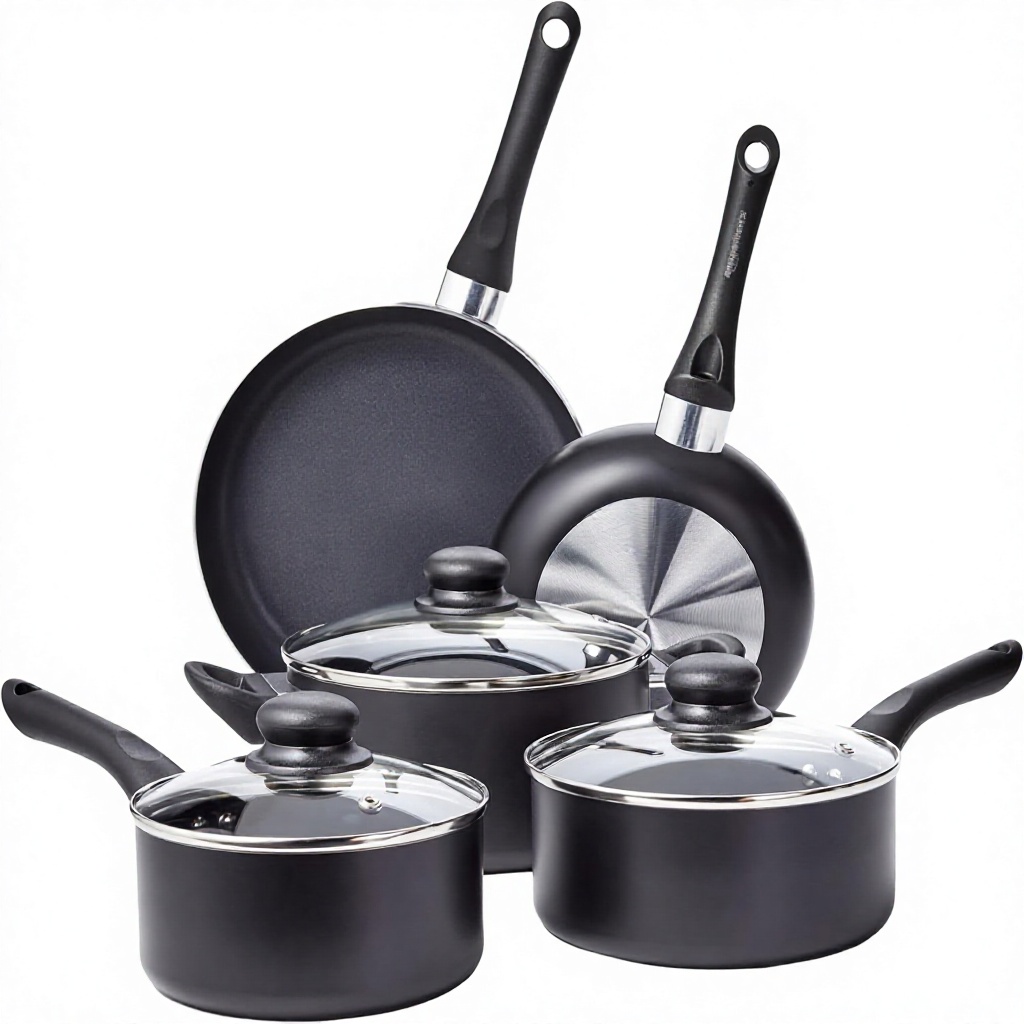
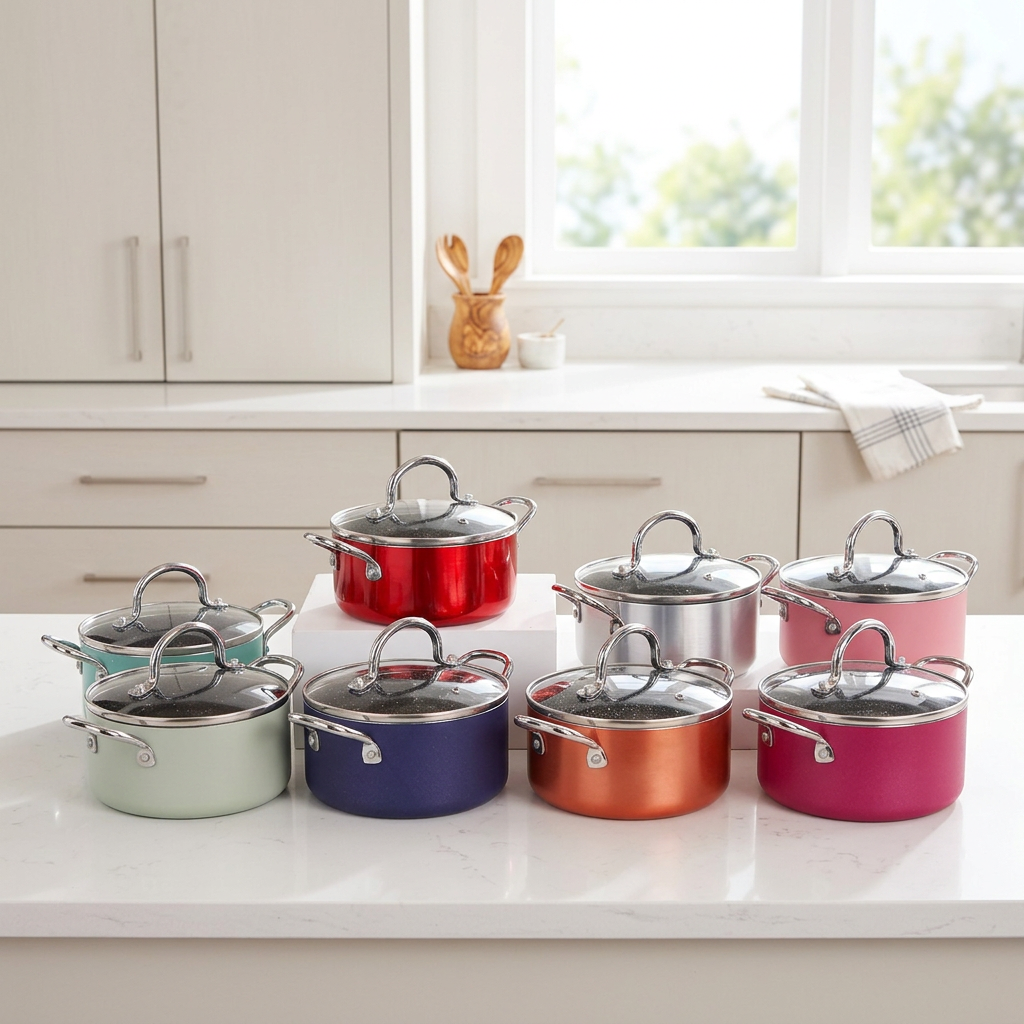
Basics Aluminum Ceramic Non-Stick 8-Piece Cookware Set
Includes induction-ready casserole & tempered covers. Ceramic thermal barrier, ergonomic soft-grip handles.
Precision-engineered stock pots, Dutch ovens, and multi-functional casseroles manufactured in our TÜV Rheinland-inspected facility and optimized for Phoenix supply chains.
The Metropolitan Phoenix area—spanning Maricopa County’s high-growth consumer corridors like Scottsdale, Tempe, Chandler, and Mesa—presents unique logistical and metallurgical demands for cookware distributors. With Phoenix serving as a vital southwestern culinary crossroads, commercial restaurant operations, institutional kitchens, and retail consumers operate at the intersection of traditional Sonoran gastronomy, high-heat Southwestern braising, and modern residential outdoor summer kitchens.
Casserole pots and Dutch ovens delivered into this regional market must withstand prolonged slow-simmering conditions (required for birria, barbacoa, posole, and chili stews) involving high acid concentrations from tomatoes, chilies, vinegar, and citrus marinades. Standard non-stick cookware constructed with single-coat fluoropolymer coatings or thin-gauge stamped aluminum frequently encounters structural buckling, coating oxidation, and handle detachment under high thermal cycling across gas burners and industrial salamanders common throughout Arizona commercial kitchens.
Phoenix commercial and outdoor kitchens experience massive temperature differentials. Heavy-gauge die-forged aluminum bases (3.5mm–4.5mm) mitigate thermal shock and eliminate bottom concavity or plate separation.
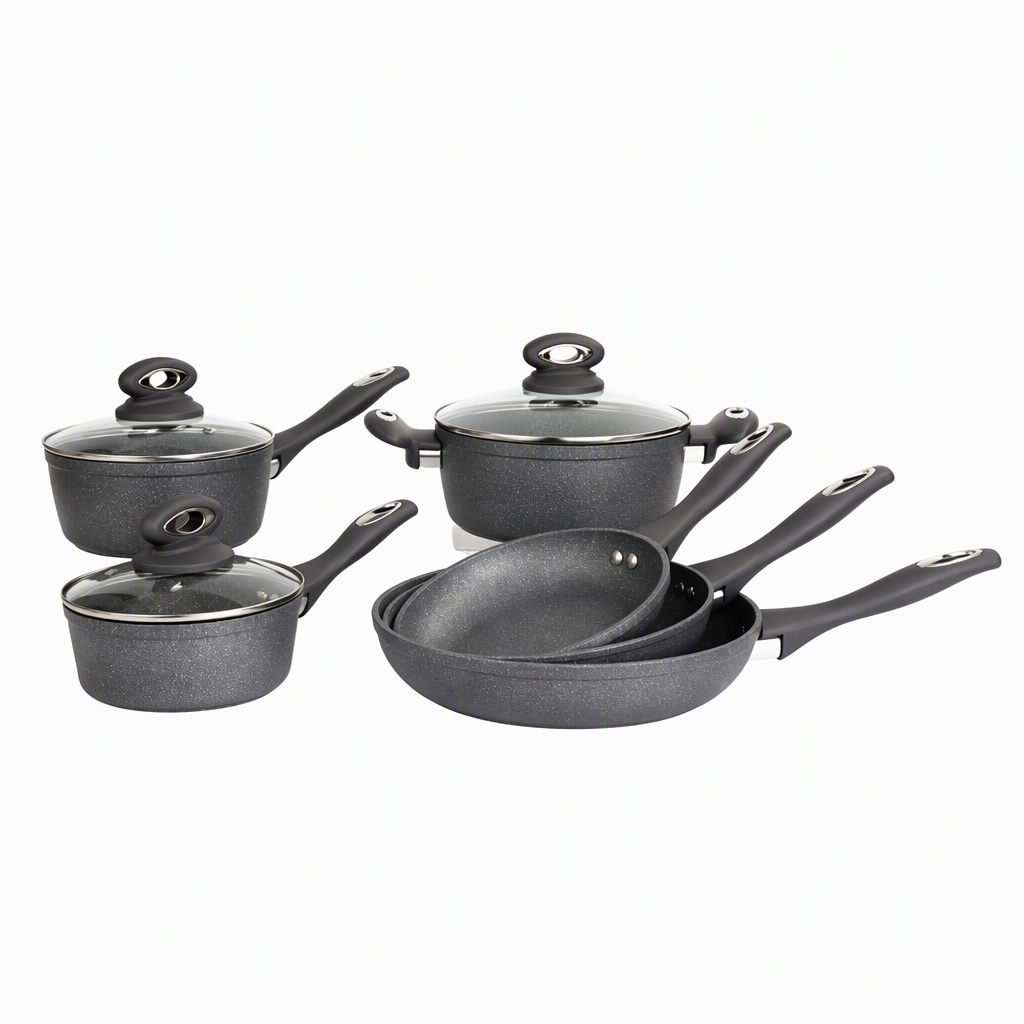
Sonoran culinary recipes rely heavily on acidic elements. Our specialized hard-anodized and multi-layer ceramic/marble fluoropolymer-free systems protect metal substrates against pitting and corrosive delamination.
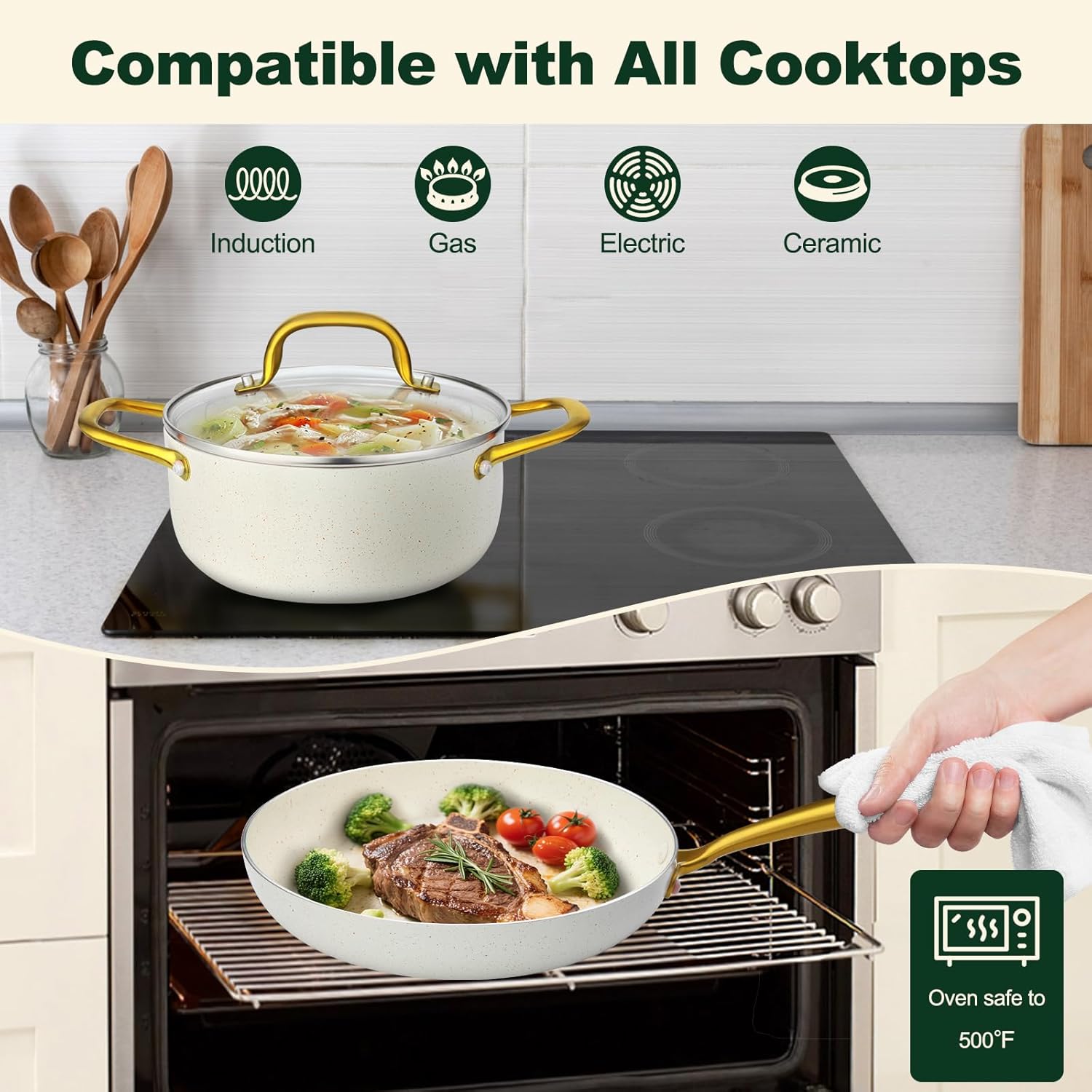
With Phoenix’s commercial conversion toward high-efficiency induction lines alongside traditional high-BTU gas grates, our induction-bonded magnetic bases ensure high electromagnetic coupling with zero warping.
Bakelite components degrade rapidly under intense dry heat and high-temperature commercial ovens. We supply solid 304 cast stainless steel handles secured by heavy-duty aircraft-grade hydraulic rivets.
As private-label brands and hotel supply chains in Phoenix source cookware inventory, the demand has moved decisively toward dual-capability cookware: vessels capable of transitioning from open flame to 450°F convection ovens, and straight to upscale tabletop display. MEIS Kitchenware fulfills these strict structural metrics through vertically integrated manufacturing controls in Jinhua, Zhejiang, providing localized private-label solutions tailored to Arizona supply chain importers.
Choosing the correct core substrate dictates your product line’s target margins, landed shipping costs through West Coast ports (Long Beach/Los Angeles to Phoenix freight corridors), and long-term end-user satisfaction. Our engineering laboratory breaks down the performance characteristics below:
| Evaluation Parameter | Pressed / Stamped Aluminum | Die-Forged Aluminum | Tri-Ply Clad (304-Alu-430) |
|---|---|---|---|
| Base Thickness Range | 2.0 mm – 2.8 mm | 3.5 mm – 5.0 mm (Reinforced rim) | 2.2 mm – 3.0 mm (Uniform composite) |
| Thermal Distribution | Extremely fast, localized hotspots | Even heat spread, high thermal retention | Consistent wall-to-edge heat conduction |
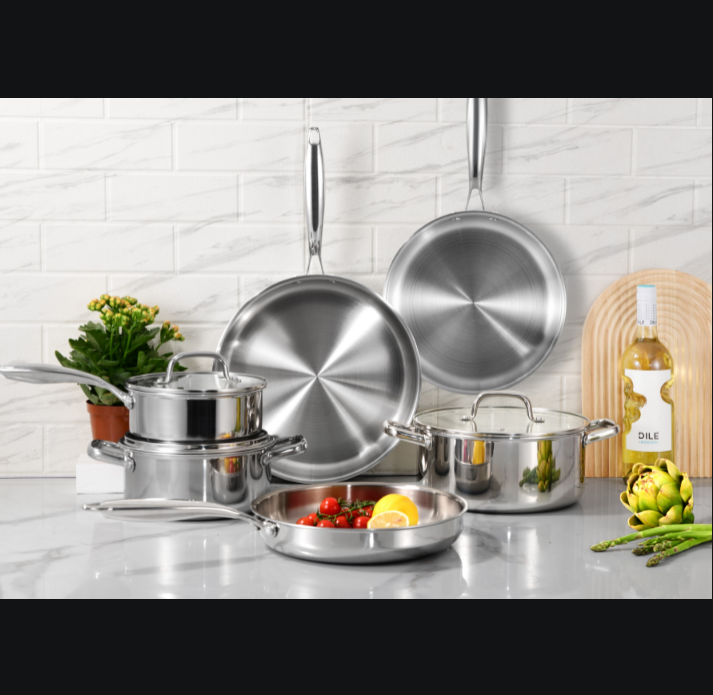
| Resistance to Base Warping | Moderate (suitable for home ranges) | Superior (withstands commercial abuse) | Exceptional (zero warp under high heat) |
| Compatible Stovetops | Gas, electric (Induction optional) | Induction plate bonded / All hobs | Magnetic 430 exterior (Full induction) |
| Target Supply Program | Supermarket, high-velocity discount retail | Mid-to-high e-commerce, private labels | Hospitality grade, professional chef lines |
Unlike regional trading companies and brokers who outsource assembly across disjointed workshops, Zhejiang MEIS Kitchenware Co., Ltd. concentrates all critical manufacturing nodes under one roof in the Dongnan Industrial Zone, Shuxi Street, Jinhua, Zhejiang. Our facility has passed strict on-site audits conducted by TÜV Rheinland, confirming our adherence to global production ethics, safety protocols, and automated manufacturing standards.
Equipped with high-precision CNC machinery and automated lathes, our technical tooling team can build custom casserole silhouettes, bespoke lid profiles, and embossed brand insignias within 15–21 days of CAD file finalization.
Coating adhesion failure accounts for over 85% of warranty returns in the US kitchenware sector. MEIS operates automatic multi-stage degreasing and surface-shot blasting lines that guarantee mechanical bonding for multi-layer non-stick coatings.
Every single export consignment is subjected to destructive torque testing, handle fatigue oscillation checks, salt-spray corrosion tests (up to 72 hours), and cross-hatch adhesion verification before goods leave our factory docks.
With an experienced workforce of over 105 qualified technicians, MEIS has supported tier-1 global importers, department store chains, and direct-to-consumer e-commerce brands in North America for more than two decades. We facilitate smooth intermodal transit from Ningbo port through Long Beach harbor straight to inland Phoenix bonded distribution centers.
We simplify international procurement by eliminating middleman delays, securing rapid prototype iterations, and providing fully customized packaging suites tailored to retail distribution in the US.
Submit your design brief, target cost per unit, wall gauge, preferred coating chemistry (ceramic, titanium, or granite), and handle ergonomical schematics.
Our in-house CNC mold workshop fabricates physical functional samples within two weeks. Samples undergo thermal conductivity and drop testing prior to air couriering.
Upon approval, we run automated stamping, spray coating, curing, and automated packaging. All products comply with US FDA, LFGB, and California Proposition 65 standards.
Speak directly with our senior engineering and export sales department. Get technical consultations, mold estimations, and factory-direct pricing within 24 hours.
Get a Quote