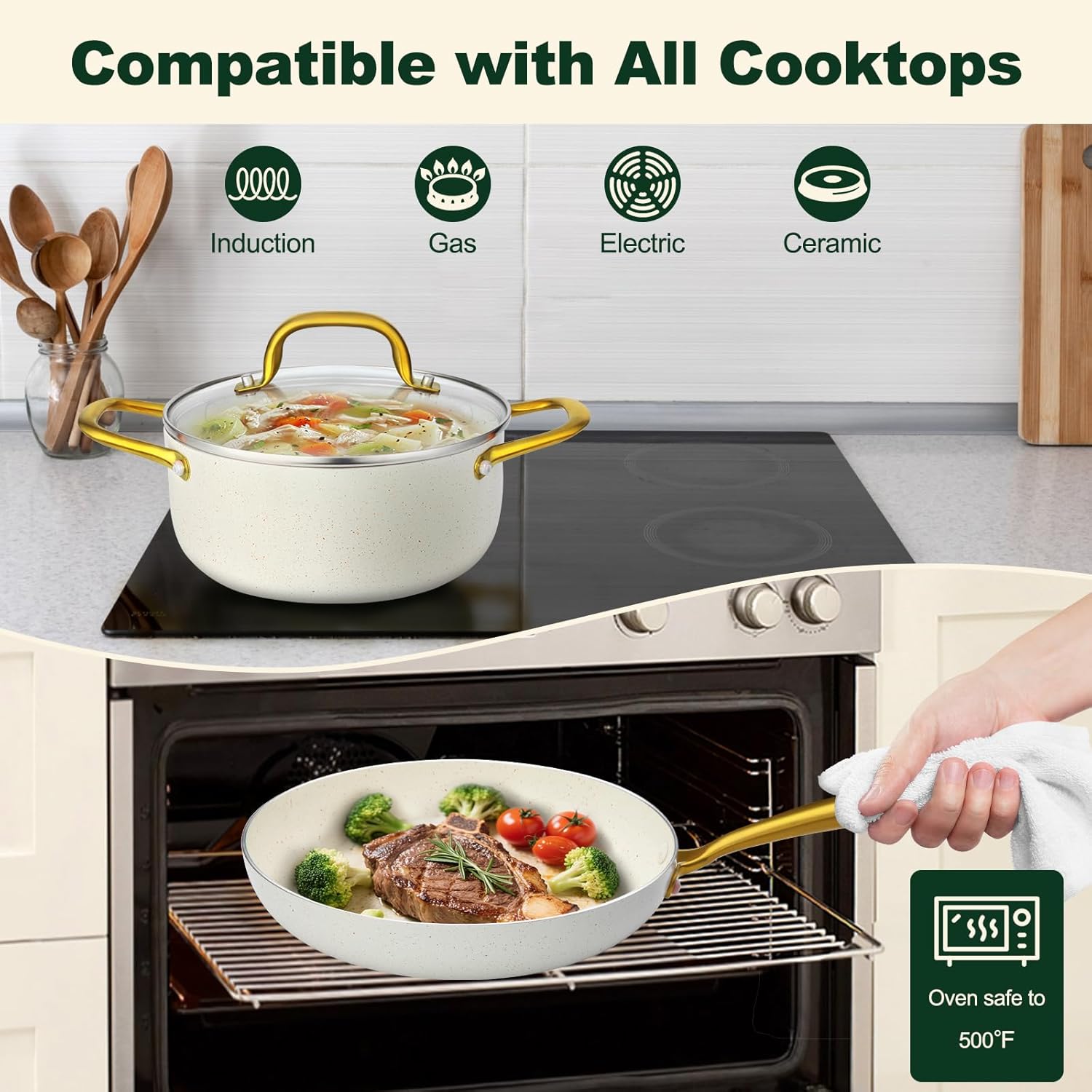
Engineered Cookware Lines for Regional Distribution
Direct factory manufacturing combining high-tonnage forged metallurgical structures, reinforced multi-tier nonstick chemistries, and induction-ready thermal distribution plates.
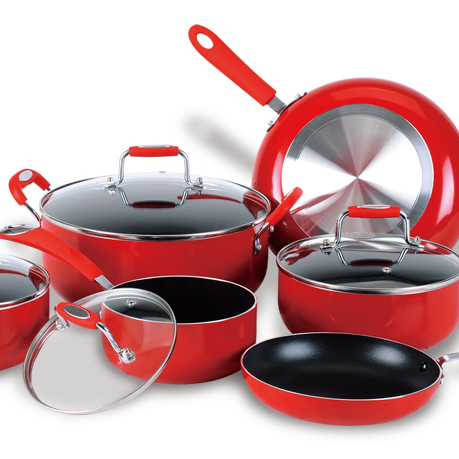
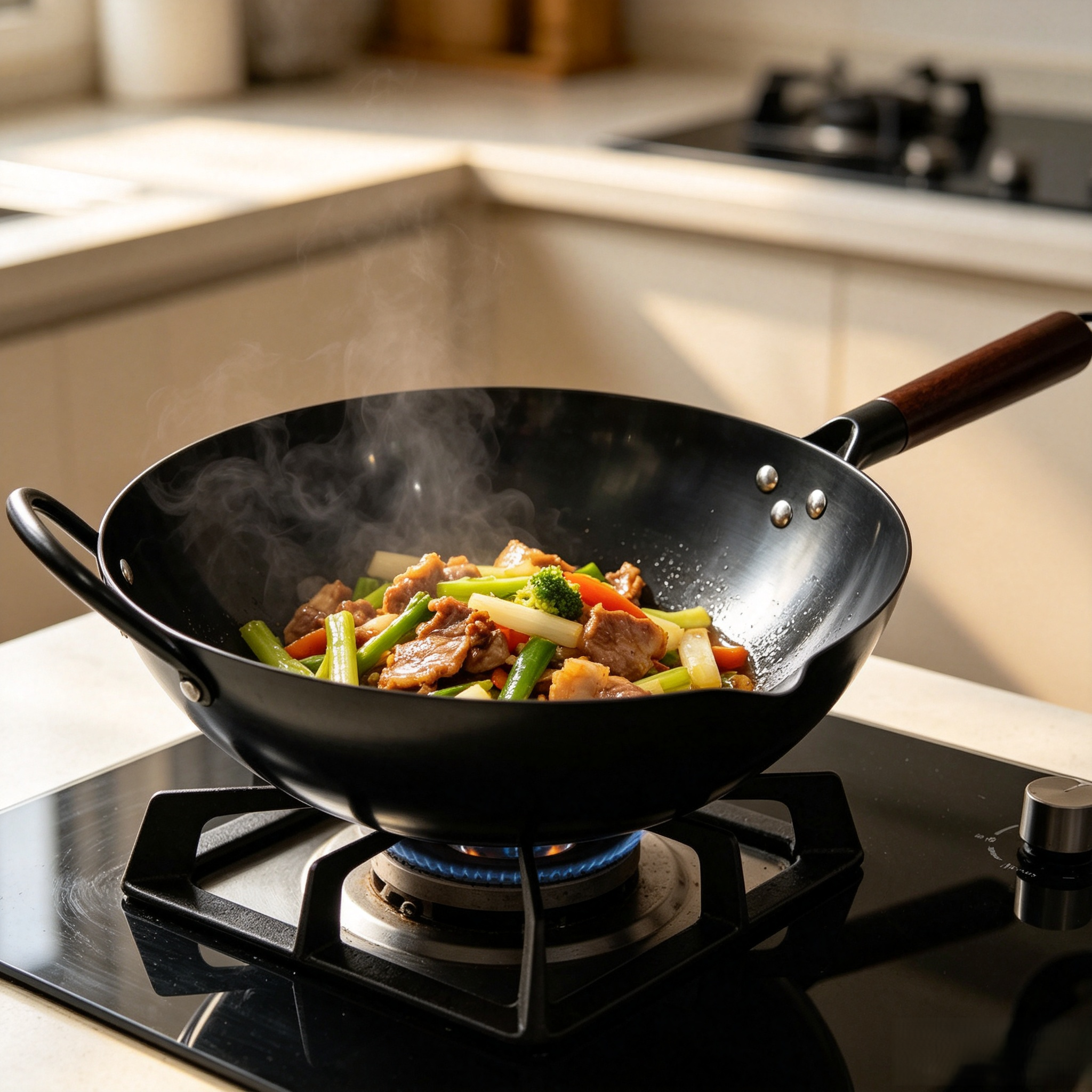
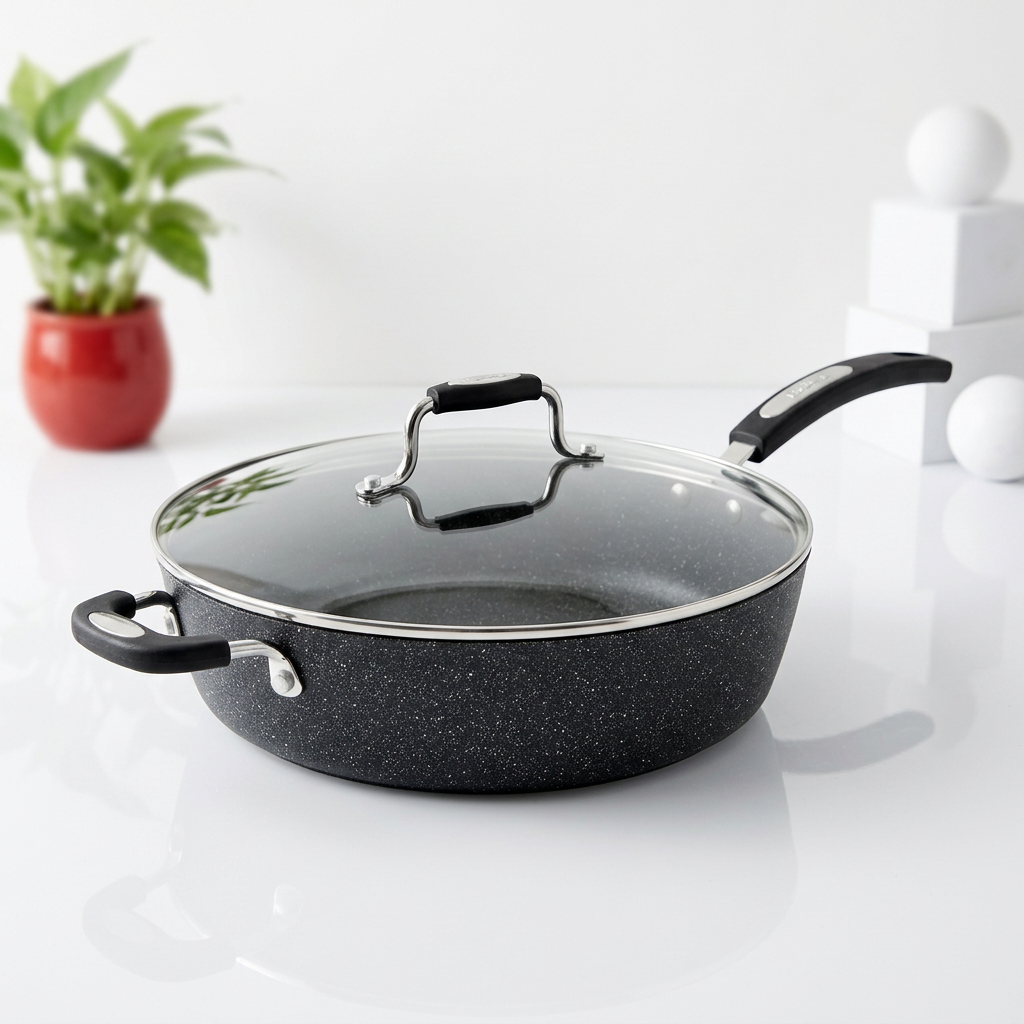
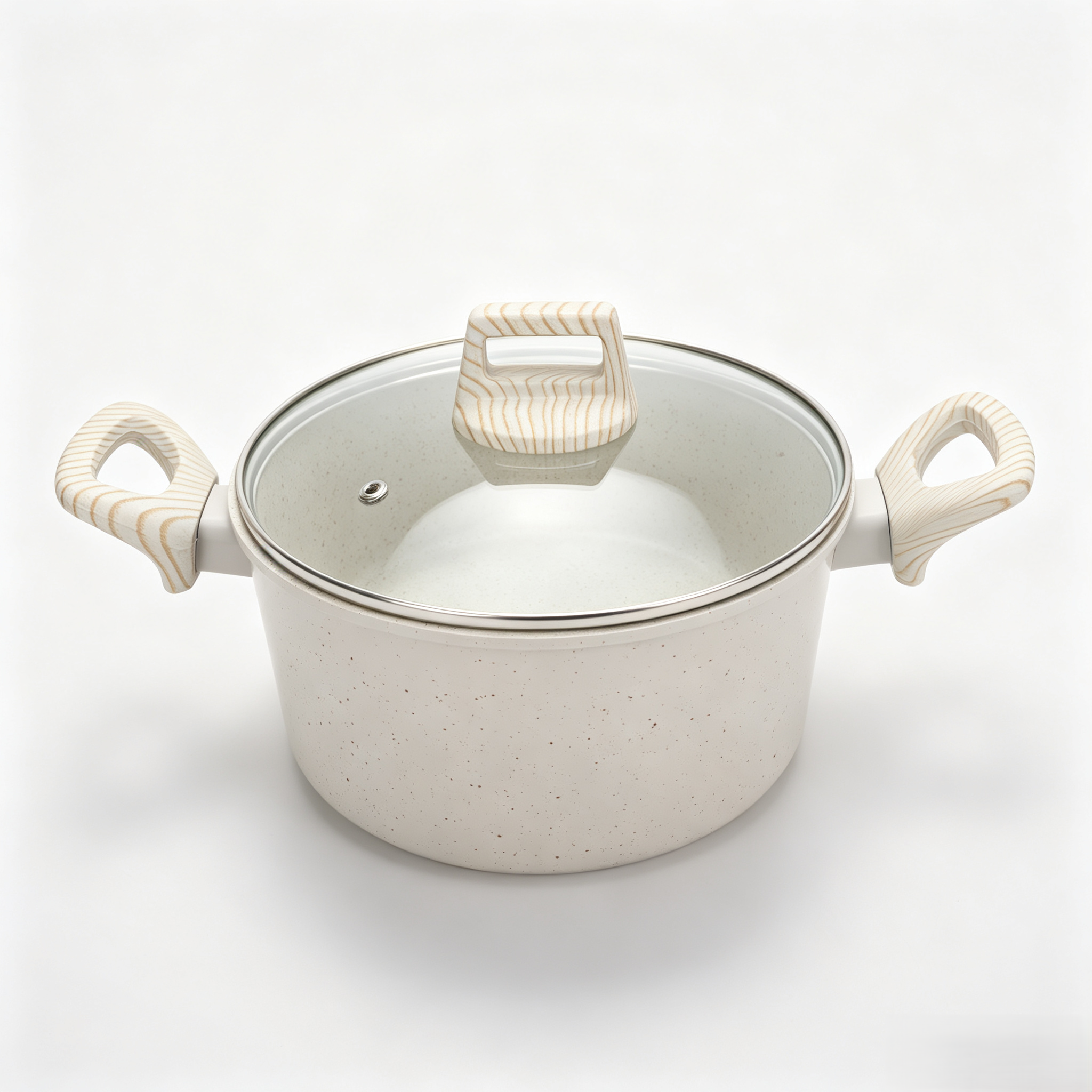
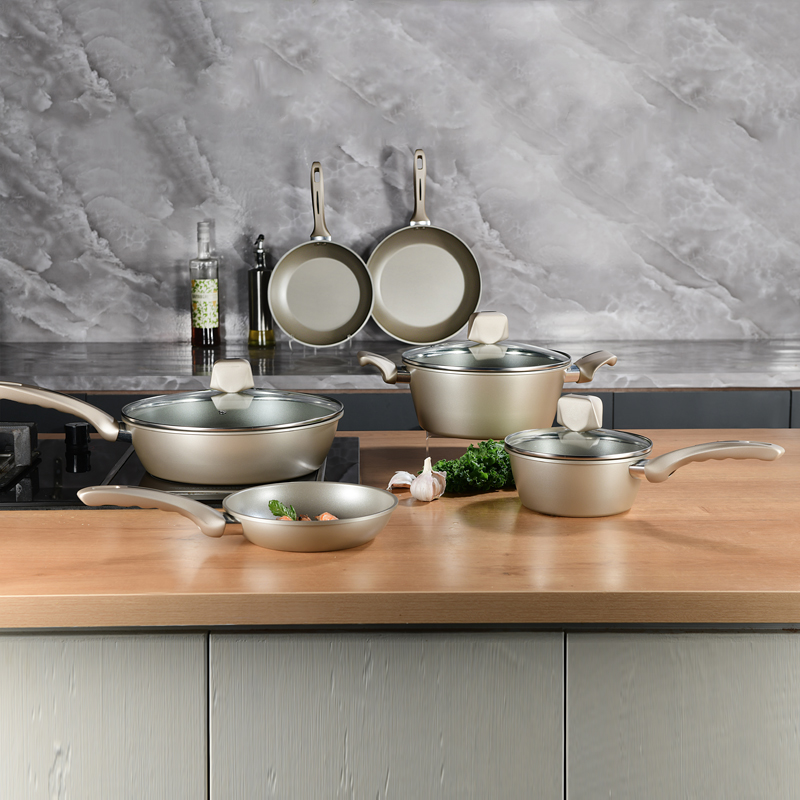
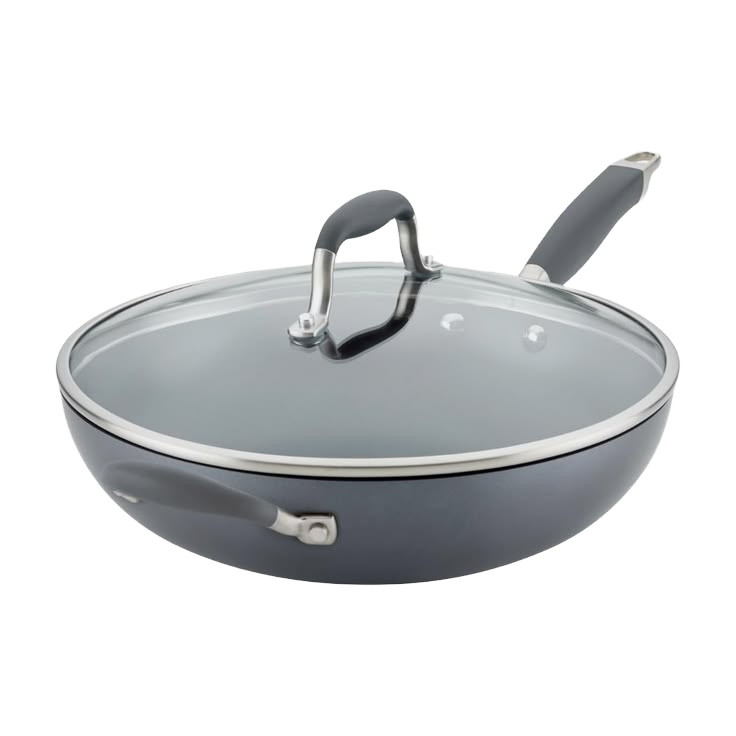
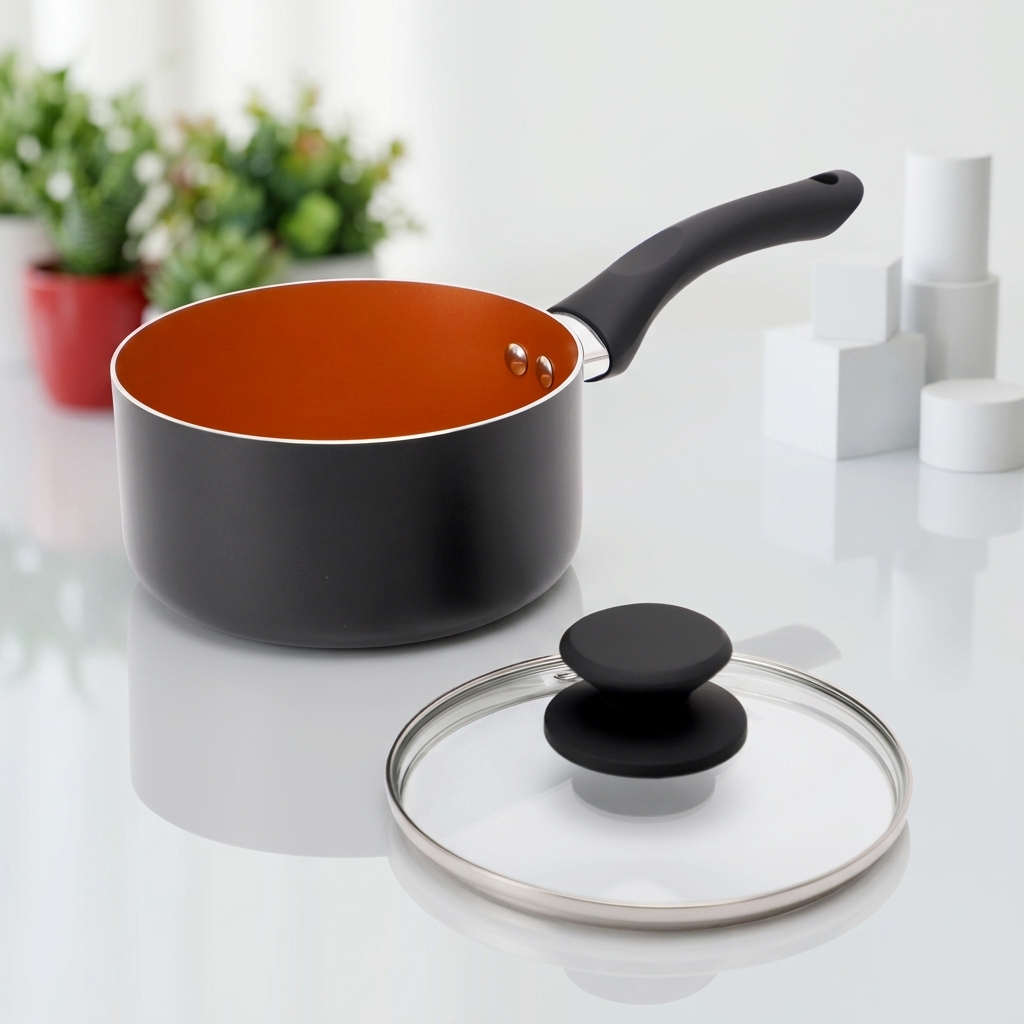
Forged Aluminum Cookware Manufacturing: Thermal Conductivity, Boundary Integrity & Acid Resistance
In high-throughput commercial and domestic kitchen ecosystems, the mechanical and thermodynamic integrity of cookware hinges fundamentally on base alloy grain alignment and the method of forming. Zhejiang MEIS Kitchenware Co., Ltd. utilizes closed-die high-tonnage hydraulic forging systems that compress molten aluminum discs under extreme pressures (up to 4,000 metric tons). Unlike standard stamped sheet pans or gravity-poured die castings, forging compacts internal crystalline microporosities, aligning the molecular grains densely along pan perimeters and heavy base transitions.
Technical Benchmark: Forged aluminum delivers a tensile strength up to 35% higher than pressed aluminum blanks, maintaining an exact thermal conductivity baseline of 205 W/(m·K). This structural integrity prevents center bowing (thermal oil convexing) and perimeter warpage when transitioning rapidly from direct heat hobs to sink wash cycles.
Metallurgical Comparison: Forged vs. Pressed vs. Carbon Steel
Procurement directors and B2B buyers serving regional consumer and commercial sectors must balance unit economics with culinary durability. The matrix below outlines operational tradeoffs verified in our on-site testing laboratories:
| Performance Matrix | High-Tonnage Forged Aluminum | Stressed Pressed Aluminum | Heavy Gauge Carbon Steel |
|---|---|---|---|
| Base Construction | Variable thickness (4.0–4.8mm base, 2.5mm rim) | Uniform gauge wall (2.0–3.0mm overall) | Drawn high-density carbon alloy sheet (1.2–2.0mm) |
| Thermal Distribution | Exceptional volumetric heat retention; 0% hot spotting | Ultra-rapid initial rise; localized thermal dissipation | Balanced direct contact heat; exceptional high-temp searing |
| Induction Efficiency | Impact-bonded perforated/solid magnetic steel bottom | Cold-punched induction plate integration | Naturally ferromagnetic across 100% of contact base |
| Nonstick Substrate Adhesion | Micro-blasted surface yielding 5B ASTM adhesion grade | Chemical degreasing with standard mechanical keying | Nitriding or plasma-primed anti-delamination layer |
| Warp Resistance Index | Superior (resists thermal shock up to 260°C / 500°F) | Moderate (suited for moderate domestic flame levels) | Very High (structural rigidity under thermal expansion) |
Coating Interfacial Chemistry & Acidic Corrosion Mitigation
A crucial metric often overlooked by standard distributors is interfacial coating delamination under persistent acid attack. Zhejiang MEIS Kitchenware applies multi-tier fluoropolymer, sol-gel ceramic, and granite-speckled silicon oxide systems over chemically cleaned and sandblasted substrates. By enforcing a continuous pre-heating cycle and 420°C baking tunnel curing, polymer cross-link density reaches near-impervious levels. The coating layers inhibit chemical seepage from harsh marine salt fogs and acidic culinary preparations, verified via continuous 72-hour ASTM B117 salt spray exposure tests without pitting or blister development.
Localized Cookware Dynamics in Mérida and Yucatán
The gastronomic capital of Yucatán presents an exceptional intersection of culinary chemistry, climate conditions, and commercial hospitality growth requiring engineered cookware performance.
High-Acid Yucatecan Cuisine
Traditional regional cooking in Mérida extensively employs highly acidic ingredients such as naranja agria (bitter orange), achiote marinades, and concentrated lime reductions for dishes like Cochinita Pibil and Poc Chuc. Standard bare metal or thin nonstick cookware rapidly pits and leaches. MEIS high-density multi-layer ceramic and granite coatings offer inert barrier resistance against severe pH drops down to 2.8.
Tropical Humidity & Coastal Atmosphere
With Mérida situated near the Gulf Coast in an environment characterized by ambient relative humidity frequently exceeding 80%, cookware stored in open hotel kitchens and beachside resorts in Progreso is vulnerable to atmospheric galvanic corrosion. MEIS exterior silicone-polyester finishes and corrosion-resistant induction plates provide robust protection against ambient humidity oxidation.
Hospitality & Induction Modernization
The rapid expansion of boutique hotels in Paseo de Montejo, luxury haciendas, and modern residential developments has accelerated the transition from conventional LP gas burners to sleek induction cooking systems. Our forged aluminum cookware features cold-stamped or spray-bonded 430 stainless steel induction bases that heat evenly while protecting glass stovetops from thermal fractures.
Emerging Cookware Procurement Trends Across Southeast Mexico
The cookware import ecosystem across the Yucatán Peninsula is moving rapidly toward functional differentiation, eco-label verification, and supply chain consolidation. Importers and wholesale retailers serving Mérida are prioritizing three distinct product transformations:
1. Health and Non-Toxic Compliance: Consumer awareness regarding food contact safety has created surging demand for certified PFOA-free, lead-free, and cadmium-free cookware. In luxury retail channels and high-end department stores across northern Mérida (such as Altabrisa and Cabo Norte), mineral-derived nonstick coatings (granite, marble, and sol-gel ceramics) are consistently outperforming legacy PTFE formulations.
2. Space-Saving Modular Cookware: Driven by the influx of international digital nomads and the growth of modern compact condominiums and Airbnb rentals in Centro and San Benito, detachable handle cookware sets (such as our 5-piece stackable forged sets) are capturing substantial retail market share. Removable ergonomic handles allow pots to double as oven baking vessels and table-ready serving dishes, reducing storage footprints by up to 60%.
3. Heavy-Duty Aesthetic Durability: Commercial restaurateurs across the culinary corridor are moving away from easily damaged lightweight cookware. The preferred product profile has shifted toward heavy-gauge forged aluminum (3.5mm to 4.5mm rim/base configurations) paired with ergonomic stainless steel or cool-touch soft-touch bakelite handles that withstand rapid order rotations during peak service windows.
Why Global Brands and Regional Importers Partner with MEIS
Operating our own in-house pressing, CNC, spray coating, curing, and automated assembly plants in Dongnan Industrial Zone, Jinhua, Zhejiang, China.
TÜV Rheinland Assessed
Verified on-site manufacturer and trading enterprise operating strict ISO-standard quality assurance across every batch.
In-House Testing Laboratory
Equipped with salt-spray corrosion chambers, handle thrust/torsion gauges, coating cure ovens, and thermal-shock testers.
Rapid Tooling & Mold Workshop
Dedicated CNC machines, lathes, and mold-making technicians providing fast prototype turnarounds for private-label lines.
Complete Product Versatility
Seamlessly manufacture forged aluminum, pressed alloys, carbon steel woks, roasting pans, and heavy bakeware under one contract.
Bespoke Finishes & Packaging
Custom Pantone exterior coatings, laser logos, custom packaging, drop-test certified mail-order cartons, and retail displays.
Logistical Export Mastery
18+ years exporting to Latin America, North America, and Europe with streamlined ocean routing direct to Puerto Progreso.
Frequently Asked Questions: Sourcing Forged Aluminum Cookware
Direct technical answers addressing lead times, certifications, packaging configurations, and regional logistics for Mérida and Mexican ports.
What shipping and port routing is optimal for freight destined for Mérida, Mexico?
Cookware shipments originating from our factory in Jinhua, Zhejiang are typically staged via Ningbo or Shanghai ports. For shipments destined for Mérida and the broader Yucatán region, freight is routed directly to the deep-water Port of Altamira or the Port of Veracruz, followed by overland freight, or transshipped via feeder vessels directly into Puerto Progreso, located approximately 35 kilometers north of downtown Mérida. We handle all FOB packaging compliance, container optimization, and export documentation to simplify customs clearance.
How do MEIS nonstick coatings comply with Mexican NOM food contact regulations?
All our ceramic, granite, and fluoropolymer coating systems comply with Mexican official standards (NOM-021-SSA1/SCFI and related regulations), as well as FDA (US) and LFGB (German) standards. Raw coating materials are tested to ensure zero migration of lead, cadmium, or harmful volatile compounds, and are certified 100% PFOA-free. Complete food contact migration test reports from accredited third parties (SGS, TÜV) are available for import audits.
What is the standard Minimum Order Quantity (MOQ) for custom private label sets?
Standard MOQ for fully customized forged aluminum cookware sets (custom Pantone exterior color, branded induction bottom stamp, custom color retail box, and laser-engraved handle logos) is typically 1,000 to 1,500 sets. For individual frying pans, saucepans, or carbon steel woks, MOQs range between 1,500 to 3,000 pieces depending on specific tool requirements. We also offer consolidated container loads combining multiple SKUs from our standard product categories.
Why choose forged aluminum cookware over cast iron in Mérida's humid climate?
While traditional cast iron provides substantial thermal mass, its open porous ferrous structure oxidizes and rusts quickly in Mérida's high ambient humidity without diligent re-seasoning. Forged aluminum offers equivalent thermal mass and retention at roughly one-third the weight, completely eliminates rust risks, is non-reactive with acidic tomato and citrus dishes, and features high-efficiency bonded induction bottoms.
Can MEIS develop custom mold shapes and handle ergonomics for our proprietary brand?
Yes. Our facility houses an internal mold-making, CNC, and lathe workshop. Based on your 3D CAD models (STEP/IGES) or physical samples, our engineering team can fabricate tooling, cast prototypes, and complete sampling within 20 to 30 business days. We support full ODM product development including detachable handle locking mechanisms, custom lid knobs, silicone rims, and proprietary vessel profiles.
Ready to Source Direct from the Factory?
Consult with our engineering and export team to request physical product samples, review technical compliance data sheets, or receive an itemized manufacturing quotation for your retail or hospitality supply project.
Get a Quote